
Palantir Technologies is often shrouded in a veil of mystery, frequently associated with high-stakes government intelligence and elite corporate strategy. To the casual observer, it might seem like a data collection agency or a consulting firm, but at its core, Palantir is a software company. It does not “sell data.” Instead, it builds the specialized operating systems that allow large, complex organizations to integrate their disparate data sources, visualize them, and make critical decisions in real-time.
To understand what Palantir makes, one must look past the buzzwords of “Big Data” and “AI” and examine the specific software platforms that define its catalog: Gotham, Foundry, Apollo, and the Artificial Intelligence Platform (AIP). These tools are designed to solve the “fragmented data” problem—the reality that most large organizations have their information trapped in siloed legacy systems that cannot communicate with one another.
The Core Platforms: Gotham, Foundry, and Apollo
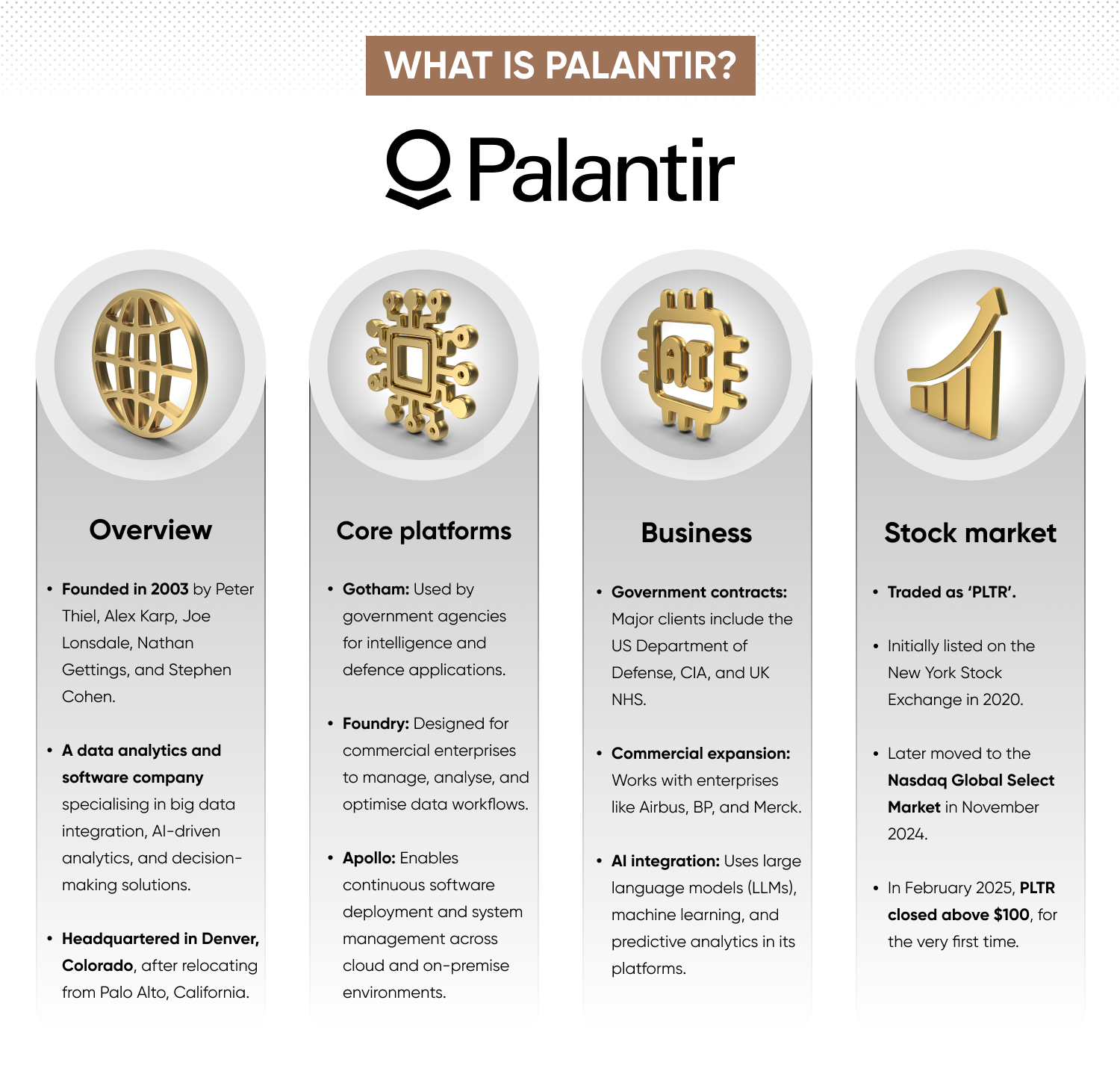
Palantir’s product suite is divided into three foundational platforms, each tailored to different operational environments and needs. While they share a common philosophy of data integration, their applications range from battlefield management to pharmaceutical research.
Palantir Gotham: The Intelligence and Defense Powerhouse
Gotham was Palantir’s first flagship product, designed primarily for the intelligence community and defense departments. It is a platform built to find “needles in haystacks.” In the context of counter-terrorism or law enforcement, Gotham allows analysts to pull data from a variety of sources—including signals intelligence, human intelligence reports, and financial records—and map the relationships between them.
The software creates a graphical interface where users can see connections between entities, such as people, places, and events. If a government agency is tracking a threat, Gotham helps visualize the network of associates, the flow of funds, and geographical movements. It doesn’t just store data; it allows users to perform complex “link analysis,” turning millions of rows of data into a coherent narrative.
Palantir Foundry: The Operating System for Modern Enterprise
While Gotham serves the defense sector, Foundry is Palantir’s solution for the commercial world. It is designed to be the “central nervous system” of a corporation. In a massive enterprise like an airline or a global manufacturer, data is often scattered across ERP systems, spreadsheets, and IoT sensors. Foundry integrates these sources into a single, unified environment.
What makes Foundry unique is its ability to create a “digital twin” of an entire organization. For example, a manufacturer can use Foundry to model their entire supply chain. If a specific part is delayed in a port halfway across the world, the software can immediately calculate the downstream impact on production schedules and customer deliveries. This allows executives to move from reactive troubleshooting to proactive optimization.
Palantir Apollo: Continuous Delivery and Deployment
Apollo is the least visible of Palantir’s products but perhaps the most technically impressive. It is the orchestration layer that allows Palantir’s software to run anywhere—from the public cloud to on-premise servers and even “at the edge” on specialized hardware.
In the world of software development, “Continuous Integration and Continuous Delivery” (CI/CD) is standard. However, doing this in high-security, air-gapped environments (where there is no internet connection) is incredibly difficult. Apollo automates the deployment and management of Gotham and Foundry across these disparate environments. It ensures that every instance of the software is updated, secure, and functioning, regardless of whether it is running in a standard data center or on a military vehicle in a remote desert.
The Artificial Intelligence Platform (AIP)
In response to the rapid advancement of Large Language Models (LLMs), Palantir launched the Artificial Intelligence Platform (AIP). This is not just another chatbot; it is a system designed to bring the power of generative AI into the high-stakes world of enterprise and military decision-making.
Integrating LLMs with Proprietary Data
The primary challenge for businesses wanting to use AI is “hallucination” and data security. A company cannot simply feed its proprietary trade secrets into a public AI model. AIP solves this by allowing organizations to deploy LLMs within their own private data environment.
AIP acts as an interface between the user, the AI model, and the organization’s structured data. A user can ask a question in natural language—such as “Which of my suppliers are most at risk due to the current hurricane?”—and the AI will use the underlying data in Foundry or Gotham to provide a factual, data-driven answer. This bridges the gap between raw data and actionable insights using a conversational interface.
Responsible AI and Ontological Security

One of the most critical components of AIP is its “Guardrails” and “Ontology” system. Palantir emphasizes that AI should not have the final word in critical operations. AIP allows developers to define exactly what the AI can and cannot do.
It uses a “Human-in-the-Loop” (HITL) architecture, ensuring that the AI provides suggestions that a human operator must then verify and execute. Furthermore, AIP respects the security permissions already established in Foundry or Gotham. If a junior analyst doesn’t have permission to see financial data, the AI will not be able to use that data to answer their questions, maintaining strict corporate and governmental security protocols.
The Data Ontology: Bridging the Gap Between Data and Decision
The “Ontology” is perhaps the most important technical concept within Palantir’s software. To understand what Palantir makes, one must understand that they don’t just provide a place to store data; they provide a way to define what that data means.
Moving Beyond Data Lakes
For years, the tech industry focused on “Data Lakes”—massive repositories where raw data is dumped for later analysis. The problem with this approach is that the data is often unorganized and lacks context. A “Customer ID” in one database might be a “Client Number” in another, making it nearly impossible to get a full picture of the business.
Palantir’s Ontology layer sits on top of these data sources and maps them to real-world objects. Instead of looking at rows and columns, users interact with “Objects” like Aircraft, Employee, or Order. Every piece of data is tied to one of these objects. This semantic layer ensures that everyone in an organization—from the CEO to the front-line worker—is looking at a single, consistent version of the truth.
Real-World Applications and Use Cases
The power of the Ontology is best seen in action. During the COVID-19 pandemic, Palantir’s software was used by health organizations to manage vaccine distribution. The “Objects” in their ontology were Vaccine Doses, Clinics, and Temperature-Controlled Trucks. Because the software understood the relationships between these things, it could automatically alert officials if a shipment was at risk of expiring or if a clinic was running low on supplies.
In the aviation industry, Palantir helps major carriers manage fleet maintenance. By integrating sensor data from engines with flight schedules and technician availability, the software can predict when a part is likely to fail and schedule maintenance before an unscheduled delay occurs. This is only possible because the software “understands” how a sensor reading relates to a specific physical aircraft.
Edge Processing and Hardware Integration
While Palantir is primarily a software company, it is increasingly moving into “Edge” computing. This involves deploying software directly onto hardware devices rather than keeping it in a centralized cloud.
Palantir at the Tactical Edge
In military and emergency response contexts, decisions must often be made in environments where there is no reliable internet connection. Palantir has developed versions of its software that can run on “tactical edge” devices, such as drones, satellites, and ruggedized laptops.
By running AI models directly on a drone, for example, the software can process video feeds in real-time, identifying objects of interest and alerting operators immediately. This reduces the need to transmit massive amounts of data back to a central server, saving precious bandwidth and time.
Sensor Fusion and Real-Time Telemetry
Palantir’s edge capabilities are also being applied in the industrial sector. In “Smart Factories,” Palantir’s software integrates with IoT (Internet of Things) sensors on the assembly line. By processing this telemetry data at the source, the software can detect anomalies in manufacturing processes instantly. This “sensor fusion”—combining data from cameras, vibration sensors, and thermometers—provides a comprehensive view of machine health that was previously impossible to achieve in real-time.
The Evolution of Sovereign Software
Ultimately, Palantir is pioneering a category of technology known as “Sovereign Software.” This refers to tools that allow organizations—and even nations—to maintain absolute control over their data and digital infrastructure.
Unlike many Silicon Valley firms that rely on advertising or data monetization, Palantir’s business model is built on providing high-quality, high-security tools for a fee. This focus on privacy, security, and data integrity has made them a preferred partner for organizations that handle the world’s most sensitive information.
What Palantir makes is a suite of tools that solve the hardest data problems on earth. Whether it is helping a logistics company optimize its global footprint, assisting a hospital in managing patient flow, or providing soldiers with the situational awareness they need to stay safe, Palantir’s software is designed to turn chaos into clarity. As AI continues to evolve, Palantir’s role in providing the structured, secure, and ontological framework for these technologies will likely only become more central to the global tech landscape.
aViewFromTheCave is a participant in the Amazon Services LLC Associates Program, an affiliate advertising program designed to provide a means for sites to earn advertising fees by advertising and linking to Amazon.com. Amazon, the Amazon logo, AmazonSupply, and the AmazonSupply logo are trademarks of Amazon.com, Inc. or its affiliates. As an Amazon Associate we earn affiliate commissions from qualifying purchases.