
In the world of professional audio, consumer electronics, and live events, few acronyms are as ubiquitous as “PA.” Whether you are attending a massive stadium concert, listening to an announcement in an airport, or setting up a small boardroom for a presentation, the PA system is the technological backbone of the experience. But what does PA in PA system stand for?
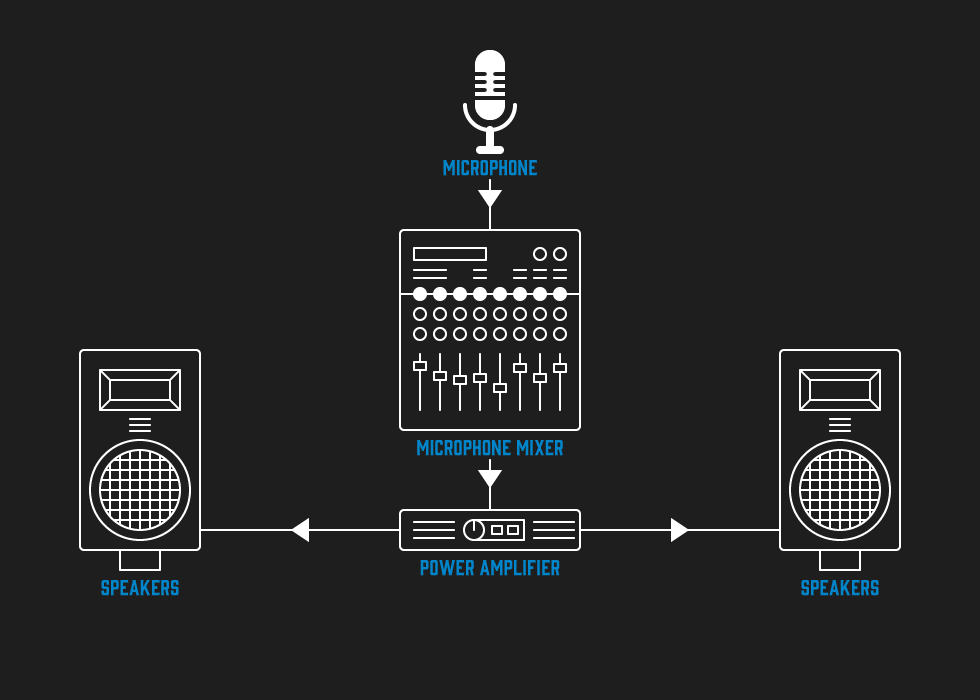
PA stands for Public Address. At its simplest level, a Public Address system is an electronic system comprising microphones, amplifiers, loudspeakers, and related equipment. It is designed to increase the apparent volume of a human voice, musical instrument, or other acoustic sound source so that it can be heard by a large group of people over a wide area.
However, in the modern tech landscape, the PA system has evolved from a simple megaphone-style setup into a sophisticated network of hardware and software. Today’s PA technology leverages digital signal processing (DSP), high-efficiency amplification, and intricate acoustic engineering to deliver crystal-clear audio in even the most challenging environments.
The Core Components of Modern PA Technology
To understand how a Public Address system functions, one must look at the “signal chain.” This is the path that audio travels from its source to the listener’s ears. In the tech niche, this chain is a marvel of electronic engineering, involving the conversion of energy from one form to another.
Microphones and Input Transducers
The process begins with an input transducer, most commonly a microphone. The microphone’s job is to take acoustic energy (sound waves in the air) and convert it into electrical energy (an analog voltage). Modern tech has introduced various types of microphones, such as dynamic, condenser, and ribbon mics, each utilizing different physical principles—like electromagnetic induction or capacitance—to capture sound. High-end PA systems now also integrate digital microphones that convert sound into data packets almost immediately, reducing interference.
Mixers and Signal Processing
Once the sound is an electrical signal, it travels to a mixer or a digital signal processor (DSP). In the modern era, the “mixer” is often a sophisticated computer interface. Here, signals from multiple sources are combined, and their levels are adjusted. More importantly, this is where equalization (EQ), compression, and noise gating occur. Technology has allowed for the miniaturization of these components; what used to require a 10-foot-long analog desk can now be controlled via an iPad or a cloud-based software interface.
Power Amplifiers: The Muscle of the System
The “A” in PA might stand for Address, but “Amplification” is arguably the most critical technical stage. The electrical signal coming out of a mixer is far too weak to move a heavy loudspeaker cone. The power amplifier takes that weak signal and uses external power (from a wall outlet or battery) to create a high-voltage version of that signal. We have moved from heavy, heat-generating Class A/B amplifiers to highly efficient Class D digital amplifiers, which provide immense power with minimal weight and energy waste.
The Evolution of Audio Engineering: From Analog to Digital
The history of the PA system is a reflection of the broader history of technology. From the early days of vacuum tubes to the current era of networked audio, the goal has always been the same: clarity and coverage.
From Vacuum Tubes to Solid State
Early Public Address systems relied on vacuum tubes, which were fragile, required significant warm-up time, and generated immense heat. The shift to solid-state technology (transistors) in the mid-20th century revolutionized the industry. This technological leap made PA systems more reliable, portable, and affordable for schools, businesses, and small venues. It paved the way for the “all-in-one” portable PA gadgets we see today.
The Digital Revolution and DSP
The most significant shift in recent decades has been the move from analog to digital. Digital Signal Processing (DSP) allows engineers to manipulate sound with mathematical precision. In a modern PA setup, DSP is used for “room correction,” where software analyzes the acoustics of a space and automatically adjusts the output to cancel out echoes or frequency build-ups. This level of automation ensures that the “Public Address” is intelligible regardless of the architectural challenges.
Networked Audio and Dante
In large-scale installations, such as stadiums or corporate campuses, the traditional method of running long copper cables is being replaced by networked audio. Protocols like Dante (Digital Audio Network Through Ethernet) allow hundreds of channels of uncompressed, low-latency audio to be transmitted over a standard IT network. This convergence of audio tech and IT infrastructure means that a PA system is now essentially a specialized branch of computer networking.
Applications and Scaling: Tailoring Tech to the Environment
Not all PA systems are created equal. The technology required for a local cafe is vastly different from the tech deployed at a global tech conference or a music festival.
Small Scale: Portability and Smart Integration
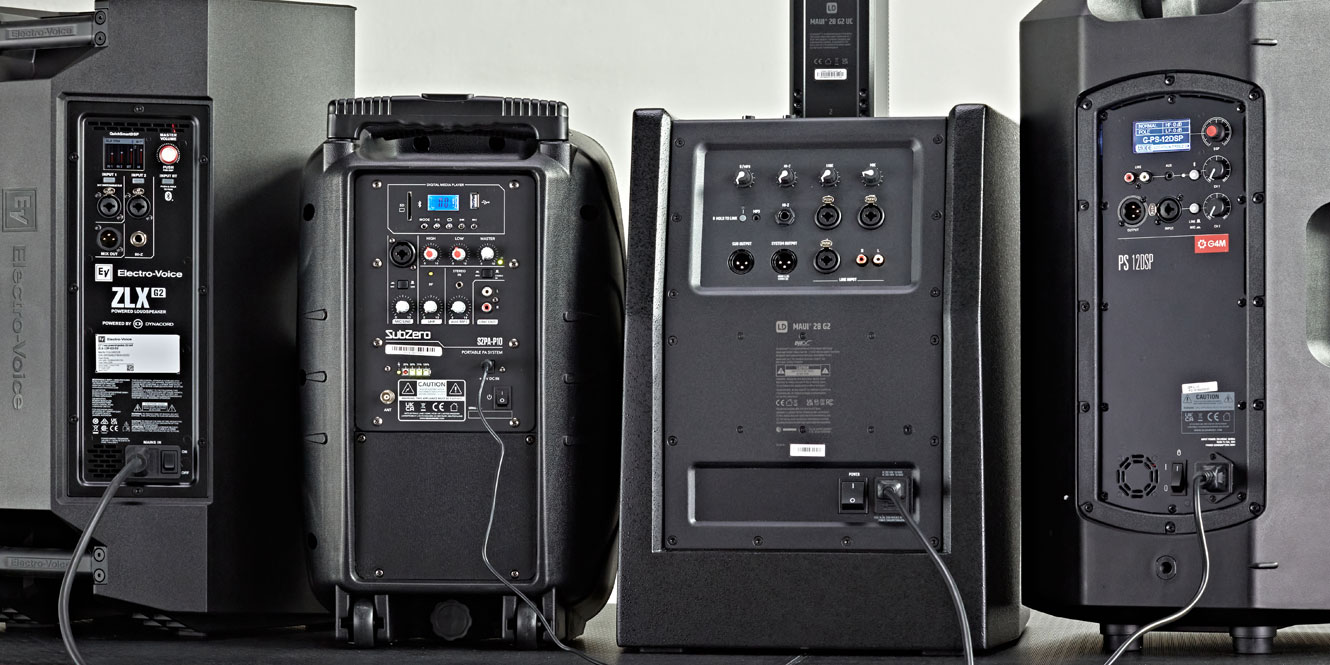
For small businesses and independent creators, the focus is on “All-in-One” systems. These gadgets integrate the mixer, amplifier, and speaker into a single battery-powered unit. Modern portable PAs often feature Bluetooth 5.0 connectivity, allowing users to stream high-fidelity audio directly from a smartphone. Some even feature AI-driven “Auto-EQ” that uses internal sensors to detect whether the speaker is on a tripod or the floor, adjusting its sound profile accordingly.
Large Scale: Line Array Technology
In large venues, the challenge is maintaining volume and clarity over long distances. This is where “Line Array” technology comes in. Instead of traditional point-source speakers, line arrays use a vertical column of speakers that interact with each other to project sound in a narrow, controlled beam. This physics-defying tech allows sound to travel hundreds of feet without the volume dropping off as rapidly as it would with a standard speaker, ensuring the person in the front row and the person in the back row have the same auditory experience.
Commercial and Emergency Systems
In the corporate and civic tech sector, PA systems are often integrated into Life Safety systems. These “Voice Evacuation” systems are highly regulated and must remain operational during power outages. They use supervised circuitry, which means the system constantly sends an inaudible “pilot tone” through the wires to check for breaks. If a wire is cut, the central hub immediately alerts technicians. This is where Public Address tech meets digital security and safety protocols.
Choosing the Right Hardware: Specifications and Gadgets
When looking at PA tech, the spec sheet can be overwhelming. Understanding the jargon is essential for anyone looking to invest in audio hardware.
Power Ratings: Watts vs. Decibels
A common misconception in audio tech is that more “Watts” always equals “louder.” While wattage measures the power consumption and output of the amplifier, Sound Pressure Level (SPL), measured in decibels (dB), is what actually tells you how loud the system is. High-efficiency speakers can produce more volume with fewer watts. When reviewing PA gadgets, tech-savvy buyers look for “Continuous” or “RMS” power rather than “Peak” power, as RMS provides a realistic measure of sustained performance.
Frequency Response and Audio Clarity
The human ear can theoretically hear from 20Hz to 20,000Hz. A high-quality PA system should cover as much of this spectrum as possible without “coloring” the sound. Modern subwoofers use advanced excursion technology to handle the low end (bass), while compression drivers with titanium diaphragms handle the high frequencies. The goal is “transparency”—the tech should be so good that the listener forgets there is a speaker between them and the sound source.
Software Interfaces and Remote Control
The “gadgetization” of the PA system is best seen in modern control software. Most mid-to-high-tier PA systems now come with proprietary apps. These allow an engineer to walk around a venue with a tablet, adjusting the volume, EQ, and delay of individual speakers in real-time. This wireless control is facilitated by built-in Wi-Fi routers within the speakers or mixers, creating a localized ecosystem of audio devices.

The Future of Public Address: AI and Spatial Audio
As we look forward, the PA system is becoming even smarter. We are seeing the rise of “Steerable Arrays,” where the direction of the sound can be changed via software without moving the speakers physically. By adjusting the timing (phase) of the signal going to different drivers, the sound can be “steered” toward a crowd and away from reflective walls.
Furthermore, AI is beginning to play a role in feedback suppression. Using machine learning algorithms, modern PA processors can distinguish between a sustained musical note and the “howl” of a feedback loop, surgically removing the offending frequency before the audience even hears it.
In conclusion, while “PA” stands for the humble Public Address, the technology behind it is anything but simple. It is a sophisticated intersection of physics, electronics, and digital innovation. From the transducers that capture the vibration of a string to the networked arrays that project a voice to thousands, PA systems remain a vital and constantly evolving segment of the technology world. Whether you are a casual tech enthusiast or a professional sound engineer, understanding the components and trends of PA systems allows for a deeper appreciation of the sounds that shape our public lives.
aViewFromTheCave is a participant in the Amazon Services LLC Associates Program, an affiliate advertising program designed to provide a means for sites to earn advertising fees by advertising and linking to Amazon.com. Amazon, the Amazon logo, AmazonSupply, and the AmazonSupply logo are trademarks of Amazon.com, Inc. or its affiliates. As an Amazon Associate we earn affiliate commissions from qualifying purchases.