
In the vast and intricate world of technology, understanding foundational mathematical concepts is often the key to unlocking deeper insights into how systems work, how data is managed, and how security is maintained. Among these fundamental ideas is the “one-to-one function,” a concept borrowed directly from mathematics but with profound implications across various technological domains, from database design and cryptography to software development and artificial intelligence. Far from being an abstract theoretical construct, the principles of a one-to-one function underpin the reliability, efficiency, and security of countless digital processes we interact with daily.

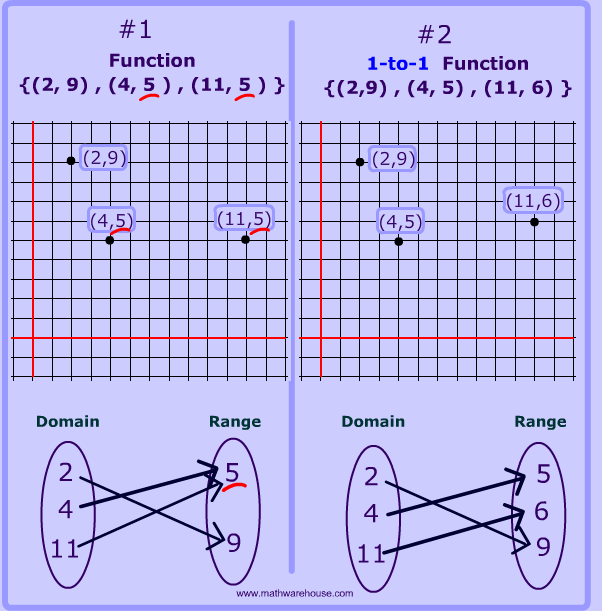
At its core, a one-to-one function, also known as an injective function, ensures uniqueness. It establishes a clear, unambiguous relationship between elements from one set to elements in another, such that each element in the second set is mapped to by at most one element from the first set. In simpler terms, if you have two distinct inputs, they will always produce two distinct outputs. No two different inputs can ever lead to the same output. This seemingly simple rule has far-reaching consequences when applied to the design and operation of technological systems, offering guarantees of data integrity, unambiguous identification, and secure transformations.
This article delves into the meaning of a one-to-one function specifically within the context of technology, exploring its definition, illustrating its applications, and highlighting its critical role in building robust and secure digital infrastructure.
The Core Concept: An In-Depth Look at One-to-One Functions
To truly appreciate its technological significance, we must first firmly grasp the mathematical definition of a one-to-one function.
Defining “One-to-One”: The Injective Property
Mathematically, a function $f$ from a set $A$ (the domain) to a set $B$ (the codomain) is said to be one-to-one (or injective) if for every $a1$ and $a2$ in $A$, if $f(a1) = f(a2)$, then it must be that $a1 = a2$. Equivalently, if $a1 neq a2$, then $f(a1) neq f(a2)$. This means that distinct inputs always map to distinct outputs. No two elements in the domain map to the same element in the codomain.
It’s crucial to distinguish a one-to-one function from an “onto” (surjective) function or a “bijective” (both one-to-one and onto) function. While an onto function ensures that every element in the codomain is mapped to by at least one element in the domain, a one-to-one function focuses solely on the uniqueness of the mapping from the domain. A function can be one-to-one without being onto if there are elements in the codomain that are not mapped to by any element in the domain. When a function is both one-to-one and onto, it establishes a perfect, reversible pairing between the two sets, which is particularly valuable in cryptography.
Illustrative Examples in Simple Terms
To make this concept tangible, consider a few simple examples relevant to technology:
-
Employee ID System: Imagine a database where each employee is assigned a unique Employee ID. The function here maps an employee to their ID. If it’s a one-to-one function, no two employees can ever have the same ID. This ensures that an ID uniquely identifies a single employee.
-
Username Registration: When you register for an online service, your chosen username must be unique. The system checks if the username you want already exists. The function mapping a user to their username is designed to be one-to-one; if two different users tried to register the same username, the system would prevent the second one, maintaining the one-to-one property.
-
URL Shortener: A URL shortener takes a long URL and generates a unique, shorter one. The ideal function here is one-to-one: each long URL should map to a distinct short URL. If two different long URLs mapped to the same short URL, the system would be ambiguous and unable to redirect correctly.
Why it Matters: Uniqueness and Predictability
The core value of a one-to-one function in technology lies in the guarantees it provides:
-
Uniqueness: It ensures that an entity or piece of data can be uniquely identified or referenced. This is fundamental for primary keys in databases, user authentication, and resource identification.
-
Predictability: Given an input, you can predict its specific output without ambiguity. This is vital for consistent system behavior and reliable data retrieval.
-
Reversibility (in some cases): While not all one-to-one functions are reversible (bijective), many critical applications in technology leverage one-to-one functions that are reversible, such as encryption algorithms. This allows for clear forward and backward mappings.
Without the one-to-one property, many technological systems would collapse into chaos, plagued by ambiguity, data corruption, and security vulnerabilities.
One-to-One Functions in Data Management and Databases
Perhaps one of the most direct and crucial applications of one-to-one functions in technology is within data management, particularly in relational databases.
Understanding One-to-One Relationships in Database Design
In relational database design, relationships define how different tables are connected. A one-to-one (1:1) relationship exists when one record in Table A is associated with exactly one record in Table B, and vice-versa. This directly mirrors the mathematical definition of a one-to-one function where each entity in one set maps to a unique entity in another.
For example, consider a Users table and a UserProfiles table. Each user can only have one profile, and each profile belongs to only one user.
-
Userstable:UserID (PK), Username, Email -
UserProfilestable:ProfileID (PK), UserID (FK), FirstName, LastName, Address
Here, the UserID in UserProfiles table acts as both a foreign key (referencing Users.UserID) and a unique key itself, establishing the one-to-one relationship. This ensures that for every unique UserID in the Users table, there can be at most one corresponding entry in the UserProfiles table.
Practical Applications: Extending Entities and Data Security
One-to-one relationships are not arbitrary; they serve specific design purposes:
-
Extending an Entity without Bloating the Main Table: If a table contains many attributes, some of which are rarely accessed or contain sensitive information, a 1:1 relationship allows you to split these attributes into a separate table. This improves performance for common queries on the main table and can enhance security by restricting access to the sensitive information table. For instance,
Usersmight hold login credentials, whileUserProfilesholds personal details. -
Managing Optional Data: When an entity has many optional attributes, placing them in a separate 1:1 related table means you don’t need to store
NULLvalues for those attributes in the main table for entities that don’t have them, saving space. -
Enforcing Security: By creating a one-to-one relationship for highly sensitive data, access controls can be implemented more granularly. For example,
EmployeeSalaryDetailsmight be in a 1:1 relationship withEmployeeDetails, allowing only specific roles to query the salary table.
Ensuring Data Integrity and Performance

The one-to-one constraint in databases is a form of referential integrity that directly leverages the injective property. It prevents scenarios where a profile exists without a user or where a user has multiple profiles, thereby maintaining data consistency and preventing logical errors. From a performance standpoint, while joining two tables with a 1:1 relationship adds a slight overhead, it can improve performance for queries that don’t need all attributes by reducing the row width of the primary table, leading to fewer disk I/Os.
Cryptography and Digital Security: The Power of Injective Mappings
The concept of one-to-one functions is absolutely foundational to cryptography and digital security, where uniqueness, predictability, and reversibility are paramount.
Hashing Algorithms and Collision Resistance
Hashing algorithms take an input (or ‘message’) of arbitrary length and return a fixed-size string of bytes, typically a hexadecimal number, called a hash value or digest. While not strictly one-to-one in the mathematical sense (as an infinite number of inputs can map to a finite number of outputs), cryptographic hash functions are designed to be “collision-resistant.” This means it is computationally infeasible to find two different inputs that produce the same hash output. In essence, they aim to mimic the one-to-one property as closely as possible within practical limits.
The “one-way” nature of hashing (easy to compute the hash, hard to reverse-engineer the input from the hash) combined with collision resistance is critical for:
-
Password Storage: Storing hashes of passwords instead of plain text. If two users have different passwords, their hashes should be different.
-
Data Integrity: Verifying that a file hasn’t been tampered with. Any change to the file, no matter how small, should result in a drastically different hash, preserving a pseudo-one-to-one relationship between the data and its integrity check.
Encryption and Decryption: Reversible One-to-One Mappings
Symmetric-key encryption algorithms (like AES) and asymmetric-key encryption algorithms (like RSA) fundamentally rely on one-to-one and bijective functions.
-
Encryption: The process of encrypting plaintext into ciphertext uses a one-to-one function. Each unique plaintext block, combined with a key, maps to a unique ciphertext block. If two different plaintext blocks resulted in the same ciphertext block, decryption would be ambiguous.
-
Decryption: The decryption process is the inverse function of encryption. For decryption to be possible and yield the original plaintext, the encryption function must be not only one-to-one but also onto (i.e., bijective). This ensures a perfect, reversible mapping: for every unique ciphertext, there is exactly one unique plaintext it corresponds to. This bijectivity is what allows secure communication, ensuring that the original message can be perfectly reconstructed.
Digital Signatures and Authenticity
Digital signatures use cryptographic principles, including one-to-one mappings, to verify the authenticity and integrity of digital messages or documents. When a document is digitally signed, a hash of the document is created (which is collision-resistant, approximating a one-to-one function from document content to hash value) and then encrypted with the signer’s private key. The recipient can then decrypt the signature with the signer’s public key to retrieve the hash, and independently compute the hash of the received document. If the hashes match, and the decryption works, it confirms the sender’s identity and that the document hasn’t been altered. The one-to-one property of the underlying hashing and encryption functions is what makes this process trustworthy.
Algorithms, Data Structures, and Software Engineering
Beyond databases and security, one-to-one functions are integral to how algorithms operate, how data is organized, and how software is engineered for efficiency and correctness.
Mapping and Lookup Operations
Many data structures and algorithms rely on efficient mapping and lookup operations.
-
Hash Maps (Dictionaries/Associative Arrays): While the internal hashing function aims for collision resistance, the overall goal is to map unique keys to unique values. When you use a hash map, you expect that querying a specific key will reliably retrieve the one associated value. This relies on the conceptual one-to-one relationship between a key and its mapped value.
-
Indexing: In databases and search engines, indexes create a one-to-one or one-to-many mapping from key values to the location of the corresponding data. An index on a unique column (like a primary key) is a perfect example of leveraging a one-to-one function to quickly locate specific records.
Function Design and Parameter Validation
In software engineering, when developers design functions or methods, the one-to-one concept often implicitly guides decisions:
-
Idempotency: A function is idempotent if calling it multiple times with the same parameters produces the same result as calling it once. While not strictly one-to-one (as many calls lead to one state), the idea of consistent output for consistent input shares philosophical roots.
-
Parameter Validation: When a function expects unique identifiers as input (e.g.,
getUserById(userId)), the expectation is that a uniqueuserIdwill fetch a unique user. Validating thatuserIdactually maps to a unique entity often involves internal database queries that rely on one-to-one database relationships. -
API Design: RESTful APIs often use unique identifiers in URLs (e.g.,
/users/{id}). Theiduniquely identifies a resource, implying a one-to-one mapping between the ID and the resource itself.
Optimizing Performance and Resource Management
The principle of one-to-one mappings can also contribute to performance optimization:
-
Memory Management: In some low-level programming or operating system design, one-to-one mappings between virtual memory addresses and physical memory addresses (or vice versa) are managed by the Memory Management Unit (MMU) to ensure each virtual address uniquely points to a specific physical location, optimizing memory access and preventing conflicts.
-
Resource Allocation: When a system allocates a unique resource (e.g., a port number, a file handle, a process ID) to a specific process or service, it’s enforcing a one-to-one relationship to prevent resource contention and ensure exclusive access, which is vital for system stability and performance.
Beyond the Basics: Advanced Applications and Considerations
The concept of one-to-one functions extends into more advanced and emerging areas of technology, demonstrating its enduring relevance.
Functional Programming Paradigms
In functional programming, “pure functions” are highly valued. A pure function is one that, given the same inputs, will always return the same output, and has no side effects. This property is very much in line with a one-to-one (or at least consistent) mapping between input and output. While not all pure functions are strictly one-to-one (multiple inputs could theoretically map to the same output), the emphasis on predictable, isolated transformations aligns with the clarity and determinism that one-to-one functions offer. This makes reasoning about code easier, enhances testability, and supports parallelization.
Machine Learning and Feature Mapping
In machine learning, data transformations are crucial. When features are engineered or data is preprocessed, it’s often through mapping functions. While many transformations are not one-to-one (e.g., dimensionality reduction), understanding the impact of one-to-one or non-one-to-one mappings is vital. For instance, if you’re mapping categorical data to numerical representations, ensuring a one-to-one mapping (e.g., using one-hot encoding for distinct categories) preserves the distinctness of the original data, which can be critical for model performance and interpretability. In certain specialized algorithms, such as those involving invertible neural networks, one-to-one mappings are explicitly engineered to allow for powerful generative models and robust uncertainty quantification.
The Importance of Context in “One-to-One”
It’s important to remember that the interpretation and strictness of “one-to-one” can vary slightly depending on the technological context. In database design, it’s a hard constraint. In cryptographic hashing, it’s an ideal that’s approximated for practical security. In software design, it might be an expected behavior or a property of a unique identifier. Regardless of the specific application, the underlying principle – the unique mapping of an input to an output – remains a cornerstone for building reliable, secure, and efficient technological systems.
The one-to-one function is more than just a mathematical term; it’s a fundamental design principle that permeates the architecture of modern technology, ensuring clarity, consistency, and robustness in our digital world. From securing our communications to organizing vast datasets, its quiet influence is indispensable.
aViewFromTheCave is a participant in the Amazon Services LLC Associates Program, an affiliate advertising program designed to provide a means for sites to earn advertising fees by advertising and linking to Amazon.com. Amazon, the Amazon logo, AmazonSupply, and the AmazonSupply logo are trademarks of Amazon.com, Inc. or its affiliates. As an Amazon Associate we earn affiliate commissions from qualifying purchases.