
NVIDIA, a name synonymous with high-performance computing, has transcended its origins as a graphics chip manufacturer to become a pivotal force in nearly every facet of modern technology. From powering immersive gaming experiences to accelerating the most advanced artificial intelligence research, the company’s product portfolio is a sprawling testament to relentless innovation. Understanding “what NVIDIA sells” requires a deep dive into its diverse technological offerings, which span hardware, software, and comprehensive platforms designed to push the boundaries of what’s possible. Far from being a singular product company, NVIDIA sells an intricate ecosystem of cutting-edge solutions that underpin industries ranging from entertainment and design to scientific discovery and autonomous systems.
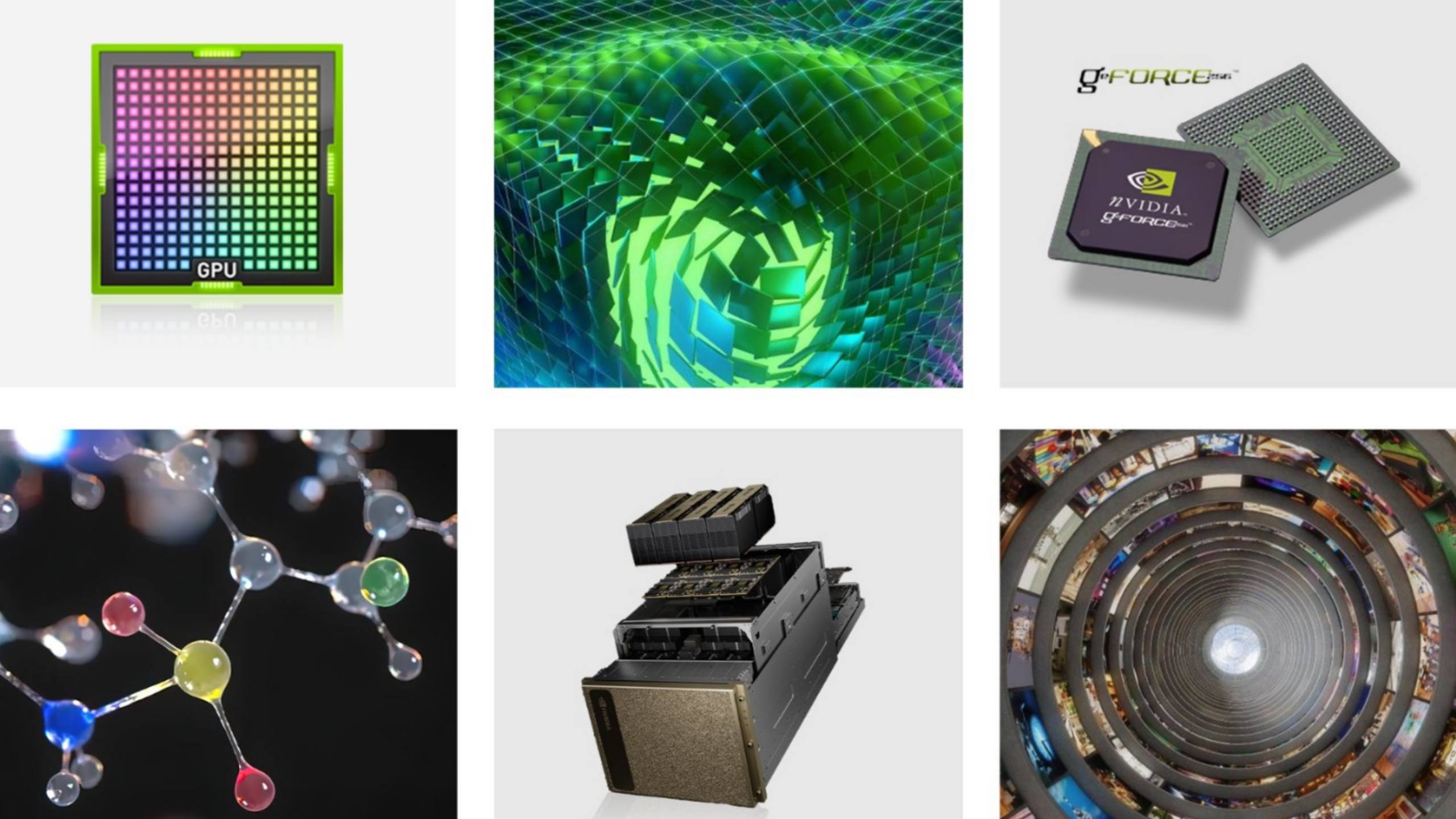
The Foundation: Revolutionizing Graphics Processing Units (GPUs)
At its core, NVIDIA’s identity is inextricably linked to the Graphics Processing Unit (GPU). Initially conceived to render complex 3D graphics in real-time, the GPU has evolved under NVIDIA’s stewardship into a versatile parallel processing powerhouse, far exceeding its original mandate. This evolution marks a significant technological shift, transforming the GPU from a specialized component into a general-purpose accelerator critical for a multitude of computational tasks.
Gaming & Consumer Graphics: The GeForce Legacy
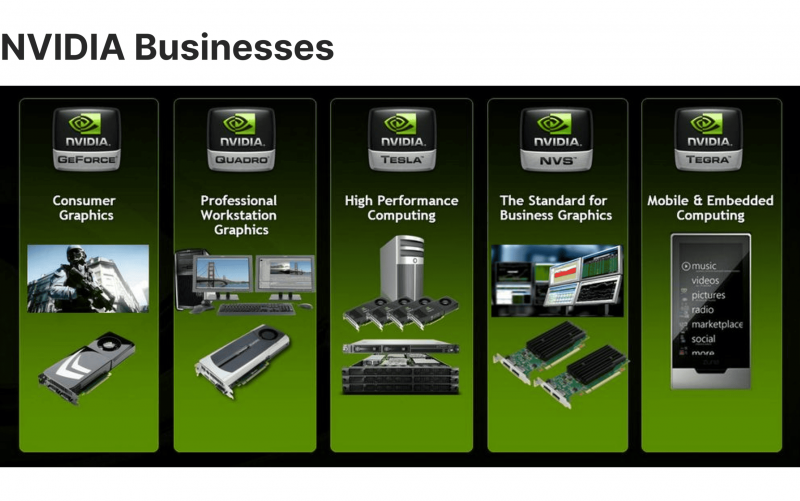
NVIDIA’s consumer-facing brand, GeForce, remains a cornerstone of its business and a household name among gamers and digital creators. The GeForce series of GPUs, from the mainstream to the ultra-high-performance RTX series, defines the state-of-the-art in PC gaming graphics. What NVIDIA sells here isn’t just a chip; it’s an entire immersive experience.
The technological advancements embedded in GeForce GPUs are profound. The introduction of the GeForce RTX series marked a watershed moment with the integration of real-time ray tracing and AI-powered Deep Learning Super Sampling (DLSS). Ray tracing simulates the physical behavior of light to render incredibly realistic shadows, reflections, and refractions, bringing cinematic quality visuals to games. DLSS, on the other hand, leverages AI to render frames at a lower resolution and then upscales them to higher resolutions with enhanced visual fidelity and significantly improved frame rates, effectively offering a performance boost without compromising image quality. This combination of groundbreaking rendering techniques and intelligent upscaling exemplifies NVIDIA’s commitment to pushing the boundaries of visual computing.
Beyond the raw hardware, NVIDIA sells an ecosystem. This includes drivers optimized for thousands of games, software suites like GeForce Experience for game optimization and recording, and a vibrant community. The continuous iteration on architecture (e.g., Ada Lovelace, Ampere, Turing) ensures that each new generation offers substantial leaps in performance per watt, efficiency, and feature sets, maintaining NVIDIA’s dominance in the highly competitive consumer graphics market.
Professional Visualization: Powering Design and Creation
While GeForce dominates the consumer space, NVIDIA’s professional-grade GPUs, historically under the Quadro brand and now largely integrated into the NVIDIA RTX Ada Generation, cater to an entirely different, yet equally demanding, market. These GPUs are the backbone of industries reliant on precise visual computing and intensive data processing, including architecture, engineering, media and entertainment, product design, and scientific visualization.
NVIDIA sells specialized hardware and software platforms tailored for these professionals. Unlike consumer GPUs, professional cards prioritize reliability, certified drivers for critical applications (CAD, DCC software), and features like ECC memory (Error-Correcting Code) to ensure data integrity during long, complex computations. They often feature higher memory capacities, more robust build quality, and multi-GPU synchronization capabilities essential for driving multiple high-resolution displays or performing massive simulations.
The technology here extends to solutions for virtual workstations, allowing professionals to access high-performance graphics from any device, anywhere. This is crucial for collaborative design workflows, remote production studios, and secure data handling in sensitive environments. By providing the computational power to render complex 3D models, accelerate video editing, perform photorealistic rendering, and drive virtual reality simulations, NVIDIA empowers creators and engineers to bring their most ambitious visions to life with unparalleled precision and speed.
Beyond Graphics: Fueling the AI and Data Center Revolution
While its roots are in graphics, NVIDIA’s most transformative impact in recent years has been its pivotal role in the rise of artificial intelligence and the explosion of data center computing. The revelation that GPUs, with their parallel processing architecture, are exceptionally well-suited for the matrix multiplications central to deep learning algorithms, fundamentally shifted the company’s trajectory. NVIDIA quickly pivoted to position its GPUs as the primary accelerators for AI training and inference, becoming indispensable to researchers and enterprises alike.
AI Accelerators and Data Center Solutions
What NVIDIA sells to the data center market is far more than just individual GPUs; it’s an integrated stack of hardware and software designed for hyper-scale AI and high-performance computing (HPC). Flagship products like the NVIDIA A100 and H100 Tensor Core GPUs are not merely powerful processors; they are engineering marvels packed with billions of transistors, specialized Tensor Cores for AI operations, and high-bandwidth memory (HBM). These GPUs are often deployed in systems like the NVIDIA DGX systems, which are pre-configured, fully integrated AI supercomputers ranging from individual workstations to rack-scale infrastructure.
The technology here is about extreme scalability and efficiency. NVIDIA’s data center GPUs are designed to handle the massive datasets and intricate neural networks required for training cutting-edge AI models, from natural language processing to computer vision. They also excel at AI inference, deploying trained models to make predictions in real-time. The company’s innovations in interconnect technology, such as NVLink and NVSwitch, allow multiple GPUs to communicate at ultra-high speeds, effectively acting as one giant accelerator, a critical factor in scaling AI workloads.
Networking and Interconnect Technologies
Recognizing that the fastest GPUs are only as effective as the network that feeds them data, NVIDIA expanded its portfolio significantly with the acquisition of Mellanox Technologies. This strategic move brought industry-leading InfiniBand and high-speed Ethernet networking solutions into NVIDIA’s fold.
NVIDIA now sells the fundamental plumbing of modern data centers and HPC clusters. InfiniBand is an ultra-low-latency, high-bandwidth interconnect technology crucial for distributed AI training and scientific simulations where data needs to move between thousands of GPUs and CPUs with minimal delay. High-speed Ethernet solutions complement this by providing robust connectivity for general-purpose data center traffic. By offering both the compute power (GPUs) and the high-speed networking (Mellanox technologies), NVIDIA provides a comprehensive, vertically integrated solution for building the most powerful AI factories and supercomputers in the world. This holistic approach ensures optimal performance and efficiency, eliminating bottlenecks that would otherwise limit the potential of its advanced GPUs.
Expanding Horizons: AI at the Edge and Autonomous Systems
NVIDIA’s vision extends beyond the data center to the burgeoning world of artificial intelligence at the edge—devices that perform AI processing locally, closer to the data source. This push into embedded AI and robotics, alongside its significant investments in autonomous driving, underscores the company’s ambition to infuse intelligence into every aspect of our physical world.
Edge AI and Robotics: The Jetson Platform
For developers and engineers building intelligent machines and IoT devices, NVIDIA sells the Jetson platform. This series of embedded computing modules and developer kits brings AI processing capabilities to compact, power-efficient form factors. From the small Jetson Nano to the more powerful Jetson AGX Orin, these modules integrate a GPU, CPU, and memory, alongside robust I/O for sensors and peripherals.
The technology behind Jetson enables a vast array of applications: smart cameras for retail analytics, industrial robots for automated manufacturing, medical devices for AI-assisted diagnostics, agricultural drones for crop monitoring, and much more. NVIDIA provides not only the hardware but also a comprehensive software stack, including specialized SDKs like JetPack, which simplifies the deployment of AI models on edge devices. This allows businesses and innovators to integrate sophisticated AI capabilities into products and systems where cloud connectivity might be intermittent or where real-time decision-making is paramount.
Automotive and Autonomous Driving Solutions
The automotive industry is undergoing a profound transformation, driven by electrification and the quest for fully autonomous vehicles. NVIDIA has positioned itself as a leading technology provider in this space with its NVIDIA DRIVE platform. What NVIDIA sells here is not a self-driving car itself, but the computational brain and software foundation necessary for vehicles to perceive, understand, and navigate their surroundings autonomously.
The DRIVE platform comprises high-performance system-on-chips (SoCs) like DRIVE Orin, which provide the immense compute power required to process vast amounts of sensor data (cameras, radar, lidar, ultrasonic) in real-time. Complementing the hardware is the comprehensive NVIDIA DRIVE software stack, which includes everything from low-level drivers and operating systems to sophisticated AI algorithms for perception, planning, and control. NVIDIA also offers tools for simulating autonomous vehicle scenarios (DRIVE Sim), crucial for safely developing and validating self-driving systems. This end-to-end platform allows automakers and robotaxi companies to accelerate their development of advanced driver-assistance systems (ADAS) and ultimately, fully autonomous capabilities, driving a future where vehicles are intelligent, safe, and efficient.
The Software Backbone: Enabling the Ecosystem
Beneath NVIDIA’s impressive hardware lies an equally critical and expansive software ecosystem that transforms raw silicon into functional, intelligent systems. This software layer is what truly unlocks the potential of NVIDIA’s GPUs and platforms, making them accessible and powerful for developers and enterprises across diverse fields.
CUDA and AI Software Stacks: The Developer’s Toolkit
Central to NVIDIA’s software strategy is CUDA (Compute Unified Device Architecture). Introduced in 2006, CUDA is a parallel computing platform and programming model that allows developers to use NVIDIA GPUs for general-purpose processing. What NVIDIA sells here is the foundational language and runtime that empowers millions of developers to harness the parallel processing power of its GPUs for tasks far beyond graphics—from scientific simulations and data analytics to, most famously, artificial intelligence.
The CUDA ecosystem includes libraries, tools, and compilers that simplify the development of GPU-accelerated applications. Beyond CUDA itself, NVIDIA offers a rich suite of AI-specific software libraries and frameworks optimized for its hardware, such as cuDNN (for deep neural networks), TensorRT (for high-performance deep learning inference), and extensive integrations with popular AI frameworks like TensorFlow and PyTorch. This comprehensive software stack has been a key differentiator, creating a sticky ecosystem that makes NVIDIA GPUs the preferred choice for AI development and deployment.
NVIDIA Omniverse: Building the Metaverse and Digital Twins
Venturing into the future of 3D internet and industrial digitization, NVIDIA introduced Omniverse. This platform for building and operating metaverse applications and digital twins represents a significant technological leap. What NVIDIA sells with Omniverse is a collaborative 3D simulation and design platform that allows creators, designers, and engineers to connect various 3D tools and assets into a single, shared virtual world.
Omniverse is built on Pixar’s Universal Scene Description (USD) format and uses NVIDIA’s advanced rendering and physics simulation technologies (like RTX Renderer and PhysX). It enables real-time collaboration among geographically dispersed teams, allowing them to iterate on complex designs, simulate factory layouts, train robots in virtual environments, or create photorealistic digital twins of real-world assets. For industries like manufacturing, architecture, and media, Omniverse offers a revolutionary way to visualize, simulate, and interact with complex 3D data, fundamentally changing how products are designed, built, and operated in an increasingly digital world.
Enterprise AI Software: NVIDIA AI Enterprise
Recognizing the growing demand for robust, secure, and manageable AI solutions within large organizations, NVIDIA developed NVIDIA AI Enterprise. What NVIDIA sells with this offering is an end-to-end, cloud-native suite of AI and data analytics software optimized for enterprise deployments.
NVIDIA AI Enterprise provides validated and supported versions of AI frameworks, libraries, and tools, ensuring reliability and performance for critical business applications. It includes components for managing AI workloads, ensuring data privacy, and integrating with existing enterprise IT infrastructure. This offering addresses the challenges companies face in deploying and scaling AI in production environments, providing a ready-to-use software layer that simplifies AI adoption, reduces development time, and enhances the security and manageability of AI operations across data centers, cloud platforms, and edge devices.
The Strategic Impact: Shaping the Future of Technology
NVIDIA’s diverse portfolio of hardware and software solutions paints a picture of a company that is not merely selling components, but actively shaping the technological landscape. By continually innovating at the intersection of graphics, parallel computing, and artificial intelligence, NVIDIA has become an indispensable enabler across a multitude of industries.
Driving Innovation Across Industries
The breadth of NVIDIA’s impact is staggering. In healthcare, its GPUs accelerate drug discovery and medical imaging analysis. In manufacturing, they power robotic automation and digital twin simulations for optimizing factory floors. In entertainment, they are essential for creating visual effects and interactive experiences. In scientific research, they unlock new frontiers in climate modeling, astrophysics, and genomics. What NVIDIA sells is the underlying computational engine that drives these transformative innovations, providing the tools for scientists, engineers, and creators to solve the world’s most complex challenges.
The Ecosystem Advantage and Future Trajectory
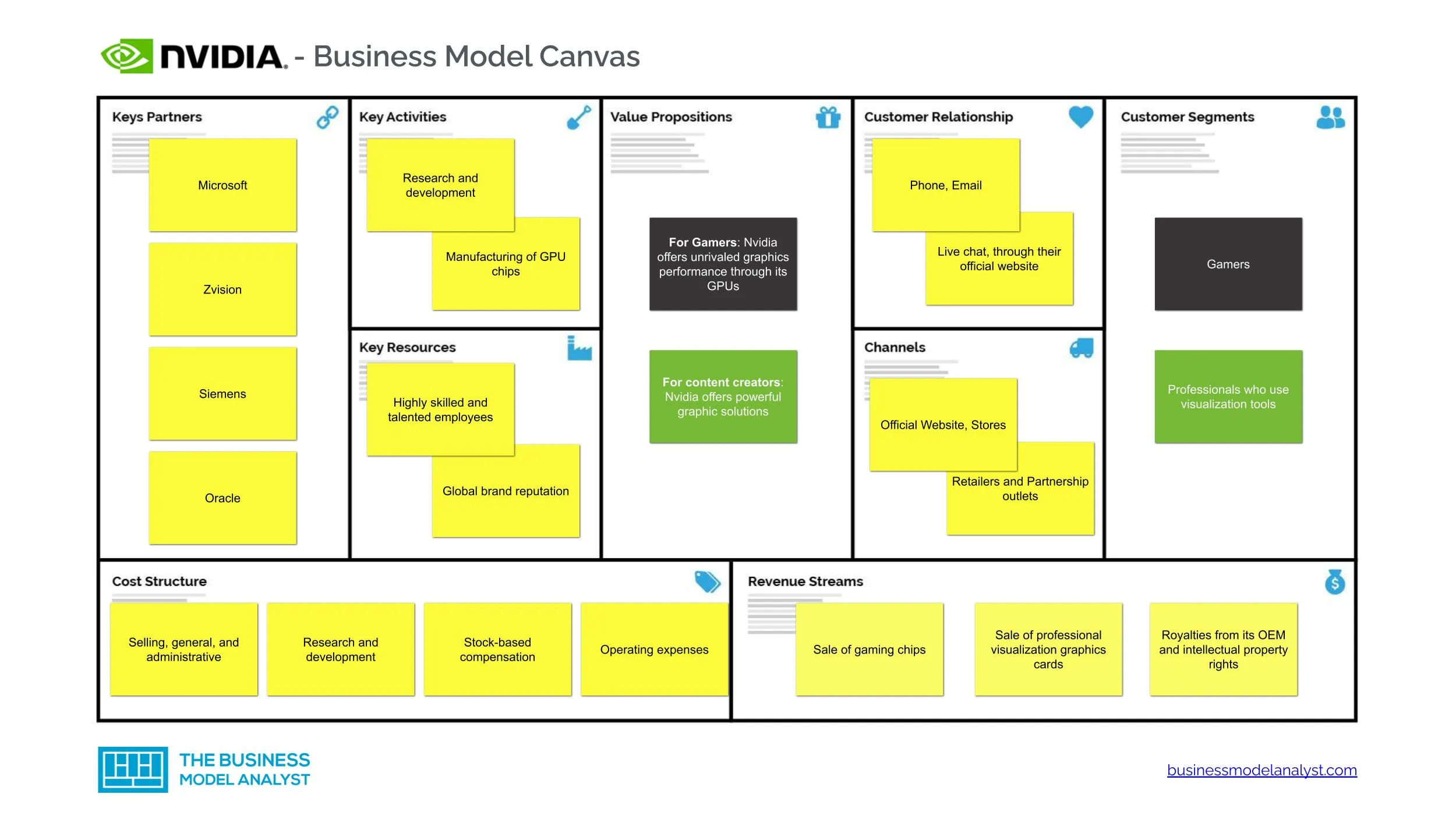
NVIDIA’s success is not just about individual products; it’s about the synergistic power of its entire ecosystem. The tight integration between its silicon, software platforms (like CUDA, Omniverse, and AI Enterprise), and a vast network of developers and partners creates a powerful flywheel effect. Each new hardware innovation is supported by a robust software stack, which in turn inspires new applications and further drives demand for its specialized processors.
Looking ahead, NVIDIA’s trajectory is firmly set on extending its leadership in AI, accelerating the metaverse, and enabling the ubiquitous deployment of intelligent machines. The company continues to invest heavily in research and development, ensuring that “what NVIDIA sells” today will evolve into even more groundbreaking technologies tomorrow, perpetually pushing the boundaries of human innovation and digital transformation. Its relentless pursuit of computational excellence means that for the foreseeable future, NVIDIA will remain at the vanguard of technological progress, selling the very fabric of our increasingly intelligent and interconnected world.
aViewFromTheCave is a participant in the Amazon Services LLC Associates Program, an affiliate advertising program designed to provide a means for sites to earn advertising fees by advertising and linking to Amazon.com. Amazon, the Amazon logo, AmazonSupply, and the AmazonSupply logo are trademarks of Amazon.com, Inc. or its affiliates. As an Amazon Associate we earn affiliate commissions from qualifying purchases.