
In the early 2000s, NVIDIA was primarily known to a niche audience of hardcore PC gamers and graphic designers. Today, it stands as arguably the most critical company in the global technology ecosystem. To ask “what does NVIDIA do” is to ask how the modern world processes information. While many still associate the brand with the green-backlit video cards inside gaming rigs, the company has evolved into a full-stack computing powerhouse that provides the foundational infrastructure for artificial intelligence, autonomous machines, and complex digital simulations.
At its core, NVIDIA designs and builds accelerated computing platforms. By moving away from the traditional serial processing of standard computers and toward a highly efficient parallel processing model, NVIDIA has unlocked levels of computational power that were previously thought impossible.
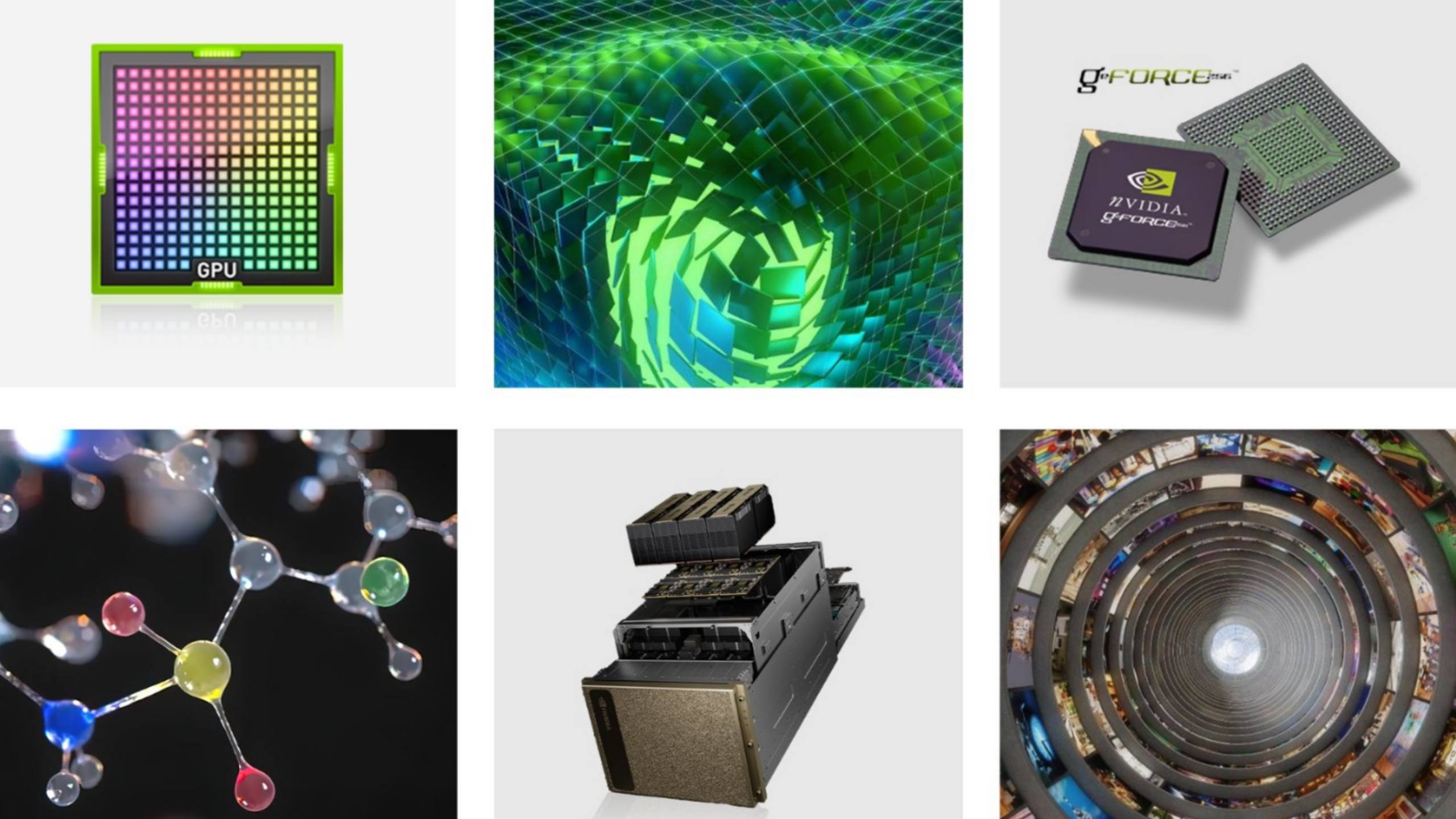
The Foundation of Parallel Computing and the GPU
The central nervous system of any computer is the Central Processing Unit (CPU). Historically, CPUs were designed to handle complex tasks one after another—a method known as serial processing. NVIDIA’s primary contribution to technology was the perfection of the Graphics Processing Unit (GPU), which approaches tasks differently.
From Pixels to General Purpose Computing
Initially, GPUs were specialized hardware meant to render images. Because an image is composed of millions of pixels that all need to be updated simultaneously, NVIDIA designed the GPU to handle thousands of small, simple tasks at once. This is “parallel processing.” In the mid-2000s, NVIDIA realized that this ability to crunch massive amounts of data in parallel could be used for more than just video games. They transformed the GPU from a toy for gamers into a “General Purpose GPU” (GPGPU) capable of solving the world’s most complex mathematical problems.
The CUDA Breakthrough
Perhaps NVIDIA’s most significant technological achievement is not a piece of hardware, but a software platform called CUDA (Compute Unified Device Architecture). Launched in 2006, CUDA is a programming model that allows developers to use the GPU for general-purpose processing. By providing the bridge between software code and the massive parallel power of the hardware, NVIDIA created an ecosystem. Today, millions of developers rely on CUDA to accelerate applications in fields ranging from oil and gas exploration to medical imaging, making NVIDIA’s hardware the industry standard through software locked-in.
The Backbone of Modern Artificial Intelligence
If data is the new oil, then NVIDIA’s hardware is the refinery. The current explosion in generative AI—exemplified by tools like ChatGPT, Midjourney, and Claude—would not be possible without NVIDIA’s specialized data center chips.
Training the Giant Models
Large Language Models (LLMs) and deep learning algorithms require an astronomical amount of “training.” This involves feeding a model billions of parameters and allowing it to learn patterns through trial and error. Because this process requires trillions of simultaneous mathematical calculations, standard CPUs are far too slow. NVIDIA’s H100 and A100 Tensor Core GPUs are specifically architected to handle these workloads. These chips are not just components; they are the engines of the AI revolution, sitting in massive clusters inside data centers owned by Google, Microsoft, and Amazon.

Tensor Cores and Specialized Silicon
What sets NVIDIA’s AI tech apart is the “Tensor Core.” While a standard GPU core handles general math, a Tensor Core is specifically designed to accelerate matrix multiplication—the fundamental mathematical operation used in deep learning. As AI models have grown more complex, NVIDIA has iterated on this silicon, introducing features like the Transformer Engine in their newer architectures. This hardware-level optimization allows AI models to be trained in weeks rather than years, effectively accelerating the pace of human innovation.
Redefining the Visual Landscape and the Metaverse
Despite its dominance in AI, NVIDIA has not abandoned its roots in graphics. However, the “graphics” they produce today are a far cry from the pixelated textures of the past. They are now focused on “physically accurate” digital worlds.
Real-Time Ray Tracing and DLSS
For decades, the “holy grail” of computer graphics was ray tracing—the ability to simulate how light behaves in the real world, including reflections, refractions, and shadows. Historically, this required hours of rendering for a single frame of a movie. NVIDIA’s RTX technology introduced hardware-based ray tracing, allowing this to happen in real-time. To make this even more efficient, they introduced DLSS (Deep Learning Super Sampling). DLSS uses AI to render a low-resolution image and then “upscale” it to high resolution, using neural networks to fill in the missing pixels. This is a prime example of NVIDIA’s tech categories—AI and Graphics—merging to create a superior product.
The Omniverse and Industrial Digital Twins
Beyond entertainment, NVIDIA is building the “Omniverse.” This is a software platform designed for collaboration in a 3D virtual space. It allows engineers and architects to create “Digital Twins”—exact virtual replicas of real-world objects or environments. For example, a car manufacturer can build a digital twin of an entire factory in the Omniverse to test how a new assembly line will function before a single brick is laid in the physical world. This integration of physics-based simulation and AI allows companies to optimize logistics and manufacturing with zero real-world risk.
The Future of Autonomous Systems and Edge Computing
NVIDIA’s technological reach extends into the physical world through robotics and the automotive industry. They are moving computing from centralized data centers to the “edge”—directly into the devices that interact with our environment.
NVIDIA DRIVE: The Brain of the Autonomous Vehicle
Self-driving cars are essentially mobile supercomputers. To navigate safely, a vehicle must process data from cameras, LiDAR, and radar sensors in milliseconds to make life-or-death decisions. The NVIDIA DRIVE platform provides the computational “brain” for this. It uses deep learning to recognize objects, predict the movement of pedestrians, and map out safe paths. By providing an end-to-end solution—from the data center where the driving AI is trained to the chip inside the car that executes the driving—NVIDIA has positioned itself as a critical Tier 1 supplier for the future of transportation.
Robotics and the Isaac Platform
Outside of cars, NVIDIA is heavily invested in the “embodied AI” movement—robots that can perceive and interact with the world. Their Isaac platform provides developers with the tools to train robots in simulated environments before deploying them. By using “reinforcement learning” in a virtual space, a robot can “practice” a task millions of times in a few hours. This technology is currently being used to automate warehouses, improve surgical robots, and develop the next generation of humanoid machines.

Conclusion: A Full-Stack Computing Company
To summarize what NVIDIA does is to describe the intersection of hardware and software at the highest level of performance. They are no longer just a chip designer; they are a platform company. By controlling the hardware (GPUs), the software layer (CUDA), and the application frameworks (Omniverse, DRIVE, Isaac), NVIDIA has created a vertical stack that is difficult for competitors to replicate.
Whether it is the AI that writes your emails, the graphics in the latest blockbuster film, or the systems that will eventually drive your car, NVIDIA’s technology is the invisible force multiplier. They have successfully transitioned from being a component manufacturer for gamers to being the primary architect of the global intelligence infrastructure, providing the raw computational power necessary to solve the most complex challenges of the 21st century.
aViewFromTheCave is a participant in the Amazon Services LLC Associates Program, an affiliate advertising program designed to provide a means for sites to earn advertising fees by advertising and linking to Amazon.com. Amazon, the Amazon logo, AmazonSupply, and the AmazonSupply logo are trademarks of Amazon.com, Inc. or its affiliates. As an Amazon Associate we earn affiliate commissions from qualifying purchases.