
NVIDIA Corporation, often recognized by its NASDAQ ticker NVDA, stands as a titan in the technology industry, a company whose innovations have fundamentally reshaped modern computing. From its origins as a pioneer in graphics processing to its current status as a linchpin of the artificial intelligence revolution, NVIDIA has consistently pushed the boundaries of what’s possible with parallel processing and advanced silicon. At its core, NVIDIA designs and manufactures Graphics Processing Units (GPUs), System-on-a-Chip (SoC) units, and accompanying software platforms that serve a myriad of applications, ranging from high-fidelity gaming and professional visualization to the most demanding scientific computing and data center operations. It’s not merely a chip maker; NVIDIA is a full-stack computing platform company that provides the hardware, software, and algorithms enabling the next generation of technological breakthroughs.
The Genesis of Accelerated Computing: From Gaming to Professional Visuals
NVIDIA’s journey began with a clear vision: to bring interactive 3D graphics to the masses. This ambition led to the invention of a new type of processor that would fundamentally change how computers handled visual information.
Revolutionizing Graphics with the GPU
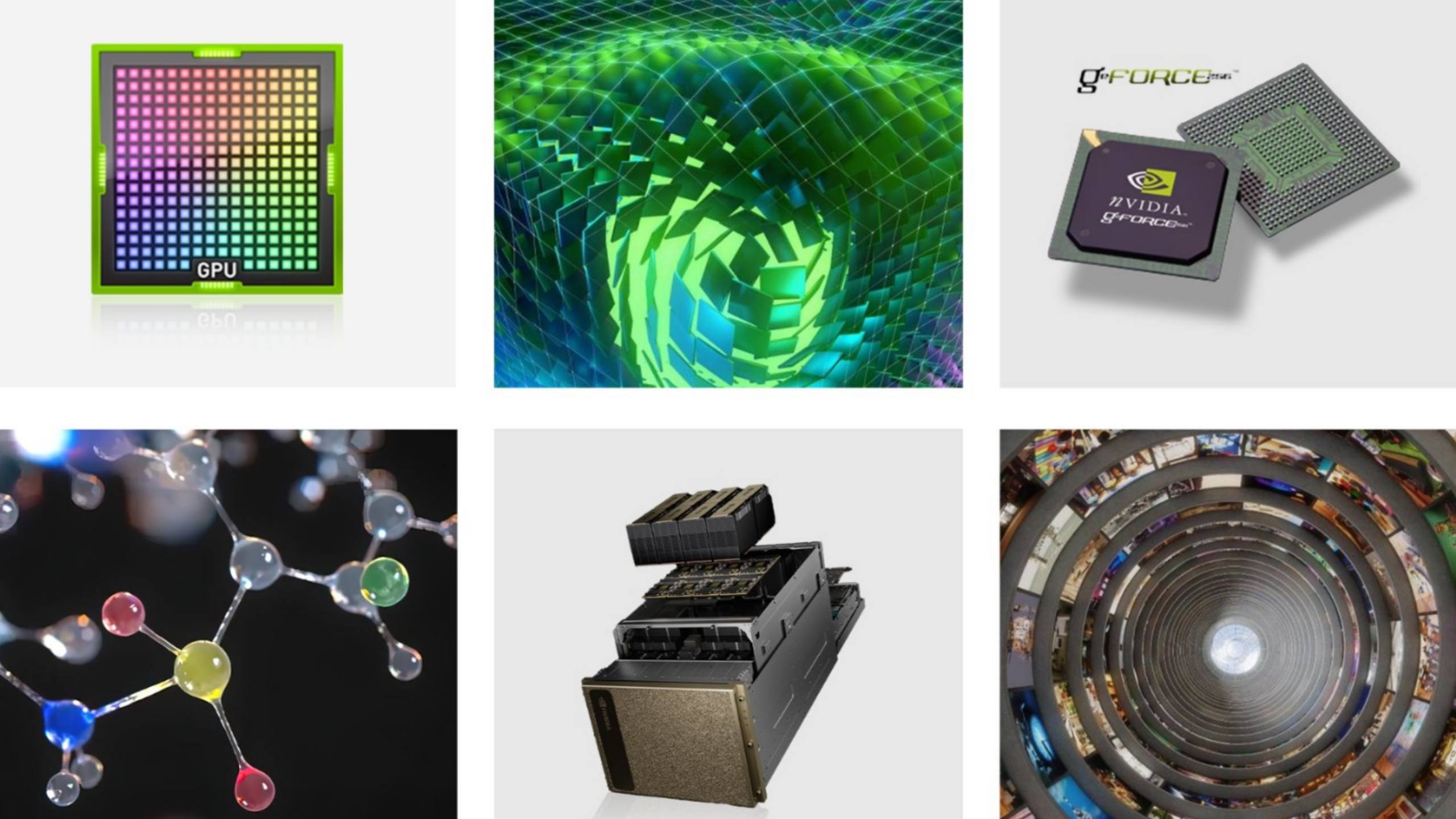
Founded in 1993, NVIDIA quickly identified the burgeoning potential of 3D graphics within personal computing. At the time, computers struggled to render complex visual environments in real-time. NVIDIA’s answer was the Graphics Processing Unit (GPU), a specialized electronic circuit designed to rapidly manipulate and alter memory to accelerate the creation of images in a frame buffer for output to a display device. The introduction of the GeForce 256 in 1999, which NVIDIA officially dubbed the world’s first GPU, marked a watershed moment. It incorporated transform and lighting (T&L) engines, offloading these computationally intensive tasks from the CPU and enabling unprecedented levels of visual realism and speed in PC games. This invention not only propelled the gaming industry into a new era of immersive experiences but also laid the foundational hardware architecture for future innovations. The parallel processing capabilities inherent in the GPU, initially optimized for rendering pixels, would later prove to be immensely valuable for a much broader range of computational challenges.
Expanding Beyond Gaming: Professional Visualization and Workstations
While gaming GPUs captured public imagination, NVIDIA simultaneously recognized the need for highly reliable, high-performance graphics solutions in professional environments. This led to the development of its Quadro and later RTX Professional series of GPUs, tailored for workstations and demanding applications. These professional-grade GPUs offered certified drivers, extended warranties, and features crucial for industries like computer-aided design (CAD), digital content creation (DCC), scientific visualization, and medical imaging. Engineers could design intricate models with unprecedented detail and fluidity, architects could visualize complex structures in real-time, and filmmakers could render stunning visual effects with greater efficiency. NVIDIA’s commitment to these professional markets underscored its understanding that the GPU was more than a gaming accessory; it was a powerful parallel processor capable of accelerating a vast array of compute-intensive workloads, thereby transforming entire industries by making previously impossible or impractical tasks achievable.
Beyond Graphics: NVIDIA’s Pivotal Role in the AI Revolution
The true transformative power of NVIDIA’s GPUs extended far beyond their original purpose, becoming the backbone of the artificial intelligence and deep learning revolution.
The CUDA Breakthrough: Unlocking Parallel Processing for General Computing
While GPUs excelled at parallel processing for graphics, harnessing this power for general-purpose computing remained a significant challenge. The breakthrough came in 2007 with the introduction of CUDA (Compute Unified Device Architecture). CUDA is a parallel computing platform and programming model that enables software developers to use a NVIDIA GPU for general-purpose processing. Essentially, CUDA allowed developers to treat the GPU as a massive array of parallel processors, vastly accelerating computations that were previously confined to slower CPUs. This marked a paradigm shift, enabling GPUs to be programmed for tasks far removed from graphics, such as scientific simulations, data analytics, and crucially, machine learning. The ability to perform thousands of calculations simultaneously on a GPU, as opposed to the few cores available on a CPU, unlocked unprecedented performance gains for parallelizable algorithms, setting the stage for the explosion of deep learning.
Fueling Deep Learning and AI Infrastructure
The real impact of CUDA and NVIDIA GPUs became undeniable with the rise of deep learning. Neural networks, particularly deep neural networks, require massive amounts of parallel computation for training—iteratively processing vast datasets to learn complex patterns. NVIDIA’s GPUs, with their thousands of CUDA cores, proved to be perfectly suited for this task, offering orders of magnitude acceleration compared to CPUs. As a result, NVIDIA GPUs became the de facto standard for training AI models, from image recognition to natural language processing. The company further cemented its position by developing specialized hardware like the DGX systems – integrated AI supercomputers combining multiple GPUs, high-speed interconnects, and a robust software stack – designed specifically for AI development and deployment in data centers. Cloud providers quickly adopted NVIDIA’s technology, making GPU-accelerated computing accessible to a global community of AI researchers and developers, thereby accelerating the pace of AI innovation across industries.
AI Everywhere: From Edge Devices to Autonomous Systems
NVIDIA’s AI ambitions extend beyond the data center. The company is actively pushing AI to the “edge”—devices that process data locally rather than relying solely on cloud computing. This is epitomized by its Jetson platform, a series of compact, high-performance modules designed for AI-powered embedded systems, robotics, and intelligent IoT devices. Jetson enables real-time AI inference in applications like smart cameras, drones, and industrial automation. Perhaps one of the most high-profile applications of NVIDIA’s edge AI technology is in autonomous systems, particularly self-driving cars. The NVIDIA DRIVE platform provides an end-to-end solution for autonomous vehicles, encompassing high-performance SoCs (like the Orin and Thor), a comprehensive software stack for perception, planning, and control, and simulation tools like DRIVE Sim. This commitment to AI at the edge and in autonomous systems highlights NVIDIA’s strategy to embed intelligent capabilities into every facet of our physical and digital world, making environments more responsive and machines more intelligent.

NVIDIA’s Diverse Ecosystems and Platforms
NVIDIA’s strength lies not only in its groundbreaking hardware but also in its comprehensive software ecosystems and platforms that enable developers and enterprises to harness its technology effectively.
Data Center Computing: Powering the Cloud and Supercomputing
NVIDIA’s impact on data center computing has grown exponentially. Beyond providing GPUs for AI training, the company acquired Mellanox Technologies in 2020, significantly bolstering its capabilities in high-performance networking solutions. This acquisition allowed NVIDIA to offer a complete stack for accelerated computing in data centers, including cutting-edge GPUs (like the Hopper and Blackwell architectures), high-speed InfiniBand and Ethernet interconnects, and a robust software platform known as NVIDIA AI Enterprise. This integrated approach allows enterprises and cloud providers to build and deploy AI models, run data analytics, and execute scientific simulations with unparalleled efficiency and scalability. NVIDIA’s technologies are at the heart of many of the world’s fastest supercomputers and underpin the AI infrastructure of major cloud service providers, facilitating breakthroughs in fields from drug discovery to climate modeling.
Professional Visualization and Metaverse: Omniverse and Digital Twins
NVIDIA is also a key player in the evolution of professional visualization, extending its reach into collaborative 3D workflows and the emerging metaverse. The NVIDIA Omniverse platform is a prime example of this. It’s an open platform for virtual collaboration and real-time accurate simulation, built on Pixar’s Universal Scene Description (USD). Omniverse allows 3D artists, designers, and engineers to collaborate in real-time across different software applications, creating and simulating complex digital twins – virtual replicas of physical objects, processes, or environments. This technology has profound implications for industries like architecture, engineering, construction, manufacturing, and even entertainment, enabling unprecedented levels of design iteration, virtual prototyping, and immersive simulation. NVIDIA envisions Omniverse as the operating system for the metaverse, facilitating the creation and interaction within persistent, interconnected virtual worlds.
Automotive and Robotics: Paving the Way for Autonomous Futures
As mentioned earlier, NVIDIA’s DRIVE platform is a comprehensive solution for the automotive industry, accelerating the development and deployment of autonomous vehicles. It encompasses a scalable range of AI processors, a rich software stack for autonomous driving functions (perception, mapping, planning), and a robust ecosystem for development and validation, including simulation tools. Beyond self-driving cars, NVIDIA is also deeply involved in robotics through its Isaac platform, which leverages the Jetson family of embedded systems and Omniverse for robotics simulation. Isaac provides tools for robot development, simulation, and deployment, making it easier for developers to create, test, and deploy AI-powered robots across various sectors, from logistics and manufacturing to healthcare and consumer services.
Software and Services: A Full-Stack Approach
A critical aspect of what NVIDIA does, and often underestimated, is its commitment to software. NVIDIA is not just a hardware company; it is a full-stack platform company. Its extensive software ecosystem includes CUDA, cuDNN (CUDA Deep Neural Network library), TensorRT (an AI inference optimizer), NVIDIA AI Enterprise (a suite of AI software), SDKs for various platforms (e.g., DRIVE SDK, JetPack SDK), and robust driver support. This comprehensive software suite enables developers to maximize the performance of NVIDIA hardware, simplify the development of AI and accelerated computing applications, and integrate NVIDIA technology seamlessly into existing workflows. By providing a complete solution from silicon to application layers, NVIDIA ensures that its hardware innovations are easily accessible and actionable for a global community of developers, researchers, and enterprises.
The Future Landscape: NVIDIA’s Strategic Vision
NVIDIA’s trajectory suggests a relentless pursuit of innovation, solidifying its position at the forefront of technological advancement.
Continued Dominance in AI and Accelerated Computing
NVIDIA continues to invest heavily in research and development, ensuring its next-generation GPUs and computing platforms maintain a leading edge. The introduction of new architectures like Blackwell underscores this commitment, promising even greater performance and efficiency for training larger, more complex AI models. The company is also expanding its AI software offerings, making AI accessible to a broader range of developers and businesses, and integrating AI into virtually every product line, from professional visualization to autonomous machines. This strategic focus ensures that as AI evolves, NVIDIA remains an indispensable partner for innovation.
Expanding into New Industries and Use Cases
The versatility of accelerated computing and AI means NVIDIA’s technologies will continue to penetrate new industries. Expect to see NVIDIA playing an increasingly significant role in healthcare (e.g., drug discovery, medical imaging analysis with Clara platform), industrial automation (e.g., smart factories, predictive maintenance), climate science, and even quantum computing research, where its platforms can accelerate complex simulations. The trend towards digital twins and the metaverse will also open up vast new markets for NVIDIA’s Omniverse platform, creating virtual worlds and digital replicas that can be used for design, simulation, and collaboration across numerous sectors.
Navigating Challenges and Competition
While NVIDIA’s position is strong, the landscape is competitive. Rivals are emerging with their own AI accelerators, and customers are exploring alternatives. NVIDIA’s strategy to navigate these challenges involves continuous innovation, maintaining its robust software ecosystem, and fostering strong developer communities. Furthermore, addressing geopolitical complexities, supply chain resilience, and the increasing demand for energy-efficient computing will be crucial for its sustained growth and leadership in the long term.
In conclusion, what does NVIDIA (NVDA) do? It designs and builds the foundational hardware and software platforms that accelerate computing, enable artificial intelligence, and power the next generation of immersive digital experiences. From revolutionizing gaming graphics to becoming the undisputed leader in AI infrastructure, NVIDIA has consistently been at the vanguard of technological progress. Its comprehensive ecosystem, spanning GPUs, data center solutions, automotive platforms, and a rich software stack, positions it not just as a component supplier but as an essential architect of the future of computing, intelligence, and digital interaction. NVIDIA is fundamentally in the business of enabling innovation, providing the tools and platforms that empower researchers, developers, and industries to solve the world’s most complex challenges and create tomorrow’s groundbreaking technologies.
aViewFromTheCave is a participant in the Amazon Services LLC Associates Program, an affiliate advertising program designed to provide a means for sites to earn advertising fees by advertising and linking to Amazon.com. Amazon, the Amazon logo, AmazonSupply, and the AmazonSupply logo are trademarks of Amazon.com, Inc. or its affiliates. As an Amazon Associate we earn affiliate commissions from qualifying purchases.