
In the ever-evolving landscape of technology, the term “node” surfaces with remarkable frequency, often appearing in discussions about networks, distributed systems, and data processing. Yet, its precise meaning can seem elusive, shifting subtly depending on the context. At its core, a node represents a fundamental unit, a point of connection, or a functional entity within a larger system. This article delves into the multifaceted nature of what a “node” signifies within the realm of technology, exploring its diverse applications and its critical role in powering the digital world we inhabit.
The Ubiquitous Node: A Core Concept in Computing
The concept of a node is not confined to a single technological domain; rather, it is a foundational principle that underpins numerous areas of modern computing. From the intricate architecture of the internet to the distributed nature of blockchain technology, nodes are the building blocks that enable complex systems to function, communicate, and process information. Understanding what constitutes a node is essential for grasping the underlying mechanics of many prevalent technologies.
Nodes in Network Architecture
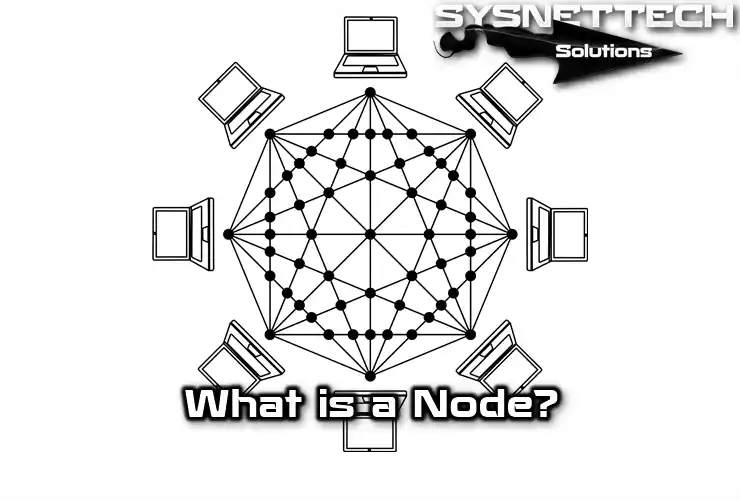
When we speak of networks, the term “node” typically refers to any active electronic device that is attached to a network and is capable of sending, receiving, or forwarding information. This definition is broad, encompassing a wide array of devices, each playing a distinct role in the network’s overall functionality.
Devices as Nodes: From Routers to Endpoints
In a typical local area network (LAN) or a wide area network (WAN), routers and switches are prominent examples of nodes. These devices act as traffic managers, directing data packets to their intended destinations. However, the definition extends far beyond these network infrastructure components. Any device that connects to the network and participates in data exchange can be considered a node. This includes:
- Computers: Desktops, laptops, and servers are fundamental nodes, serving as endpoints for users or as hosts for applications and data.
- Mobile Devices: Smartphones and tablets, with their constant connectivity, are increasingly vital nodes in mobile networks and the broader internet.
- Printers and Scanners: Network-enabled peripherals, when connected to a network, also function as nodes, allowing for shared access.
- Internet of Things (IoT) Devices: Smart thermostats, security cameras, wearable fitness trackers, and an ever-growing array of connected appliances are all nodes in the expanding IoT ecosystem. These devices often collect and transmit data, contributing to the overall network intelligence.
The Role of Nodes in Data Transmission
Within a network, nodes are not merely passive participants. They actively engage in the communication process. When a user on one computer sends data to another, that data travels through a series of nodes. Each node it encounters may perform functions like routing, buffering, or even transforming the data before passing it along. The reliability and efficiency of a network are heavily dependent on the performance and interconnectivity of its constituent nodes. Failures in one node can sometimes be mitigated by redundant paths through other nodes, a testament to the distributed nature that many networks are designed with.
Nodes in Distributed Systems
Beyond traditional networking, the concept of a node takes on even greater significance in the context of distributed systems. These are systems where components are located on different networked computers, which communicate and coordinate their actions by passing messages to one another. In such architectures, each individual computer or processing unit participating in the distributed system is considered a node.
Decentralization and Collaboration
Distributed systems, by their very nature, rely on the collective effort of multiple nodes to achieve a common goal. This decentralization offers several advantages, including enhanced fault tolerance, improved scalability, and increased processing power. For instance, in cloud computing platforms, each server that contributes to the shared pool of resources can be viewed as a node. When an application is deployed across multiple servers, it is leveraging the power of a distributed system comprised of these nodes.
Blockchain Technology: Nodes as the Foundation
Perhaps one of the most prominent and discussed applications of nodes in distributed systems is within blockchain technology. In a blockchain, each participating computer that stores a copy of the ledger and validates transactions is known as a node. These nodes form a decentralized network, ensuring that no single entity has control over the data.
Types of Blockchain Nodes
Blockchain networks employ different types of nodes, each with specific responsibilities:
- Full Nodes: These nodes download and validate every block and transaction in the entire blockchain. They are crucial for maintaining the integrity and security of the network, as they independently verify the blockchain’s history.
- Lightweight Nodes (SPV Nodes): These nodes do not download the entire blockchain but instead rely on full nodes to provide them with block headers and transaction information. They offer a more resource-efficient way to interact with the blockchain.
- Mining Nodes (for Proof-of-Work blockchains): These are specialized full nodes that actively participate in the mining process, competing to solve complex computational puzzles to create new blocks and earn rewards.
- Staking Nodes (for Proof-of-Stake blockchains): In Proof-of-Stake systems, these nodes “stake” their cryptocurrency to validate transactions and create new blocks, earning rewards in return.
The collective operation of these diverse nodes is what makes blockchain technology secure, transparent, and immutable.
Nodes in Data Processing and Analysis
The concept of a node also extends into the realm of data processing and analysis, particularly in the context of big data and machine learning. Here, a node often represents a processing unit or a stage within a larger data pipeline or computational graph.
Data Pipelines and Workflows
In big data processing frameworks like Apache Spark or Apache Flink, data is often processed in stages, with each stage represented as a “task” or “stage” that can be conceptualized as a node in a computational graph. These frameworks distribute the processing across a cluster of machines, where each machine can be considered a node contributing to the overall computation.
Stages of Processing as Nodes
Imagine a complex data analysis task. It might involve several steps: data ingestion, cleaning, transformation, feature engineering, model training, and prediction. Each of these steps, when executed as part of a distributed computation, can be seen as a node in a data flow. For example, in a Spark application, a Directed Acyclic Graph (DAG) represents the execution plan, where each node in the DAG represents a transformation or an action performed on the data. The workers executing these tasks on different cluster machines are the physical nodes that embody these processing stages.
Machine Learning and Neural Networks
In the domain of artificial intelligence, particularly in neural networks, the term “node” has a very specific and widely recognized meaning: a neuron.
Neurons as Computational Nodes
A neural network is composed of interconnected layers of artificial neurons, or nodes. Each node receives input from previous nodes (or the initial data), performs a simple computation (typically a weighted sum of its inputs followed by an activation function), and then passes its output to subsequent nodes. These nodes are the fundamental processing units of a neural network, responsible for learning patterns and making predictions from data.
Input, Hidden, and Output Nodes
Within a neural network, nodes are typically categorized into three types:
- Input Nodes: These nodes receive the raw data that is fed into the network. They do not perform any computation but simply pass the input values to the next layer.
- Hidden Nodes: These nodes form the intermediate layers of the network. They perform computations and learn complex feature representations from the data. The depth of a neural network is determined by the number of hidden layers, and the number of nodes within these layers dictates the network’s capacity.
- Output Nodes: These nodes produce the final result of the network’s computation. The number of output nodes depends on the task; for example, a binary classification task might have one output node, while a multi-class classification task would have multiple output nodes, one for each class.
The collective activation and interaction of these computational nodes enable neural networks to perform sophisticated tasks such as image recognition, natural language processing, and predictive modeling.
The Evolving Significance of Nodes
As technology continues to advance, the role and definition of a node are likely to become even more nuanced and critical. The trend towards distributed computing, edge computing, and the ever-expanding Internet of Things ensures that the concept of a node will remain central to technological innovation.
Edge Computing and Distributed Intelligence
Edge computing represents a paradigm shift where computation and data storage are brought closer to the source of data generation, rather than relying solely on a central cloud. In this model, devices at the “edge” of the network—sensors, smart appliances, local servers—act as nodes. These edge nodes perform processing and analysis locally, reducing latency and bandwidth requirements. This distributed intelligence, powered by a vast network of interconnected nodes, is crucial for real-time applications like autonomous vehicles, smart city infrastructure, and industrial automation.

Decentralized Applications (dApps) and Web3
The burgeoning field of Web3, which envisions a more decentralized internet, heavily relies on the concept of nodes. Decentralized applications (dApps) run on peer-to-peer networks, often powered by blockchain technology. Each participant running the software that supports these dApps acts as a node, contributing to the network’s resilience and censorship resistance. As the internet moves towards a more distributed and user-controlled architecture, the importance of individual nodes and their collective participation will only grow.
In conclusion, the term “node” is a versatile and indispensable concept in the technological lexicon. Whether it refers to a physical device on a network, a computational unit in a distributed system, or a neuron in an artificial intelligence model, a node invariably signifies a distinct, functional entity that contributes to the operation and intelligence of a larger, interconnected system. Understanding the multifaceted meaning of “node” is key to comprehending the intricate workings of the digital world and the technologies that shape our future.
aViewFromTheCave is a participant in the Amazon Services LLC Associates Program, an affiliate advertising program designed to provide a means for sites to earn advertising fees by advertising and linking to Amazon.com. Amazon, the Amazon logo, AmazonSupply, and the AmazonSupply logo are trademarks of Amazon.com, Inc. or its affiliates. As an Amazon Associate we earn affiliate commissions from qualifying purchases.