
The name “Nihon” serves as the primary endonym for Japan, acting as the fundamental pillar of the nation’s cultural and corporate identity on the global stage. Understanding this term goes beyond mere linguistic translation; it is an exploration of how a brand—in this case, a sovereign nation—defines its essence, communicates its value proposition, and establishes its visual and conceptual identity. For branding professionals and identity strategists, the etymology and evolution of “Nihon” offer a masterclass in how a name shapes perception, fosters national cohesion, and influences international marketing.
The Etymology of Identity: Defining the Origin
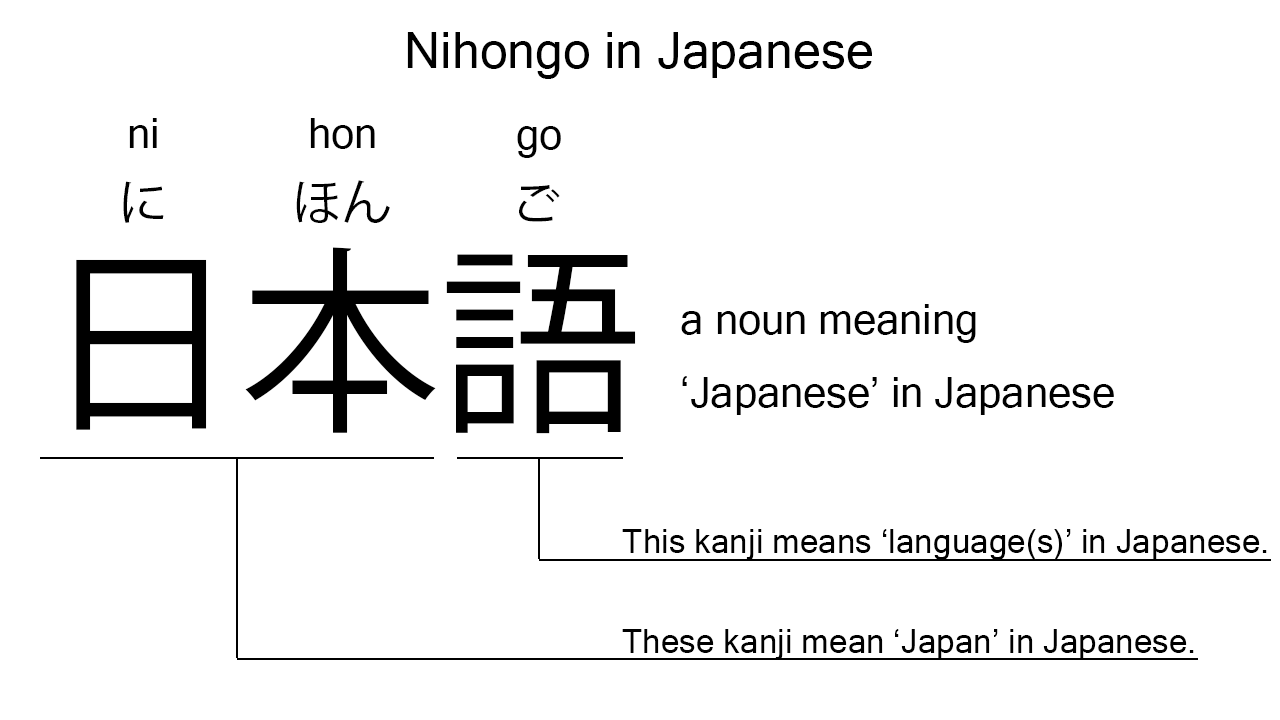
At its core, the word “Nihon” is composed of two kanji characters: 日 (ni), meaning “sun” or “day,” and 本 (hon), meaning “origin,” “source,” or “base.” Together, they translate literally to “the origin of the sun” or “the place where the sun rises.”

The Strategic Shift from Wa to Nihon
Before the adoption of the name Nihon in the late 7th century, the archipelago was referred to as “Wa” or “Wako.” The shift to “Nihon” was not merely a linguistic preference but a deliberate branding exercise intended to signal political maturity and divine legitimacy. By framing itself as the “source of the sun,” the state strategically positioned its ruler as a figure of celestial authority. In the context of modern brand strategy, this transition mirrors a successful rebrand—moving from a descriptive, generic identifier to a narrative-driven name that commands prestige and defines the organization’s place within its competitive ecosystem.
The Duality of Pronunciation: Nihon vs. Nippon
A frequently debated aspect of this identity is the dual pronunciation of the characters: “Nihon” and “Nippon.” While both are written the same way (日本), their usage carries distinct nuances. “Nihon” is the more common, colloquial form used in daily conversation, while “Nippon” conveys a sense of formality, traditionalism, and nationalistic pride. For a brand, this dual identity reflects the balance between mass-market accessibility and institutional authority. International marketers often note that “Nippon” tends to appear more frequently in corporate branding and formal international events, reinforcing a stronger, more disciplined brand persona.
The Nation as a Brand: Cultural Equity and Perception
In the modern global marketplace, “Nihon” functions as a powerful umbrella brand. The equity associated with this name is vast, encompassing values like precision, aesthetic minimalism, high-tech innovation, and traditional craftsmanship. When a product or service is labeled with the origin “Made in Japan,” it inherently inherits the associations tied to the name “Nihon.”
Establishing High-Value Brand Attributes
The brand identity of Japan is rooted in the philosophy of monozukuri—the art of making things. This conceptual framework, intrinsically linked to the national identity, has allowed Japanese corporations to command a premium in the global market. Whether it is automotive engineering, consumer electronics, or high-end fashion, the branding of “Nihon” has successfully positioned the nation as a leader in reliability and design excellence. This is a primary example of how a nation’s name acts as a seal of quality, effectively serving as the ultimate endorsement for any entity operating under that banner.
Visual Identity and Symbolism
The visual branding associated with “Nihon” is perhaps one of the most recognizable in the world. The Hinomaru, or the circular red sun, is a direct, minimalist visual translation of the name itself. This minimalist aesthetic is a cornerstone of Japanese design, emphasizing clarity, simplicity, and impact. For corporate identity experts, the Hinomaru serves as a case study in effective logo design—it is simple enough to be reproduced in any medium, yet deeply symbolic, evoking the very meaning of the name while remaining timeless.

The Evolution of Brand Positioning in a Globalized Economy
As global markets shift, the brand of “Nihon” has had to evolve from a focus on industrial manufacturing to a broader appeal centered on “Soft Power.” This includes the promotion of culture, cuisine, and digital media, often referred to as “Cool Japan.”
Modernizing the Narrative
The challenge for any long-standing brand—be it a country or a corporation—is to remain relevant while honoring its history. The narrative of “Nihon” has successfully transitioned from a post-war narrative of rapid industrial growth to a modern, sophisticated narrative of cultural curation. This transition is evident in how Japanese lifestyle brands have penetrated international markets. By focusing on the concepts of omotenashi (hospitality) and wabi-sabi (beauty in imperfection), the “Nihon” brand has successfully expanded its reach beyond physical goods to experiential and lifestyle domains.
Navigating Identity in a Digital World
In the digital age, where brand stories are disseminated across fragmented platforms, maintaining a cohesive identity is critical. The “Nihon” brand faces the challenge of representing both a traditional, heritage-rich past and a futuristic, tech-forward future. By leveraging both the colloquial “Nihon” and the formal “Nippon,” the brand manages to inhabit both spaces effectively. This approach serves as a lesson for global organizations: a single brand name can contain multiple facets if the strategy for deploying those facets is consistent and purpose-driven.
Lessons for Corporate Identity and Strategy
For businesses looking to build a sustainable, global identity, the study of the “Nihon” brand provides several key takeaways regarding longevity, positioning, and stakeholder perception.
The Power of Narrative Consistency
The longevity of the name “Nihon” demonstrates the value of a narrative that is both descriptive and aspirational. When branding a product, the most successful names are those that ground the consumer in the product’s origin while simultaneously elevating its purpose. “Nihon” does this by identifying the geographical location of the “source of the sun” while implying a higher, divine order. Brands that find this balance—the intersection of literal origin and conceptual promise—often achieve the highest levels of loyalty.
Leveraging Heritage to Drive Future Growth
One of the most profound aspects of the Japanese branding strategy is the integration of tradition into innovation. Companies that have flourished under the Japanese identity—such as Toyota, Sony, and Nintendo—do not view their heritage as a limitation. Instead, they view it as the foundation upon which their future-facing technological advancements are built. In brand strategy, this is often referred to as “heritage branding,” where the historical context of the name provides a sense of trust and permanence, allowing the company to experiment with bold new ideas without losing its core audience.
Adaptability Without Compromise
Finally, the “Nihon” brand illustrates the importance of adaptability. By shifting between “Nihon” and “Nippon,” the brand demonstrates that identity is not a static monolith. It is a living, breathing concept that can be adjusted based on the context of the engagement—whether for a casual trade discussion or a formal diplomatic state visit. Organizations that learn to modulate their tone and identity markers while maintaining a consistent core philosophy are better equipped to navigate the complexities of international markets.
In summary, “Nihon” is much more than a name; it is a masterclass in identity design. By grounding its existence in a clear, evocative definition and successfully curating a brand image that balances heritage with cutting-edge evolution, Japan provides a blueprint for how an entity can define itself in a competitive world. For those focused on branding, this name remains a definitive case study in how to craft an identity that is not only enduring but also deeply meaningful.
aViewFromTheCave is a participant in the Amazon Services LLC Associates Program, an affiliate advertising program designed to provide a means for sites to earn advertising fees by advertising and linking to Amazon.com. Amazon, the Amazon logo, AmazonSupply, and the AmazonSupply logo are trademarks of Amazon.com, Inc. or its affiliates. As an Amazon Associate we earn affiliate commissions from qualifying purchases.