
In the landscape of sensory branding, few aromas possess the immediate recognizability and cultural resonance of Nag Champa. While most consumers encounter it as a stick of incense burning in a boutique or a yoga studio, from a brand strategy perspective, Nag Champa represents a masterclass in olfactory identity. It is more than a fragrance; it is a global trademark of atmosphere, a signal of a specific lifestyle, and a psychological anchor for millions of consumers.
To answer “what does Nag Champa smell like” is to peel back the layers of a complex chemical and botanical profile that has been meticulously preserved for decades. For a brand to achieve this level of longevity, it must balance consistency with an evocative power that transcends geographic and demographic boundaries.

The Sensory Signature: Decoding the Nag Champa Brand Profile
The Nag Champa profile is defined by a heavy, earthy sweetness that lingers long after the initial source has been extinguished. Unlike the ephemeral nature of citrus or the sharp medicinal quality of eucalyptus, Nag Champa is built on a “base-note-heavy” architecture. This structural choice is intentional, designed to create a lasting impression—a foundational requirement for any brand seeking to own a particular sensory space.
The Earthy Base: Sandalwood’s Structural Foundation
The core of the Nag Champa brand is sandalwood. In the world of high-end perfumery and branding, sandalwood acts as a fixative. It is creamy, warm, and woodsy, providing a “gravity” to the scent. From a marketing standpoint, this woodiness communicates stability and tradition. It grounds the more volatile floral notes, ensuring that the brand experience is perceived as “premium” and “authentic” rather than synthetic or cheap.
The Floral Heart: The Role of the Champa Flower
The “Champa” in Nag Champa refers to the Magnolia champaca flower. This is the “hero ingredient” of the brand’s narrative. The flower brings a heady, indolic sweetness that is often compared to jasmine or ylang-ylang but with a distinct spicy undertone. By combining the masculine weight of sandalwood with the feminine allure of the Champa flower, the scent achieves a gender-neutral appeal. This inclusivity is a vital component of its brand strategy, allowing it to penetrate diverse markets ranging from traditional religious settings to modern urban wellness centers.
The Resinous Finish: Halmaddi and Balsamic Tones
Historically, the secret ingredient in authentic Nag Champa is halmaddi, a resin taken from the Ailanthus triphysa tree. This resin gives the incense its characteristic “grey” scent—a slightly musky, balsamic note that mimics the smell of damp earth or ancient temples. For a brand, this ingredient serves as the “moat.” It is the difficult-to-replicate element that distinguishes an original Nag Champa from a generic floral imitation.
Heritage and Visual Identity: The Satya Sai Baba Legacy
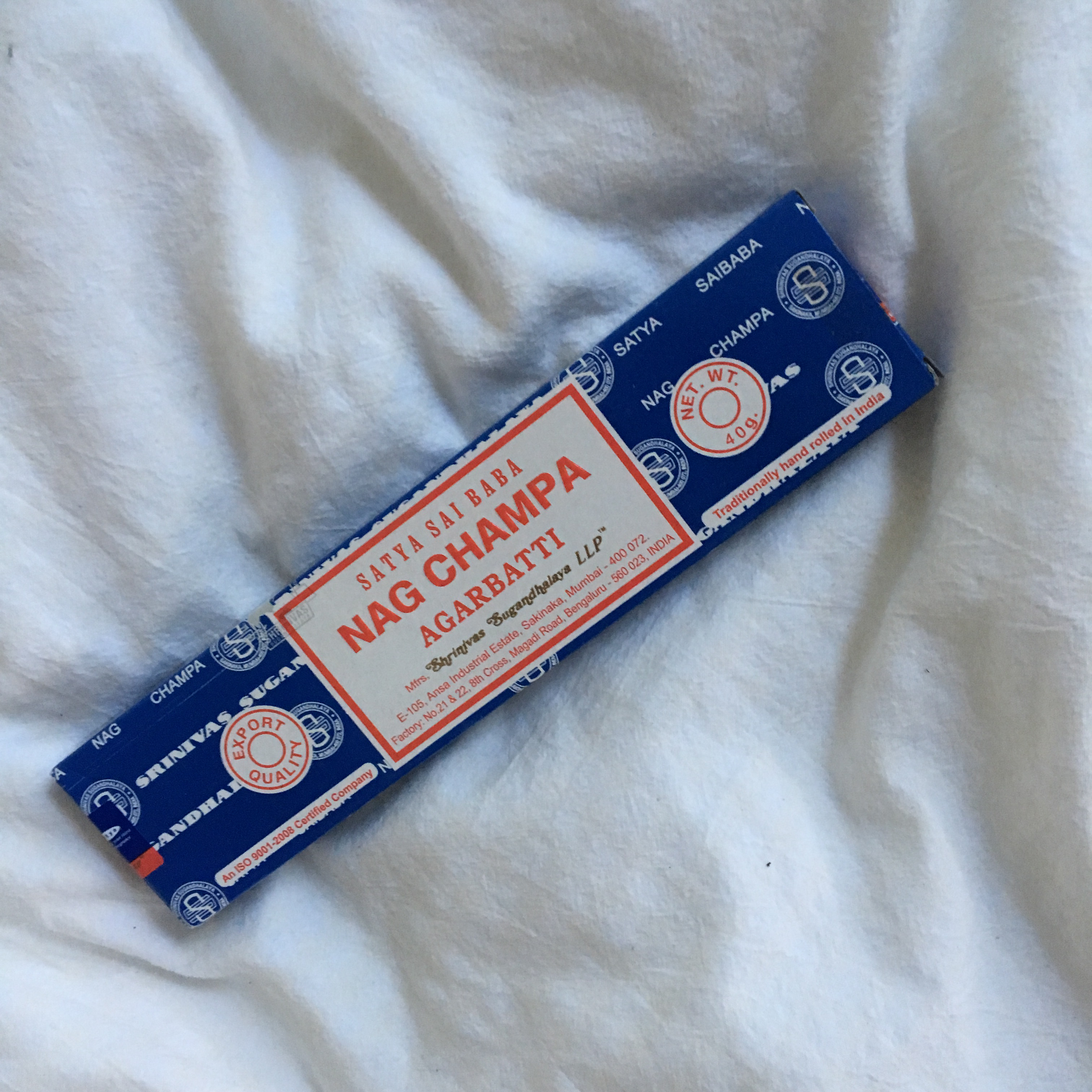
When discussing Nag Champa, one cannot ignore the corporate identity established by Shrinivas Sugandhalaya and the “Satya Sai Baba” brand. The blue-and-red packaging is as iconic as the scent itself. In branding, this is known as “total sensory alignment.” The consumer sees the blue box, recognizes the typography, and immediately anticipates the earthy-sweet olfactory experience.
Design Consistency as a Trust Signal
The packaging of Satya Nag Champa has remained largely unchanged for over half a century. In an era of constant rebranding and “minimalist” facelifts, this visual stagnation is a strategic asset. It signals heritage, reliability, and authenticity. For the consumer, the lack of change in the logo and color palette reinforces the belief that the formula inside has also remained untouched. This is the “Coca-Cola” effect of the incense world; the packaging is a promise of a specific, repeatable experience.
The Battle Against Brand Dilution
Because “Nag Champa” is a generic name for a scent profile (much like “Vanilla” or “Lavender”), the primary brand holders must work tirelessly to protect their market share. The presence of the holographic seal on Satya packaging is a corporate security measure designed to combat “brand dilution” and counterfeiting. It tells the story of a premium product that is worth faking, which paradoxically increases the perceived value of the original.

Sensory Branding: The Psychological Impact of a Signature Scent
In the field of experiential marketing, scent is the most direct path to the human limbic system, which governs emotion and memory. Nag Champa does not just smell like flowers and wood; it smells like “sanctuary.”
Creating an Immediate Brand Environment
Retailers often use Nag Champa to curate a specific “vibe” or customer journey. When a customer walks into a shop scented with Nag Champa, the brand is signaling its values without saying a word. The scent suggests a rejection of corporate sterility in favor of bohemian comfort, spiritual exploration, and a slower pace of life. This is “atmospheric branding” at its most effective—the scent filters out certain demographics while creating a deep sense of belonging for others.
Cultural Capital and Nostalgia Marketing
Nag Champa carries significant cultural capital. For the Baby Boomer generation, it is the smell of the 1960s counterculture and the “Summer of Love.” For Gen Z and Millennials, it is the smell of “self-care,” “mindfulness,” and the “aesthetic” home. The brand has successfully navigated these generational shifts by remaining a constant. It leverages nostalgia marketing not by looking backward, but by being so pervasive that it becomes a timeless backdrop for various cultural movements.
Market Evolution: Scaling an Ancient Brand into the Modern Wellness Economy
The global wellness industry is currently valued in the trillions, and Nag Champa has successfully pivoted from a niche ethnic product to a cornerstone of the mainstream lifestyle market. This evolution required a shift in how the scent was positioned—from a religious tool to a functional wellness product.
From Counterculture to Mainstream Luxury
We are currently seeing a “premiumization” of the Nag Champa profile. High-end candle brands and artisanal perfumers are now creating “Champa-inspired” scents, stripping away the smoky connotations of incense and replacing them with clean, luxury-focused oils. This allows the scent brand to move from the $2 incense stick category into the $60 luxury candle category. The core olfactory DNA remains the same, but the brand’s “wrapper” is upgraded for a more affluent demographic.
Product Extension and Lifestyle Integration
The modern Nag Champa brand is no longer confined to combustible sticks. It has successfully extended into soaps, oils, room sprays, and even laundry detergents. This is a classic brand expansion strategy: identifying a high-equity scent and applying it to different touchpoints in the consumer’s daily life. By doing so, the brand moves from being an occasional “event” (burning incense) to a permanent “lifestyle” (scenting one’s body and clothes).
Strategic Longevity: Why Nag Champa Remains a Market Leader
The enduring success of Nag Champa lies in its refusal to compromise on its core identity. In branding, there is often a temptation to follow trends—to become “lighter,” “fresher,” or “more modern.” Nag Champa has done the opposite. It has remained heavy, unapologetic, and distinct.
This commitment to a specific sensory niche has created a “moat” that few other fragrances can cross. When a consumer asks for Nag Champa, they are not looking for a generic perfume; they are looking for a specific emotional state. The scent’s ability to consistently trigger that state is what makes it a powerhouse in the world of branding.
In conclusion, Nag Champa smells like a combination of sandalwood, magnolia, and resin, but its brand identity is composed of heritage, authenticity, and emotional resonance. It is a rare example of a product that has achieved “generic trademark” status while maintaining a high-value, premium reputation. For marketers and brand strategists, Nag Champa serves as a reminder that a strong, consistent sensory identity can be more powerful than any advertising campaign, creating a brand that is not just seen, but felt and remembered.
aViewFromTheCave is a participant in the Amazon Services LLC Associates Program, an affiliate advertising program designed to provide a means for sites to earn advertising fees by advertising and linking to Amazon.com. Amazon, the Amazon logo, AmazonSupply, and the AmazonSupply logo are trademarks of Amazon.com, Inc. or its affiliates. As an Amazon Associate we earn affiliate commissions from qualifying purchases.