
In George Orwell’s allegorical masterpiece Animal Farm, every character serves as a vessel for a specific socio-political or economic class. While much of the academic discourse focuses on the power dynamics between the pigs (the ruling elite) and the working class (symbolized by Boxer), one character offers a profound lesson in the world of personal finance, wealth migration, and the psychology of materialism: Mollie, the white mare.
Mollie is often dismissed as a vain and shallow figure, but through the lens of modern economics and money management, she represents the “petty bourgeoisie”—a segment of society whose primary loyalty is not to a government or an ideology, but to their own standard of living. In the context of “Money,” Mollie represents the tension between collective economic sacrifice and individual wealth preservation. Her story provides a timeless blueprint for understanding how capital behaves in times of turmoil and the inherent trade-offs between luxury consumption and long-term financial stability.
The Mollie Archetype: Materialism and the Economic Cost of Comfort
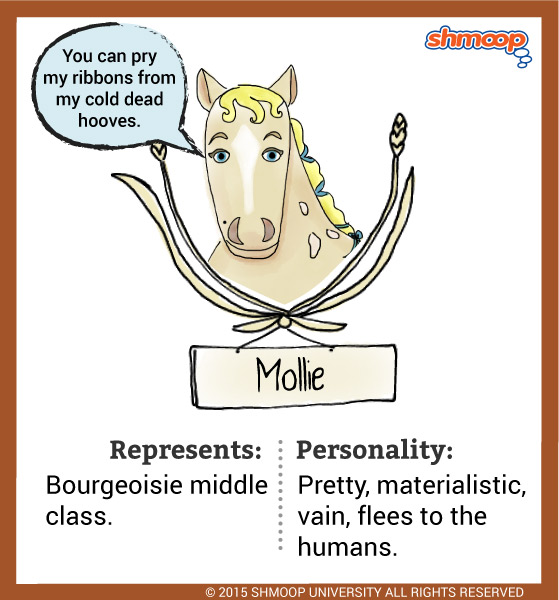
Mollie’s primary concerns are “sugar and ribbons.” In a financial context, these are not just trivial accessories; they represent luxury goods and the comforts of a high-consumption lifestyle. While the other animals are focused on the macroeconomics of the farm—production, labor, and sovereignty—Mollie is focused on her personal balance sheet and her quality of life.
The Valuation of Luxury Goods and Non-Essential Spending
In personal finance, Mollie represents the “discretionary spender.” Her obsession with ribbons highlights a common economic behavior: the prioritization of status symbols over utilitarian assets. From a wealth-building perspective, Mollie’s ribbons represent “depreciating assets.” She values items that provide immediate ego gratification but offer zero return on investment (ROI). For the modern investor, the “Mollie mindset” is the temptation to prioritize lifestyle inflation—buying the latest car or luxury watch—before securing the foundational assets required for financial independence.
Opportunity Cost in Personal Finance
Mollie’s refusal to engage with the revolution is a classic study in opportunity cost. By choosing to seek out sugar from humans, she forfeits her place in the new collective economy of the farm. In the world of money, every dollar spent on a “ribbon” is a dollar that cannot be invested in a “windmill” (a long-term infrastructure project). Mollie’s character reminds us that financial decisions are rarely about the money itself; they are about the trade-offs we make between current pleasure and future security. She represents the portion of our portfolio that we are unwilling to risk, even if the potential for growth is high.
Wealth Migration and Capital Flight: The Economic “Sugar” Trail
Perhaps the most significant action Mollie takes is her eventual departure from Animal Farm. When the regime becomes too restrictive and her personal comforts are threatened, she simply leaves. This is a literal representation of “capital flight.”
Identifying the Signs of Market Volatility
In business finance, capital flight occurs when assets or money rapidly flow out of a country due to an event of economic consequence. Mollie is the first to detect that the new economic system (Animalism) will not support her specific needs. She performs a personal “risk assessment” and realizes that her “assets”—her beauty and her companionship—are valued more highly in the old system (the human-led economy) than in the new one. This reflects how sophisticated investors move their capital to more favorable tax jurisdictions or more stable currencies when they sense a shift in the political or economic climate.
The Modern “Mollie”: Global Mobility and Asset Protection
Mollie represents the “mobile class.” In the 21st century, this is seen in the rise of digital nomads and high-net-worth individuals who utilize “golden visas” to move their wealth where it is most appreciated and least taxed. Mollie’s defection to a neighboring farm where she is pampered by a publican is a strategic financial move. She chooses a “market” that recognizes her value. While the book frames this as a betrayal, from a cold, financial perspective, it is an act of asset protection. She recognizes that her “human capital” is not suited for manual labor or revolutionary struggle; it is suited for the service and luxury sector.

The Psychology of “Sugar and Ribbons”: Short-Term Gratification vs. Wealth Building
Mollie’s behavior is often contrasted with that of Boxer, the loyal horse who works himself to death. While Boxer represents the ultimate sacrifice of labor, Mollie represents the ultimate pursuit of self-interest. In terms of online income and side hustles, this dichotomy is essential to understand.
The Trap of Lifestyle Inflation
Many individuals seek to increase their income specifically to afford the “sugar and ribbons” of life. This is the “Mollie Trap.” As soon as a side hustle begins to generate profit, the “Mollie” instinct is to spend it on an upgraded lifestyle rather than reinvesting it into the business. This prevents the compounding of wealth. Mollie’s ribbons are a metaphor for the “golden handcuffs”—a situation where a person becomes so dependent on a high-consumption lifestyle that they lose the freedom to make radical changes or take risks in their career.
Strategic Diversification Beyond the Immediate
Mollie’s choice to leave shows an understanding of diversification—not of stocks, but of environments. She realizes that her “portfolio” (her lifestyle) is over-leveraged in a “market” (Animal Farm) that is about to crash in terms of quality of life for her specific demographic. The financial lesson here is to never have all your “sugar” in one basket. Whether it is diversifying income streams through online businesses or holding assets in different classes (real estate, stocks, crypto), the goal is to ensure that no single systemic change can strip you of your financial identity.
Navigating the Trade-off: Security, Freedom, and Financial Identity
The departure of Mollie is a turning point in the book’s economic narrative. It signals the end of a certain type of individual liberty in favor of a collective, albeit failing, economic plan. For the individual looking at their personal finances, Mollie poses a difficult question: What price are you willing to pay for your comforts?
Building a Recession-Proof Financial Persona
Mollie’s exit was successful because she had a “marketable” skill set for the world outside the farm. To be financially resilient like Mollie (without the negative connotations of being “flighty”), one must build a recession-proof financial persona. This involves developing skills that remain in high demand regardless of the “regime” or the economic cycle. Whether the economy is booming or in a recession, there will always be a market for high-value services. Mollie didn’t just run; she ran to a place where her specific “value proposition” was understood.
Lessons from the Petit Bourgeoisie in Modern Investing
The “petit bourgeoisie,” which Mollie represents, are often the most sensitive to economic shifts. They have enough to lose that they are cautious, but not enough power to dictate the rules. In modern investing, this is the “middle-class investor.” By studying Mollie, we learn the importance of being honest about our financial goals. If your goal is luxury and comfort, own it—but recognize that this path requires a different set of financial strategies than the path of the revolutionary or the laborer. It requires a focus on liquidity, mobility, and the constant assessment of where your value is highest.
Conclusion: The Economic Legacy of the White Mare
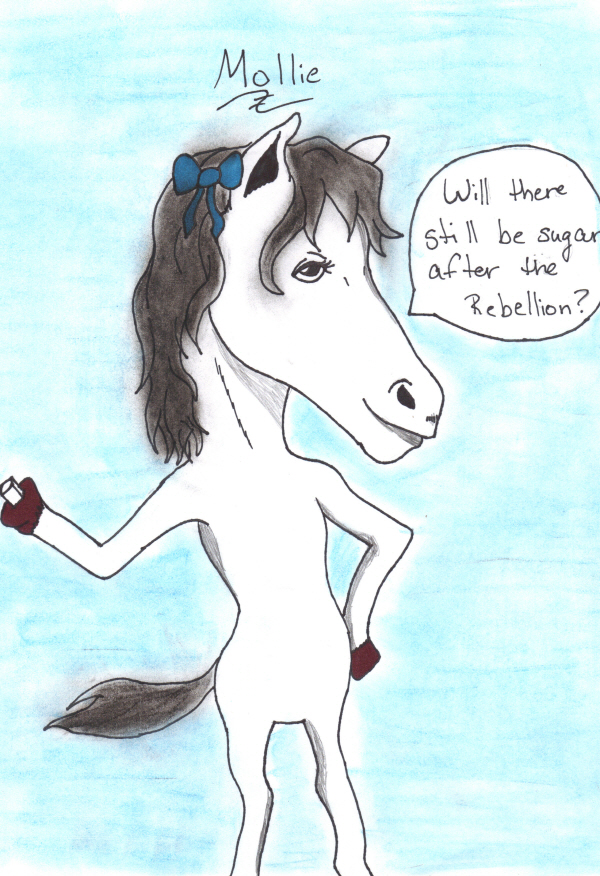
Mollie is often the most misunderstood character in Animal Farm because her motivations are purely economic and self-interested in a story that demands ideological purity. However, in the world of money and finance, her “flight” is a rational response to an environment that no longer serves her financial or personal interests.
She represents the reality that not everyone is built for the “grind” of a revolutionary startup or the collective struggle of a corporate overhaul. Some individuals are “lifestyle participants” who value the tangible rewards of their labor—the sugar and the ribbons. By understanding what Mollie represents, we can better navigate our own financial journeys. We can recognize the “Mollie” in ourselves when we are tempted by lifestyle inflation, and we can learn from her the importance of financial mobility and the protection of our personal assets in an ever-changing economic landscape.
Ultimately, Mollie reminds us that in the ledger of life, personal comfort and financial freedom often come at the cost of collective belonging—and for some, that is a price worth paying.
aViewFromTheCave is a participant in the Amazon Services LLC Associates Program, an affiliate advertising program designed to provide a means for sites to earn advertising fees by advertising and linking to Amazon.com. Amazon, the Amazon logo, AmazonSupply, and the AmazonSupply logo are trademarks of Amazon.com, Inc. or its affiliates. As an Amazon Associate we earn affiliate commissions from qualifying purchases.