
In the rapidly shifting landscape of digital discourse, language evolves at the speed of fiber-optic connections. New terms emerge from niche corners of the internet, catalyzed by social media algorithms, and eventually permeate mainstream culture. One such term that has recently dominated the digital sphere is “mogs” (or “mogging”). While it may sound like tech-jargon or a shorthand for a software process, its origins and current usage are deeply rooted in the intersection of digital sociology, computer vision, and the gamification of human aesthetics.
To understand what “mogs” means in a professional and technical context, one must look beyond the surface-level slang and examine how technology has facilitated a new era of visual competition.

The Etymology and Digital Migration of “Mogs”
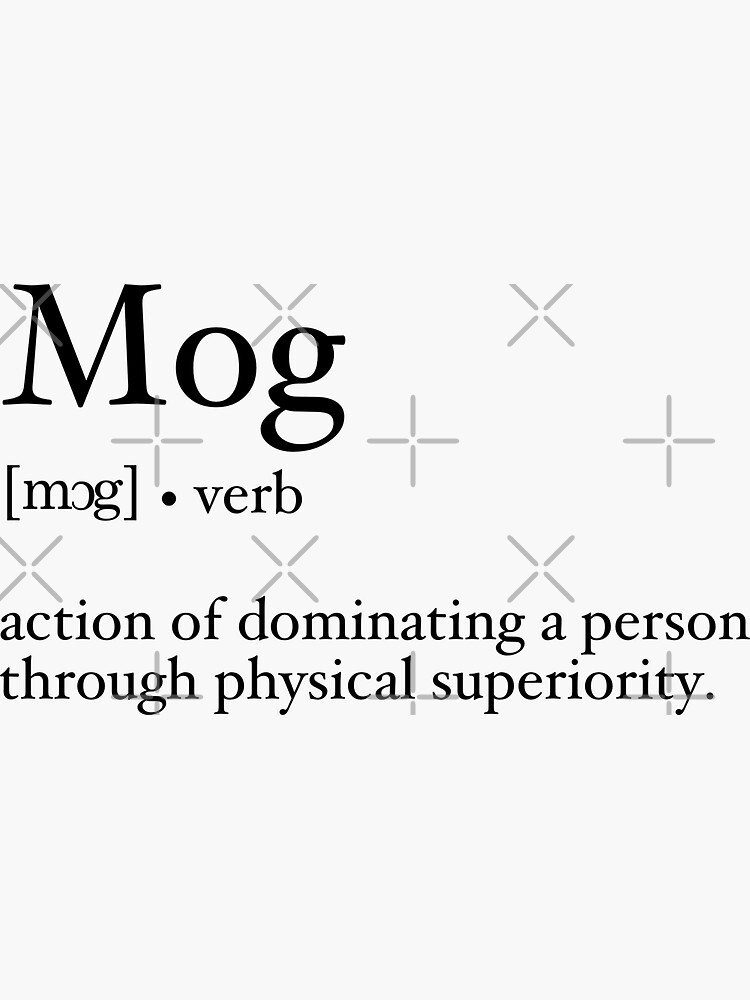
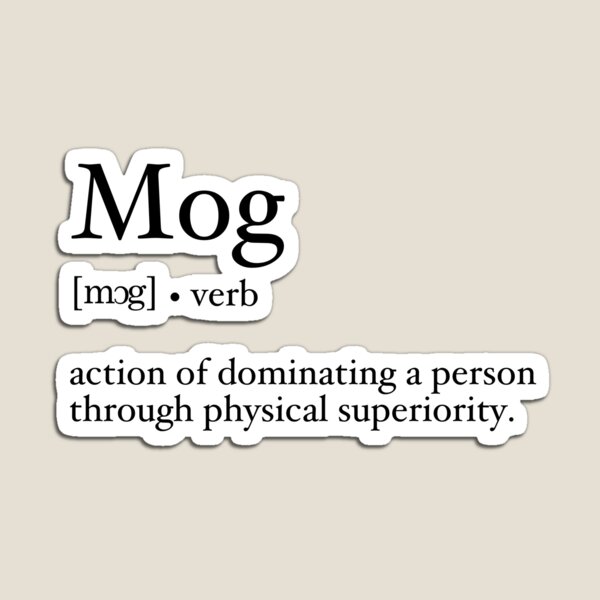
The term “mogs” is an acronym-derived verb originating from “AMOG,” which stands for “Alpha Male Other Guy.” Initially popularized in early 2000s pickup artist (PUA) forums, the term has undergone a significant digital transformation. In its modern iteration, to “mog” someone is to physically or aesthetically outshine them, typically by standing next to them in a photograph or video.
From Niche Forums to TikTok Virality
The transition of “mogs” from obscure imageboards to mainstream platforms like TikTok and Instagram represents a classic study in algorithmic amplification. In the early days of the internet, such terminology was confined to text-based environments where the “mogging” was conceptual. However, the advent of high-definition smartphone cameras and short-form video platforms shifted the focus to visual evidence.
The TikTok “For You” page (FYP) acts as a high-speed delivery mechanism for these concepts. When a video of a taller, more muscular, or more conventionally attractive individual standing next to a peer goes viral, the algorithm identifies the engagement patterns associated with social comparison. This creates a feedback loop where the term “mogs” becomes a standardized tag for the platform’s machine-learning systems to categorize and push content that triggers psychological “comparison triggers” in users.
The Anatomy of a “Mog”
In the digital context, “mogging” is not merely about being attractive; it is about the relative delta between two subjects. Tech-savvy subcultures have categorized various forms of this phenomenon, such as “height-mogging” or “jaw-mogging.” This granular classification reflects a broader trend in digital culture: the quantification of the human form. Much like a benchmark test for a CPU, “mogging” serves as a social benchmark where individuals are measured against one another in a digital arena.
The Algorithmic Engine: How Social Platforms Propagate Comparison Culture
The rise of the term “mogs” cannot be separated from the architecture of the platforms where it thrives. Social media platforms are not neutral observers; they are active participants in shaping the “mogging” culture through specific technical mechanisms.
The Feedback Loop of Short-Form Video
The user interface (UI) of modern social apps is designed for rapid-fire visual consumption. In a scroll-based environment, the most visually striking content—often those exhibiting “mogging” traits—receives the highest retention rates. Consequently, the recommendation engine prioritizes these videos.
For example, TikTok’s algorithm uses computer vision to analyze frames for facial symmetry, height ratios, and contrast. These features are inherently tied to what the community defines as “mogging.” By promoting users who “mog” others, the platform reinforces a visual hierarchy, turning a slang term into a tangible metric of digital influence and reach.
Data Mining the Aesthetic Ideal
As millions of users interact with “mogging” content, platforms collect massive datasets on what current populations deem superior. This data isn’t just used for ads; it informs the development of beauty filters and AI-driven image enhancers. When a user uses a “Mog Filter” or a “Rating App,” they are participating in a massive, decentralized data-labeling project. This technical infrastructure turns the concept of “mogs” into a data point that helps refine how AI perceives and categorizes human attractiveness.
AI and the Distortion of Reality: The “Mogging” Tech Stack
While “mogging” is often presented as a natural occurrence, it is increasingly a product of sophisticated software. The line between reality and digital enhancement has blurred, leading to what many call “tech-mogging”—using digital tools to achieve a superior visual presence.
Filters, Deepfakes, and the Unreachable Standard
The most prevalent way technology influences the “mogs” phenomenon is through real-time AR (Augmented Reality) filters. Modern smartphones possess the processing power to execute complex facial mapping in milliseconds. These filters can adjust jawlines, increase height in wide-angle shots, and clear skin textures—essentially allowing a user to “mog” their real-world self.
Furthermore, the emergence of Deepfake technology and Generative AI (GenAI) has taken this to an extreme. We are seeing the rise of “AI-mogging,” where personas are entirely generated or heavily modified by neural networks to represent an unattainable ideal. When these AI-enhanced images are compared to unedited photos of real individuals, the “mogging” is no longer a human competition but a human-versus-machine discrepancy.
The “Mogging” Bot: Automation in Aesthetic Evaluation
A new niche of software applications has emerged, often referred to as “Looksmaxxing Apps.” These tools utilize computer vision APIs (Application Programming Interfaces) to scan a user’s photo and provide a numerical score based on “Golden Ratio” calculations and facial symmetry.
These apps essentially automate the act of “mogging.” They tell the user exactly where they fall in the social hierarchy based on a programmed set of aesthetic parameters. From a technical standpoint, these apps are simplified versions of the biometric software used in security and surveillance, repurposed for social validation and digital competition.
The Digital Footprint of Looksmaxxing and Self-Improvement
The obsession with “mogs” has fueled a broader digital movement known as “looksmaxxing.” While the term sounds like a lifestyle choice, it is governed by the same principles as SEO (Search Engine Optimization) or hardware overclocking: the optimization of a system to achieve peak performance.
Privacy and the Gamification of Self-Improvement
The pursuit of “mogging” status has led users to upload vast amounts of personal biometric data to third-party apps. Users frequently share photos for “rating,” often without considering the privacy implications of how their facial data is stored or used to train future AI models. This gamification of self-improvement turns the human body into a project to be “optimized,” mirroring the way developers optimize code or sysadmins balance server loads.
Future Implications for Digital Identity
As we move toward a more integrated Metaverse or spatial computing environment (like the Apple Vision Pro), the concept of “mogs” will likely evolve. In a virtual space, “mogging” might be achieved through the purchase of superior digital assets or the use of more advanced shaders. If our digital avatars become our primary mode of interaction, the “mogging” culture will transition from biological competition to a competition of digital rendering and software sophistication.
Conclusion: Navigating the Intersection of Tech and Self-Perception
In essence, “mogs” is more than just a slang term used by Gen Z and Alpha; it is a linguistic marker of how technology has transformed human social dynamics. It represents the intersection of evolutionary psychology and modern data science. By understanding that “mogs” is a product of algorithmic bias, computer vision, and the gamification of social platforms, we can better analyze the psychological impact of our digital tools.
As technology continues to advance, the metrics for “mogging” will shift. We are moving toward a future where “visual dominance” is increasingly manufactured by AI and moderated by recommendation engines. In this high-tech landscape, the true challenge is not to “mog” others, but to maintain a grounded sense of reality in a world where the “ideal” is often just a very well-trained algorithm. Understanding the technical underpinnings of terms like “mogs” allows us to navigate the digital world with greater critical awareness, recognizing that what we see on our screens is often a carefully engineered distortion of the human experience.
aViewFromTheCave is a participant in the Amazon Services LLC Associates Program, an affiliate advertising program designed to provide a means for sites to earn advertising fees by advertising and linking to Amazon.com. Amazon, the Amazon logo, AmazonSupply, and the AmazonSupply logo are trademarks of Amazon.com, Inc. or its affiliates. As an Amazon Associate we earn affiliate commissions from qualifying purchases.