
In the world of fast-moving consumer goods (FMCG), few icons are as instantly recognizable as the small, candy-coated chocolate known as the M&M. While millions of consumers enjoy these chocolates daily, the question of what the name actually stands for—Mars and Murrie—is more than a piece of trivia. It represents a foundational moment in corporate identity and a masterstroke in brand strategy.
The story of M&M’s is not merely a chronicle of confectionery; it is an exploration of how a brand can be built on the pillars of strategic partnership, a revolutionary unique selling proposition (USP), and a visual identity that transcends language and culture. To understand what M&M stands for is to understand the DNA of one of the most successful brand architectures in modern history.

The Origins of a Powerhouse: Mars, Murrie, and the Birth of an Identity
The initials “M&M” represent the surnames of the two men who formed the original partnership in 1941: Forrest Mars Sr., the son of the founder of Mars, Inc., and Bruce Murrie, the son of the president of Hershey’s Chocolate. While the partnership eventually dissolved, the brand name remained, serving as a permanent reminder of a strategic alliance that changed the landscape of the marketing world.
The Strategic Partnership Behind the Initials
Forrest Mars Sr. was a visionary who understood that for a brand to survive, it needed both innovation and a steady supply of resources. During the early 1940s, as the world moved toward war, sugar and chocolate were strictly rationed. By partnering with Bruce Murrie, Mars secured a reliable source of Hershey’s chocolate, which was then the dominant player in the American market.
From a brand strategy perspective, this was a move of calculated pragmatism. The name “M&M” was a corporate “handshake” immortalized in print. It allowed the new product to leverage the reputation of two major chocolate dynasties. This partnership gave the brand the industrial backing it needed to scale rapidly, proving that even the strongest brands often begin with strategic collaborations that mitigate supply chain risks.
Positioning for Persistence: The Wartime Market Entry
The initial positioning of M&M’s was not focused on the general public, but rather on the military. Forrest Mars had observed soldiers during the Spanish Civil War eating small chocolate pellets encased in a hard sugar shell to prevent melting. Recognizing a gap in the market for a durable, portable snack, he designed M&M’s to be the ultimate ration-friendly chocolate.
By securing a contract with the U.S. Army during World War II, M&M’s established a “trusted” brand identity. The product was durable, reliable, and functional. When the soldiers returned home, they brought their brand loyalty with them. This is a classic example of “seeding” a market—positioning a product in a high-intensity environment to build a legacy of reliability that can later be translated into a lifestyle brand for the masses.
Brand Equity and the Art of the Unique Selling Proposition (USP)
In the mid-20th century, the advertising world was shifting toward the “Big Idea.” For M&M’s, this transition was spearheaded by legendary ad executive Rosser Reeves, who believed that every brand must have a Unique Selling Proposition (USP) that competitors cannot claim. This led to the creation of one of the most famous slogans in marketing history.
“Melts in Your Mouth, Not in Your Hand”: A Slogan for the Ages
The tagline “Melts in your mouth, not in your hand” is a masterclass in functional branding. At a time when chocolate was messy and temperature-sensitive, M&M’s focused on a specific pain point for consumers. This USP didn’t just sell a flavor; it sold a solution.
From a strategic standpoint, this slogan defined the brand’s utility. It communicated a benefit that was easily understood and highly desirable. It transformed the candy-coated shell from a production necessity into a premier consumer benefit. By focusing on the “cleanliness” of the snack, M&M’s carved out a niche that allowed it to dominate the snack category, particularly for parents who wanted a mess-free treat for their children.
Establishing Visual Consistency through the Stamped “m”
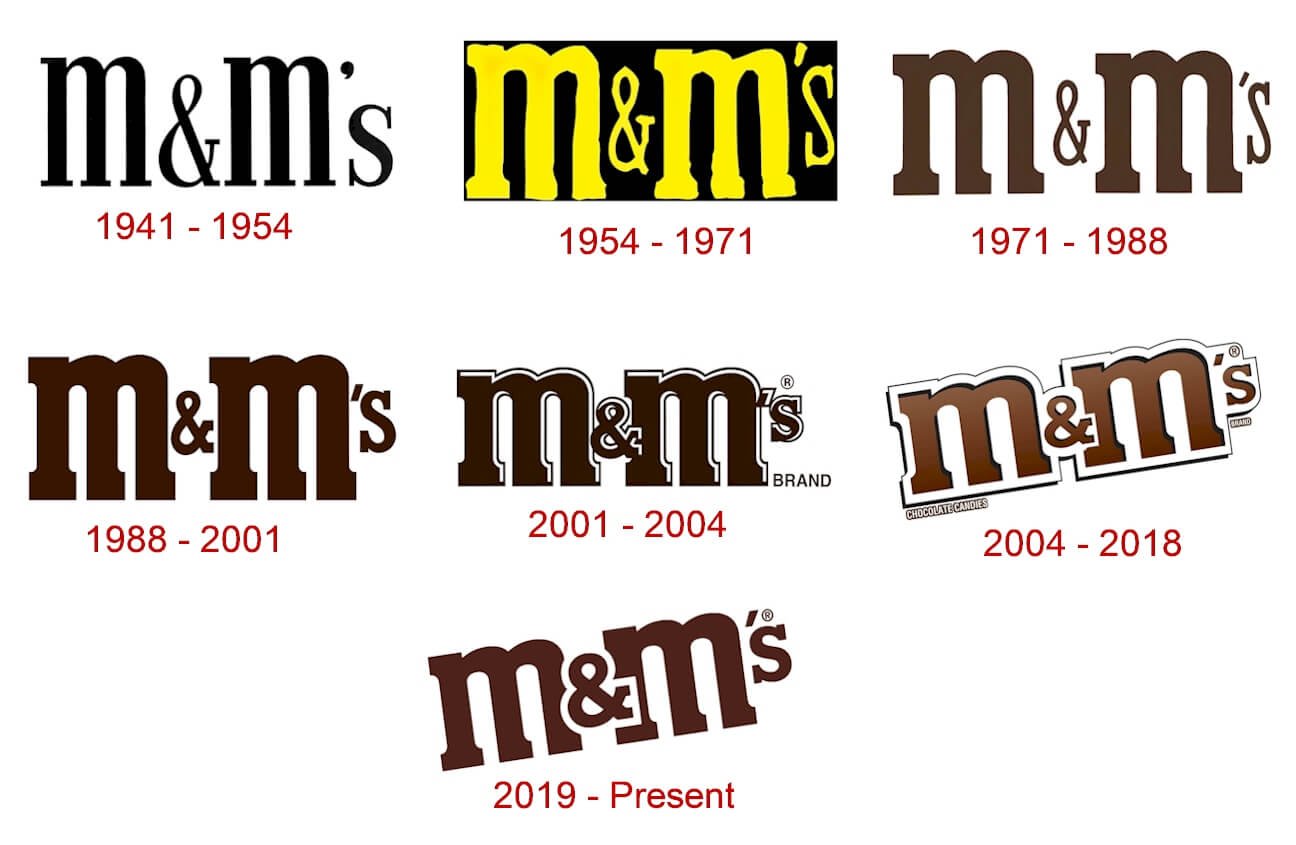
In 1950, as competitors began to flood the market with imitations, the brand took a significant step in its visual identity strategy: they began stamping each candy with a black “m.” This was later changed to white in 1954. This wasn’t just an aesthetic choice; it was an early form of brand protection and authentication.
The marketing campaign at the time urged consumers to “look for the m on every piece.” This transformed the product itself into a logo. In the world of brand design, this is known as “product-as-identity.” When the consumer can identify the brand from the product alone, without seeing the packaging, the brand has achieved a level of equity that is nearly impossible to disrupt. The “m” became a seal of quality, ensuring that the consumer was getting the genuine Mars and Murrie experience.

Character Marketing: Humanizing the Brand Experience
As the brand matured, the strategy shifted from focusing on the product’s physical attributes to building an emotional connection with the audience. This was achieved through the introduction of the M&M’s characters—the “spokescandies.”
The Shift from Product to Personality
In 1954, the world met Red and Yellow. These characters were designed to embody different archetypes: Red was the sarcastic, confident leader, while Yellow was the lovable, albeit dim-witted, sidekick. By humanizing the candy, Mars, Inc. moved the brand beyond the “commodity” phase.
This is a critical lesson in brand strategy: people do not form emotional bonds with objects; they form bonds with personalities. The characters allowed M&M’s to enter the world of entertainment and storytelling. This narrative-driven approach meant that the brand could participate in holiday specials, commercials that felt like short films, and eventually, social media trends. The characters became “brand ambassadors” who could communicate the brand’s values in a way that a simple chocolate bar never could.
Navigating Modern Brand Evolution and Rebranding
In recent years, M&M’s has faced the challenge of staying relevant in a rapidly changing cultural landscape. In 2022, the brand underwent a significant “refresh” of its characters to reflect a more inclusive and modern society. This involved subtle changes to the characters’ footwear and personalities to emphasize belonging and community.
While such moves often spark public debate, they are essential components of “Brand Stewardship.” A brand that stands still eventually becomes a relic. By evolving the characters to match contemporary social values, Mars, Inc. signaled that M&M’s is a brand that listens and adapts. The strategy shifted from “just fun” to “fun and inclusive,” ensuring the brand remains a staple for Gen Z and beyond.
Global Expansion and Portfolio Management
M&M’s is now sold in over 100 countries, and its success is a testament to its adaptable brand architecture. Whether it is the introduction of Peanut M&M’s, Crispy, or Caramel versions, the core brand identity remains unshakable.
Adapting the Brand Across International Markets
The genius of the M&M’s brand strategy lies in its modularity. While the core “m” remains the same globally, the brand adapts its flavors and marketing tactics to suit local tastes. In some markets, the brand focuses on premium positioning; in others, it is the ultimate accessible treat.
This global consistency—paired with local relevance—is the “Holy Grail” of brand management. The M&M’s characters are translated into various languages, but their core personalities remain intact, allowing for a unified global brand voice. This creates a “halo effect” where a successful campaign in the United States can provide momentum for the brand in Europe or Asia.
Lessons in Resilience: Maintaining Core Values Amidst Growth
Throughout its 80-year history, M&M’s has navigated economic downturns, changes in consumer health trends, and intense competition. Its resilience is built on the fact that the brand never lost sight of what those two “Ms” represented: a commitment to quality and a willingness to innovate.
The brand has successfully diversified its portfolio without diluting its core identity. Whether through the “M&M’s World” flagship stores—which provide an immersive brand experience—or limited-edition color releases for various causes, the brand manages to feel both timeless and timely. This balance is the hallmark of a legacy brand.
Conclusion: More Than Just a Name
The question “what does M&M stand for?” has a simple historical answer: Mars and Murrie. However, from a brand strategy perspective, the answer is much deeper. M&M stands for a legacy of strategic positioning, a commitment to a clear and functional USP, and a pioneer’s approach to character-driven marketing.
From its origins as a military ration to its current status as a cultural icon, M&M’s has demonstrated how to build a brand that is durable, recognizable, and emotionally resonant. It serves as a blueprint for modern marketers on how to balance tradition with evolution. By protecting its visual identity and humanizing its product, M&M’s has ensured that it isn’t just a chocolate brand—it is a global symbol of joy, inclusivity, and marketing excellence. The “m” on the shell is not just a letter; it is a signature of success that has stood the test of time.
aViewFromTheCave is a participant in the Amazon Services LLC Associates Program, an affiliate advertising program designed to provide a means for sites to earn advertising fees by advertising and linking to Amazon.com. Amazon, the Amazon logo, AmazonSupply, and the AmazonSupply logo are trademarks of Amazon.com, Inc. or its affiliates. As an Amazon Associate we earn affiliate commissions from qualifying purchases.