
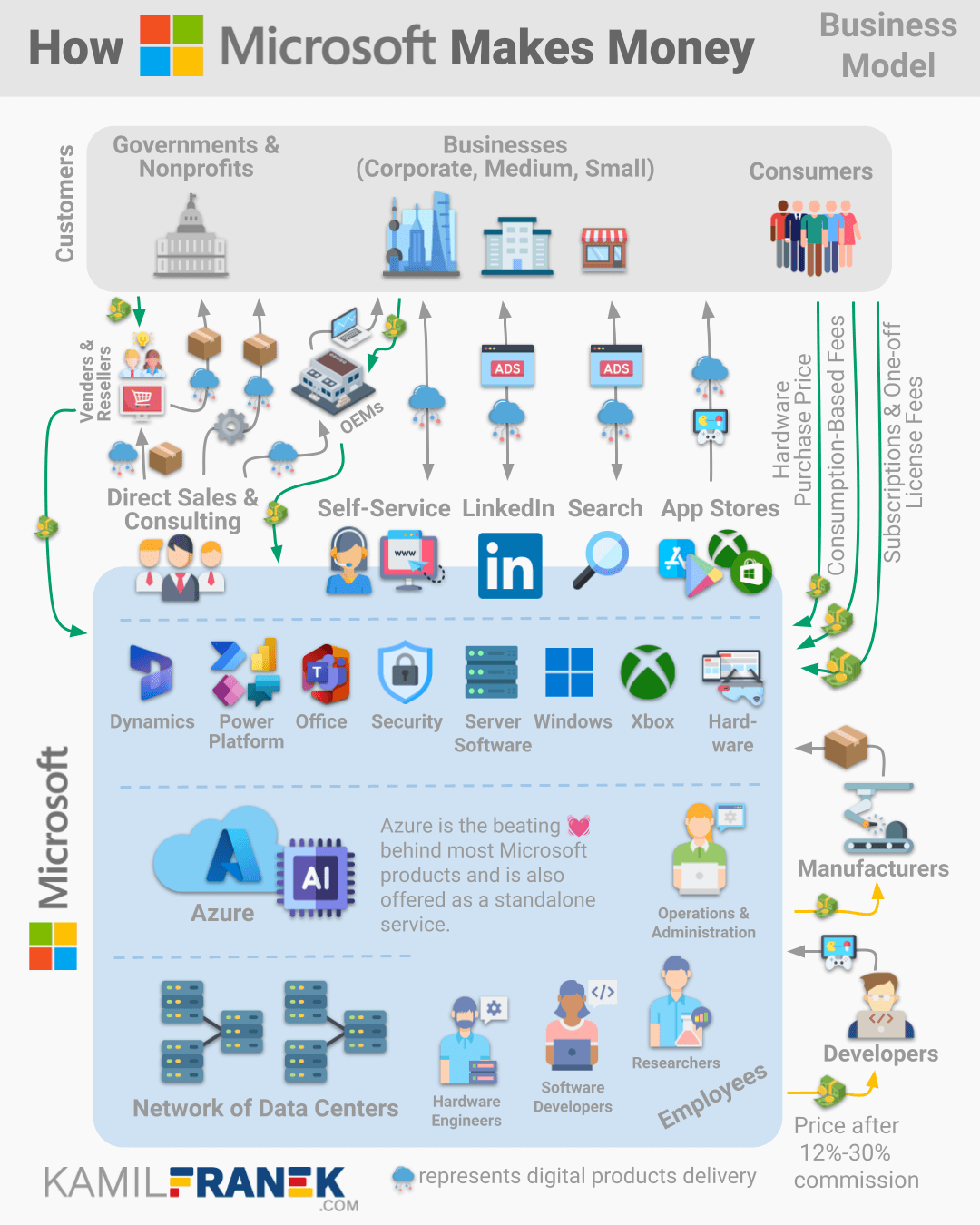
Microsoft Corporation stands as a colossal entity in the technology landscape, its influence permeating nearly every facet of digital life. Far from being a mere software company, Microsoft’s expansive portfolio encompasses pioneering developments in cloud computing, artificial intelligence, gaming, enterprise solutions, and cutting-edge hardware. At its core, Microsoft’s mission has evolved from “a computer on every desk and in every home” to empowering every person and every organization on the planet to achieve more, largely through the innovative application of technology. Understanding “what does Microsoft” entails exploring its multifaceted contributions to the technological world, from foundational operating systems to the frontiers of AI and quantum computing.

A Legacy of Innovation and Ubiquitous Software
Microsoft’s journey began with software, establishing an unparalleled foundation that continues to shape its present and future. The company’s early innovations laid the groundwork for personal computing, making complex digital tools accessible to a global audience.
The Operating System Foundation
At the heart of Microsoft’s historical impact lies its dominance in operating systems. Windows, since its inception, has been the de facto standard for personal computers worldwide. More than just an interface, Windows represents a massive ecosystem of drivers, applications, and user experiences that have powered generations of desktops, laptops, and more recently, tablets. The continuous evolution of Windows, from its graphical user interface revolution to its modern iterations like Windows 10 and Windows 11, showcases Microsoft’s commitment to adapting to changing user needs and hardware capabilities. Each version brings advancements in security, performance, and user productivity, serving as the digital canvas for billions of users.
Productivity Suite Dominance
Beyond the operating system, Microsoft’s Office suite has defined digital productivity for decades. Word, Excel, PowerPoint, and Outlook are not just applications; they are indispensable tools that underpin business operations, academic work, and personal organization globally. The transition of Office from a boxed software product to the cloud-based Microsoft 365 subscription service exemplifies the company’s foresight in embracing recurring services and collaborative capabilities. This evolution has integrated sophisticated AI features, real-time collaboration, and seamless cross-device functionality, ensuring its continued relevance in an increasingly connected world. These applications are continuously updated with new features, leveraging machine learning for tasks like grammar correction, data analysis, and presentation design, making them more powerful and intelligent than ever before.
Cloud Computing: The Azure Era
While its software legacy is undeniable, Microsoft’s most significant transformation in recent decades has been its aggressive pivot towards cloud computing with Azure. This strategic shift has repositioned Microsoft as a leading provider of scalable, flexible, and robust cloud infrastructure and services.
Infrastructure as a Service (IaaS) and Platform as a Service (PaaS)
Microsoft Azure offers a comprehensive suite of cloud services, rivaling and often surpassing competitors in breadth and depth. As an Infrastructure as a Service (IaaS) provider, Azure enables businesses to rent virtualized computing resources, storage, and networking without the overhead of managing physical hardware. This includes virtual machines, scalable storage solutions, and advanced networking capabilities that support everything from small websites to complex enterprise applications.
Furthermore, Azure excels as a Platform as a Service (PaaS) offering, providing environments for developers to build, deploy, and manage applications without the complexity of infrastructure management. This includes services for web applications, mobile backends, serverless computing, and containers. Azure’s extensive range of services, including databases, IoT hubs, and machine learning platforms, empowers developers to innovate rapidly and scale solutions globally with unprecedented ease. Its commitment to open-source technologies also allows for a diverse range of development stacks and tools to be utilized within its ecosystem.
Industry-Specific Solutions and Hybrid Cloud
Microsoft Azure’s innovation extends to highly specialized, industry-specific cloud solutions, tailoring its capabilities for sectors like healthcare, finance, manufacturing, and retail. These solutions combine Azure’s core services with industry-compliant frameworks, data models, and pre-built applications, helping organizations accelerate digital transformation while meeting stringent regulatory requirements.
A cornerstone of Azure’s strategy is its robust support for hybrid cloud environments. Recognizing that many enterprises operate with a mix of on-premises and cloud infrastructure, Azure provides seamless integration tools like Azure Stack and Azure Arc. These technologies allow businesses to extend Azure services and management capabilities to their existing data centers, offering a unified control plane and consistent development experience across distributed environments. This hybrid approach provides flexibility, enhanced security, and optimized performance, allowing companies to modernize at their own pace.
Empowering the Modern Workplace with AI and Collaboration
Microsoft has positioned itself as a central player in the evolution of the modern workplace, integrating powerful AI capabilities and fostering seamless collaboration through its comprehensive suite of tools. This strategy goes beyond individual applications to create an interconnected digital ecosystem.
Microsoft 365 and Teams: The Hub of Productivity
Microsoft 365, the evolution of the Office suite, combines the familiar productivity applications with cloud services, advanced security, and device management. It’s a holistic platform designed to enhance individual and organizational productivity in a hybrid work world. Central to this ecosystem is Microsoft Teams, which has rapidly become a dominant force in corporate communication and collaboration. Teams integrates chat, video conferencing, file sharing, and application integration into a single hub, allowing remote and distributed teams to connect, co-create, and manage projects efficiently. Its extensibility allows for thousands of third-party apps and custom integrations, making it a highly adaptable platform for diverse business needs. The platform continues to evolve, incorporating features like intelligent meeting summaries, noise suppression, and enhanced virtual backgrounds, all powered by sophisticated AI.

AI Integration Across the Ecosystem
Microsoft’s commitment to artificial intelligence is deeply embedded across its entire product ecosystem, moving beyond standalone AI tools to intelligent features that enhance user experience and productivity. AI models are integrated into Microsoft 365 applications to automate tasks, provide insights, and improve content creation. For instance, in Word, AI assists with writing suggestions and grammar checks; in Excel, it helps analyze data patterns and suggest visualizations; and in PowerPoint, it can design slides and offer presentation coaching.
Furthermore, Microsoft’s AI capabilities power search engines like Bing, providing more relevant results, and fuel the intelligent automation features within Dynamics 365 for customer relationship management and enterprise resource planning. The company’s significant investment in OpenAI and the integration of large language models like GPT into its products, such as the Copilot feature across Windows and Microsoft 365, represent a paradigm shift. Copilot acts as an intelligent assistant, capable of drafting documents, summarizing emails, generating code, and more, fundamentally changing how users interact with their digital tools and knowledge. This pervasive AI integration is designed to reduce cognitive load, accelerate workflows, and unlock new levels of creativity and efficiency.
Gaming, Devices, and Emerging Technologies
Beyond its enterprise and productivity software, Microsoft maintains a robust presence in consumer technology, particularly through its gaming division and hardware innovations, while also investing heavily in future-facing technologies.
Xbox and the Entertainment Landscape
Microsoft’s Xbox brand is a cornerstone of the global gaming industry, encompassing consoles, games, and online services. With consoles like the Xbox Series X and S, Microsoft offers cutting-edge hardware designed for immersive gaming experiences, leveraging powerful processors, advanced graphics, and high-speed storage. The Xbox ecosystem extends beyond hardware to include Xbox Game Pass, a subscription service offering a vast library of games, and Xbox Cloud Gaming, which allows users to stream games to various devices. Microsoft’s aggressive acquisition strategy, including companies like Bethesda and Activision Blizzard, underscores its ambition to expand its exclusive content offerings and solidify its position as a leader in interactive entertainment, driving technological innovation in game development, cloud delivery, and community features.
Surface Devices: Hardware Innovation
Recognizing the need for a cohesive software and hardware experience, Microsoft ventured into device manufacturing with its Surface line. These devices, including laptops, tablets, and all-in-one PCs, are designed to showcase the full capabilities of Windows and Microsoft 365. The Surface Pro series, for example, pioneered the detachable 2-in-1 form factor, blurring the lines between tablets and laptops. Surface Laptops offer premium design and performance, while Surface Studio devices cater to creative professionals with innovative hinge designs and touch-enabled screens. Each Surface device integrates tightly with Microsoft’s software ecosystem, featuring precision touchscreens, stylus support, and powerful internal components, representing Microsoft’s vision for premium, integrated computing experiences.
Quantum Computing and Mixed Reality Ventures
Microsoft is also at the forefront of exploring nascent, transformative technologies. Its commitment to quantum computing is significant, focusing on developing scalable quantum hardware and a full-stack quantum computing platform, including the Azure Quantum service. This initiative aims to solve computational problems currently intractable for classical computers, with potential applications in medicine, materials science, and cryptography.
In mixed reality, Microsoft’s HoloLens headset is a leading platform, blending digital content with the physical world. HoloLens enables professionals in fields like manufacturing, healthcare, and education to visualize 3D models, access contextual information, and collaborate remotely in immersive environments. These long-term bets highlight Microsoft’s dedication to pushing the boundaries of what technology can achieve, investing in innovations that could define the next generation of computing.
The Future Trajectory: AI, Sustainability, and Responsible Tech
Looking ahead, Microsoft’s strategic direction is clearly focused on leveraging its technological prowess to address global challenges and define the next era of digital innovation, with artificial intelligence at its core, underpinned by commitments to sustainability and responsible technology development.
Leading the AI Revolution
Microsoft is not merely participating in the AI revolution; it is actively shaping it. Its extensive research and development in AI, machine learning, and deep learning are integrated into its cloud services (Azure AI), productivity tools (Microsoft 365 Copilot), and developer platforms. The company is heavily invested in advancing large language models and generative AI, aiming to make these powerful tools accessible and practical for businesses and individuals alike. This leadership extends to democratizing AI, offering platforms and services that allow developers and enterprises, regardless of their AI expertise, to build and deploy intelligent solutions. The ambition is to create an AI-powered future where technology augments human capabilities across all sectors.
Commitment to Sustainability
Recognizing the environmental impact of technology, Microsoft has made ambitious commitments to sustainability. The company aims to be carbon negative, water positive, and zero waste by 2030. This involves significant investments in renewable energy for its data centers, optimizing resource efficiency in its operations, and developing sustainable product designs and supply chains. Microsoft also leverages its technology, particularly Azure, to help other organizations achieve their sustainability goals, offering tools for carbon accounting, energy optimization, and environmental monitoring. This commitment reflects a broader understanding of technology’s role in addressing global environmental challenges.
Digital Security and Trust
In an increasingly complex digital landscape, Microsoft places paramount importance on digital security and trust. Its comprehensive approach to security spans identity and access management (Azure Active Directory), threat protection (Microsoft Defender), information protection, and security management across its entire ecosystem. The company invests billions annually in cybersecurity research and development, employing thousands of security professionals to protect its infrastructure, services, and customers from evolving cyber threats. Furthermore, Microsoft advocates for responsible AI development, emphasizing principles of fairness, privacy, reliability, safety, and accountability in its AI systems. This focus on building trustworthy technology and robust security measures is fundamental to its long-term vision and its promise to empower users and organizations securely in an interconnected world.
aViewFromTheCave is a participant in the Amazon Services LLC Associates Program, an affiliate advertising program designed to provide a means for sites to earn advertising fees by advertising and linking to Amazon.com. Amazon, the Amazon logo, AmazonSupply, and the AmazonSupply logo are trademarks of Amazon.com, Inc. or its affiliates. As an Amazon Associate we earn affiliate commissions from qualifying purchases.