
In the world of high-stakes corporate finance and global investing, few entities command as much gravity as Microsoft Corporation. For investors, financial analysts, and business strategists, the question of “what does Microsoft own” is not merely a request for a product list—it is an inquiry into one of the most sophisticated capital allocation strategies in modern history. Under the leadership of CEO Satya Nadella, Microsoft has transformed from a legacy software vendor into a diversified holding powerhouse, strategically acquiring assets that ensure its dominance across the financial landscape of the 21st century.
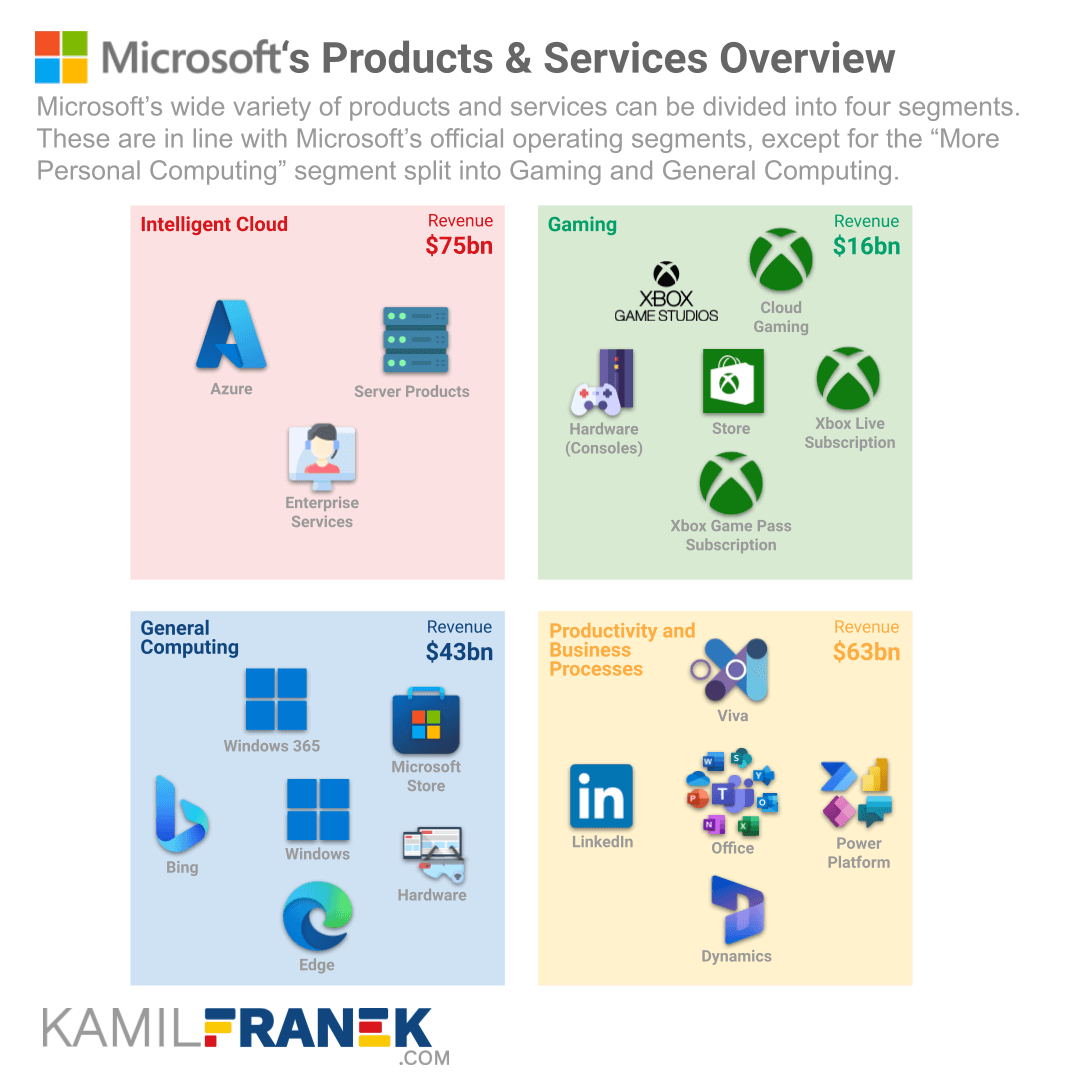
By examining Microsoft’s ownership through the lens of business finance and investment strategy, we can uncover how the company utilizes its massive cash reserves to build a “moat” that protects its market valuation and drives consistent shareholder returns.
1. The Strategic Blueprint: High-Yield Acquisitions and Market Positioning
Microsoft’s approach to ownership is rooted in a disciplined mergers and acquisitions (M&A) strategy. Unlike many tech firms that acquire startups to stifle competition, Microsoft typically acquires established platforms with high “network effects” and integrates them into its broader financial ecosystem.
The Philosophy of Capital Allocation
Microsoft maintains a pristine balance sheet, often characterized by high levels of liquidity. The company’s financial strategy involves a delicate balance between returning value to shareholders via dividends and share buybacks, and reinvesting “excess” capital into transformative acquisitions. When Microsoft “owns” a company, it isn’t just buying technology; it is buying a recurring revenue stream and a treasure trove of proprietary data.
Diversification as a Risk Mitigation Tool
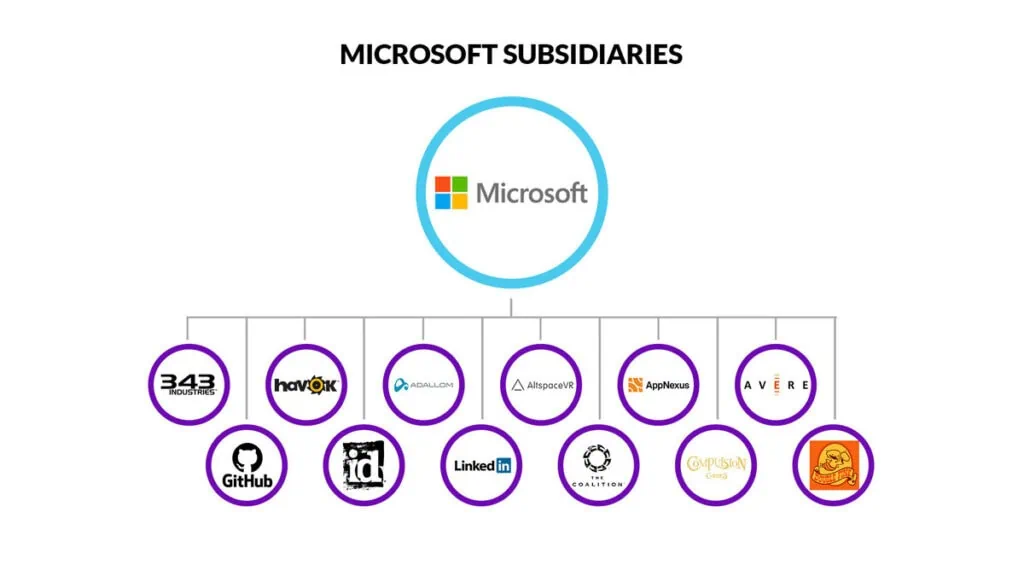
From a business finance perspective, Microsoft’s portfolio is a masterclass in diversification. By owning assets in professional networking (LinkedIn), software development (GitHub), and interactive entertainment (Activision Blizzard), Microsoft ensures that a downturn in the enterprise PC market does not cripple its overall valuation. This multi-pillar ownership structure provides the financial stability that has made Microsoft a “triple-A” rated credit entity, a status currently held by only a handful of organizations globally.
2. The Crown Jewels: Analyzing the Multi-Billion Dollar Subsidiary Portfolio
To understand the scale of Microsoft’s wealth, one must look at the specific high-value assets it has absorbed over the last decade. These are not merely “apps” or “tools”; they are independent business units that contribute significantly to the company’s bottom line.
LinkedIn: The Professional Gold Mine
Purchased for $26.2 billion in 2016, LinkedIn represented Microsoft’s entry into the social media and data-driven recruitment space. Financially, this was a move to own the “human capital” data layer of the business world. Today, LinkedIn generates billions in annual revenue through premium subscriptions, advertising, and talent solutions, representing a high-margin asset that synergizes perfectly with Microsoft’s enterprise software suite.
GitHub: Controlling the Developer Pipeline
In 2018, Microsoft acquired GitHub for $7.5 billion. For investors, the value of GitHub isn’t found in direct subscription fees alone, but in the strategic ownership of the world’s most important software development infrastructure. By owning the place where code is built, Microsoft secures a central position in the future of the global digital economy, effectively owning the “top of the funnel” for future tech innovations.
Activision Blizzard: The Largest Deal in Tech History
The $68.7 billion acquisition of Activision Blizzard, completed in 2023, is the most aggressive financial move in Microsoft’s history. By bringing franchises like Call of Duty, World of Warcraft, and Candy Crush under its corporate umbrella, Microsoft has positioned itself as the “Netflix of Gaming.” From a finance perspective, this move shifts the company’s revenue mix toward consumer staples and recurring subscription models (Xbox Game Pass), diversifying away from cyclical corporate spending.
3. The Financial Segments: How Ownership Drives Revenue
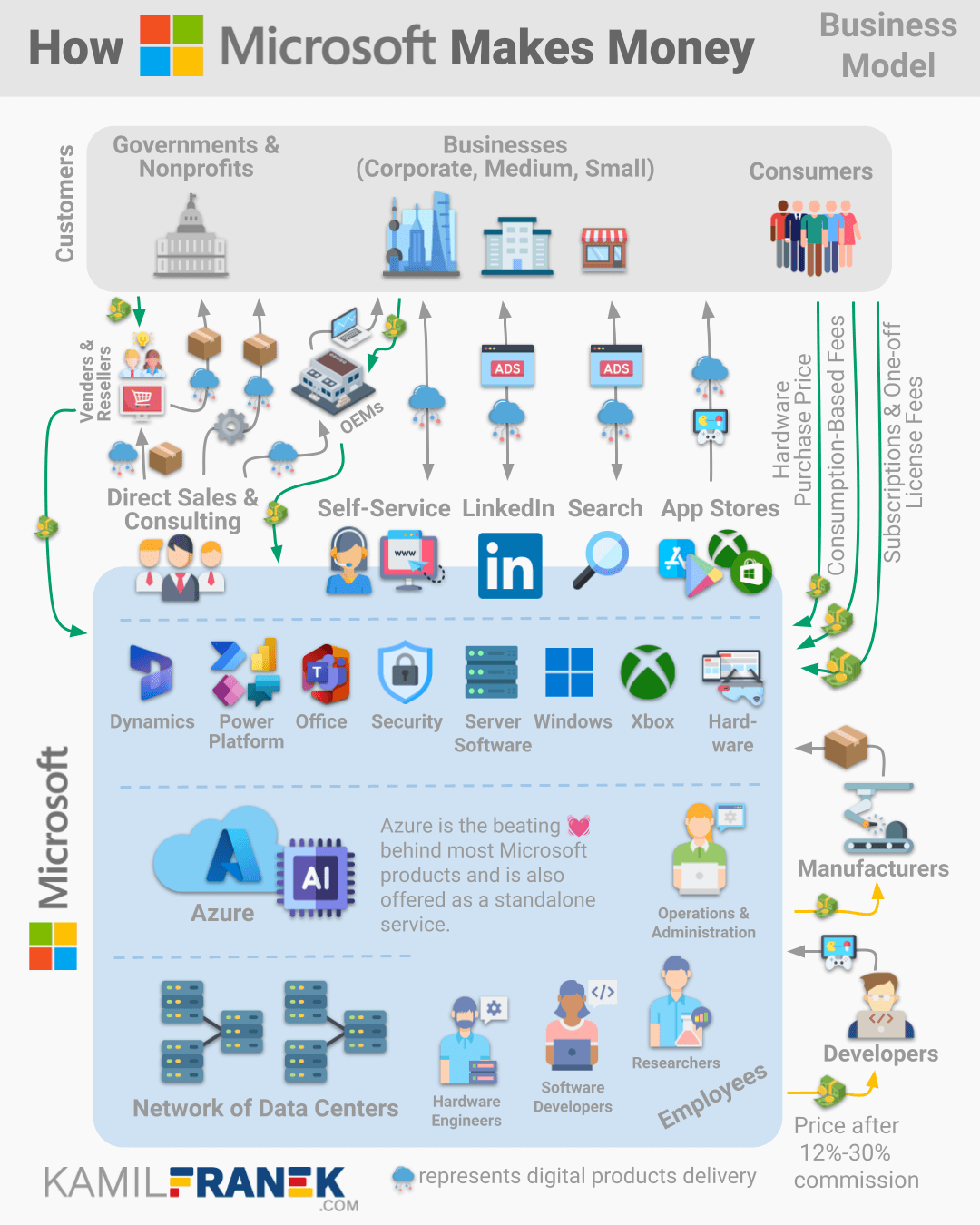
Microsoft categorizes its vast ownership into three primary financial reporting segments. This structure allows investors to see exactly how different owned assets contribute to the company’s $200+ billion annual revenue.
Productivity and Business Processes
This segment includes the “Office” family—now Microsoft 365. By owning the dominant tools for professional communication (Teams), documentation (Word), and financial modeling (Excel), Microsoft has created an indispensable utility. The transition from one-time software sales to a Software-as-a-Service (SaaS) model has turned these owned products into a perpetual annuity for the company and its shareholders.
Intelligent Cloud and the Azure Powerhouse
Microsoft’s most valuable “owned” asset is arguably its global network of data centers that power Azure. While Windows was the engine of the 90s, the cloud is the engine of today. Azure represents the backbone of Microsoft’s “Intelligent Cloud” segment, which has become the company’s fastest-growing and most profitable division. The financial genius here lies in the “rent” Microsoft collects from other businesses that build their infrastructure on Microsoft-owned servers.
More Personal Computing
This segment encompasses the Windows operating system, Surface hardware, and the gaming division. Despite the growth of the cloud, owning the operating system (Windows) remains a vital strategic asset. It serves as the primary gateway for users to enter the Microsoft ecosystem, where they can be upsold on other owned services.
4. The OpenAI Partnership: A New Model of Ownership and Investment
In the modern era of artificial intelligence, Microsoft has pioneered a unique form of “ownership” through its multi-billion dollar partnership with OpenAI. While Microsoft does not technically own 100% of OpenAI, its 49% stake in the for-profit arm represents a sophisticated financial maneuver.
The Economics of the $13 Billion Bet
Microsoft’s investment in OpenAI is structured to provide a significant share of profits until the investment is paid back, alongside a long-term equity stake. This allows Microsoft to integrate cutting-edge AI (GPT-4) into its owned products without the regulatory hurdles or the full overhead of an outright acquisition.
Leveraging AI to Inflate Asset Value
By embedding AI into Azure and Office 365, Microsoft is essentially “premium-izing” its existing assets. From an investment standpoint, this increases the Average Revenue Per User (ARPU) and extends the life cycle of its software products, driving higher margins and justifying a higher Price-to-Earnings (P/E) ratio for the stock.
5. What Microsoft’s Ownership Means for the Individual Investor
For the personal investor or the business owner, Microsoft’s vast ownership profile offers a lesson in “compound growth” and “ecosystem building.” Understanding the scope of what Microsoft owns is essential for anyone looking to build a resilient investment portfolio.
Dividend Growth and Shareholder Yield
Because Microsoft owns so many cash-generative assets, it has become one of the most reliable dividend payers in the technology sector. The company’s ability to generate massive free cash flow allows it to increase dividends annually while simultaneously funding multi-billion dollar acquisitions. For an income-focused investor, Microsoft functions almost like a technology-focused mutual fund, providing exposure to various sectors (Cloud, AI, Gaming, Social Media) under a single ticker symbol.
The Long-Term Outlook
Microsoft’s ownership of “future-proof” assets—specifically in AI and Cloud infrastructure—suggests a long-term growth trajectory that outpaces many of its peers. The company’s strategic shift from being a “Windows company” to a “data and intelligence company” has fundamentally changed its risk profile. It is no longer reliant on the success of a single product but rather on the collective growth of a global digital infrastructure.
In conclusion, “what Microsoft owns” is a sprawling empire of digital and physical assets that touch nearly every aspect of the modern economy. From the professional lives of 1 billion LinkedIn users to the cloud infrastructure of the world’s largest banks, Microsoft’s portfolio is designed for one thing: the efficient capture of global economic value. For the savvy investor, Microsoft represents more than just a software company; it is a diversified financial powerhouse that has mastered the art of acquiring, integrating, and scaling the world’s most valuable intellectual property.
aViewFromTheCave is a participant in the Amazon Services LLC Associates Program, an affiliate advertising program designed to provide a means for sites to earn advertising fees by advertising and linking to Amazon.com. Amazon, the Amazon logo, AmazonSupply, and the AmazonSupply logo are trademarks of Amazon.com, Inc. or its affiliates. As an Amazon Associate we earn affiliate commissions from qualifying purchases.