
The trade relationship between the United States and Mexico is one of the most sophisticated and integrated economic partnerships in the world. For those operating within the realms of business finance, international investing, and global supply chain management, understanding the specifics of what Mexico imports from its northern neighbor is not merely a matter of curiosity—it is a fundamental requirement for navigating the North American market. In 2023, Mexico officially became the United States’ top trading partner, surpassing China. This shift represents a massive movement of capital, goods, and financial services that defines the fiscal health of both nations.
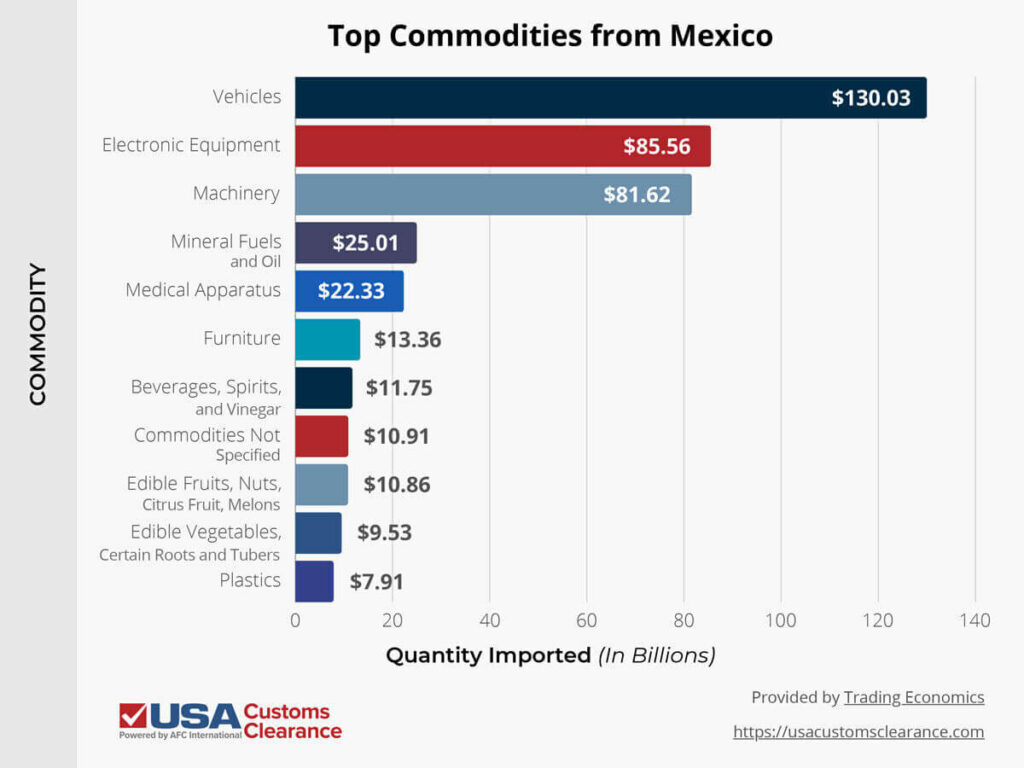
To understand the “Money” aspect of this relationship, one must look beyond simple transactions. The goods flowing south across the border are the lifeblood of Mexican industry, energy, and agriculture. These imports represent billions of dollars in capital expenditure, financing opportunities, and strategic market positioning.
The Strategic Scale of US-Mexico Trade Relations
At the heart of the US-Mexico trade dynamic lies the United States-Mexico-Canada Agreement (USMCA). This framework does more than just lower tariffs; it creates a unified financial ecosystem where production is often shared. To talk about what Mexico imports is to talk about the “co-production” of goods. A product may cross the border several times before it is finalized, meaning the financial transactions associated with these imports are complex and frequent.
The Impact of Geographic Proximity on Capital Allocation
For business finance professionals, the “Nearshoring” trend has transformed Mexico into a primary destination for capital. Because Mexico is geographically adjacent to the US, the “velocity of money” is higher. Capital is not tied up for weeks in trans-Pacific shipping containers. Instead, imports from the USA can reach Mexican factories in hours or days. This efficiency reduces the need for massive working capital reserves and allows businesses to operate on “just-in-time” financial models. Investors are increasingly looking at companies that leverage this proximity to reduce logistics costs and hedge against the volatility seen in Asian trade routes.
Understanding the Trade Balance and Financial Flows
While Mexico often runs a trade surplus with the US in terms of finished goods (like automobiles and electronics), it relies heavily on American inputs to produce those very goods. This creates a fascinating financial circularity. Mexico’s imports from the US are dominated by intermediate goods—parts and materials that are processed and then re-exported. From a business finance perspective, this means that a significant portion of Mexico’s import bill is actually an investment in future export revenue. Analyzing the health of these imports provides a leading indicator of Mexico’s projected GDP growth and currency stability.
Industrial Powerhouse: Machinery and Electronic Components
The largest category of Mexican imports from the United States involves the high-tech machinery and electronic components necessary for modern manufacturing. Mexico’s “Maquiladora” system (factories that import materials and equipment on a duty-free and tariff-free basis for assembly or manufacturing) is the primary engine of this demand.
Capital Goods and the Manufacturing Value Chain
Mexico imports billions of dollars worth of industrial machinery, including specialized tools for the automotive and aerospace sectors. For a CFO of a Mexican manufacturing firm, these imports represent significant “CapEx” (Capital Expenditure). Because the US produces some of the world’s most advanced precision machinery, Mexican firms often take out US dollar-denominated loans to finance these purchases. This creates a deep financial link between the two banking systems, where interest rate decisions by the Federal Reserve directly impact the cost of doing business for industrial players in Mexico.
The Semiconductor and Electronics Integration
In the modern digital economy, no sector is more critical than electronics. Mexico imports vast quantities of semiconductors, computer parts, and telecommunications equipment from the USA. These are not typically for end-user consumption but are integrated into complex systems. The financial scale of this trade is staggering. As global companies seek to diversify away from Chinese electronic components, the US-Mexico corridor has seen a surge in “high-value-added” trade. This shift is attracting private equity and venture capital into the region, focusing on tech-enabled logistics and assembly plants that sit at the intersection of US design and Mexican labor.
Fueling Growth: Energy and Petrochemical Imports
Perhaps the most surprising aspect of the trade relationship for many casual observers is energy. Despite being an oil-producing nation, Mexico is one of the largest importers of American refined petroleum products and natural gas. This creates a critical dependency that has profound implications for Mexico’s national budget and business finance landscape.
Mexico’s Dependence on American Refined Petroleum
Mexico possesses significant reserves of heavy crude oil, but it lacks the advanced refining capacity to turn that crude into gasoline, diesel, and jet fuel at the scale its economy requires. As a result, Mexico imports a massive volume of refined fuels from US Gulf Coast refineries. For the Mexican government and the state-owned oil company, PEMEX, this is a major fiscal consideration. Fluctuations in US gasoline prices or refining margins (the “crack spread”) directly impact inflation in Mexico. Businesses across the country must manage the financial risk of these fluctuating energy costs, often using hedging instruments traded on US commodity exchanges.
Natural Gas: The Invisible Backbone of Mexican Industry
Low-cost natural gas from the Permian Basin in Texas is the primary energy source for Mexico’s industrial heartland. Piped across the border, this gas fuels the electricity generation that keeps Mexican factories running. From a business finance perspective, the availability of cheap US natural gas is a competitive advantage for Mexico. It allows Mexican manufacturers to keep their operational costs lower than their competitors in Europe or Asia, where energy costs are significantly higher. This “energy arbitrage” is a key factor for international investors when deciding where to locate new production facilities.
Agricultural Interdependence and Food Security
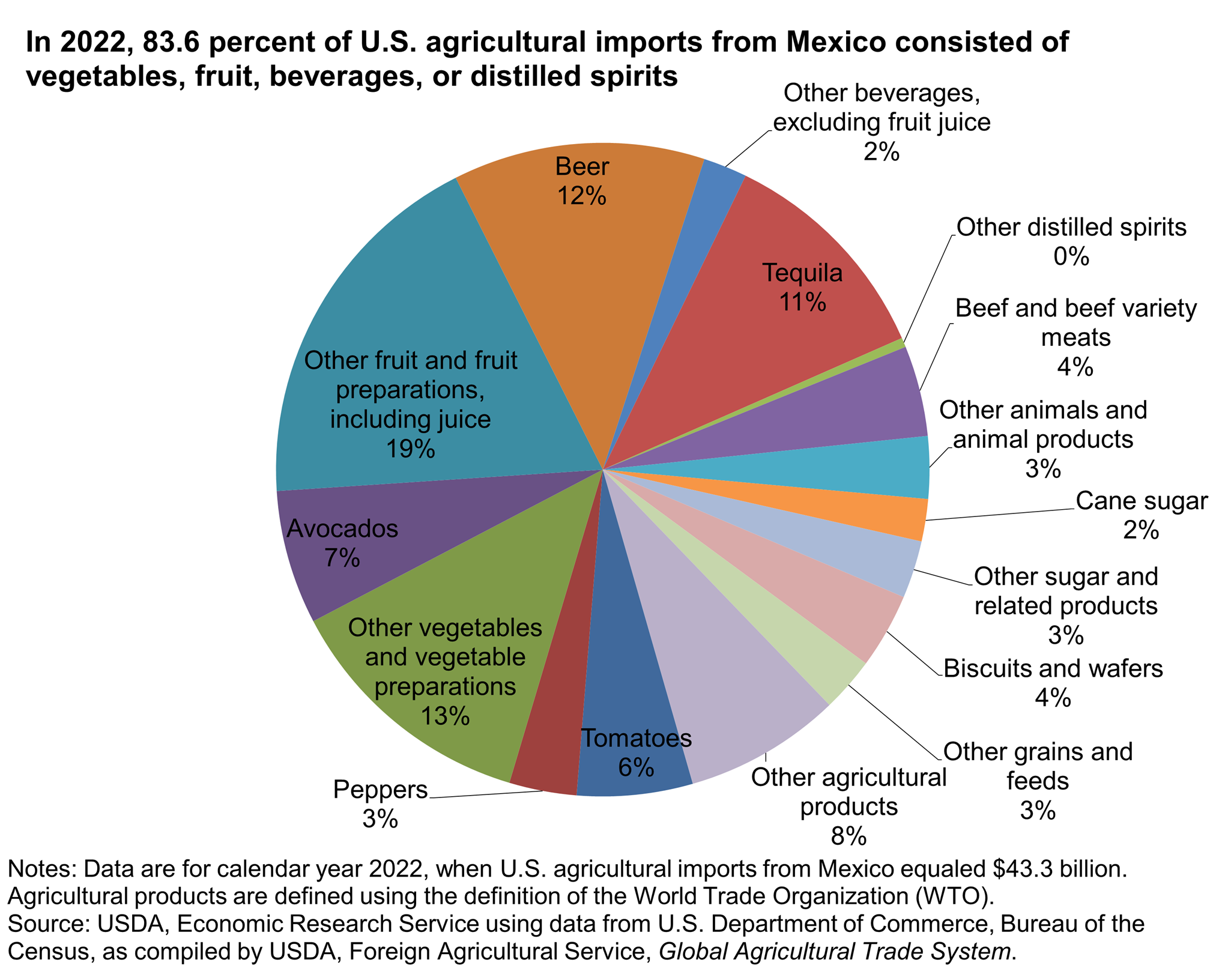
While manufacturing and energy dominate the headlines, agriculture represents a vital and consistent flow of capital between the two nations. Mexico is a top market for American farmers, importing billions in grains, meats, and oilseeds annually.
Grains and Oilseeds: Supporting Mexico’s Livestock Sector
Yellow corn, soybeans, and wheat are among the top US exports to Mexico. Interestingly, most of the corn imported is not for human consumption (for tortillas) but for livestock feed. This makes the Mexican meat industry—poultry, pork, and beef—highly dependent on US agricultural commodity prices. For agribusiness financiers, the US-Mexico agricultural trade is a high-volume, low-margin business that requires sophisticated trade finance solutions, including letters of credit and export credit guarantees.
The Consumer Market: Value-Added Food Products
Beyond raw commodities, Mexico imports a wide variety of processed foods, dairy products, and beverages from the US. As the Mexican middle class expands, demand for American brand-name consumer goods increases. This trend is a boon for US consumer staples companies and provides a steady stream of dividend-paying revenue for investors. The financial integration here is seen in the retail sector, where American giants like Walmart de México rely on seamless cross-border supply chains to keep shelves stocked with both local and imported American goods.
Strategic Implications for Investors and Businesses
Understanding what Mexico imports from the USA is essential for any professional involved in international business finance. The relationship is not just about moving boxes; it is about integrated capital structures, risk management, and long-term economic strategy.
Nearshoring and the Financial Shift in Supply Chains
The trend of “Nearshoring”—moving manufacturing closer to the end market—is the most significant financial story in North America today. As companies move production from Asia to Mexico, the volume of imports from the USA (in the form of components and machinery) is expected to rise. This creates a “multiplier effect” for the US economy. For every dollar Mexico exports to the US, a significant percentage consists of US-made parts. For investors, this means that betting on Mexican growth is often a roundabout way of betting on US industrial productivity.
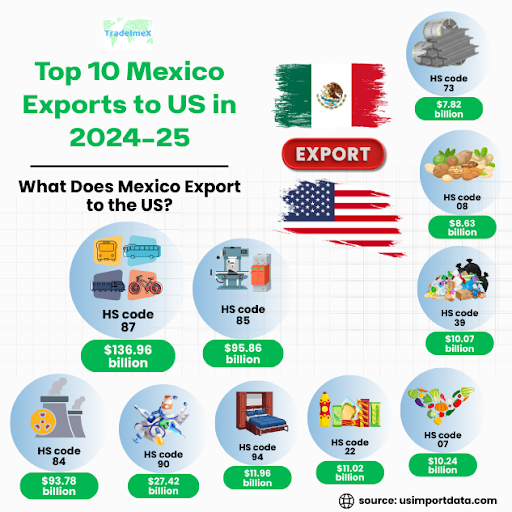
Navigating Currency Fluctuations and Trade Policy
The financial health of the “MXN/USD” (Mexican Peso to US Dollar) exchange rate is heavily influenced by these trade flows. Large-scale imports require Mexican companies to buy dollars, creating constant demand for the greenback. Conversely, high export volumes bring dollars back into Mexico. Business finance managers must constantly hedge against the volatility of the Peso, which can be affected by political rhetoric surrounding trade policy.
In conclusion, Mexico’s imports from the USA—ranging from the high-tech chips in our cars to the natural gas powering our factories and the grain feeding our livestock—form the backbone of a multi-billion dollar financial network. For those focused on “Money,” whether through investing, corporate finance, or market analysis, the US-Mexico trade corridor remains one of the most lucrative and stable regions for capital deployment in the 21st century. As the two economies continue to fuse into a single North American production platform, the financial opportunities inherent in these import flows will only continue to grow.
aViewFromTheCave is a participant in the Amazon Services LLC Associates Program, an affiliate advertising program designed to provide a means for sites to earn advertising fees by advertising and linking to Amazon.com. Amazon, the Amazon logo, AmazonSupply, and the AmazonSupply logo are trademarks of Amazon.com, Inc. or its affiliates. As an Amazon Associate we earn affiliate commissions from qualifying purchases.