
For many individuals striving for financial security and a comfortable retirement, the 401(k) plan stands as a cornerstone of their savings strategy. This employer-sponsored retirement savings plan offers a powerful, tax-advantaged way to accumulate wealth over time. However, the concept of “maxing out” a 401(k) is a frequently discussed yet sometimes misunderstood financial goal. Understanding what it truly entails is crucial for anyone looking to optimize their retirement planning and leverage this valuable tool to its fullest potential. In essence, maxing out your 401(k) means contributing the maximum allowable amount set by the IRS for that specific tax year. This limit applies to the total contributions made by both you and your employer.
The Mechanics of 401(k) Contributions and Limits
At its core, a 401(k) is a defined-contribution plan that allows employees to defer a portion of their salary into an investment account specifically designated for retirement. The power of this plan lies in its tax advantages, which come in two primary forms: pre-tax contributions and tax-deferred growth.
Pre-Tax Contributions and Their Impact on Your Paycheck
When you make pre-tax contributions to a 401(k), the money is deducted from your gross income before federal and state income taxes are calculated. This immediately reduces your taxable income for the current year, meaning you pay less in taxes today. This can be a significant benefit, especially for individuals in higher tax brackets, as it effectively lowers your immediate tax liability. For example, if you earn $70,000 annually and contribute $10,000 to your 401(k) on a pre-tax basis, your taxable income for that year becomes $60,000. The actual reduction in your take-home pay will be less than the full $10,000 due to this tax saving.
Tax-Deferred Growth: The Magic of Compounding Over Time
The second major tax advantage of a 401(k) is tax-deferred growth. Any earnings generated by your investments within the 401(k) – whether through dividends, interest, or capital appreciation – are not taxed annually. Instead, these earnings grow and compound year after year, reinvested and allowed to build upon themselves without the drag of immediate taxation. This compounding effect is exceptionally powerful over long periods, which is precisely why retirement savings vehicles like the 401(k) are designed for the long haul. By allowing your money to grow tax-free, you accelerate the wealth accumulation process significantly compared to taxable investment accounts where annual gains would be subject to capital gains tax.
Understanding the Annual Contribution Limits
The IRS sets annual limits on how much individuals can contribute to their 401(k) plans. These limits are adjusted periodically for inflation. For 2023, the maximum employee contribution was $22,500 for individuals under age 50. For those aged 50 and over, there is an additional “catch-up” contribution allowed, which for 2023 was $7,500, bringing the total maximum to $30,000. These limits are for employee contributions only.
It is crucial to distinguish between employee contributions and total contributions. The IRS also sets a limit on the total contributions that can be made to a 401(k) plan from all sources – employee, employer match, and any profit-sharing contributions. For 2023, this overall limit was $66,000 (or $73,500 for those 50 and over including the catch-up). Therefore, maxing out your 401(k) means contributing up to the employee limit, and your employer’s contributions will also count towards that overall total limit. If your employer offers a generous match or profit-sharing, it is possible to reach the overall limit even if your personal contribution is less than the employee maximum. However, the common understanding of “maxing out” usually refers to reaching the employee contribution limit.
The Strategic Advantages of Maxing Out Your 401(k)
Achieving the goal of maxing out your 401(k) is not merely about reaching a numerical target; it represents a strategic decision with profound implications for your long-term financial well-being. It signifies a commitment to aggressive saving and a proactive approach to securing a comfortable retirement, leveraging the full power of the plan’s tax advantages and employer incentives.
Maximizing Tax Savings in the Present
As discussed, pre-tax contributions directly reduce your current taxable income. For individuals in their peak earning years, where tax brackets are often higher, the immediate tax savings from maxing out can be substantial. This reduction in taxes frees up cash flow that can then be reinvested or used for other financial goals. Furthermore, for those participating in Roth 401(k) plans (if offered by their employer), the contributions are made with after-tax dollars, but the growth and qualified withdrawals in retirement are tax-free, offering a different but equally valuable tax advantage. The decision between a traditional (pre-tax) and Roth 401(k) often hinges on one’s current tax bracket versus their expected tax bracket in retirement.
Accelerating Wealth Accumulation Through Compounding
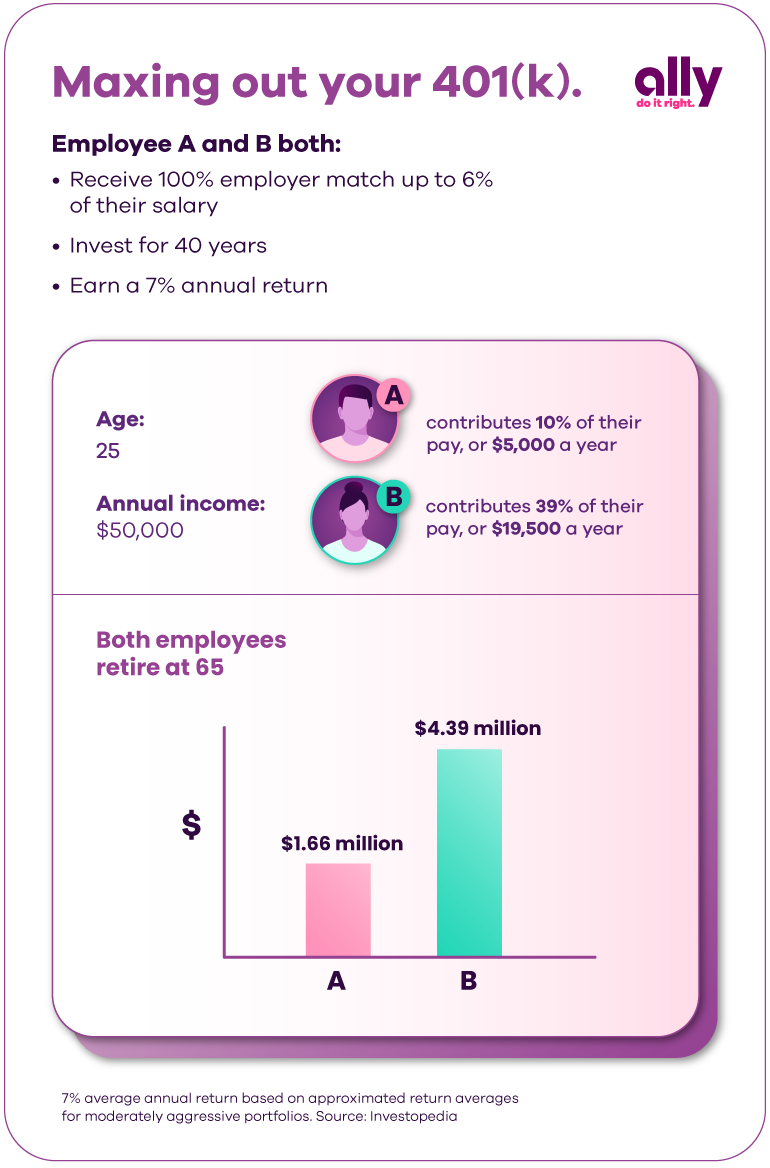
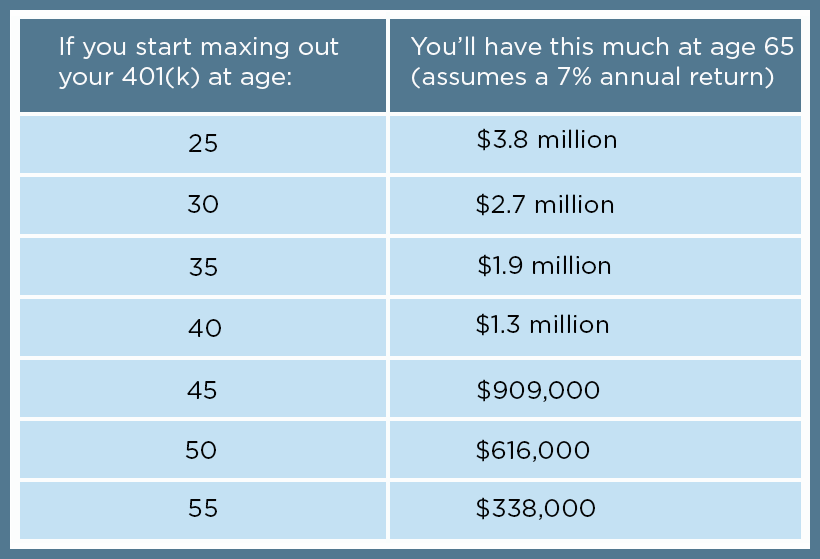
By contributing the maximum allowable amount, you are maximizing the principal on which your investments can grow. The power of compounding is directly proportional to the amount of money invested and the duration of time. Maxing out ensures you are providing the largest possible foundation for this exponential growth. Over decades, the difference in accumulated wealth between someone who maxes out their 401(k) and someone who contributes less can be astonishing. This aggressive approach to savings fuels a more robust retirement nest egg, providing greater financial freedom and security in later years.
Capturing the Full Employer Match
Many employers offer a matching contribution to employee 401(k) contributions, often a percentage of the employee’s salary up to a certain limit. This employer match is essentially free money. For instance, an employer might match 50% of your contributions up to 6% of your salary. If you earn $80,000 and contribute 6% ($4,800), your employer would contribute an additional $2,400. By maxing out your 401(k), you ensure you are contributing enough to receive the maximum possible employer match. Failing to do so means leaving a portion of this valuable benefit on the table, significantly hindering your overall retirement savings potential. This immediate boost to your retirement fund is a critical component of aggressively building wealth.
Factors to Consider When Aiming to Max Out Your 401(k)
While the benefits of maxing out a 401(k) are clear, it’s not a one-size-fits-all strategy. Several personal financial factors and plan-specific details must be carefully considered to determine if and how you can achieve this goal. A prudent approach involves a comprehensive assessment of your current financial situation, future goals, and the specifics of your employer’s plan.
Assessing Your Current Financial Health and Budget
Before committing to the maximum contribution, it’s essential to have a clear understanding of your overall financial health. This involves a thorough budgeting process to identify where your money is going and whether you can comfortably allocate the maximum allowable amount to your 401(k) without jeopardizing other critical financial obligations. This includes ensuring you have an adequate emergency fund, are meeting other essential living expenses, and are making progress on any high-interest debt. If maxing out your 401(k) would strain your budget to the point of taking on more debt or depleting your emergency savings, it might be prudent to start with a lower contribution and gradually increase it as your financial situation improves.
Evaluating Your Investment Horizon and Risk Tolerance
The decision to max out your 401(k) is intrinsically linked to your time horizon until retirement and your personal risk tolerance. A longer time horizon allows for more aggressive investment strategies, as there is more time to recover from market downturns. If retirement is decades away, a higher allocation to equities, which historically offer higher returns but also carry more volatility, might be appropriate. Conversely, if retirement is on the horizon, a more conservative investment approach may be warranted. Your 401(k) plan will offer various investment options, from low-risk bond funds to high-growth stock funds. Understanding these options and aligning them with your risk tolerance and time horizon is crucial for maximizing your returns over the long term.
Understanding Employer Match and Vesting Schedules
As mentioned, employer matching contributions are a significant incentive. It’s crucial to know the exact terms of your employer’s match. Some employers match 100% of your contributions up to a certain percentage, while others offer a lower match. Understanding this structure helps you determine the optimal contribution level to receive the full match. Equally important is understanding the vesting schedule for employer contributions. Vesting refers to the timeline over which you earn the right to keep your employer’s contributions. If you leave your job before you are fully vested, you may forfeit some or all of the employer contributions. Maxing out your 401(k) is most beneficial when you plan to stay with your employer long enough to gain full ownership of their contributions.
The Long-Term Impact and Strategic Retirement Planning
Maxing out your 401(k) is not merely an annual financial maneuver; it’s a strategic pillar of a well-thought-out retirement plan. It signifies a proactive approach to wealth accumulation and a commitment to financial independence in your later years. The cumulative effect of consistently maximizing contributions over a career can dramatically alter the landscape of your retirement.
Building a Substantial Retirement Nest Egg
The most direct and significant outcome of maxing out your 401(k) is the creation of a substantial retirement nest egg. By consistently contributing the maximum allowable amount and benefiting from tax-deferred growth and employer matches, your retirement savings will compound at a much faster rate. This can lead to a significantly larger sum of money available for your retirement years, providing greater financial flexibility, enabling you to maintain your desired lifestyle, and potentially allowing for early retirement or more substantial philanthropic endeavors. The difference between a comfortable retirement and a financially strained one can often be directly attributed to the discipline of maximizing retirement savings vehicles like the 401(k).
Achieving Financial Independence and Flexibility
Financial independence in retirement means having enough savings and investments to cover your living expenses without needing to work. Maxing out your 401(k) is one of the most effective ways to accelerate the journey toward this goal. A larger retirement fund provides the flexibility to make choices beyond simply covering basic needs. You might be able to travel, pursue hobbies, support family members, or even engage in part-time work that you find enjoyable rather than necessary. This increased flexibility contributes to a higher quality of life and greater peace of mind during your retirement years.

Planning for Retirement Withdrawals and Tax Management
As you approach retirement, understanding how to manage withdrawals from your 401(k) becomes as important as accumulating funds. Maxing out your 401(k) throughout your working life creates a substantial asset that will require careful planning for distribution. This includes understanding the tax implications of withdrawals from traditional 401(k)s (which are taxed as ordinary income) and from Roth 401(k)s (which are tax-free if qualified). Diversifying your retirement income streams, perhaps with other investments or pensions, and strategically planning the timing and method of your 401(k) withdrawals can help optimize your tax situation in retirement. Furthermore, considering options like rollovers to an IRA can offer greater control and flexibility over investment choices and withdrawal strategies in retirement. Ultimately, maxing out your 401(k) empowers you with more options and a stronger foundation for a secure and fulfilling retirement.
aViewFromTheCave is a participant in the Amazon Services LLC Associates Program, an affiliate advertising program designed to provide a means for sites to earn advertising fees by advertising and linking to Amazon.com. Amazon, the Amazon logo, AmazonSupply, and the AmazonSupply logo are trademarks of Amazon.com, Inc. or its affiliates. As an Amazon Associate we earn affiliate commissions from qualifying purchases.