
In the landscape of modern household technology, the washing machine stands as one of the most sophisticated examples of automated chemical and mechanical engineering. While users often interact with the interface by simply pressing a button, the underlying logic of specific cycles—such as “Permanent Press”—represents a complex interplay between hardware capabilities and material science. To understand what “machine wash permanent press” means is to explore the evolution of textile technology and the engineering solutions designed to preserve the structural integrity of synthetic and blended fabrics.
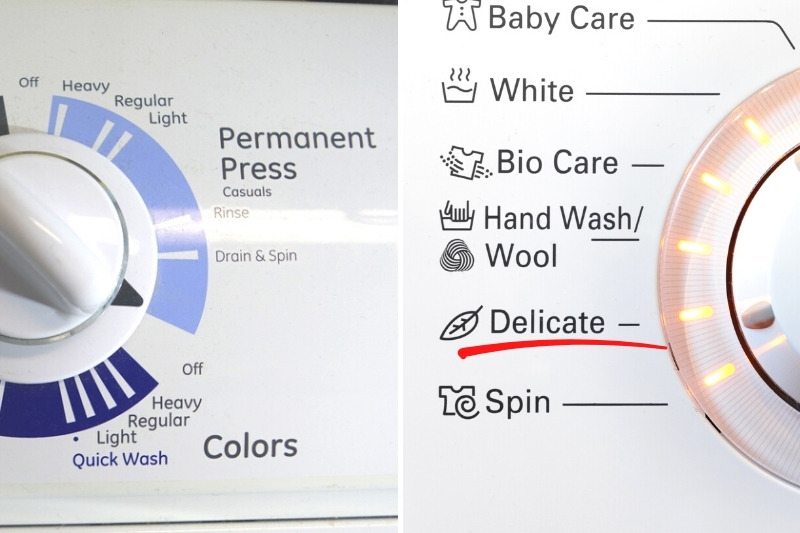
The Mechanics of the Permanent Press Cycle
At its core, the permanent press cycle is a software-driven protocol designed to manage the physical and thermal stresses applied to garments during the cleaning process. This cycle was originally engineered in the mid-20th century to accommodate the rise of chemically treated fabrics and synthetic fibers like polyester and nylon, which reacted differently to heat and agitation than traditional cotton or wool.
Temperature Control and Thermal Shock Prevention
The primary technical differentiator of the permanent press setting is its management of water temperature. Unlike a standard “Whites” cycle that may use high heat for sanitation or a “Delicate” cycle that uses cold water to prevent shrinking, the permanent press cycle utilizes a “warm wash, cold rinse” logic.
From a technical standpoint, the warm water (typically calibrated between 85°F and 105°F) is essential for relaxing the fibers and releasing oils or dirt without reaching the glass transition temperature of synthetic polymers. If the water is too hot, synthetic fibers can become plasticized, leading to permanent heat-set wrinkles.
The most critical engineering feature of this cycle, however, is the “cool-down” phase. Modern high-efficiency (HE) washers use a graduated cooling process where cold water is pulsed into the drum before the final spin. This prevents “thermal shock,” a phenomenon where a rapid transition from hot to cold water causes the fibers to lock into a wrinkled state. By gradually lowering the temperature, the machine ensures the fabric remains smooth as it transitions to the mechanical extraction phase.
Agitation and Spin Dynamics
Beyond temperature, the permanent press cycle modifies the mechanical action of the washing machine’s motor and drum. In a standard heavy-duty cycle, the agitation is aggressive, designed to beat dirt out of rugged fibers. In contrast, the permanent press setting utilizes a “medium” agitation profile.
The agitation phase is programmed to provide enough mechanical energy to clean the clothes while minimizing the friction that can cause pilling on synthetic blends. Furthermore, the spin cycle—the final phase where water is extracted via centrifugal force—is typically set to a lower RPM (revolutions per minute) than the normal cycle. High-speed spinning can crush garments against the side of the drum, forcing creases into the fabric that are difficult to remove even with an iron. By reducing the spin speed, the hardware ensures that the garments retain enough moisture to hang heavy, allowing gravity to pull out minor wrinkles during the drying process.
The Evolution of Laundry Tech: From Manual Labor to Smart Algorithms
The transition from the “wringer” washers of the early 1900s to today’s AI-enabled smart appliances has redefined how we interact with garment care. The permanent press cycle is a bridge between the era of manual textile care and the future of automated fabric maintenance.
The Invention of Synthetic Fibers and the Need for Custom Cycles
The necessity for a specific “Permanent Press” setting arose from a breakthrough in textile chemistry during the 1950s and 60s. Manufacturers began treating cotton with formaldehyde-based resins and blending it with polyester to create “wash-and-wear” clothing. These fabrics were designed to resist wrinkling, but they required a specific laundry environment to maintain their “memory.”
Appliance engineers had to innovate new hardware controls to support these textiles. The introduction of the dual-action agitator and the multi-position timer allowed machines to switch between different motor speeds and water valves automatically. This was the precursor to the digital control boards found in modern machines, which now use solid-state relays to manage the complex sequences of the permanent press cycle.
Modern Sensors and AI-Driven Fabric Care
In the current era of smart home technology, the permanent press cycle has evolved from a static timer-based setting to a dynamic, sensor-informed process. Modern premium washing machines utilize load sensors, turbidity sensors, and even optical sensors to detect the type of fabric and the level of soil.
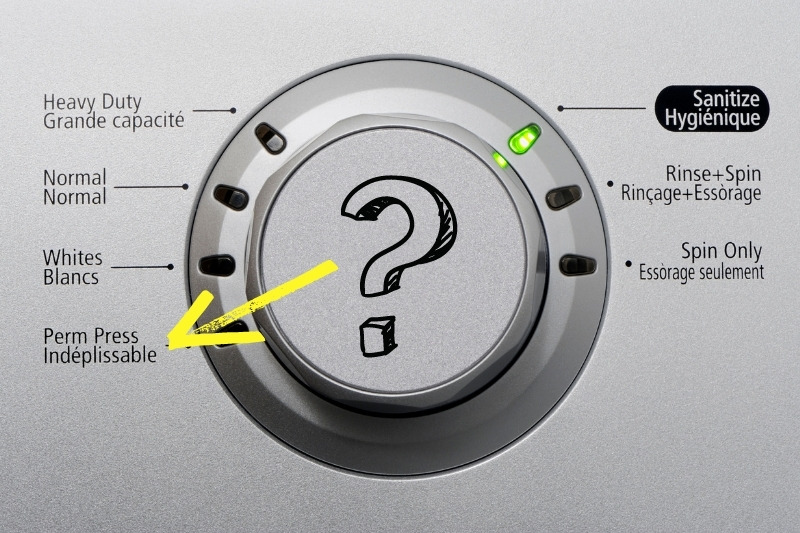
Digital inverters and brushless DC (BLDC) motors allow for precise control over drum rotation. Instead of a simple “on/off” agitation, the machine’s software can execute specific “tumble patterns” that optimize the distribution of garments. In a permanent press setting, the AI may detect a heavy load and adjust the water level upward to provide a “cushioning” effect, reducing the physical impact of the garments against one another. This level of granularity in appliance firmware ensures that the “permanent press” of today is far more effective at fabric preservation than the analog versions of thirty years ago.
Why Permanent Press Matters in the Era of High-Tech Fabrics
The relevance of the permanent press cycle has only increased with the proliferation of “performance” fabrics and “athleisure” wear. Most modern clothing is no longer 100% organic; it is a complex matrix of spandex, elastane, polyester, and treated cotton.
Preserving Material Integrity
Synthetic fibers are essentially extruded plastics. When subjected to the high heat of a standard “Heavy Duty” wash or the high-speed spin of a “Towels” cycle, these fibers can undergo micro-deformations. Over time, this leads to a loss of elasticity—the “baggy knees” syndrome in leggings or the loss of shape in dress shirts.
The permanent press cycle acts as a protective protocol. By maintaining a stable thermal environment and reducing mechanical shear, the cycle extends the lifecycle of the garment. In an age where digital consumers are becoming more conscious of “slow fashion” and the environmental impact of textile waste, using the correct machine settings is a form of hardware-enabled sustainability.
Energy Efficiency and Hardware Longevity
From a technical maintenance perspective, the permanent press cycle is also optimized for energy efficiency. Because it avoids the extreme high-heat settings of a “Sanitize” cycle, it draws significantly less power from the heating element. Furthermore, the modulated spin speeds reduce the wear and tear on the machine’s bearings and suspension system.
High-RPM spins exert massive G-forces on the internal components of a washing machine. By utilizing the medium-speed spin associated with permanent press, users reduce the vibrational stress on the appliance. This not only results in a quieter operation—ideal for modern integrated living spaces—but also reduces the frequency of mechanical failure, illustrating how software settings can influence the physical lifespan of the hardware.
Troubleshooting and Optimizing Your Smart Washer Settings
Understanding the technical parameters of the permanent press cycle allows users to make better decisions regarding their laundry workflow and appliance maintenance.
When to Use (and When to Avoid) Permanent Press
The permanent press cycle should be the “default” for approximately 60% to 70% of a modern wardrobe. It is ideal for:
- Synthetic Blends: Polyester, nylon, and acrylic.
- Treated Fabrics: Wrinkle-resistant dress shirts and slacks.
- Performance Wear: Moisture-wicking gym clothes (though cold water is sometimes preferred for pure spandex).
However, it is not a universal solution. For heavy natural fibers like denim or canvas, the permanent press cycle may not provide enough agitation to remove deep-set soil. Conversely, for ultra-fragile silks or lace, the agitation—even at “medium”—may be too rigorous. For these, a dedicated “Delicate” cycle, which uses even lower RPMs and more water, is technically superior.

The Future of Automated Garment Care
As we look toward the future of the “Internet of Things” (IoT), the concept of the permanent press cycle is likely to become even more automated. We are already seeing the introduction of RFID (Radio Frequency Identification) tags in clothing that communicate directly with the washing machine. In this scenario, the machine doesn’t just offer a “Permanent Press” button; it reads the tag on the garment, identifies the exact polymer blend, and creates a bespoke agitation and temperature profile in real-time.
Furthermore, advancements in “dry” or “low-water” washing technology—using polymer beads or CO2—may eventually render traditional aqueous cycles obsolete. Until then, the permanent press cycle remains the pinnacle of balanced engineering, providing a sophisticated solution to the problem of maintaining the aesthetic and structural quality of modern textiles through digital and mechanical control.
By leveraging the specific thermal and mechanical logic of the permanent press setting, users are not just “doing laundry”; they are engaging with a finely tuned piece of software-driven machinery designed to optimize the relationship between water, heat, and fiber. Understanding this process is key to maximizing both the longevity of our garments and the efficiency of our household technology.
aViewFromTheCave is a participant in the Amazon Services LLC Associates Program, an affiliate advertising program designed to provide a means for sites to earn advertising fees by advertising and linking to Amazon.com. Amazon, the Amazon logo, AmazonSupply, and the AmazonSupply logo are trademarks of Amazon.com, Inc. or its affiliates. As an Amazon Associate we earn affiliate commissions from qualifying purchases.