
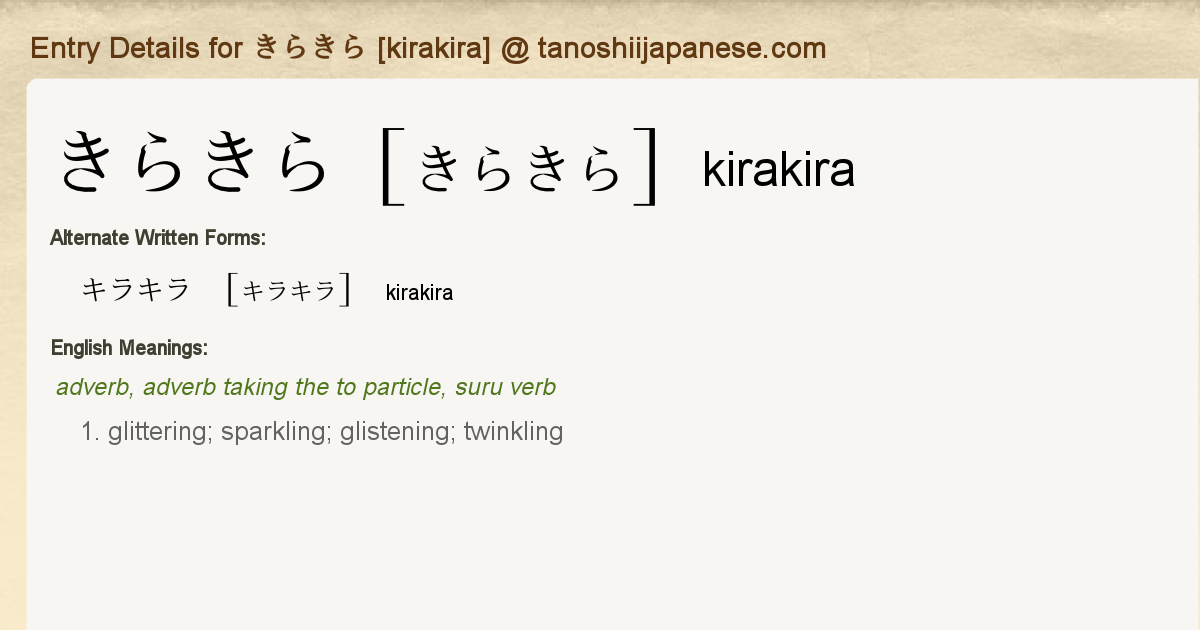
In the lexicon of Japanese onomatopoeia, few words carry as much weight in the modern digital landscape as “kira kira.” Literally translated, it means “sparkling,” “glittering,” or “shining.” It describes the way light bounces off the facets of a diamond, the shimmering surface of the ocean at noon, or the twinkling of stars in a clear night sky. However, in the context of 21st-century technology, “kira kira” has evolved from a simple descriptive term into a sophisticated category of digital imaging, software development, and user experience design.
The transition of kira kira from a linguistic expression to a global tech phenomenon began with the rise of social media and mobile photography. Today, it represents a multi-million dollar industry encompassing augmented reality (AR) filters, specialized photo-editing software, and advanced computer vision algorithms designed to replicate the physics of light in real-time. To understand what kira kira means in the digital age, we must look beyond the dictionary and into the code, hardware, and creative tech trends that have turned a simple Japanese sound into a universal visual standard.
The Digital Translation of Kira Kira: From Onomatopoeia to Algorithmic Brilliance
While the term originates from traditional Japanese culture—often used in literature and daily conversation to describe anything that catches the eye with brilliance—its modern “tech” identity was solidified by the app “KiraKira+.” Released by developer Kentaro Yama, this application became a global sensation by using a proprietary algorithm to identify light sources in a video feed and overlay them with sparkling cross-effects. This was the moment “kira kira” moved from a concept to a functional technology.
The Semantic Roots of Visual Sparkle
In Japanese, “gitaigo” (mimetic words) describe states or conditions. “Kira kira” specifically refers to a continuous, bright sparkle. Unlike “pika pika,” which refers to a flash or a clean shine (think Pikachu), “kira kira” implies a multifaceted radiance. In software development, capturing this specific “feel” requires more than just a static overlay; it requires a dynamic understanding of how light interacts with motion. Developers realized that to make a “kira kira” filter successful, it had to respond to the user’s movement, creating a sense of “digital jewelry” that felt reactive and alive.
The Viral Genesis of the Sparkle App
The explosion of the KiraKira+ app in late 2017 showcased the power of niche software tools to dictate global aesthetic trends. By identifying high-contrast pixels and replacing them with animated starbursts, the app solved a problem that professional cinematographers have struggled with for decades: how to make inanimate objects appear “magical” without expensive post-production. This sparked a race among social media giants like Instagram, TikTok, and Snapchat to integrate similar computer vision features into their native platforms.
The Engineering of Radiance: How Computer Vision Identifies Glint
To the average user, a “kira kira” filter is a simple fun effect. To a software engineer, it is a complex exercise in luminance thresholding and real-time pixel processing. The technology required to make a video “sparkle” involves several layers of computational photography.
Thresholding and Luminance Analysis
The core of kira kira technology lies in “luminance thresholding.” The software analyzes every frame of a video, searching for pixels that exceed a certain brightness level compared to their neighbors. These pixels are identified as “glints” or “specular highlights.”
In sophisticated applications, the software doesn’t just look for pure white; it uses color theory to identify “saturated highlights.” For example, if a user is wearing gold jewelry, the algorithm must identify the specific yellow-gold peak brightness to ensure the resulting “sparkle” matches the warmth of the metal. This requires real-time color histograms and edge detection to ensure the sparkle is tethered to the correct physical object and doesn’t simply float randomly in the frame.
Real-Time Rendering and Latency Optimization
One of the greatest technical hurdles in kira kira technology is latency. For an AR filter to feel “real,” the sparkle must appear at the exact moment the light hits the camera sensor, with zero perceptible lag. This is achieved through GPU (Graphics Processing Unit) acceleration.
Modern smartphones use Metal (Apple) or Vulkan (Android) APIs to offload the heavy lifting of image processing from the CPU to the GPU. The “kira kira” effect is essentially a “shader”—a program that runs on the GPU to calculate the color and position of every pixel. By using “particle systems,” developers can create dozens of individual sparkles that have their own physics, such as gravity, rotation, and fading, all while maintaining a smooth 60 frames per second.

Kira Kira as a UX Paradigm: Gamification and User Engagement
Beyond the filters, “kira kira” has influenced the broader world of User Experience (UX) and User Interface (UI) design. In tech circles, the “sparkle” has become a shorthand for premium quality, newness, and digital reward.
The Psychology of Luster in Digital Interfaces
Humans are biologically programmed to be attracted to shimmering surfaces—a trait evolutionary psychologists link to the search for water. Tech companies leverage this attraction by incorporating “kira kira” elements into their apps to drive engagement. Think of the “celebration” animations when you complete a task in a productivity app like Asana, or the shimmering “rare” card effects in digital CCGs (Collectible Card Games) like Hearthstone or Marvel Snap. These are digital implementations of kira kira designed to trigger a dopamine response.
Haptic and Visual Feedback Loops
The most effective tech implementations of kira kira combine visual brilliance with haptic feedback. When a user “levels up” or completes a transaction, the screen may emit a burst of shimmering particles while the phone provides a light, “sparkling” vibration. This multi-sensory approach creates a “high-fidelity” feel that distinguishes premium software from basic utilities. In branding and app development, the kira kira aesthetic signifies a “polished” product—quite literally.
Advanced Applications: AR, VR, and the Future of Shimmer
As we move toward the “Metaverse” and more immersive forms of computing, the technology behind kira kira is becoming even more complex. We are moving from 2D overlays to 3D light simulations.
Ray Tracing on Mobile Hardware
The next frontier for the kira kira aesthetic is mobile ray tracing. Ray tracing is a rendering technique that simulates the physical behavior of light. Instead of just identifying “bright spots” (the old way), ray tracing tracks individual rays of light as they bounce off virtual surfaces.
With the introduction of ray-tracing hardware in the latest generations of mobile chips (like the Apple A17 Pro or Qualcomm Snapdragon 8 Gen 3), we are seeing the emergence of “True Kira Kira.” This means that in an AR environment, a digital dress or a virtual piece of jewelry will sparkle based on the actual light sources in the user’s room, creating a level of realism that was previously impossible.
Generative AI and the Customization of Light
Generative AI is also playing a role in the evolution of the sparkle. New AI tools can now “relight” a scene after it has been filmed. If a video lacks the “kira kira” quality because the lighting was poor, AI models can infer where the highlights should have been and generate photorealistic reflections. This allows creators to maintain a high-end, sparkling brand aesthetic regardless of their technical equipment.

Beyond the Filter: Ethical and Technical Implications of Enhanced Reality
As “kira kira” technology becomes more pervasive, it raises interesting questions about the nature of digital reality. When we can apply a “brilliance” filter to everything from our faces to our living rooms, the line between the physical and the digital blurs.
Technically, the challenge remains to make these effects look “natural” rather than “computed.” The future of kira kira tech lies in subtlety—algorithms that can mimic the “bokeh” effect of high-end camera lenses or the “star filter” of professional cinematography without looking like a cheap digital overlay.
Furthermore, the “kira kira name” phenomenon in Japan—where parents give their children unconventional, “sparkling” names—has a digital parallel in “Personal Branding.” High-end tech influencers and brands use these shimmering visual cues to denote a “luxury” digital presence. The tech behind the sparkle is no longer just a toy; it is a tool for status, identity, and visual storytelling.
In conclusion, “kira kira” in Japanese may mean to sparkle, but in the world of technology, it represents the pinnacle of real-time image processing, the sophistication of mobile GPUs, and the deep psychological pull of visual brilliance. Whether it’s through a simple Instagram filter or a complex ray-traced environment in a VR headset, the “kira kira” aesthetic continues to drive innovation in how we capture, enhance, and perceive the world through our screens. The sparkle is not just an effect; it is an engineering feat that continues to redefine the digital experience.
aViewFromTheCave is a participant in the Amazon Services LLC Associates Program, an affiliate advertising program designed to provide a means for sites to earn advertising fees by advertising and linking to Amazon.com. Amazon, the Amazon logo, AmazonSupply, and the AmazonSupply logo are trademarks of Amazon.com, Inc. or its affiliates. As an Amazon Associate we earn affiliate commissions from qualifying purchases.