
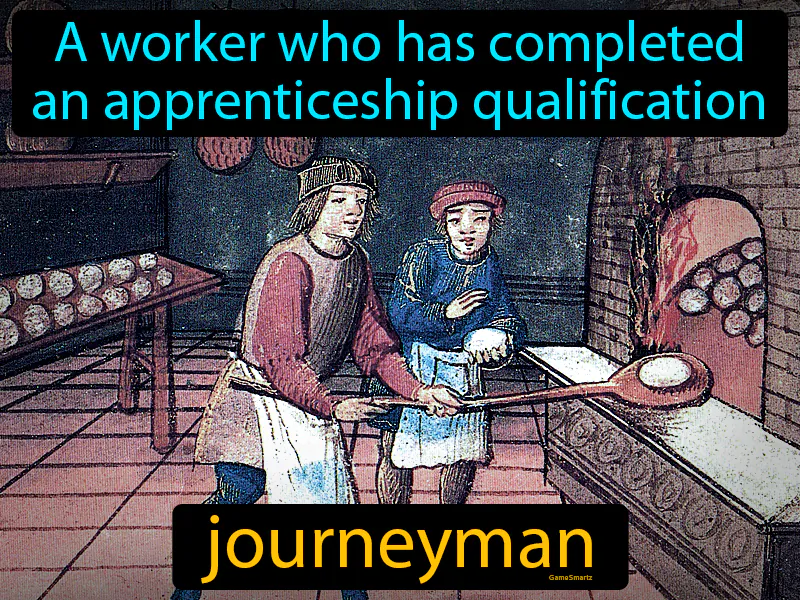
The term “journeyman” evokes images of medieval guilds, dusty workshops, and a time when a craft was passed down through centuries of tradition. Historically, a journeyman was a skilled worker who had completed an apprenticeship but was not yet a “master.” They were entitled to work for others and were paid by the day (the word comes from the French journée, meaning day).
However, in the hyper-fast world of technology, software engineering, and digital systems, the concept of the journeyman has seen a profound resurgence. Within the tech niche, a journeyman represents a pivotal stage in a developer’s or engineer’s career—a phase defined by competence, reliability, and the bridge between theoretical knowledge and high-level architectural mastery. Understanding what “journeyman” means today is essential for anyone navigating the complexities of software development, digital security, and AI integration.
The Evolution of the Digital Craft: From Trades to Tech
To understand the modern tech journeyman, we must first look at how the software industry adopted the terminology of the ancient guilds. Software development is often described as “craftsmanship” rather than just science or engineering. This mindset suggests that coding is an art form that requires years of practice to master.
The Historical Context of the Guild System
In the traditional guild system, an individual moved through three distinct phases: Apprentice, Journeyman, and Master. The apprentice learned the basics under a master. The journeyman, having proven their skill, traveled from workshop to workshop to gain experience in different environments and techniques. This “journeying” was critical for rounding out their education.
Translating “Journeyman” to Software Engineering
In modern technology, we rarely use the word “journeyman” on a LinkedIn profile, but the role exists under titles like “Intermediate Developer” or “Level II Engineer.” A journeyman in tech is someone who no longer needs their hand held. They can take a feature request, design a solution, and implement it with minimal supervision. They have moved past the “copy-pasting from Stack Overflow” phase and have entered the phase of understanding why a certain design pattern works over another.
Defining the Journeyman Developer Profile
The transition from a junior (apprentice) to a journeyman is a significant milestone. It marks the point where a technologist moves from learning the syntax of a language to mastering the ecosystem of a technology stack.
Beyond Junior, Not Quite Senior
A junior developer focuses on getting the code to run. A journeyman developer focuses on making the code maintainable, readable, and efficient. The “journeyman” phase is where the bulk of the tech workforce resides. They are the “doers” who build the features, fix the bugs, and maintain the infrastructure that keeps the digital world spinning. Unlike a senior engineer, who might spend more time on system architecture and cross-team strategy, the journeyman is deeply focused on the execution of high-quality code.
Core Competencies and Tool Proficiency
A journeyman in tech is expected to be proficient with a wide array of tools. This includes:
- Version Control: Moving beyond basic
git pushto handling complex merges and rebases. - Testing Frameworks: Writing unit and integration tests as a standard part of the workflow.
- CI/CD Pipelines: Understanding how code moves from a local machine to a production environment.
- API Design: Creating interfaces that are intuitive for other developers to use.
The Shift from Learning to Doing
One of the defining characteristics of a journeyman is autonomy. While a junior dev might ask, “How do I write a loop in Python?” a journeyman asks, “Which data structure will optimize this search algorithm for our specific scale?” This shift from syntax-level questions to implementation-level logic is the hallmark of the journeyman.
Navigating the Mid-Career Tech Plateau
The “journeyman” phase can be the longest period of a tech career. For many, it lasts five to ten years. During this time, the goal is to accumulate as much varied experience as possible—mirroring the historical journeyman’s travels between different workshops.

Mastering Modern Tech Stacks
In the tech world, “journeying” often means moving between different tech stacks. A journeyman might spend two years working on a React/Node.js stack and then move to a company using Go and Kubernetes. This cross-pollination of technologies is what builds the “T-shaped” skill set: deep expertise in one area with a broad understanding of several others.
The Role of Digital Security and AI Tools
Modern journeymen must integrate digital security and AI tools into their daily workflow. It is no longer enough to just write code; it must be secure code. A journeyman understands common vulnerabilities (OWASP Top 10) and uses automated security scanners to protect their applications. Furthermore, the rise of AI-assisted coding tools like GitHub Copilot has changed the journeyman’s role. They use these tools to automate boilerplate tasks, allowing them to focus on the more complex logical problems that AI still struggles to solve autonomously.
Building a Portfolio of Real-World Solutions
The journeyman phase is about building “scar tissue.” This comes from seeing systems fail, debugging production outages at 3 AM, and living through the consequences of poor architectural choices. Each of these experiences adds to their value, making them more resilient and insightful technologists.
The Software Craftsmanship Movement
In the early 2000s, a movement emerged called “Software Craftsmanship,” which explicitly used the apprentice-journeyman-master model to improve the industry’s standards. This movement emphasizes that the quality of the work is just as important as the functionality.
Code Quality and Maintainability
For a journeyman, the phrase “it works on my machine” is an admission of failure. They understand that code is read much more often than it is written. Therefore, they adhere to principles like SOLID, DRY (Don’t Repeat Yourself), and KISS (Keep It Simple, Stupid). They treat their code as a craft, ensuring that the next developer who touches it (who might be their future self) can understand the logic without a map.
Mentorship and the Transfer of Knowledge
While the journeyman is still learning from masters, they also begin the process of mentoring apprentices. In a tech team, this happens through code reviews. A journeyman uses code reviews not just to find bugs, but to teach junior developers better ways of thinking about problems. This dual role of student and teacher is a core component of the journeyman identity.
Future-Proofing the Journeyman Role in the AI Era
As Artificial Intelligence continues to evolve, the definition of a journeyman in tech is shifting again. There is a growing concern that AI will “skip” the need for mid-level developers, but the reality is quite the opposite.
Adapting to AI-Assisted Coding
The journeyman of the future will be an “AI Orchestrator.” Rather than writing every line of code by hand, they will use AI to generate prototypes and then use their journeyman-level expertise to audit, refine, and integrate that code into a larger, complex system. The ability to verify the output of an AI is a skill that only a journeyman—someone with significant practical experience—can possess.
Scaling from Individual Contributor to Architect
The ultimate goal of the journeyman is to eventually become a master (or Senior/Staff Engineer). This transition happens when the individual stops thinking about how to solve a single problem and starts thinking about how to solve classes of problems. They begin to see the “big picture”—how the software interacts with the hardware, how the data flows across the network, and how the team’s culture affects the code they produce.

Conclusion
What does journeyman mean in tech? It means being a reliable, skilled, and autonomous practitioner of the digital craft. It is the vital middle ground where the most significant growth happens. In an era of rapid technological change, the journeyman’s commitment to continuous learning, code quality, and the mastery of new tools like AI and cloud infrastructure is what keeps the industry moving forward.
While the tools have changed from hammers and anvils to IDEs and cloud servers, the spirit of the journeyman remains the same: a dedication to the craft, a hunger for experience, and the steady pursuit of mastery in an ever-evolving landscape. Whether you are a junior looking to level up or an organization looking to hire, understanding the value of the journeyman is key to building a robust and innovative tech ecosystem.
aViewFromTheCave is a participant in the Amazon Services LLC Associates Program, an affiliate advertising program designed to provide a means for sites to earn advertising fees by advertising and linking to Amazon.com. Amazon, the Amazon logo, AmazonSupply, and the AmazonSupply logo are trademarks of Amazon.com, Inc. or its affiliates. As an Amazon Associate we earn affiliate commissions from qualifying purchases.