
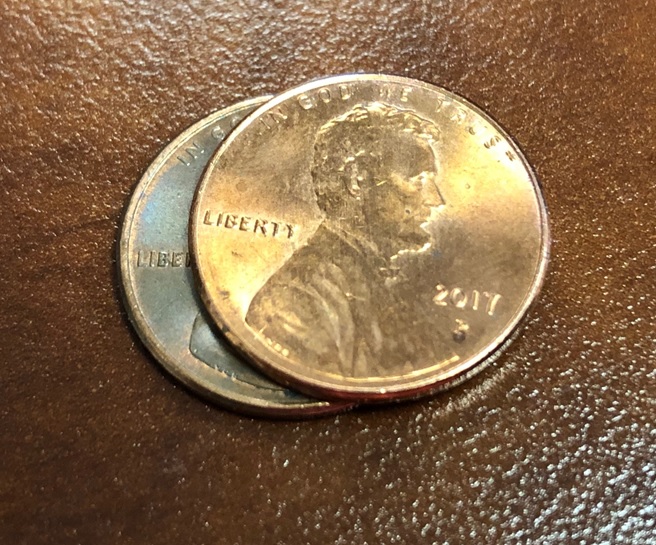
Finding a penny on the ground is an experience almost everyone has encountered at some point in their lives. While many dismiss it as a trivial event or a mere sign of someone’s loose change falling out of a pocket, there is a broader financial and psychological perspective to consider. From a personal finance standpoint, finding a penny serves as a micro-lesson in the velocity of money, the psychology of saving, and the fundamental importance of acknowledging the smallest denominations of currency. Whether you view it as a stroke of good luck or simply a piece of discarded metal, understanding the financial implications of finding a penny can shift how you perceive your overall relationship with money.
The Financial Reality of Micro-Currency
In the modern digital age, where transactions are increasingly automated and cashless, physical currency—especially the lowly penny—is often viewed as obsolete. However, neglecting small change is a symptom of a larger issue in personal finance: the lack of attention to incremental gains.
The Value of Compounding
Personal finance experts often emphasize the power of compounding. While a single penny earned in interest or found on the sidewalk seems negligible, it represents the base unit of wealth accumulation. If you consistently ignore small amounts of money because they appear “worthless,” you are subconsciously training yourself to undervalue the building blocks of capital. Wealth is rarely built in massive, sudden leaps; it is constructed through the disciplined collection and management of small sums. By picking up that penny, you are acknowledging that currency has value regardless of its denomination.
The Cost of Inflation and Purchasing Power
Critics of the penny often point to the fact that it costs more to manufacture a cent than it is actually worth. From a strictly business finance perspective, the penny is an inefficient tool. However, for the individual, the penny remains a legal tender that retains the ability to be saved or invested. When you find a penny, you are technically experiencing a 100% return on investment—you acquired an asset with zero cost. While the purchasing power of a single cent is limited, the habit of identifying and securing “found” assets is a foundational trait of successful investors.
The Psychology of Found Money: A Financial Mindset
Beyond the raw math, the act of picking up a penny is a behavioral trigger. It signals to your brain that you are a person who notices and respects money. In behavioral finance, small habits determine long-term success.
Developing Financial Mindfulness
Financial mindfulness is the practice of being acutely aware of where your money comes from, where it goes, and how it is managed. Many people struggle with financial health because they are “leaky”—small amounts of money disappear through unused subscriptions, transaction fees, or neglected change. When you find a penny and take the time to notice it, you are practicing a form of financial mindfulness. You are breaking the cycle of indifference. By deciding that even the smallest denomination is worth your attention, you become more likely to notice larger, more significant financial inefficiencies in your life, such as high-interest debt or unnecessary monthly recurring expenses.
The “Penny-Pincher” vs. The “Strategic Saver”
There is a negative stigma attached to being a “penny-pincher,” often associated with extreme stinginess. However, there is a profound difference between being miserly and being fiscally diligent. Finding a penny and choosing to save it—perhaps by placing it in a jar that eventually goes into a savings account—is an act of discipline. This habit cultivates a “saver’s mindset.” A person who understands that pennies add up to dollars is less likely to engage in impulsive spending. The penny acts as a tangible reminder that wealth is cumulative.

Converting Small Change into Large Capital
What should you actually do when you find a penny? It may seem like a trivial question, but the answer dictates your financial trajectory. Transforming small finds into a systematic savings plan is where the true value lies.
The Power of the “Change Jar”
While digital banking has automated much of our saving, physical change jars remain a potent tool for subconscious wealth building. The act of physically depositing found coins into a dedicated vessel creates a sensory connection to the act of saving. When that jar fills up, it represents “found money”—capital that was not part of your planned budget. This is the perfect money to move into a high-yield savings account or a brokerage account. By treating found money as an investment vehicle rather than “spending money” for vending machines, you turn a minor occurrence into a contribution to your net worth.
From Pennies to Portfolio
It is helpful to consider the penny as a metaphor for asset allocation. If you cannot manage a single cent, you will likely struggle to manage a multi-asset portfolio. This is why many financial advisors suggest that young investors start with micro-investing apps that round up purchases to the nearest dollar. These apps leverage the exact same psychological principle as the “found penny”: they take the small, invisible remainders of your financial life and aggregate them into meaningful capital. Whether you find a penny on the sidewalk or your banking app rounds up your coffee purchase, the financial outcome is the same: you are increasing your total assets.
The Broader Economic Context of Small Denominations
While the individual penny may seem insignificant, the aggregate data shows otherwise. Financial systems rely on the precision of these small denominations to ensure market stability and accurate accounting.
The Role of Small Denominations in Business
Businesses operate on margins that are often measured in fractions of a cent. Retailers know that by pricing items at “.99,” they utilize the psychological threshold of the consumer. Understanding the penny means understanding that businesses are constantly optimizing for the smallest possible unit of value. When you find a penny, you are participating in the macro-economy of currency circulation. It is a reminder that the global financial system is built on billions of tiny, interconnected transactions. Recognizing this helps you understand why businesses track every cent—and why you should, too.
Changing Trends in Currency Usage
As we move toward a digital-first economy, the physical penny may eventually be phased out in many jurisdictions. However, the concept of the penny—the smallest unit of currency—will always remain. Even in a cryptocurrency or digital wallet environment, transactions are measured in “Satoshis” or other tiny units. The core principle remains unchanged: success in personal finance is about the efficient accumulation of value, regardless of how small the unit is. Finding a penny in the physical world is a tactile training exercise for the digital financial world. It conditions you to value the small gains that, when compounded, create the wealth necessary for financial independence.

Final Reflections on Finding a Penny
Ultimately, the meaning of finding a penny is entirely defined by the person who finds it. If you view it as trash, it remains a nuisance. If you view it as a piece of your financial portfolio, it is an opportunity.
To improve your financial health, start by adopting a philosophy of “radical awareness.” When you see a penny, acknowledge it. Recognize it as a unit of wealth that has been overlooked by others. Whether you add it to a savings jar, invest it through a micro-investment platform, or simply use it to reinforce your commitment to fiscal discipline, the act of valuing the small makes you better equipped to steward the large. Financial freedom is not achieved through massive windfalls; it is achieved through the consistent, deliberate management of your resources, starting from the very first cent.
aViewFromTheCave is a participant in the Amazon Services LLC Associates Program, an affiliate advertising program designed to provide a means for sites to earn advertising fees by advertising and linking to Amazon.com. Amazon, the Amazon logo, AmazonSupply, and the AmazonSupply logo are trademarks of Amazon.com, Inc. or its affiliates. As an Amazon Associate we earn affiliate commissions from qualifying purchases.