
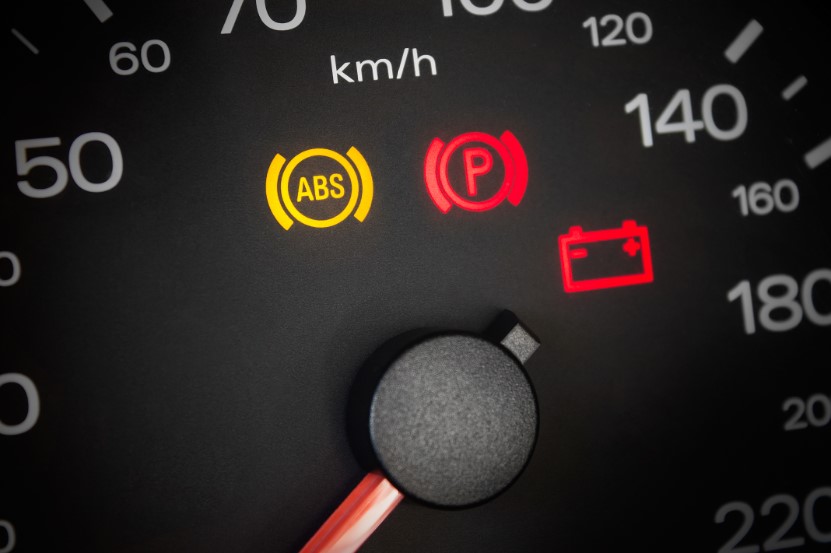
The modern vehicle is no longer a purely mechanical assembly; it is a sophisticated mobile computer network. Among the various subsystems designed to ensure passenger safety and operational efficiency, the Anti-lock Braking System (ABS) stands as one of the most critical technological advancements in automotive history. When the amber or red ABS light illuminates on your dashboard, it is not merely a suggestion to check your brakes—it is a digital notification that the vehicle’s Electronic Control Unit (ECU) has detected a malfunction within a complex hardware-software feedback loop.
Understanding what it means when this light comes on requires a deep dive into the underlying technology, the diagnostic protocols governing the system, and the sophisticated sensor arrays that keep modern vehicles rubber-side down.
Understanding the Architecture of the Anti-lock Braking System
To understand why the ABS light activates, one must first grasp the technological ecosystem it monitors. The ABS is an automated system that uses the principles of threshold braking and cadence braking, techniques once practiced only by expert racing drivers, and translates them into an algorithmic response that occurs in milliseconds.
The Role of Wheel Speed Sensors and Data Acquisition
At the heart of the ABS are the wheel speed sensors, typically located at each wheel hub. These are highly sensitive hardware components—often Hall effect sensors or variable reluctance sensors—that monitor the rotational speed of each tire. As the wheel spins, a toothed “tone ring” passes by the sensor, creating an electromagnetic pulse.
This pulse is converted into a digital signal and sent to the ABS control module. The system is essentially a high-speed data acquisition unit, constantly measuring whether one wheel is decelerating at a rate significantly faster than the others, which indicates an impending lock-up. When the light comes on, it often means the data stream from these sensors has become corrupted, inconsistent, or lost entirely.
The Electronic Control Unit (ECU): The Brain of the Operation
The ABS has its own dedicated microprocessor, often integrated into the primary Engine Control Unit or acting as a standalone module. This computer runs a continuous diagnostic “heartbeat.” It processes the incoming data from the wheel sensors and executes a sophisticated algorithm to determine if hydraulic pressure needs to be modulated.
If the ECU detects an anomaly—such as a software logic error or a “plausibility fault” where the data provided does not match the physics of the vehicle’s movement—it will trigger the warning light. At this point, the system often enters a “fail-safe” mode, disabling the ABS functionality while retaining standard mechanical braking.
Hydraulic Actuators and the Feedback Loop
The final piece of the architecture is the hydraulic modulator unit, which includes a series of electrically controlled valves and a pump. When the software detects a skid, it commands these valves to open and close rapidly—up to 15 to 20 times per second. This rapid-fire pulse prevents the brake calipers from locking the rotors. The ABS light may illuminate if the computer detects that a valve is stuck or if the pump motor is not responding to electronic commands, indicating a mechanical failure within an electronic interface.
Decoding the Diagnostic Trouble Codes (DTCs)
When the ABS light illuminates, the vehicle’s On-Board Diagnostics (OBD-II) system stores a specific piece of data known as a Diagnostic Trouble Code (DTC). This is the primary way the vehicle communicates its internal state to a technician or a DIY enthusiast using a scanning tool.
How the On-Board Diagnostics System Communicates Faults
The ABS light is the user interface for a much deeper diagnostic layer. Unlike a simple mechanical switch, the ABS light is triggered by the system’s self-test. Every time you start your car, the ABS module runs a Power-On Self-Test (POST), similar to a computer booting up. It checks the resistance of the circuits and the integrity of the software.
If a fault is found, the system generates a code, usually starting with “C” (for Chassis). For example, a code like C0035 might indicate a problem with the front left wheel speed sensor circuit. Without a digital scan tool, the driver only sees the warning light, but the underlying tech is providing a roadmap to the specific hardware or software failure.
Common Software-Side Triggers for the Warning Light
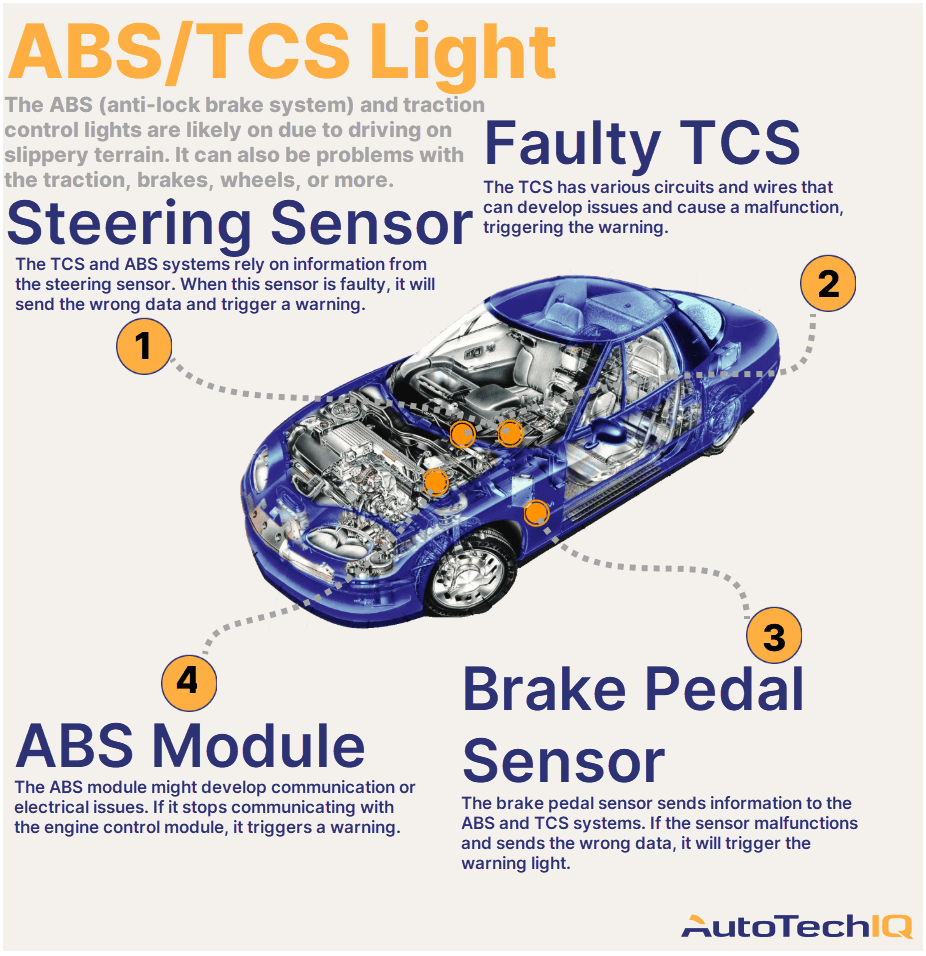
Not all ABS issues are caused by broken parts; some are the result of data processing errors. Software-side triggers can include:
- Signal Interruption: If a sensor sends a “noisy” signal due to electromagnetic interference (EMI) from other electronic components, the ABS module may flag this as a malfunction.
- Calibration Errors: If a vehicle has been modified with different tire sizes without updating the ECU’s software parameters, the computer may perceive the difference in rotational speed as a permanent error state.
- Low System Voltage: The ABS module is sensitive to voltage fluctuations. If the vehicle’s battery or alternator is failing, the drop in voltage can cause the ABS computer to “brown out” or register a fault, even if the braking hardware is perfectly fine.
Hardware vs. Software Failure: Why the Indicator Illuminates
The persistence of an ABS light usually boils down to a breakdown in either the physical sensing environment or the electronic communication network.
Physical Component Degradation and Signal Interference
Despite being a high-tech system, the ABS operates in one of the harshest environments on a vehicle. Wheel speed sensors are exposed to road salt, water, extreme heat from the brake rotors, and physical debris.
A common reason for the ABS light is the accumulation of metallic debris on the magnetic tip of the sensor. Since the sensor relies on magnetism to “count” the teeth on the tone ring, a layer of iron filings or road grime can muffle the signal. From the perspective of the ABS computer, the signal has gone “flatline,” leading it to illuminate the light to warn the driver that it can no longer “see” what that wheel is doing.
Electronic Interference and Connectivity Issues
Modern vehicles utilize a communication protocol known as Controller Area Network (CAN bus). This allows different modules (like the engine, transmission, and ABS) to talk to each other over a shared pair of wires.
If there is a break in the CAN bus wiring, or if a connector has become corroded, the ABS module may lose its connection to the rest of the vehicle. When the light comes on, it could mean the ABS module is perfectly healthy, but it has been “orphaned” from the network and can no longer receive the vital data it needs—such as steering angle or vehicle speed—to perform its safety functions.
The Future of Braking Technology: ADAS and Autonomous Integration
As we move toward more advanced vehicle platforms, the “ABS light” is evolving from a standalone warning into a critical indicator for broader Advanced Driver Assistance Systems (ADAS).
From Passive Safety to Active Collision Avoidance
In modern tech-heavy vehicles, the ABS is no longer just about preventing skids during manual braking. It is integrated into Electronic Stability Control (ESC) and Automatic Emergency Braking (AEB). These systems use the ABS hardware to autonomously apply brakes if the vehicle’s cameras or radar detect an impending collision.
When the ABS light comes on in a high-tech car, it often disables these autonomous features as well. This creates a ripple effect: a single faulty $50 sensor can deactivate a suite of multi-thousand-dollar safety technologies, highlighting the interconnected nature of modern automotive software.
Over-the-Air (OTA) Updates and Predictive Maintenance
The next frontier for resolving ABS and related lighting issues is Over-the-Air (OTA) updates, popularized by manufacturers like Tesla and integrated into new fleets from Ford, GM, and others. In the past, a software bug in the ABS logic required a physical recall and a trip to the dealership. Today, manufacturers can push software patches directly to the vehicle’s wireless module to refine ABS algorithms or clear “ghost” codes caused by software glitches.
Furthermore, we are seeing the rise of predictive maintenance algorithms. Instead of waiting for a sensor to fail and the light to come on, the vehicle’s AI can monitor trends in the data. If it notices a sensor’s signal strength is degrading over several weeks, it can alert the owner via a smartphone app that a component is nearing the end of its lifecycle. This shifts the paradigm from “reactive” diagnostics (waiting for the light) to “proactive” system management.
Conclusion: The Digital Safeguard
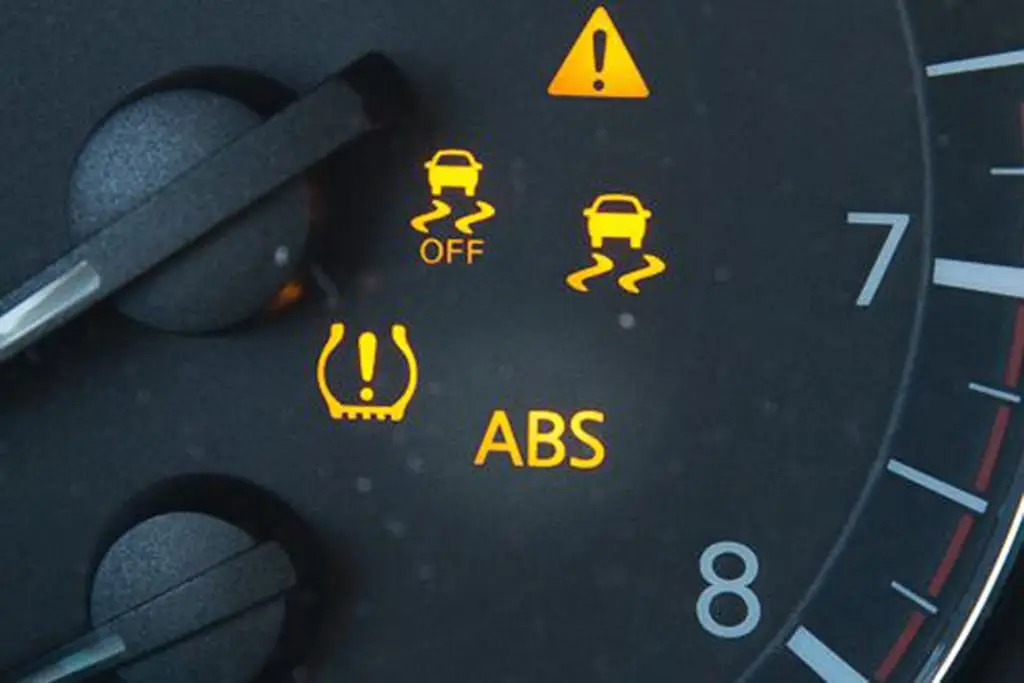
When your ABS light comes on, it represents the intersection of mechanical engineering and computer science. It is an indication that the sophisticated digital safeguard designed to monitor your vehicle’s physical dynamics has detected an anomaly it cannot resolve. Whether caused by a fouled sensor, a voltage drop, or a communication error on the CAN bus, the light is an essential diagnostic tool in the age of the “computer on wheels.”
Ignoring the light doesn’t just mean losing anti-lock capabilities; it means operating a vehicle that is essentially “blind” to its own rotational physics. In a world where software increasingly dictates the safety and performance of our transport, the ABS light remains one of the most important status updates a driver can receive.
aViewFromTheCave is a participant in the Amazon Services LLC Associates Program, an affiliate advertising program designed to provide a means for sites to earn advertising fees by advertising and linking to Amazon.com. Amazon, the Amazon logo, AmazonSupply, and the AmazonSupply logo are trademarks of Amazon.com, Inc. or its affiliates. As an Amazon Associate we earn affiliate commissions from qualifying purchases.