
While often interpreted as a simple sign of happiness akin to a dog’s enthusiastic wag, a cat’s tail movements are far more nuanced and communicative. Understanding the subtle shifts and rhythms of your feline companion’s tail can unlock a deeper understanding of their emotional state, intentions, and even their underlying physiological responses. Far from being a singular gesture, tail wagging in cats is a complex language, a dynamic display that can convey everything from playful excitement to outright aggression, and everything in between.
The Multifaceted Language of the Feline Tail
Cats employ their tails as an integral part of their non-verbal communication. This highly sensitive appendage, composed of numerous vertebrae and muscles, allows for a wide range of motion and expression. Each flick, twitch, or sweep carries a distinct meaning, and observing these movements in conjunction with other body language cues, such as ear position, pupil dilation, and vocalizations, is crucial for accurate interpretation.
Expressing Contentment and Excitement
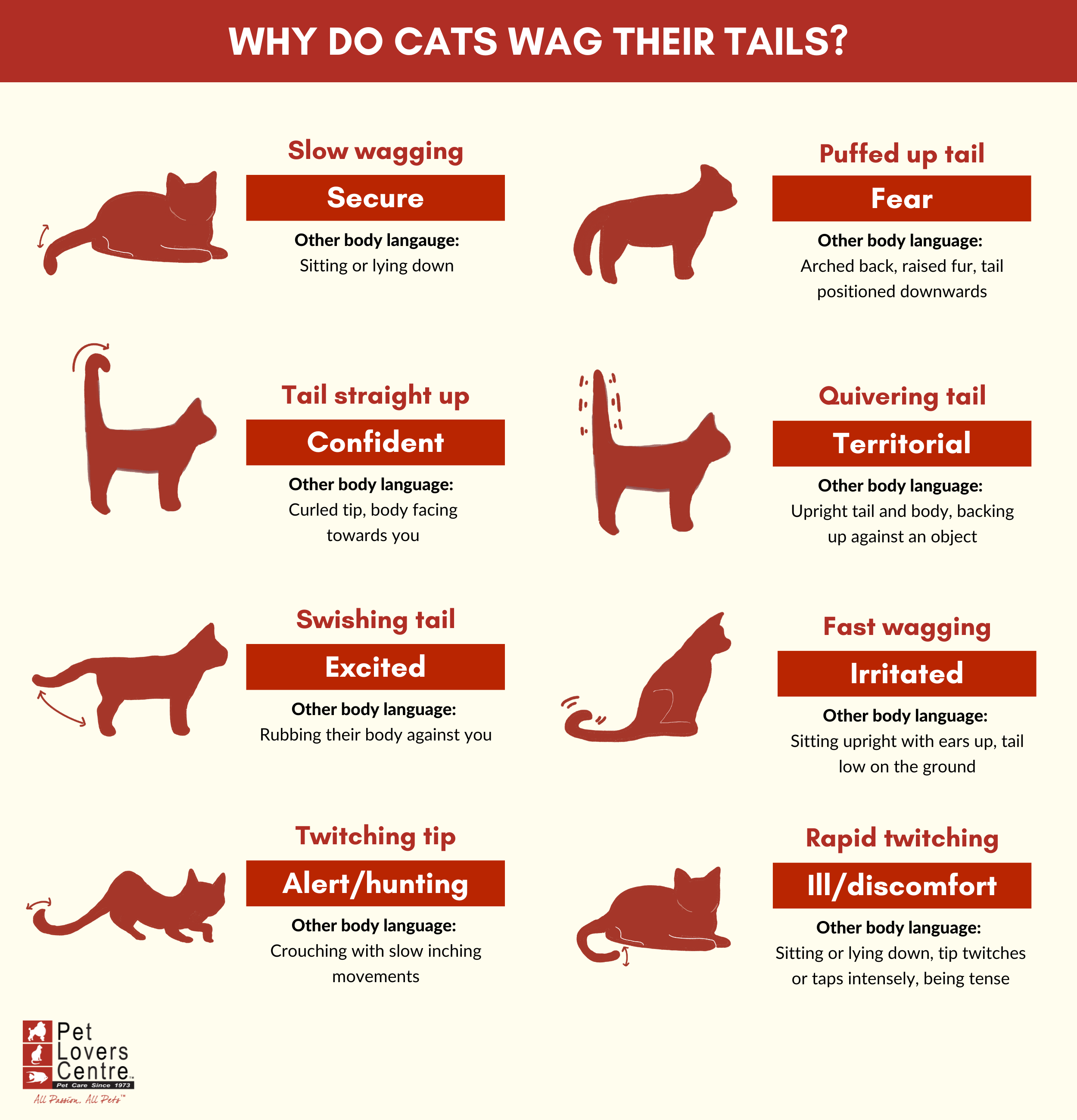
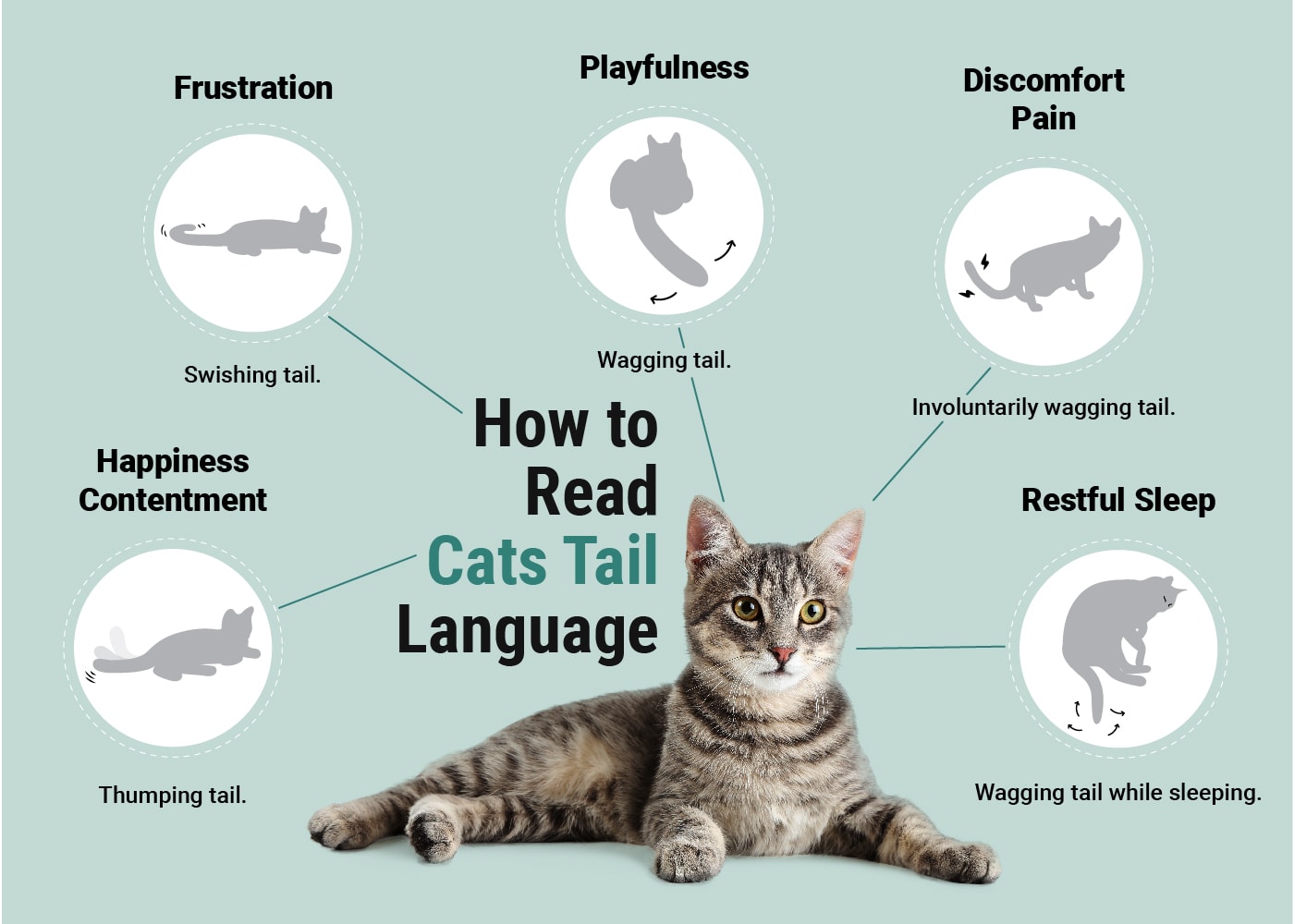
When a cat’s tail is held high, often with a slight curve or a gentle twitch at the tip, it typically signifies happiness, confidence, and a friendly disposition. This is the tail wag most commonly associated with positive emotions. A slow, rhythmic swishing might indicate a cat is enjoying your company or a particularly pleasing sensory experience, such as being petted or receiving a favorite treat. In this context, the wag is a subtle yet clear signal of contentment and engagement.
The Signal of Agitation and Warning
Conversely, a fast, agitated wagging of the tail, often accompanied by a lashing motion, is a definitive indicator of distress, frustration, or anger. This is a warning signal, a clear sign that the cat is feeling overwhelmed, threatened, or is on the verge of acting out. If you observe this type of tail movement, it’s advisable to give the cat space and avoid further interaction until they have calmed down. The intensity and speed of the wag often correlate with the level of agitation. A sharp, violent flick can precede a hiss, a swat, or even a bite.
Curiosity and Exploration
A tail that twitches rapidly at the tip, while the rest of the tail remains relatively still or is held in a neutral position, often signifies intense focus and curiosity. This is commonly seen when a cat is observing something of interest, such as a bird outside the window, a moving toy, or another animal. The rapid tip twitch is indicative of heightened sensory processing and anticipation, as the cat gathers information and prepares for a potential response, whether it be a pounce or simply continued observation.
Beyond Simple Wagging: Other Tail Gestures and Their Meanings
The “wag” is not the only significant tail movement in a cat’s repertoire. A variety of other postures and motions contribute to their complex communication system.
The “Question Mark” Tail
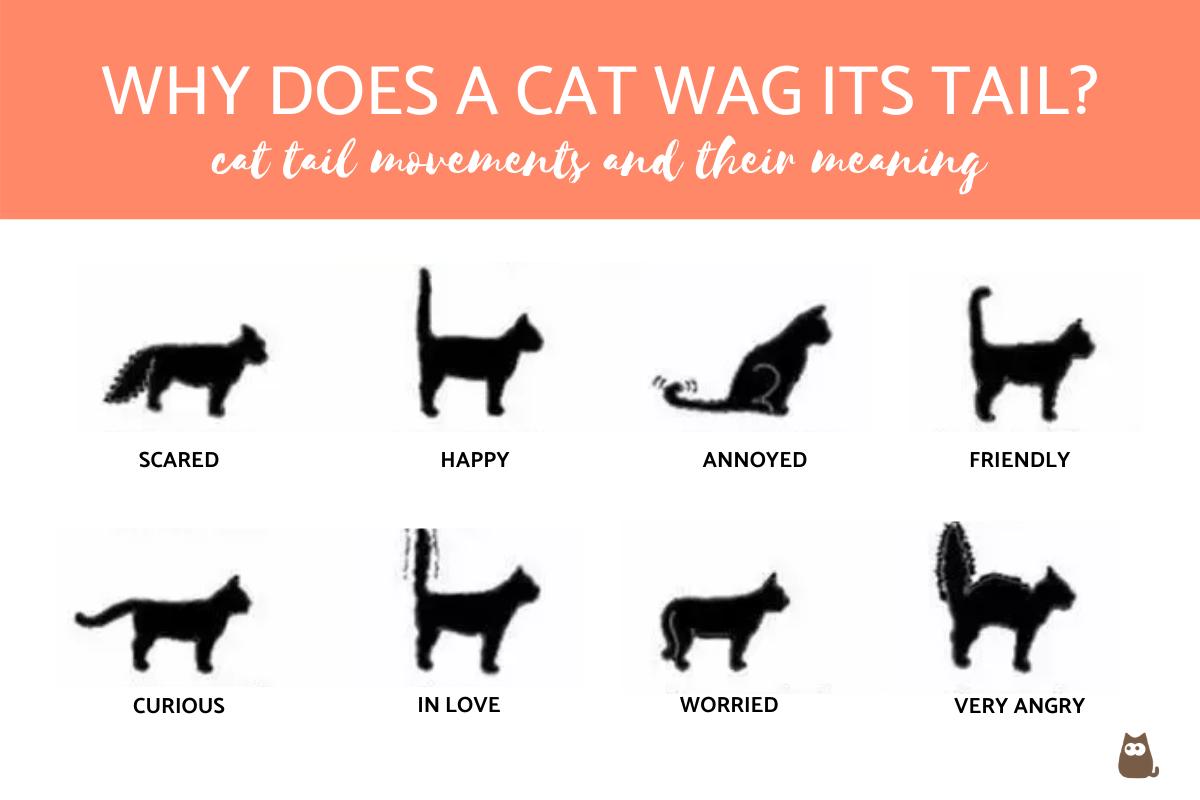
When a cat holds its tail in a gentle curve, resembling a question mark, it generally indicates a friendly and curious greeting. This posture is often accompanied by a soft purr and is a sign that the cat is open to interaction and is seeking your attention in a positive way. This is a particularly endearing gesture that many cat owners recognize as a sign of affection.
The Puffed-Up Tail
A tail that appears significantly thicker and bushier than usual, often described as “bottlebrush,” is a clear sign of fear or aggression. This is a defensive mechanism, designed to make the cat appear larger and more intimidating to a perceived threat. The hair on the tail stands on end, and the tail may also be held low or tucked between the legs, depending on the underlying emotion. This is a strong indicator that the cat feels threatened and is preparing to defend itself.
The Tucked Tail
A tail tucked tightly beneath the body or between the legs is a universal sign of fear, insecurity, or submission. This posture is adopted when a cat feels vulnerable and is trying to make itself as small and unthreatening as possible. It’s important to recognize this as a sign of distress and to provide a safe and calming environment for the cat.
The Biological and Evolutionary Roots of Tail Communication
The sophisticated use of tails in feline communication has deep evolutionary roots. In wild ancestors, a well-controlled tail was crucial for balance during hunting, climbing, and navigating complex terrains. Over time, this physical utility became intertwined with social signaling.
Vestiges of Ancestral Instincts
While domestic cats may not be actively hunting large prey on a daily basis, the ingrained behaviors and communication methods developed for survival in the wild remain. The tail, being a prominent and easily manipulated appendage, naturally evolved as a primary tool for conveying information within social groups and to potential threats. The ability to signal intent, mood, and status through tail movements would have conferred a significant survival advantage.
Tail as an Indicator of Neurological and Emotional States
The tail’s connection to the nervous system is profound. The same neural pathways that govern emotional responses also influence tail movements. Therefore, tail behavior can serve as an outward manifestation of a cat’s internal neurological and emotional state. Understanding these connections allows us to better interpret their behavior and respond appropriately to their needs. For instance, a cat experiencing pain or discomfort might exhibit unusual tail twitches or a lack of normal tail movement, signaling something is amiss even before other symptoms become apparent.
Recognizing the Context: The Key to Accurate Interpretation
As with any form of communication, context is paramount when interpreting a cat’s tail wagging. A slight twitch of the tail while a cat is asleep might be a dream-related movement, while the same twitch while it’s staring intently at a toy signals predatory focus.
Observing the Whole Cat
Never interpret tail movements in isolation. Always consider the cat’s entire body language. Are its ears forward or back? Are its pupils dilated or constricted? Is it purring, hissing, or meowing? These accompanying cues provide invaluable context for understanding the precise meaning of the tail’s actions. A tail held high with relaxed ears and a soft gaze is a very different message than a tail held high with flattened ears and wide eyes.
Individual Differences and Learned Behaviors
It’s also important to acknowledge that individual cats have their own personalities and may develop unique ways of expressing themselves. Some cats are naturally more expressive with their tails than others. Furthermore, through interaction with humans and other animals, cats can learn to associate certain tail movements with specific outcomes, refining their communication over time. For example, a cat might learn that a specific tail flick elicits a treat, and therefore use it more frequently when seeking rewards.
In conclusion, the seemingly simple act of a cat wagging its tail is a rich and complex form of communication. By paying close attention to the nuances of these movements, combined with a holistic understanding of feline body language, we can foster deeper bonds with our feline companions and better understand their needs and emotions. Their tails are not just appendages; they are eloquent storytellers, revealing a world of feline thought and feeling to those who take the time to listen.
aViewFromTheCave is a participant in the Amazon Services LLC Associates Program, an affiliate advertising program designed to provide a means for sites to earn advertising fees by advertising and linking to Amazon.com. Amazon, the Amazon logo, AmazonSupply, and the AmazonSupply logo are trademarks of Amazon.com, Inc. or its affiliates. As an Amazon Associate we earn affiliate commissions from qualifying purchases.