
The term “exempt” in the context of employment often sparks confusion, particularly for those navigating the job market or managing a workforce. Understanding what constitutes an exempt job is crucial for both employers and employees, as it directly impacts legal obligations, compensation, and day-to-day work realities. At its core, an exempt job signifies a position that is not subject to certain provisions of labor laws, most notably the overtime pay requirements mandated by legislation like the Fair Labor Standards Act (FLSA) in the United States. This exemption is typically granted based on the nature of the work performed, the employee’s level of responsibility, and their salary. It’s a classification that carries significant financial and practical implications, shaping the employment relationship in fundamental ways.
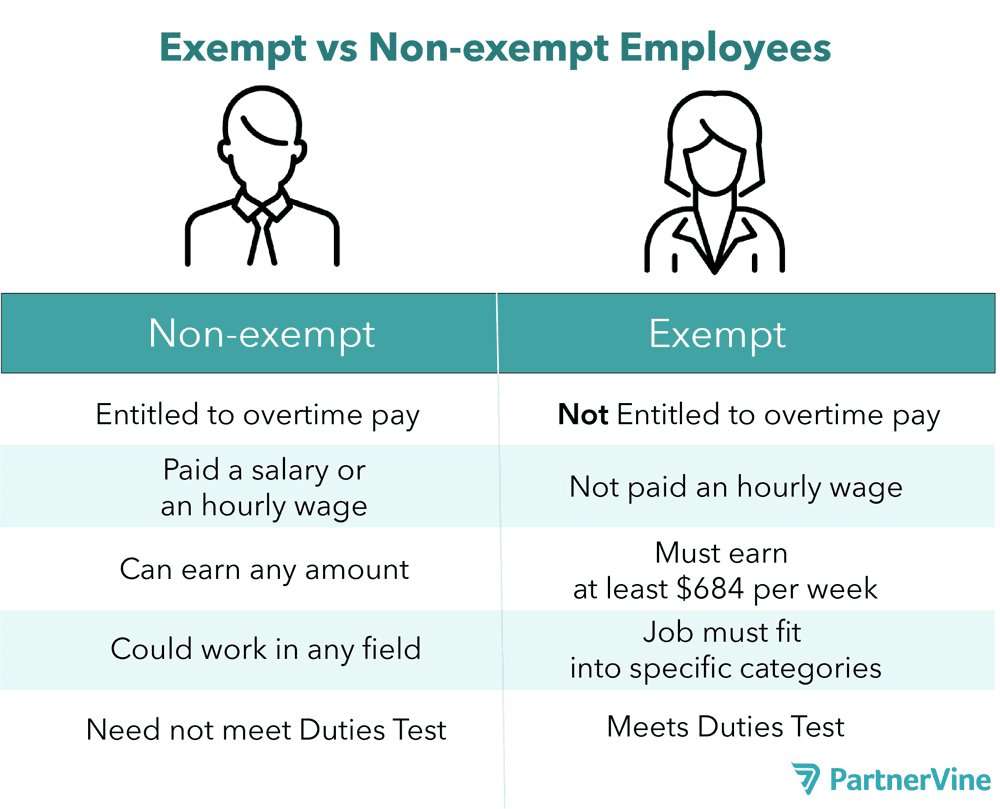
The concept of exempt versus non-exempt status is not an arbitrary designation. It’s a legal framework designed to differentiate between roles that are considered professional, administrative, or executive in nature and those that are not. For employers, correctly classifying positions is a matter of compliance, with significant penalties for misclassification. For employees, understanding their status can shed light on why they may or may not be eligible for overtime pay, a critical component of their overall compensation. This article will delve into the intricacies of exempt job classifications, exploring the criteria used, the common types of exempt roles, and the implications for both parties involved in the employment dynamic.
Understanding the Core Criteria for Exemption
The classification of a job as exempt is not a simple declaration by an employer; it’s governed by specific legal tests and criteria. These criteria are designed to ensure that the exemption is applied to roles that genuinely align with the spirit of the law, which generally aims to protect workers from exploitative labor practices, particularly concerning excessive hours without commensurate pay. The FLSA, for instance, outlines a framework that has been adopted or influenced labor laws in many jurisdictions. For a position to be considered exempt, it typically must meet a combination of salary and duties tests.
The Salary Basis Test
One of the foundational requirements for many exempt classifications is that the employee must be paid on a fixed, predetermined salary basis. This means they receive a set amount of compensation each pay period, regardless of the quantity or quality of the work performed during that period. This salary must also meet a minimum threshold, which is regularly updated by regulatory bodies. If an employee’s salary falls below this established minimum, they generally cannot be classified as exempt, even if their duties would otherwise qualify.
Understanding the Salary Level Requirements
The specific salary thresholds for exempt status are not static. They are subject to review and adjustment by government agencies to account for inflation and changes in the economic landscape. Employers must stay informed about these updates to ensure ongoing compliance. The salary basis test also specifies that the employer cannot dock an employee’s pay for absences of less than a full workday, except in specific, legally defined circumstances. This is because the essence of a salary is that it’s a fixed payment for the position, not tied to precise hours worked.
The Duties Test: The Heart of Exemption
While salary is a critical component, the duties test is arguably the most complex and determinative factor in classifying a job as exempt. This test examines the actual tasks an employee performs and the level of discretion and independent judgment they exercise. The FLSA, for example, identifies several primary categories of exempt employees: executive, administrative, and professional employees. Each of these categories has its own specific set of duties that must be met for the exemption to apply.
Executive Exemption
To qualify for the executive exemption, an employee’s primary duty must be the management of the enterprise or a department within it. This includes customarily and regularly directing the work of at least two other employees. The executive employee must also have the authority to hire or fire other employees, or at least have their recommendations in such matters given particular weight. They are typically involved in strategic decision-making and oversight, rather than day-to-day operational tasks.
Administrative Exemption
The administrative exemption applies to employees whose primary duty is performing office or non-manual work directly related to the management or general business operations of the employer or its customers. This exemption is often characterized by the exercise of discretion and independent judgment on significant matters. Examples include employees involved in areas like human resources, finance, marketing, or legal services. Critically, the work must be more than just routine or clerical; it must involve making important decisions or providing expert advice.
Professional Exemption
The professional exemption covers employees engaged in work that requires a high degree of learning, often acquired by prolonged specialized intellectual instruction. This typically includes fields such as law, medicine, teaching, and accounting. There are two subcategories: learned professionals and creative professionals. Learned professionals rely on advanced knowledge and discretion, while creative professionals engage in work that is original and creative in character, such as a journalist or a musician. For both, the work must be predominantly intellectual and require consistent exercise of discretion and judgment.
Navigating the Nuances: Overtime and Other Implications
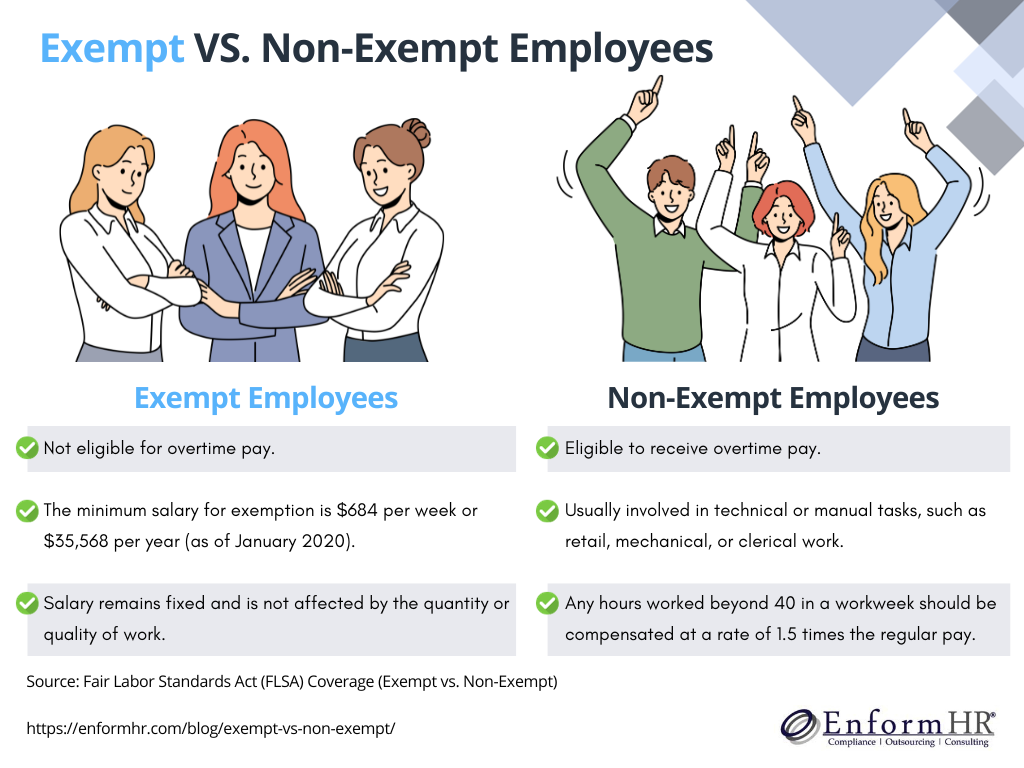
The distinction between exempt and non-exempt status has direct and significant consequences, particularly concerning overtime pay. Non-exempt employees are legally entitled to overtime compensation, typically at one and a half times their regular rate of pay, for any hours worked beyond a standard workweek (usually 40 hours). Exempt employees, by definition, are not entitled to this overtime pay. This difference can lead to vastly different compensation structures and work expectations.
The Absence of Overtime Pay for Exempt Employees
The fundamental implication of being classified as exempt is the forfeiture of overtime pay eligibility. Employers can require exempt employees to work more than 40 hours in a workweek without incurring additional overtime compensation. This doesn’t mean exempt employees are expected to work excessively without consideration; rather, their compensation is structured on the expectation that their role demands flexibility and potentially longer hours due to its strategic importance or the nature of their responsibilities. Their salary is intended to compensate them for the overall value of their contribution, rather than strictly by the clock.
The Risk of Misclassification
One of the most significant risks for employers is the misclassification of employees. If an employer incorrectly classifies a non-exempt employee as exempt, they can face substantial penalties. These can include back pay for unpaid overtime, liquidated damages (often equivalent to the back pay owed), legal fees, and civil penalties. Regulators take misclassification very seriously, as it represents a direct violation of labor laws designed to protect workers. Employers must regularly review their job classifications to ensure accuracy, especially when job duties evolve or new roles are created.
Impact on Employee Benefits and Expectations
Beyond overtime, the exempt vs. non-exempt distinction can subtly influence other aspects of the employment relationship. While not a direct legal requirement, exempt employees are sometimes perceived as having greater autonomy and flexibility in their work schedules. They might have more control over when and where they work, provided their responsibilities are met. Conversely, non-exempt employees are generally expected to adhere to more rigid schedules and be present for their designated work hours. It’s important to note that these are general perceptions and not hard-and-fast rules; company policy and the specific nature of the role will ultimately dictate the level of flexibility.
Common Examples of Exempt Job Roles
Understanding the theoretical criteria is one thing, but seeing them in practice can provide a clearer picture. Certain job titles and functions are consistently classified as exempt due to the nature of their duties and the responsibilities typically associated with them. These roles often involve decision-making, leadership, specialized knowledge, or the management of others, aligning with the core principles of the exemption tests.
Executive Roles
As mentioned, roles involving management and supervision are prime candidates for the executive exemption. This includes positions like:
- Company Presidents and CEOs: Their primary duty is managing the overall enterprise.
- Department Managers (e.g., Marketing Manager, Operations Manager): They oversee specific departments, direct staff, and are responsible for departmental performance.
- Store Managers (in larger retail settings): They often have significant responsibility for the store’s operations, staff, and profitability.
- Supervisors of teams: Even if not at a senior management level, those who directly and customarily direct the work of others can be considered executive exempt.
Administrative Roles
The administrative exemption is broad and encompasses many office-based positions that contribute to the general business operations. Common examples include:
- Human Resources Managers: Responsible for employee relations, benefits administration, and recruitment, requiring independent judgment.
- Financial Analysts and Controllers: Performing complex financial analysis, budgeting, and reporting that goes beyond basic bookkeeping.
- Marketing Specialists and Managers: Developing and implementing marketing strategies, requiring creativity and strategic decision-making.
- IT Managers and System Administrators (with significant decision-making power): While IT roles can vary, those responsible for system design, implementation, and high-level problem-solving often qualify.
- Purchasing Agents: Making significant decisions about acquiring goods and services for the company.
Professional Roles
The professional exemption is often tied to specific educational backgrounds and licenses. Key examples include:
- Doctors, Nurses, and other Healthcare Professionals: Their work requires extensive specialized knowledge and judgment.
- Lawyers and Paralegals (with significant independent work): Requiring legal education and the exercise of legal reasoning.
- Teachers and Professors: Their primary duty involves instruction and curriculum development, requiring specialized academic knowledge.
- Accountants and Auditors (with advanced degrees and responsibilities): Performing complex financial audits and advisory services.
- Engineers (in roles requiring advanced knowledge and design): Those involved in the design, development, and implementation of engineering solutions.
- Journalists and Writers (in creative, original capacities): Producing original content that requires creativity and judgment.
It’s crucial to remember that job titles alone are not determinative. The actual duties performed by the employee are paramount in determining exempt status. An individual with the title “Manager” might not be exempt if their day-to-day tasks don’t meet the criteria for managing others or exercising significant independent judgment. Conversely, someone without a “manager” title might be considered exempt if their role involves substantial administrative or professional responsibilities.
The Employer’s Responsibility and Employee’s Awareness
The classification of jobs as exempt or non-exempt places distinct responsibilities on both employers and employees. Employers are legally obligated to accurately classify their workforce, while employees have a vested interest in understanding their status and rights. This mutual awareness fosters a more transparent and compliant employment environment.
Employer’s Due Diligence in Classification
Employers have a significant legal and ethical obligation to ensure that all their employees are correctly classified. This involves:
- Conducting Regular Job Audits: Periodically reviewing job descriptions and actual employee duties to confirm correct classification.
- Understanding the Latest Legal Requirements: Staying abreast of changes in labor laws and regulatory guidance regarding exempt status.
- Documenting Duties and Responsibilities: Maintaining clear and accurate records of employee tasks and responsibilities to support classification decisions.
- Seeking Legal Counsel When Necessary: Consulting with employment lawyers to ensure compliance, especially for complex or borderline cases.
Failure to do so can lead to costly legal battles, back pay obligations, and damage to the company’s reputation. The penalties for misclassification are substantial and can impact the financial health of a business.

Employee’s Role in Understanding Their Status
While the onus is primarily on the employer, employees also play a role in ensuring their rights are protected:
- Reviewing Job Descriptions Carefully: Understanding the stated responsibilities and how they align with exempt or non-exempt criteria.
- Understanding Their Pay Stubs: Recognizing whether they are being paid a salary and if overtime is being calculated correctly (for non-exempt roles).
- Asking Questions: If an employee is unsure about their classification or overtime eligibility, they should feel empowered to ask their HR department or manager for clarification.
- Seeking External Advice: If an employee believes they have been misclassified, they can consult with a labor attorney or the relevant labor department in their jurisdiction.
Ultimately, a clear understanding of what constitutes an exempt job is not just a matter of legal technicality; it’s fundamental to fair compensation, transparent employment practices, and a well-functioning workplace. Both employers and employees benefit from clarity and diligence in navigating this critical aspect of employment law.
aViewFromTheCave is a participant in the Amazon Services LLC Associates Program, an affiliate advertising program designed to provide a means for sites to earn advertising fees by advertising and linking to Amazon.com. Amazon, the Amazon logo, AmazonSupply, and the AmazonSupply logo are trademarks of Amazon.com, Inc. or its affiliates. As an Amazon Associate we earn affiliate commissions from qualifying purchases.