
In the world of business finance and entrepreneurship, the suffix “Ltd,” “LLC,” or “Inc” is more than just a formal designation; it represents a fundamental shift in the legal and financial relationship between a business and its owners. When a company is described as “limited,” it refers to the concept of limited liability. This structural framework is the cornerstone of modern capitalism, enabling individuals to invest in ventures, launch startups, and scale enterprises without risking their entire personal net worth. Understanding the nuances of a limited company is essential for any investor, business owner, or financial professional navigating the corporate landscape.

The Concept of Limited Liability: A Shield for Personal Assets
At its core, “limited” refers to the restriction of financial risk. In a traditional sole proprietorship or a general partnership, the business and the individual are legally viewed as the same entity. This means that if the business incurs a debt or loses a lawsuit, the owner’s personal assets—such as their home, savings, and vehicles—can be seized to satisfy those obligations. A limited company changes this dynamic entirely.
Separating the Entity from the Owner
The most significant feature of a limited company is the creation of a “separate legal personality.” Under the law, the company is treated as a “person” in its own right. It can enter into contracts, take on debt, sue, and be sued independently of the people who own or manage it. This legal wall is often referred to as the “corporate veil.” When a company is limited, the owners (shareholders) are not personally responsible for the company’s debts beyond the amount they have invested or the nominal value of their shares.
The Financial Boundary: Protecting Private Wealth
For an investor or entrepreneur, this boundary is a vital risk management tool. If a limited company faces insolvency or bankruptcy, the creditors generally only have a claim against the assets held by the company itself—such as its bank balance, inventory, and equipment. The personal wealth of the shareholders remains untouched. This protection encourages investment in higher-risk ventures that might otherwise be avoided if the potential for personal financial ruin were on the table. However, it is important to note that this protection is not absolute; if a director engages in fraudulent trading or personal guarantees, the corporate veil can be “pierced,” leading to personal liability.
Types of Limited Companies: Private vs. Public Structures
While the principle of limited liability remains constant, the structure of the company can vary based on how it raises capital and who is allowed to own its shares. Most jurisdictions distinguish between private and public entities, each serving different financial goals.
Private Limited Companies (Ltd/LLC): For Small to Medium Enterprises
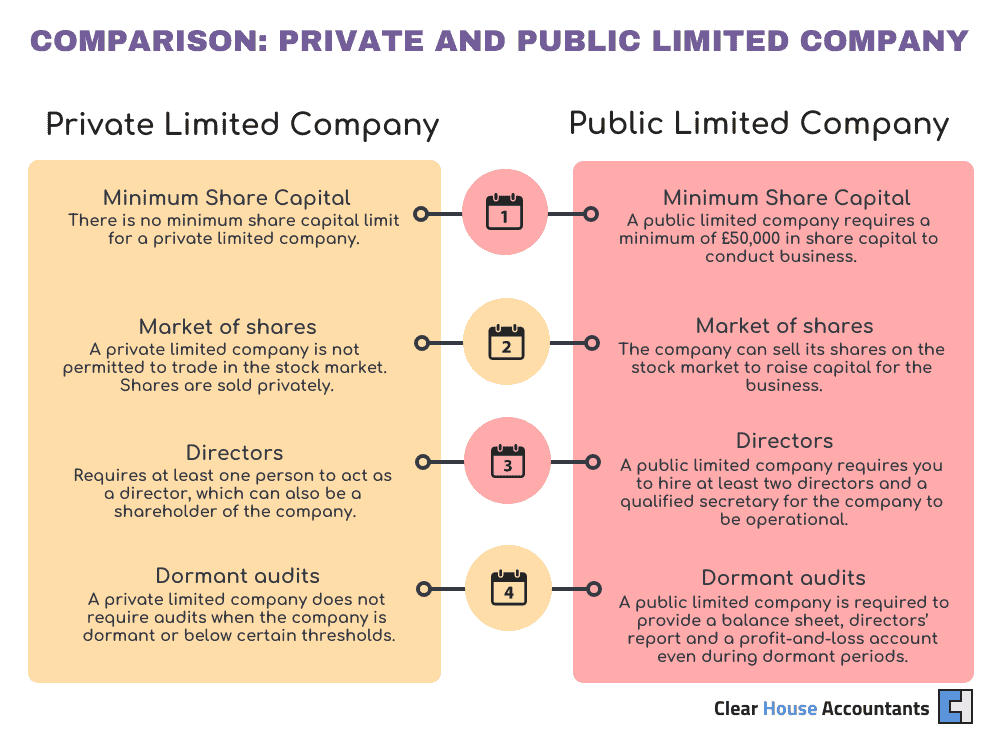
A private limited company is the most common structure for startups and small-to-medium-sized businesses (SMEs). In this model, shares are held privately and cannot be traded on a public stock exchange. The number of shareholders is often restricted, and the transfer of shares usually requires the approval of other board members or shareholders. This structure offers the benefits of limited liability while allowing the founders to retain tight control over the business’s direction and financial secrets, as disclosure requirements are typically less stringent than those for public companies.
Public Limited Companies (PLC/Corp): Scaling through Capital Markets
A Public Limited Company (PLC) or a publicly traded corporation is a different beast entirely. These companies have the “limited” status but are permitted to sell shares to the general public. To become a PLC, a company must usually meet higher minimum share capital requirements and adhere to rigorous financial reporting standards. The primary advantage of this structure is the ability to raise massive amounts of capital through an Initial Public Offering (IPO). This influx of cash can be used for expansion, research and development, or acquisitions. For investors, PLCs offer liquidity, as shares can be bought and sold daily on exchanges like the NYSE or the London Stock Exchange.
Financial Implications and Capital Management
Choosing to incorporate as a limited company has profound implications for how a business manages its money, pays its taxes, and distributes profits.
Share Capital and Ownership Interests
In a limited company, ownership is divided into units called shares. The “limit” in limited liability refers to the amount unpaid on these shares. For example, if a shareholder agrees to buy 1,000 shares at $1 each but has only paid $500, their liability is limited to the remaining $500. Once the shares are fully paid, the shareholder has no further financial obligation to the company’s creditors. This system makes it easy to quantify ownership and facilitates the distribution of dividends—payments made to shareholders from the company’s after-tax profits.
Tax Efficiency and Corporate Governance
From a financial perspective, limited companies are often more tax-efficient than sole proprietorships. While a sole trader pays personal income tax on all business profits, a limited company pays corporate tax. In many regions, corporate tax rates are lower than the top tiers of personal income tax. Additionally, owners can choose to take a smaller salary and supplement their income with dividends, which may be taxed at a lower rate. However, this comes with the responsibility of corporate governance. The company must have at least one director (who manages the business) and shareholders (who own it), although in small companies, these are often the same people.
The Strategic Advantages of Incorporation
Beyond the immediate protection of assets, being a “limited” entity provides several strategic advantages that are crucial for long-term financial growth and stability.
Enhanced Credibility and Funding Opportunities
In the business world, the “Ltd” or “Inc” suffix signals a level of permanence and professionalism. Many large corporations and government agencies prefer to deal exclusively with limited companies because of the structured legal framework they inhabit. Furthermore, obtaining financing is often easier for limited companies. Banks are generally more willing to provide loans to an incorporated entity that has clear financial records and a separate credit history. Additionally, the ability to issue new shares allows the company to bring in venture capital or angel investors in exchange for equity, a move that is impossible for a sole proprietorship.
Perpetual Succession and Business Longevity
A limited company is designed to exist independently of its founders. This concept, known as “perpetual succession,” means the company continues to exist even if its shareholders or directors pass away, retire, or sell their interests. This is a critical factor for business valuation and exit strategies. It allows the business to be sold as a “going concern,” making it a much more attractive asset for potential buyers or heirs. The continuity of the business entity ensures that contracts, employee agreements, and ownership of property remain intact through transitions of leadership.
Compliance and Disclosure: The Cost of Protection
Limited liability is often viewed as a “grand bargain” with the state: in exchange for the protection of personal assets, the company must be transparent about its financial health.
Statutory Reporting and Transparency Requirements
Unlike private individuals, limited companies are required by law to file annual financial statements and tax returns with government bodies (such as Companies House in the UK or the SEC/Secretary of State in the US). These records often include a balance sheet, profit and loss statements, and a report on the company’s directors. This transparency allows creditors, investors, and the public to assess the company’s creditworthiness and financial stability. For the business owner, this means additional administrative costs and the need for professional accounting services.

Director Responsibilities and Fiduciary Duties
The directors of a limited company have significant legal and financial responsibilities. They owe a “fiduciary duty” to the company, meaning they must act in its best interest, avoid conflicts of interest, and ensure the company remains solvent. If a director continues to trade when they know the company is insolvent (wrongful trading), they can be held personally liable for the debts incurred during that period. This ensures that while “limited” status protects owners from honest business failure, it does not provide a license for negligence or financial malpractice.
In conclusion, a limited company is a sophisticated financial and legal tool designed to foster investment and mitigate risk. By separating the individual from the enterprise, it creates a secure environment for capital growth, provides pathways for professional funding, and ensures business continuity. While it brings a higher burden of compliance and transparency, the benefits of asset protection and tax flexibility make it the preferred vehicle for serious business ventures globally. Understanding what it means to be “limited” is the first step in mastering the mechanics of corporate finance and wealth preservation.
aViewFromTheCave is a participant in the Amazon Services LLC Associates Program, an affiliate advertising program designed to provide a means for sites to earn advertising fees by advertising and linking to Amazon.com. Amazon, the Amazon logo, AmazonSupply, and the AmazonSupply logo are trademarks of Amazon.com, Inc. or its affiliates. As an Amazon Associate we earn affiliate commissions from qualifying purchases.