
The concept of evolution, traditionally associated with biological systems, takes on a profoundly different yet equally dynamic meaning within the realm of technology. In the digital age, to “evolve” signifies a continuous process of adaptation, innovation, and transformation across software, hardware, artificial intelligence, and the very frameworks that govern our interaction with the digital world. It’s a relentless pursuit of efficiency, intelligence, and utility, driven by human ingenuity and accelerated by an interconnected global landscape. Understanding this evolution is key to navigating and shaping our increasingly digital future.
The Continuous Metamorphosis of Software and Systems
Software is perhaps the most visible manifestation of technological evolution. Unlike static physical products, software is inherently designed for change, updates, and expansions. Its evolution is not merely about incremental improvements but often involves paradigm shifts that redefine how we interact with information and each other.
Iteration vs. Revolution: The Development Cycle
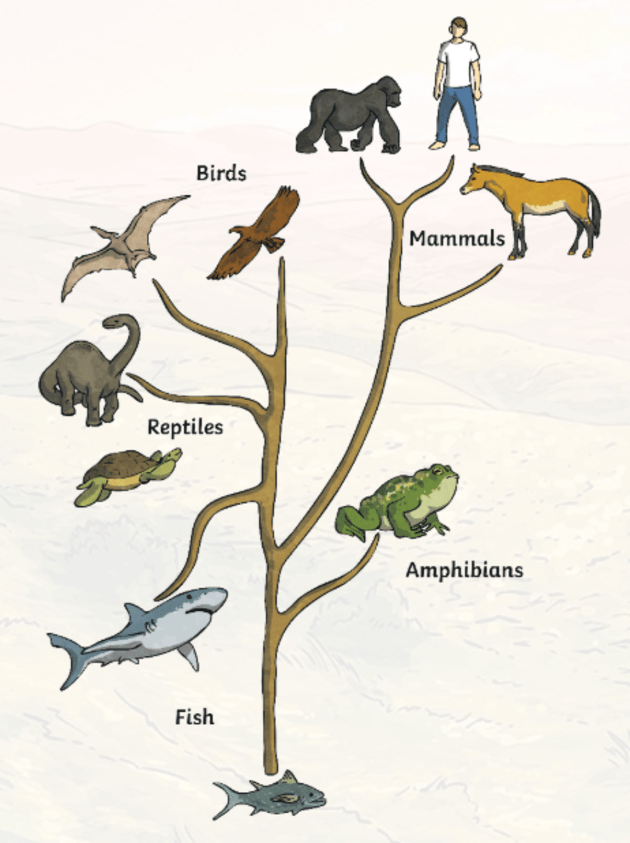
At its core, software evolution cycles between iterative refinement and revolutionary breakthroughs. Iteration involves regular updates, bug fixes, and feature additions that gradually enhance a product’s performance and user experience. This agile approach, common in modern development, ensures that software remains responsive to user feedback and emerging needs. However, true evolution also encompasses revolutionary shifts—moments when entirely new architectures, programming languages, or operating systems emerge, rendering previous methods obsolete and opening doors to unprecedented capabilities. Think of the leap from command-line interfaces to graphical user interfaces, or from monolithic applications to microservices. Each represented a fundamental re-imagining of how software is built and consumed. This continuous cycle means software is never truly “finished” but is always in a state of becoming.
Adaptive Architectures: Building for Change
Modern software systems are increasingly designed with adaptability in mind. The concept of “evolutionary architecture” emphasizes creating systems that can readily accommodate new features, scale with demand, and integrate novel technologies without requiring a complete overhaul. This is achieved through modular designs, APIs (Application Programming Interfaces) that allow different components to communicate seamlessly, and containerization technologies that package applications and their dependencies for consistent deployment across various environments. This architectural foresight is crucial for systems that must evolve rapidly to meet changing business requirements and technological landscapes, preventing stagnation and ensuring long-term viability.
Cloud Computing and SaaS: The Evolution of Delivery
The advent and widespread adoption of cloud computing and Software as a Service (SaaS) models have fundamentally transformed how software evolves and is delivered. Rather than purchasing static licenses, users now subscribe to services that are constantly updated and maintained by providers. This shift democratizes access to cutting-edge features, reduces the burden of local IT infrastructure, and ensures that everyone is always on the latest, most evolved version of the software. From productivity suites to enterprise resource planning tools, the cloud enables continuous deployment and instantaneous updates, making software evolution a seamless, background process for the end-user.
AI and Machine Learning: Intelligence in Flux
Perhaps no area embodies the concept of “evolution” more vividly than Artificial Intelligence (AI) and Machine Learning (ML). These technologies are not merely programmed to perform tasks but are designed to learn, adapt, and improve autonomously, mirroring, in a limited sense, biological evolution’s drive towards greater complexity and efficiency.
Learning and Adaptation: The Core of AI Evolution
The essence of AI’s evolution lies in its ability to learn from data. Machine learning algorithms are not explicitly programmed for every possible scenario; instead, they are trained on vast datasets to identify patterns, make predictions, and solve problems. As more data becomes available, or as the models are fine-tuned, their performance “evolves.” Deep learning, a subset of machine learning, takes this a step further, enabling neural networks to learn hierarchical representations of data, leading to breakthroughs in image recognition, natural language processing, and strategic game-playing. The iterative process of training, evaluation, and refinement allows AI systems to continuously evolve their capabilities, becoming more accurate, robust, and intelligent over time.
Generative Models: Pushing Creative Boundaries
The evolution of AI has moved beyond mere analysis and prediction to active creation. Generative AI models, such as Large Language Models (LLMs) and diffusion models, can generate new content—text, images, audio, and even code—that is often indistinguishable from human-created output. This represents a significant evolutionary leap, as AI moves from being a tool for automation to a collaborator in creative processes. These models evolve through further training on larger and more diverse datasets, fine-tuning, and incorporating new architectural innovations, constantly pushing the boundaries of what machines can “imagine” and produce. Their evolution is rapid, leading to an accelerating pace of innovation across various industries.
Ethical Evolution: Guiding AI’s Future

As AI systems become more powerful and pervasive, the conversation around their ethical implications also evolves. The concept of “responsible AI” has emerged as a critical component of AI’s evolutionary path, focusing on principles like fairness, transparency, accountability, and privacy. This involves developing methods to detect and mitigate bias in AI models, ensuring explainability of their decisions, and designing systems that align with human values. The ethical evolution of AI is a collaborative effort involving researchers, policymakers, and society at large, aiming to steer this powerful technology towards beneficial and equitable outcomes, ensuring that its progress serves humanity rather than creating unintended harm.
Hardware’s Relentless March: From Silicon to Quantum
While software often grabs the headlines, the evolution of hardware provides the foundational bedrock for all digital advancement. From the intricate etchings on silicon chips to the theoretical realms of quantum computing, hardware continually evolves to become smaller, faster, more energy-efficient, and capable of entirely new forms of computation.
Miniaturization and Power Efficiency
For decades, Moore’s Law—the observation that the number of transistors on an integrated circuit doubles approximately every two years—has been a driving force behind hardware evolution. This has led to incredible miniaturization, packing billions of transistors onto chips no larger than a fingernail, enabling devices like smartphones and wearables that possess computing power far exceeding early supercomputers. Coupled with this is the relentless pursuit of power efficiency, crucial for mobile devices and massive data centers alike. Innovations in chip architecture, materials science, and manufacturing processes continue to push these boundaries, even as the limits of traditional silicon-based computing approach.
Specialized Processors and Accelerators
The generic CPU (Central Processing Unit) once reigned supreme, but the demands of modern applications, especially AI and graphics, have driven the evolution of specialized hardware. GPUs (Graphics Processing Units), originally designed for rendering graphics, have evolved into powerful parallel processors ideal for training neural networks. Similarly, TPUs (Tensor Processing Units) and other AI accelerators are custom-built to optimize machine learning workloads, offering significant speed and efficiency advantages. This diversification of hardware demonstrates an evolutionary adaptation to specific computational needs, allowing for unprecedented performance in specialized domains.
Beyond Moore’s Law: New Frontiers in Computing
As traditional scaling slows, the hardware landscape is evolving into entirely new paradigms. Neuromorphic computing, inspired by the human brain, aims to build chips that process information more like biological neurons, offering potential breakthroughs in energy efficiency and AI capabilities. Quantum computing, still in its nascent stages, represents a revolutionary leap, leveraging the principles of quantum mechanics to solve problems that are intractable for even the most powerful classical computers. While not yet mainstream, the fundamental research and early development in quantum computing signify a profound evolutionary path, promising to reshape industries from medicine to materials science.
Evolving User Experiences and Digital Security
The evolution of technology isn’t just about internal mechanisms; it profoundly impacts how humans interact with digital systems and how those systems are protected. User experience (UX) and digital security are two critical areas that must constantly evolve in lockstep with underlying technological advancements.
Intuitive Interfaces: Adapting to Human Needs
The evolution of user interfaces (UIs) and user experiences (UX) is driven by the desire to make technology more accessible, intuitive, and enjoyable. From early command-line prompts to graphical interfaces, then to touchscreens, voice assistants, and augmented reality, the goal has always been to bridge the gap between human intent and machine execution. This evolution involves deep understanding of human psychology, cognitive science, and user behaviors, leading to interfaces that adapt to human needs rather than forcing humans to adapt to machines. Predictive text, personalized recommendations, and context-aware applications are examples of how interfaces evolve to anticipate and serve user desires, making technology feel more natural and integrated into daily life.
The Arms Race of Digital Security
Digital security is an ongoing, dynamic evolution, often described as an “arms race.” As technology advances and new vulnerabilities emerge, security measures must evolve to counteract increasingly sophisticated threats. This means the continuous development of new encryption standards, robust authentication methods, advanced threat detection systems, and proactive incident response protocols. The evolution of security extends beyond technical solutions to include user education and policy development, recognizing that human factors are often the weakest link. The rise of AI in cyber warfare, both for attack and defense, further accelerates this evolutionary spiral, demanding constant vigilance and innovation to protect data, privacy, and critical infrastructure.
Personalization and Predictive Technologies
The evolution of data collection and processing capabilities has led to an era of hyper-personalization and predictive technologies. Algorithms learn individual preferences, habits, and contexts to tailor experiences, whether it’s content recommendations, targeted advertising, or smart home automation. This involves an ongoing evolutionary loop where user interactions feed data back into systems, allowing them to refine their understanding and deliver ever-more precise and helpful predictions. While raising questions about privacy and data governance, this trend represents a significant evolution in how technology anticipates and serves individual needs, transforming digital tools from generic instruments into highly personalized companions.
In conclusion, to evolve in the digital age is to embrace perpetual change. It is a testament to humanity’s drive to innovate, optimize, and expand the boundaries of what’s possible. From the iterative updates of software to the learning capabilities of AI, the physical advancements of hardware, and the human-centric design of user experiences, every facet of technology is in a constant state of transformation. This ongoing evolution not only shapes the tools we use but fundamentally redefines our capabilities, our societies, and our future.
aViewFromTheCave is a participant in the Amazon Services LLC Associates Program, an affiliate advertising program designed to provide a means for sites to earn advertising fees by advertising and linking to Amazon.com. Amazon, the Amazon logo, AmazonSupply, and the AmazonSupply logo are trademarks of Amazon.com, Inc. or its affiliates. As an Amazon Associate we earn affiliate commissions from qualifying purchases.