
In the evolving landscape of professional growth, your technical skills might get you hired, but your coachability will determine how far you climb. In a competitive market where adaptability is the primary currency, “coachability” is often misunderstood as mere obedience. It is not about being a passive recipient of instructions; it is a sophisticated, proactive engagement with feedback that accelerates competence and innovation. Whether you are navigating a corporate hierarchy or building a personal brand, the ability to internalize critique and adjust your trajectory is the ultimate professional superpower.
The Foundation of Coachability: Intellectual Humility
At its core, coachability is anchored in intellectual humility—the recognition that your current knowledge base is incomplete and that there is always a more efficient or effective way to achieve an objective. In the context of brand strategy and professional development, this requires a decoupling of your ego from your output.

Moving Beyond Defensiveness
The primary barrier to growth is the reflexive defense mechanism. When a mentor or a strategist provides feedback on a project, the natural inclination is often to justify the decision-making process. Coachable individuals, however, pause. They understand that if a message is not being received as intended—whether it is a marketing campaign, a visual design, or a personal branding narrative—the issue rarely lies with the audience’s comprehension. Instead, the issue lies in the strategy. By asking “Why was this unclear?” rather than “Why didn’t they get it?”, you transform a critique into a data point for optimization.
Embracing the Growth Mindset
Carol Dweck’s research on the growth mindset is vital here. Coachability requires the belief that your abilities are not static. In a professional environment, this translates to viewing feedback as a diagnostic tool rather than a performance review. When you approach a brand audit or a management critique with the assumption that your strategy can always be refined, you move from “defending your work” to “iterating your success.” This mindset shift is what separates high-potential leaders from those who plateau.
The Mechanics of Effective Feedback Loops
Being coachable is a process of active information management. It is not enough to simply “listen” to advice; you must create a framework to process, filter, and implement feedback in a way that aligns with your long-term brand objectives.
Seeking the “Why” behind the “What”
Generic advice is rarely actionable. To be truly coachable, you must cultivate the skill of inquiry. When a stakeholder or mentor suggests a change—for instance, pivoting a brand’s tone of voice or reallocating an advertising budget—do not settle for the surface-level instruction. Ask for the underlying logic. Understanding the “why” allows you to apply that wisdom to future challenges rather than just following a one-off command. This creates a compounding effect on your professional intelligence.
Curating the Feedback Environment
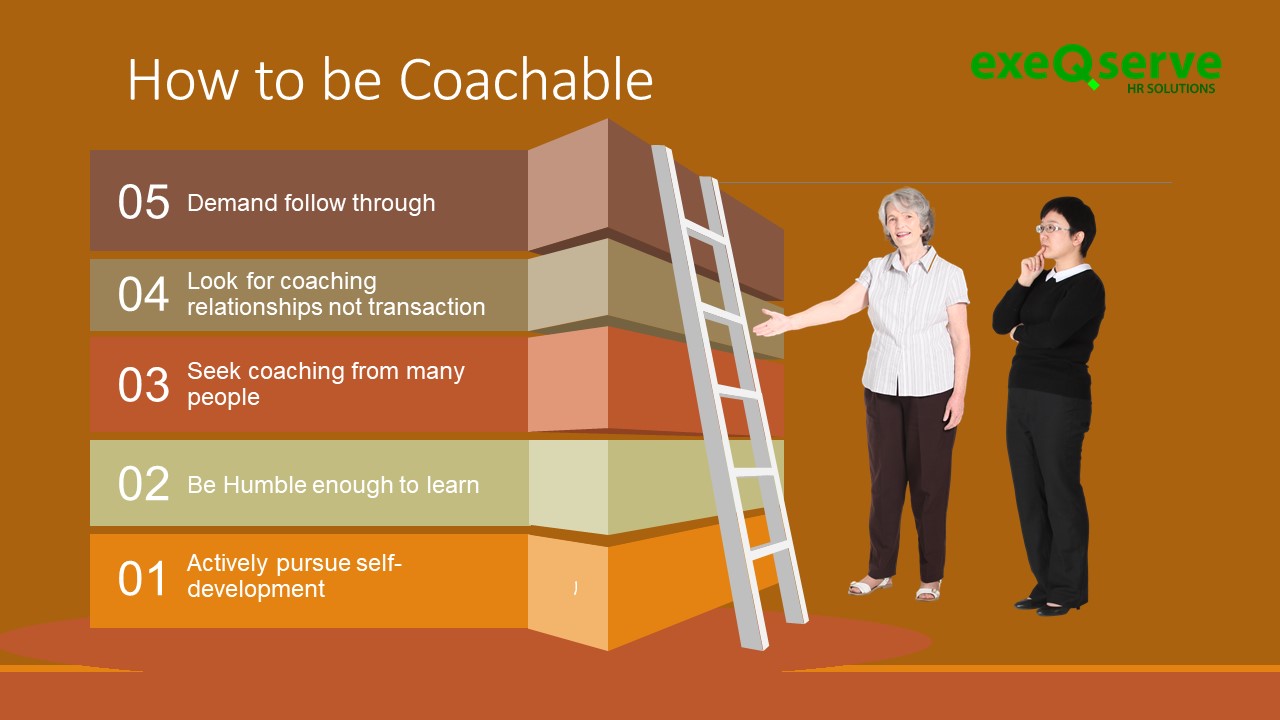
You cannot be coachable if you are surrounded by “yes-people.” Part of the responsibility of being coachable is curating a circle of advisors who are comfortable being candid. This includes seeking out diverse perspectives. If you are building a personal brand, you need feedback from marketing experts, industry peers, and the end-user. By actively seeking out sources of constructive friction, you accelerate your growth trajectory far faster than those who only look for validation.
Strategic Application: Translating Guidance into Results
The true test of coachability is not the conversation itself; it is the implementation phase. A common pitfall for many professionals is “analysis paralysis,” where they seek feedback but fail to synthesize it into a coherent action plan.
From Input to Iteration
Once you receive feedback, categorize it. Is the critique related to strategy, execution, or alignment? Create a roadmap that dictates how you will integrate this insight into your current workflows. For example, if your brand identity is consistently failing to resonate with a specific demographic, and your mentor suggests a pivot in visual language, your actionable step is to create a prototype or A/B test rather than simply discussing the feedback. Coachability is demonstrated through movement. If there is no tangible change in the output after a coaching session, you have not been coached; you have simply been lectured.
The Art of the Controlled Pivot
In the business world, rigidity is the enemy of longevity. Being coachable means knowing when to hold onto your core values and when to pivot your tactical execution based on expert guidance. This is a delicate balance. You must maintain the integrity of your personal or corporate brand while simultaneously adjusting to market signals provided by your mentors. The most successful professionals are those who can integrate external advice without losing the original mission. They treat their brand as a living entity—one that evolves through the influence of others while maintaining its distinctive character.
The Long-Term ROI of a Coachable Disposition
Why does this matter? Because the business landscape is increasingly volatile. The strategies that worked two years ago may be obsolete today. The ability to unlearn outdated tactics and embrace new, higher-leverage approaches is the only way to stay relevant.
Future-Proofing Your Career
When you establish a reputation as someone who is highly coachable, you become a magnet for high-level mentorship. Mentors, investors, and leaders prefer to pour their time and energy into individuals who demonstrate the capacity for growth. By showing that you can listen, process, and implement, you signal that their time will yield a return on investment. This creates a virtuous cycle: better mentors lead to better insights, which lead to higher performance, which attracts even better mentors.
Developing Organizational Agility
On an organizational level, a culture of coachability prevents institutional stagnation. When an entire brand team adopts this philosophy, the company becomes remarkably resilient. They avoid the trap of “we’ve always done it this way.” Instead, they treat every campaign, every design iteration, and every quarterly financial review as a learning opportunity. This creates a culture of continuous improvement that is nearly impossible for competitors to replicate.
Conclusion: The Practice of Constant Evolution
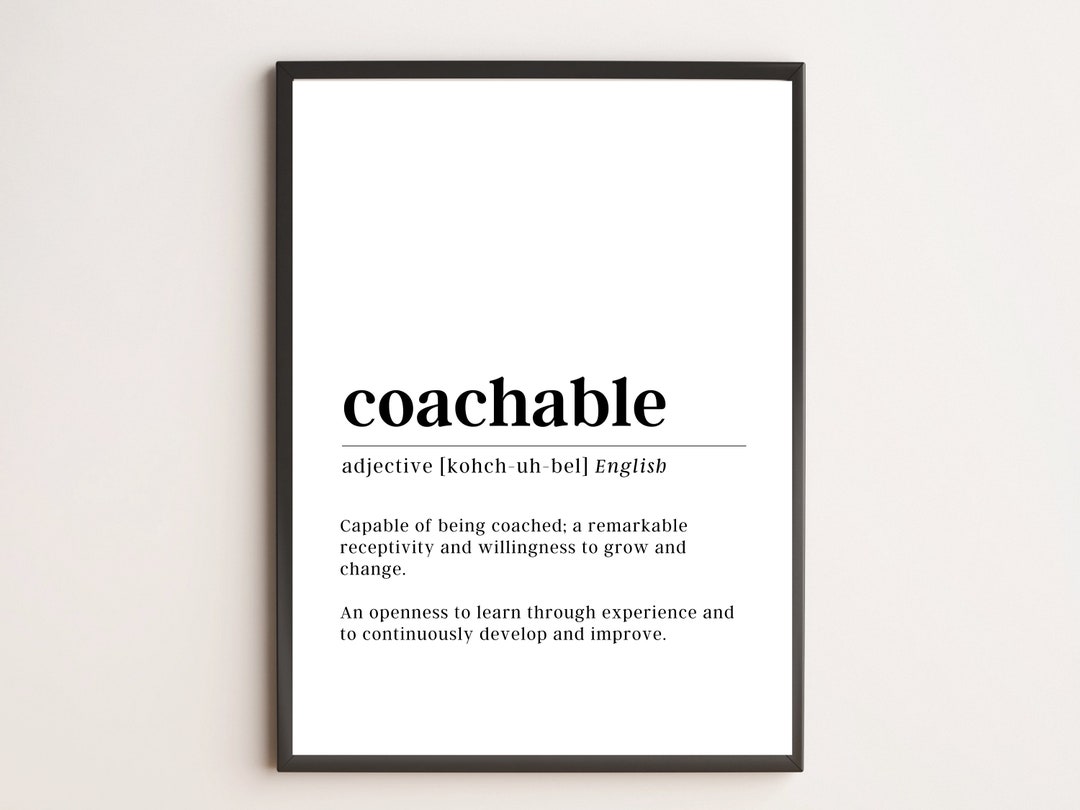
Ultimately, being coachable is a disciplined practice. It requires you to acknowledge your limitations, seek out the perspectives of others, and possess the courage to discard your own ideas when evidence suggests a better path forward. It is the bridge between who you are today and the version of yourself or your business that you aspire to become.
In a world filled with information, wisdom remains the rarest commodity. By embracing coachability, you position yourself as a lifelong student of your industry—a trait that ensures you are not just keeping pace with the market, but actively defining it. Treat feedback not as a critique of your worth, but as the fuel for your next level of growth. Start by identifying one area of your professional strategy where you feel most confident, and then ask a mentor to critique it. The discomfort you feel in that moment is not a sign of failure; it is the growing pain of evolution. Embrace it, integrate it, and watch how quickly your trajectory changes.
aViewFromTheCave is a participant in the Amazon Services LLC Associates Program, an affiliate advertising program designed to provide a means for sites to earn advertising fees by advertising and linking to Amazon.com. Amazon, the Amazon logo, AmazonSupply, and the AmazonSupply logo are trademarks of Amazon.com, Inc. or its affiliates. As an Amazon Associate we earn affiliate commissions from qualifying purchases.