
The Department of Housing and Urban Development (HUD) is often viewed through a social lens, but its primary function is fundamentally rooted in the mechanics of the national economy. As a cabinet-level agency, HUD serves as a cornerstone of the American financial system, influencing everything from the liquidity of the mortgage market to the revitalization of distressed urban economies. By bridging the gap between private capital and public need, HUD plays a pivotal role in wealth creation, risk mitigation, and market stabilization. To understand what Housing and Urban Development does is to understand the flow of trillions of dollars within the real estate and financial sectors.

The Financial Pillars of HUD: Strengthening the Mortgage Market
At the heart of HUD’s economic mission is the Federal Housing Administration (FHA). While many view the FHA simply as a source of loans for first-time buyers, it is actually one of the largest insurers of mortgages in the world. Its influence on the “Money” niche cannot be overstated, as it provides the safety net that allows private lenders to extend credit to a broader range of participants.
Making Homeownership Accessible through FHA Loans
The FHA does not lend money directly to consumers; rather, it insures loans made by private banks and credit unions. This insurance protects lenders against loss if a borrower defaults on their mortgage. From a financial perspective, this drastically reduces the risk profile of the borrower. Because the risk is mitigated, lenders can offer lower down payments—often as low as 3.5%—and more flexible credit requirements. This mechanism acts as a primary entry point for wealth building in the United States, allowing individuals who lack significant liquid capital to begin building equity in a real estate asset.
Ginnie Mae and Market Liquidity
Another critical financial arm of HUD is the Government National Mortgage Association, commonly known as Ginnie Mae. Ginnie Mae plays a vital role in the secondary mortgage market. It guarantees investors the timely payment of principal and interest on mortgage-backed securities (MBS) backed by federally insured loans. By doing so, Ginnie Mae ensures that there is a constant flow of global capital into the U.S. housing market. This liquidity is what keeps mortgage rates competitive and ensures that banks have the cash on hand to issue new loans, creating a self-sustaining cycle of investment and lending.
Mortgage Insurance and the Mutual Mortgage Insurance Fund
HUD manages the Mutual Mortgage Insurance (MMI) Fund, which is fueled by the premiums paid by FHA borrowers. This fund is a massive financial entity that must be managed with surgical precision to ensure the FHA can cover potential claims without taxpayer intervention. The health of the MMI Fund is a leading indicator of the overall stability of the housing market. When the fund is robust, it signals a healthy economy with low default rates; when it is strained, it often precedes broader economic shifts.
Economic Growth through Community Development Block Grants (CDBG)
HUD’s influence extends beyond individual mortgages into the realm of macroeconomics and municipal finance. The Community Development Block Grant (CDBG) program is one of HUD’s most powerful tools for fostering economic development. It provides communities with resources to address a wide range of unique development needs, essentially acting as a catalyst for private-sector investment in underserved areas.
Revitalizing Local Economies and the Multiplier Effect
The CDBG program is designed to create viable urban communities by providing decent housing and a suitable living environment. However, from a business finance perspective, its greatest value lies in the “multiplier effect.” When HUD invests federal dollars into infrastructure or neighborhood revitalization, it lowers the barrier to entry for private developers and small business owners. A new road or a refurbished commercial strip funded by HUD can lead to increased property values, higher tax revenues for the city, and a more attractive environment for private venture capital.
Job Creation and Infrastructure Investment
HUD mandates that a significant portion of CDBG funds be used for activities that benefit low- and moderate-income persons, often through job creation. This is achieved by providing low-interest loans to businesses that agree to create or retain jobs in specific areas. By subsidizing the cost of expansion or equipment for these businesses, HUD acts as a public-sector partner in corporate growth. This synergy between government funding and private enterprise is a key driver of local GDP in many American cities.
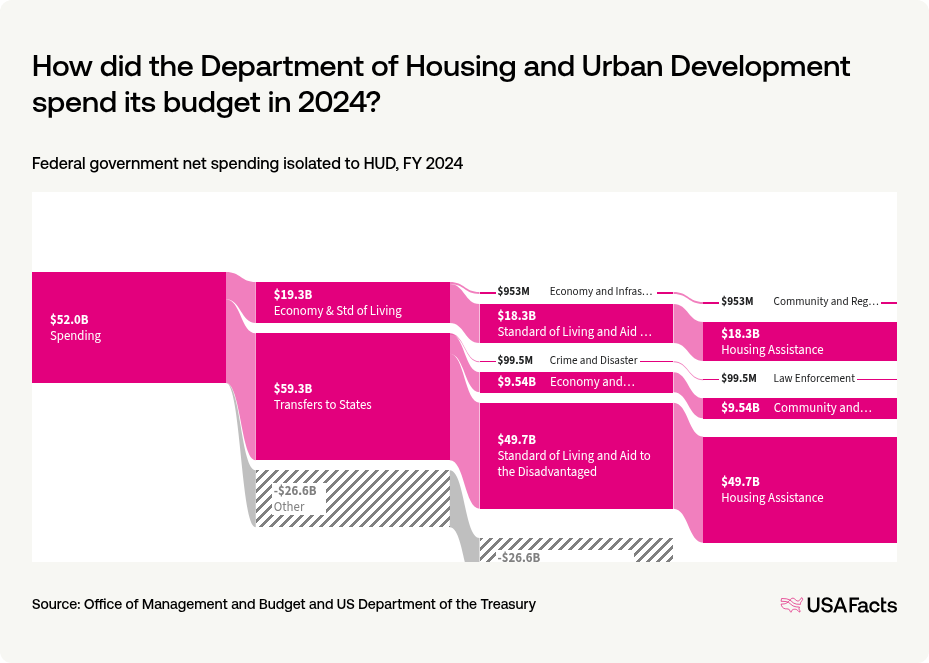
Disaster Recovery and Economic Resilience
Following natural disasters, HUD’s Community Development Block Grant Mitigation (CDBG-MIT) and Recovery (CDBG-DR) funds become the primary financial engine for rebuilding. These funds are used to restore not just homes, but also the commercial infrastructure necessary for a local economy to function. By providing the capital needed to rebuild businesses and public utilities, HUD ensures that a localized disaster does not turn into a long-term economic depression for the region.
Rental Assistance and the Economics of Housing Stability
While homeownership is a major focus, a significant portion of HUD’s budget is dedicated to rental assistance, primarily through the Section 8 program. While often discussed as a social safety net, rental assistance has profound implications for the broader rental market and the financial stability of the workforce.
Section 8 and the Private Rental Market
The Housing Choice Voucher Program (Section 8) is a market-based approach to assistance. HUD provides vouchers to low-income families, who then find their own housing in the private market. For landlords and real estate investors, this program provides a guaranteed stream of income. Even during economic downturns, the government portion of the rent is paid reliably. This reduces the “vacancy risk” for property owners and makes rental properties a more stable investment vehicle, particularly in volatile markets.
Reducing the Economic Burden of Poverty
From a personal finance standpoint, housing is typically an individual’s largest expense. When a household is “rent-burdened” (spending more than 30% of income on housing), they have less disposable income to contribute to the rest of the economy. By subsidizing housing costs, HUD effectively increases the discretionary income of millions of participants. This capital is then redistributed into the economy through the purchase of goods, services, and education, stimulating growth in other sectors.
Public Housing as an Asset Management Challenge
HUD also oversees the nation’s public housing stock. This involves a complex web of capital fund grants and operating subsidies. Managing these assets requires sophisticated financial planning and oversight to ensure that the buildings—which represent billions of dollars in federal investment—do not fall into disrepair. In recent years, HUD has moved toward programs like the Rental Assistance Demonstration (RAD), which allows public housing authorities to leverage private debt and equity to perform much-needed repairs, further integrating public assets with private financial markets.
Protecting the Consumer and Ensuring Market Equality
A healthy financial market requires transparency, fairness, and consumer confidence. HUD plays a regulatory role in ensuring that the real estate market operates without the distortions of discrimination or predatory lending practices, which can have devastating financial consequences for both individuals and the economy at large.
The Fair Housing Act and Market Efficiency
The Fair Housing Act, enforced by HUD, prohibits discrimination in the sale, rental, and financing of dwellings. From an economic perspective, discrimination is a market inefficiency. When a segment of the population is unfairly excluded from certain neighborhoods or credit products, capital is not allocated efficiently, and property values can be artificially suppressed or inflated. By enforcing fair housing laws, HUD ensures a more competitive and fluid market where assets are traded based on economic value rather than social bias.
Financial Education and Housing Counseling
HUD provides grants to a network of housing counseling agencies across the country. These agencies provide essential financial tools to consumers, including credit repair, budgeting assistance, and pre-purchase education. Educated consumers are less likely to default on loans and more likely to contribute to a stable financial ecosystem. For many, a HUD-approved counselor is the first step toward successful personal finance management and long-term wealth accumulation.

Regulation of Manufactured Housing and Real Estate Standards
HUD also sets the standards for the construction of manufactured homes (the HUD Code) and oversees certain aspects of the Real Estate Settlement Procedures Act (RESPA). These regulations are designed to protect the consumer’s financial interests during the closing process of a home sale, preventing “kickbacks” and unearned fees that increase the cost of doing business. By standardizing these processes, HUD lowers the transactional friction in the real estate market, making it easier and safer for capital to change hands.
In conclusion, the Department of Housing and Urban Development is far more than a social service agency; it is a vital organ of the American financial system. Through the FHA, Ginnie Mae, and various grant programs, it stabilizes the mortgage market, facilitates the flow of global capital, stimulates local economic growth, and protects the financial interests of millions of citizens. For anyone navigating the world of money, investment, and real estate, HUD’s policies and programs are the invisible hand that shapes the landscape of opportunity.
aViewFromTheCave is a participant in the Amazon Services LLC Associates Program, an affiliate advertising program designed to provide a means for sites to earn advertising fees by advertising and linking to Amazon.com. Amazon, the Amazon logo, AmazonSupply, and the AmazonSupply logo are trademarks of Amazon.com, Inc. or its affiliates. As an Amazon Associate we earn affiliate commissions from qualifying purchases.