
From a financial perspective, a roof is not merely a structural necessity; it is a primary protective layer for one of your most significant capital assets. When a hailstorm strikes, the damage inflicted is often subtle, yet its impact on property valuation and long-term liability can be catastrophic. Understanding what hail damage looks like is the first step in performing a rigorous visual audit to protect your investment and ensure your insurance claims are substantiated by clear, empirical evidence.
In the world of real estate and property management, hail damage is viewed as a “latent defect”—a problem that exists but is not immediately visible to the untrained eye. Left unaddressed, these minor imperfections evolve into significant financial drains, including structural rot, interior water damage, and a sharp decline in resale value.

The Visual Indicators: Auditing Your Asset for Physical Depreciation
Identifying hail damage requires a systematic approach to inspection. Because high-velocity ice impact affects materials differently, you must categorize your findings based on the specific components of the roofing system. For a property owner, recognizing these signs is equivalent to identifying a leak in a diversified portfolio; it signals a need for immediate reallocation of resources to prevent further loss.
Damage to Soft Metals and Peripherals
The most immediate and obvious signs of hail damage are found on the “soft metals” of a roof. These include aluminum vents, flashing, gutters, and downspouts. Because these materials have lower tensile strength than shingles, they serve as a “litmus test” for the severity of the storm.
Look for localized indentations or “dings.” These small, bowl-shaped craters provide a clear record of the hailstone’s size and the angle of impact. In the context of a financial claim, these marks are vital evidence. They prove that a storm event occurred with enough force to cause functional damage. If your gutters are pockmarked, it is highly probable that the integrity of your shingles has also been compromised, even if the signs there are less obvious.
Bruising and Granule Displacement on Asphalt Shingles
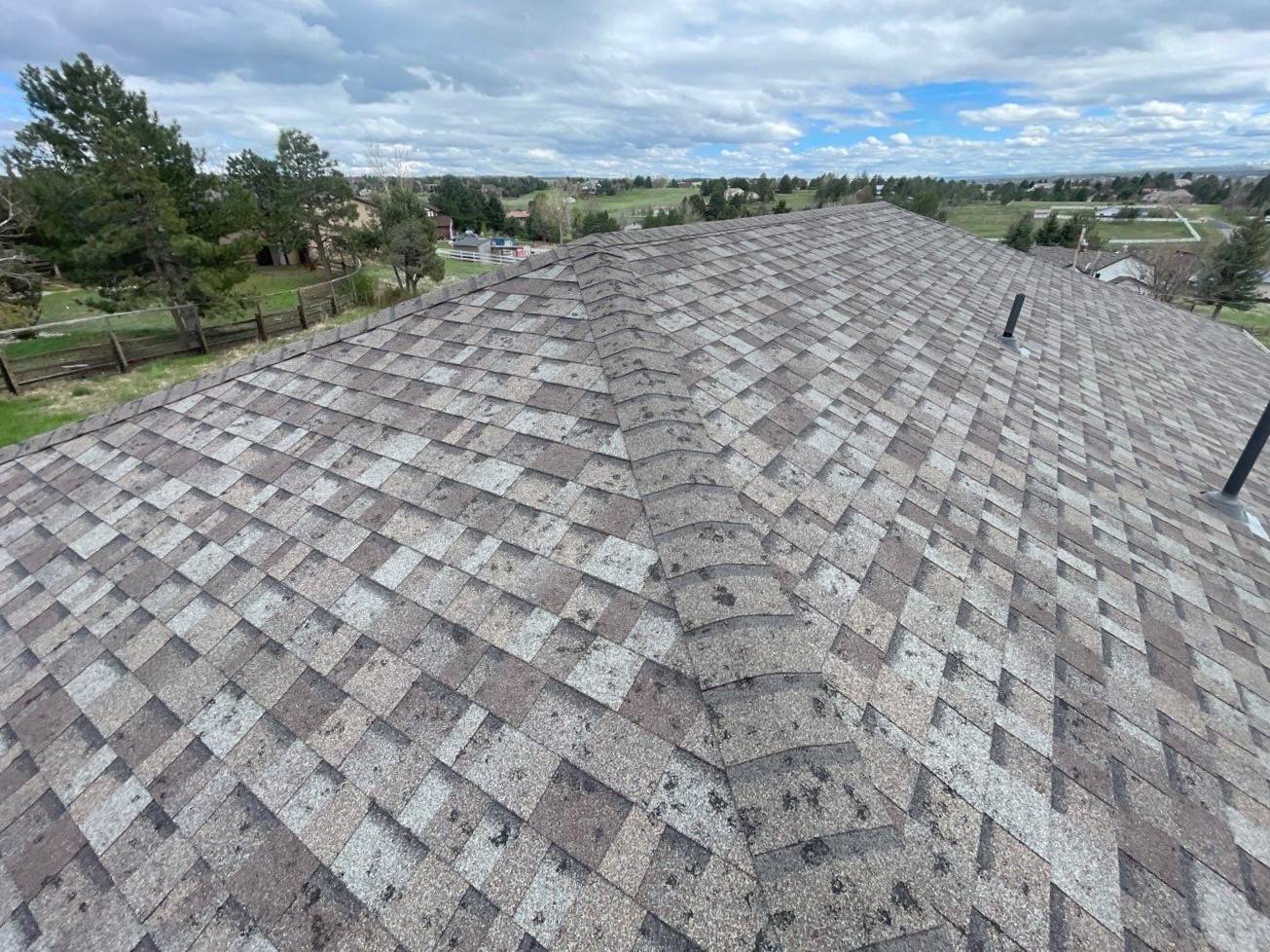
Asphalt shingles are the most common roofing material, and their failure mode under hail is often misunderstood. Hail does not usually “break” a shingle; rather, it “bruises” it. This looks like a dark spot where the protective mineral granules have been knocked away, exposing the underlying bitumen or fiberglass mat.
From a financial standpoint, these granules are the shingle’s primary defense against UV radiation. Once they are displaced, the sun’s ultraviolet rays begin to rapidly degrade the asphalt. This leads to premature aging, brittleness, and eventual water infiltration. When inspecting, look for areas that appear “bald” or have a collection of granules at the base of downspouts. A significant accumulation of granules in your gutters is a direct indicator of accelerated asset depreciation.
Cracking and Fracturing in Wood and Tile
For high-end properties utilizing wood shakes or clay tiles, hail damage presents as literal structural failure. In wood shakes, look for split shingles with sharp edges or a brown/orange color inside the crack, indicating a fresh break. In clay or concrete tiles, hail typically causes “star fractures” or clean breaks at the corners. Because these materials represent a higher capital expenditure, the financial stakes for repair and the necessity of accurate visual documentation are significantly higher.
The Financial Mechanics: Translating Physical Damage into Insurance Recovery
Once the physical damage is identified, the focus shifts to the financial recovery process. In the niche of personal finance and property management, a roof claim is a strategic maneuver to restore the value of your asset using the premiums you have paid into your insurance “risk pool.”
Navigating the Claims Process with Visual Evidence
To the insurance carrier, a “damaged” roof is a liability they must settle. However, the burden of proof lies with the policyholder. What hail damage “looks like” must be documented through high-resolution photography and, ideally, a third-party professional assessment.
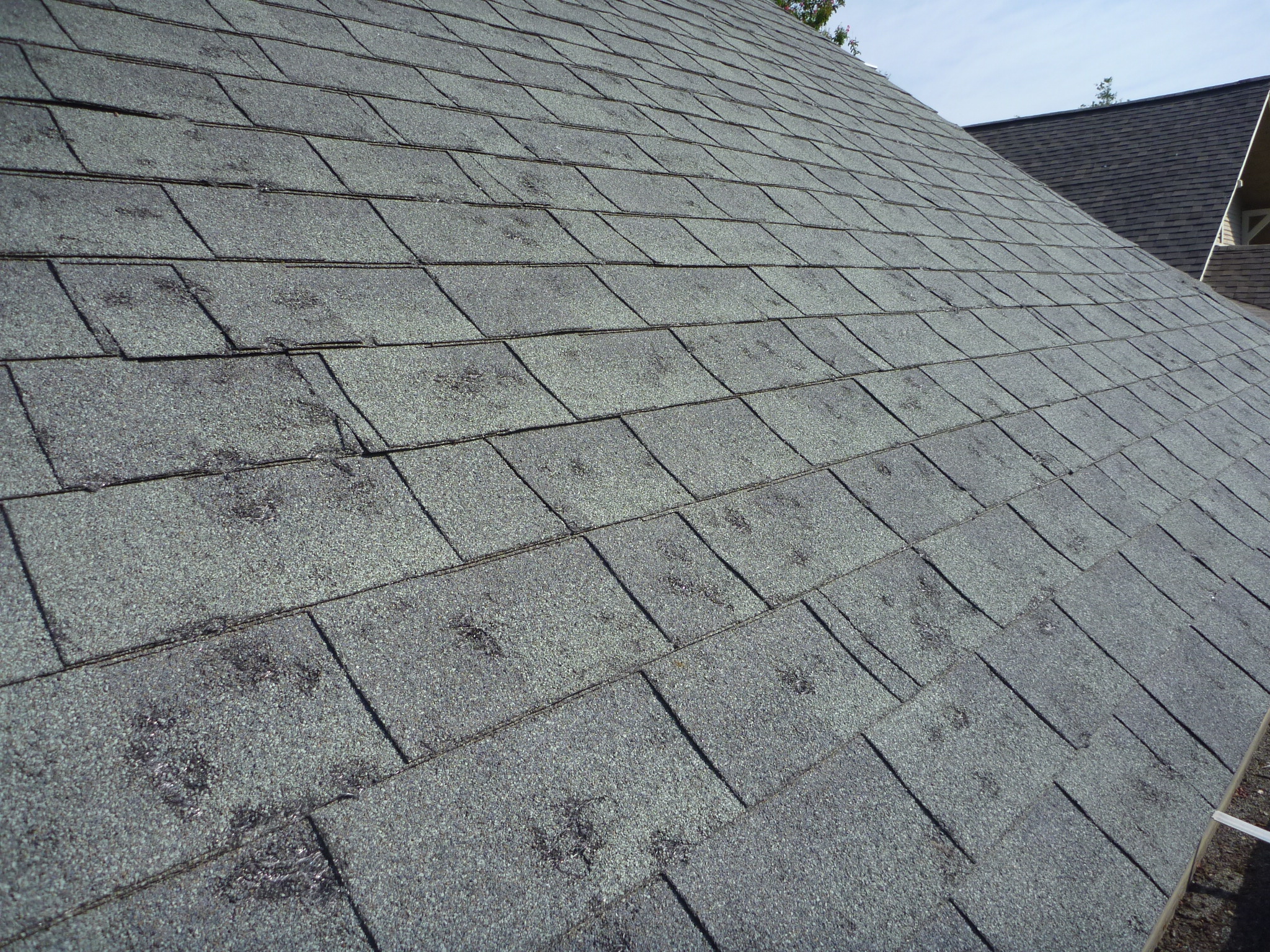
The most effective documentation includes “test squares”—standardized 10×10 foot areas on each slope of the roof. If an inspector finds a specific number of hits (typically 6 to 10) within that square, the entire slope or the entire roof may be deemed a total loss. This is a critical financial threshold. Knowing how to identify these hits yourself allows you to manage the adjuster’s expectations and ensures that the settlement reflects the true cost of restoration.
Replacement Cost Value (RCV) vs. Actual Cash Value (ACV)
Understanding the visual cues of hail damage is essential when navigating the two primary types of insurance settlements.
- Actual Cash Value (ACV): The insurer pays the depreciated value of the roof. If your 20-year roof is 10 years old, they may only pay 50% of the replacement cost.
- Replacement Cost Value (RCV): The insurer pays the full cost to replace the roof at today’s market prices, regardless of age.
If you cannot clearly identify and prove hail damage, an insurer might argue that the wear and tear is “merely cosmetic” or “age-related,” potentially denying the claim or moving it into a lower payout category. Visual proof of impact-related bruising is the key to triggering an RCV payout, which can represent a swing of tens of thousands of dollars in your personal net worth.
Risk Management: The Cost of Neglected Maintenance
In finance, the “cost of carry” refers to the expense of holding an asset. A damaged roof significantly increases this cost. While a hail-damaged roof may not leak immediately, the clock begins ticking the moment the integrity of the shingles is breached.
Compounding Repairs and Secondary Damage
What looks like a minor “ding” today can evolve into a $50,000 interior restoration project tomorrow. Water infiltration caused by hail-weakened shingles often leads to mold growth, rotted decking, and compromised insulation. From an investment perspective, failing to address hail damage is a form of negative compounding. You are effectively allowing a manageable repair cost to grow into a multi-system failure that could jeopardize the structural solvency of the entire building.
The Impact on Real Estate Liquidity and Resale Value
If you intend to sell your property, a roof inspection is an inevitability. A savvy buyer’s inspector will immediately identify unaddressed hail damage. At this stage, the damage becomes a powerful tool for price negotiation against the seller.
Unaddressed hail damage often results in a “price reduction” that far exceeds the actual cost of the roof replacement, as buyers bake in a “risk premium” for the hassle of managing the repair themselves. By identifying what hail damage looks like early and settling the claim through insurance, you maintain the liquidity of your asset and ensure that you can exit the investment at peak market value.
Strategizing the Restoration: Enhancing Asset Value
When hail damage necessitates a roof replacement, it presents an opportunity for a capital improvement that can yield a high Return on Investment (ROI). This is where the intersection of property maintenance and financial strategy becomes most apparent.
Investing in Impact-Resistant (Class 4) Technology
If you are replacing a roof due to hail damage, upgrading to Class 4 impact-resistant shingles is often a prudent financial move. While the upfront cost is higher, many insurance providers offer significant premium discounts (up to 20-30% annually) for homes with these materials. Over the 15-to-25-year lifespan of the roof, these savings can effectively pay for the upgrade and provide a hedge against future storm events.
Long-term Asset Appreciation
A new roof with a transferable warranty is a significant selling point that adds tangible value to a property’s “Blue Book” value. In many markets, a new roof can provide an ROI of 60% to 80% of its cost in terms of added home equity. By accurately identifying hail damage and successfully navigating the insurance process, you are essentially leveraging your insurance policy to fund a major capital improvement that boosts your overall financial position.
In conclusion, knowing what hail damage looks like is not just a matter of home maintenance; it is a fundamental skill in asset management. By recognizing the visual markers of impact—from soft metal indentations to shingle bruising—you can protect your property’s structural integrity, secure your financial interests through informed insurance claims, and ensure your real estate investments continue to appreciate without the drag of hidden liabilities.
aViewFromTheCave is a participant in the Amazon Services LLC Associates Program, an affiliate advertising program designed to provide a means for sites to earn advertising fees by advertising and linking to Amazon.com. Amazon, the Amazon logo, AmazonSupply, and the AmazonSupply logo are trademarks of Amazon.com, Inc. or its affiliates. As an Amazon Associate we earn affiliate commissions from qualifying purchases.