
In the landscape of modern digital communication, the introduction of a new character into the Unicode Standard is more than just a stylistic update; it is a significant event for software developers, UI/UX designers, and data scientists. When users ask, “What does the grey heart mean?” they are often looking for its social connotation. However, from a technical perspective, the grey heart ( ) represents a milestone in the Unicode 15.0 release, reflecting a broader shift in how operating systems, social media algorithms, and cross-platform protocols interpret non-verbal data.

The grey heart emoji is a product of rigorous standardization and technical implementation. Its arrival signals the maturation of the emoji set and provides a neutral anchor in the spectrum of digital sentiment. To understand its significance, one must look beyond the screen and into the architecture of modern software development, data processing, and platform interoperability.
The Technical Genesis: Unicode 15.0 and the Standardization Process
The grey heart did not appear by accident. Its existence is the result of a multi-year proposal and review process governed by the Unicode Consortium. For tech professionals, the “meaning” of the grey heart begins with its encoding—U+1FA76.
From Proposal to Pixel: The Unicode Consortium’s Approval Process
The journey of the grey heart began with a technical proposal submitted to the Unicode Emoji Subcommittee. Unlike text, which follows established alphabetic rules, emojis must meet specific criteria for inclusion: they must be visually distinct, have high expected usage, and fill a “semantic gap” in the existing library. For years, the heart emoji set lacked a true neutral tone. We had the white heart and the black heart, but the absence of a median value created a “broken gradient” in UI design. The approval of the grey heart was a technical solution to provide a complete achromatic scale for developers and users alike.
Encoding and Compatibility Across Operating Systems
Once approved in Unicode 15.0 (September 2022), the grey heart became a standardized hexadecimal code. However, the technical challenge lies in “implementation lag.” When a new emoji is released, operating systems like iOS, Android, and Windows must update their system fonts (such as Apple Color Emoji or Segoe UI Emoji) to render the new character. If a software environment has not been updated to support Unicode 15.0, the grey heart appears as a “tofu”—the notorious empty box (☐) or a question mark. For developers, this necessitates the use of “graceful degradation” or ensuring that mobile applications are bundled with updated emoji libraries to maintain a consistent user experience regardless of the underlying OS version.
The UI/UX of Color: Why Platform Developers Integrated Neutral Palettes
In the world of User Interface (UI) and User Experience (UX) design, the grey heart serves a specific functional purpose. It is not merely an aesthetic choice; it is an asset in the minimalist design movement that has dominated tech for the last decade.
Dark Mode Optimization and Visual Hierarchy
The rise of “Dark Mode” across macOS, Android, and various SaaS platforms changed the way icons are perceived. Vibrant emojis can sometimes create “visual noise,” distracting users from critical interface elements. The grey heart offers a low-saturation alternative that maintains the “heart” metaphor without the high-contrast urgency of a red heart. In professional productivity tools (like Slack or Microsoft Teams), the grey heart is often utilized by developers as a “neutral acknowledgment” icon. It provides a way to interact with a message without the emotional weight of a “love” (red) or “support” (purple) reaction, fitting perfectly into the professional, muted color palettes of enterprise software.
The Shift Toward Minimalist Digital Expression
Design systems such as Google’s Material Design and Apple’s Human Interface Guidelines emphasize clarity and intentionality. The grey heart aligns with these principles by offering a “middle ground” in digital expression. From a UX perspective, it is a tool for “low-stakes engagement.” Developers and product managers monitor the adoption of such icons to understand user behavior—specifically, how users communicate when they want to show “receipt” of information without triggering a high-arousal emotional response. This data is invaluable for refining notification algorithms and engagement loops within social apps.
Algorithmic Interpretation: How AI and NLP Process Non-Verbal Data
For data scientists and software engineers working in Natural Language Processing (NLP), the grey heart introduces a new variable in sentiment analysis. Understanding what a grey heart means is a complex task for a machine learning model.
Sentiment Analysis and Emoji Tokenization
Modern sentiment analysis engines tokenized emojis to understand the “vibe” of a piece of text. Red hearts are typically weighted with high positive polarity. Black hearts may be tagged with “edgy,” “sorrowful,” or “aesthetic” metadata. The grey heart, however, introduces a “neutral-positive” vector. AI engineers must now calibrate their models to recognize the grey heart as a marker of balance, sophistication, or “calm support.” In the context of Big Data, the frequency of grey heart usage in a dataset can indicate a brand’s “minimalist appeal” or a user base’s preference for understated interaction.
Semantic Ambiguity in Machine Learning Models
One of the greatest challenges in Tech today is “contextual disambiguation.” To an AI, a grey heart could mean “grey area” (uncertainty), “silver” (luxury/tech), or simply a neutral acknowledgment. Developers use “Word2Vec” or “BERT” models to look at the words surrounding the grey heart to determine its intent. If a user posts “New laptop ,” the algorithm identifies the grey heart as a thematic match for the hardware’s metallic finish. If a user posts “Feeling okay ,” the algorithm adjusts the sentiment score to “stable/neutral.” This nuance is critical for brands using AI to monitor customer sentiment on platforms like X (formerly Twitter) or Instagram.
Cross-Platform Discrepancies: Rendering Challenges in Modern Software
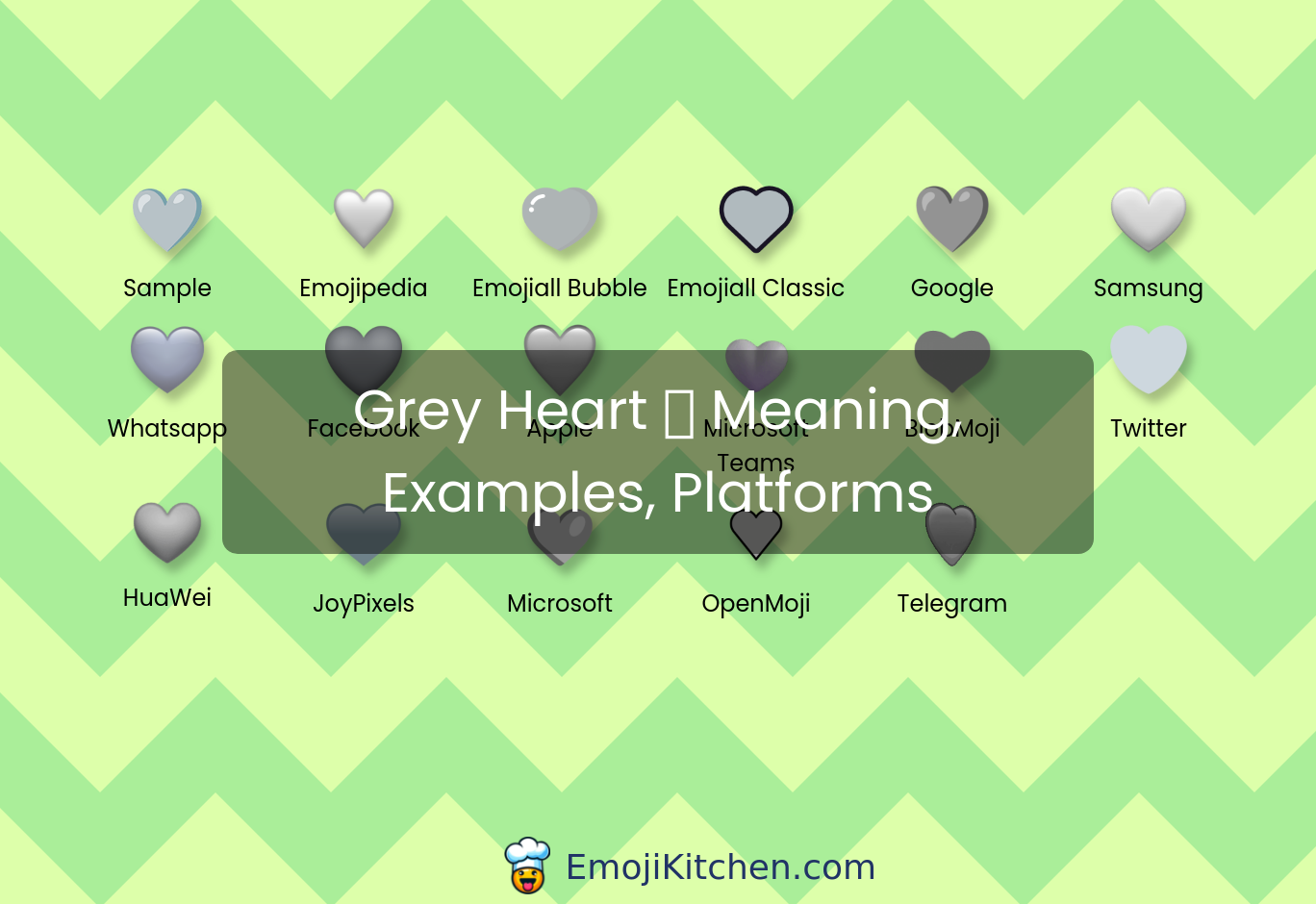
A recurring issue in software engineering is that “a heart is not always a heart.” Because Unicode only provides the code, the actual graphic design is left to the platform (Apple, Google, Samsung, Microsoft).
Vector vs. Bitmap: The Scalability of Iconography
The grey heart must be rendered as a scalable vector or a high-resolution bitmap. Apple’s version of the grey heart features a 3D-shaded, metallic aesthetic, while Google’s Noto Emoji version is a flat, minimalist shape. For developers building cross-platform apps (using frameworks like Flutter or React Native), these visual discrepancies can lead to “UI fragmentation.” If a design relies on the grey heart appearing “metallic” to match a specific “silver” brand identity, it may fail on platforms where the emoji appears as a flat, matte grey.
Legacy Support and the “Box” Glitch
The “meaning” of the grey heart in a legacy system is often “error.” When a user on an older Android device receives a grey heart from an iPhone user, the lack of support for Unicode 15.0 results in a broken experience. This is a classic “backward compatibility” problem. Tech companies solve this by using “Emoji Polyfills”—scripts that detect if a system can render a character and, if not, replace it with a web-hosted image of the emoji. This ensures that the communicative intent (the “meaning”) is not lost due to hardware limitations.

The Future of Digital Symbology in the AI Era
The introduction of the grey heart is a precursor to a more customizable digital language. We are moving toward a period in tech where “Adaptive Emojis” or “AI-Generated Symbols” may become the norm.
As we look at the trajectory of software, the grey heart represents the successful “filling of the spectrum.” It shows that the tech industry is moving toward a more nuanced, sophisticated way of handling human emotion through binary code. For the developer, it is a lesson in Unicode compliance; for the designer, it is a tool for visual balance; and for the AI, it is a new data point in the quest to understand human sentiment.
In conclusion, the grey heart is much more than a simple icon. It is a testament to the continuous evolution of the Unicode Standard and the complex technical infrastructure that allows a single hex code to convey a specific, neutral emotion across billions of devices globally. Whether it is used to signify a “grey area,” a metallic product, or a sophisticated brand identity, its implementation remains a masterclass in modern digital engineering.
aViewFromTheCave is a participant in the Amazon Services LLC Associates Program, an affiliate advertising program designed to provide a means for sites to earn advertising fees by advertising and linking to Amazon.com. Amazon, the Amazon logo, AmazonSupply, and the AmazonSupply logo are trademarks of Amazon.com, Inc. or its affiliates. As an Amazon Associate we earn affiliate commissions from qualifying purchases.