
In the world of personal finance and luxury consumption, the term “gold vermeil” frequently appears as a middle ground between high-end solid gold investments and low-cost costume jewelry. To the uninitiated, it might seem like just another marketing buzzword, but for the savvy consumer or small-scale investor, understanding the technical and financial implications of gold vermeil is essential. From a capital allocation perspective, purchasing jewelry is rarely just about aesthetics; it is about understanding the intrinsic value of the materials, the longevity of the asset, and the cost-benefit analysis of the purchase.

Gold vermeil (pronounced ver-may) is a specific type of high-quality gold plating that must meet strict legal and regulatory standards to carry the name. Unlike standard gold-plated items, which often feature a thin wash of gold over a base metal like brass or nickel, vermeil represents a significant step up in both material cost and durability. To understand what gold vermeil means for your wallet, one must look past the luster and into the metallurgical composition and market regulations that define its worth.
Understanding the Economic Value of Gold Vermeil
The primary driver of value in any precious metal asset is its composition. For a piece of jewelry to be legally labeled as gold vermeil in jurisdictions like the United States, it must satisfy three distinct criteria set by the Federal Trade Commission (FTC). These standards are not merely suggestions; they are the baseline for consumer protection and financial transparency in the jewelry market.
The Regulatory Standards: Legal Definitions and Composition
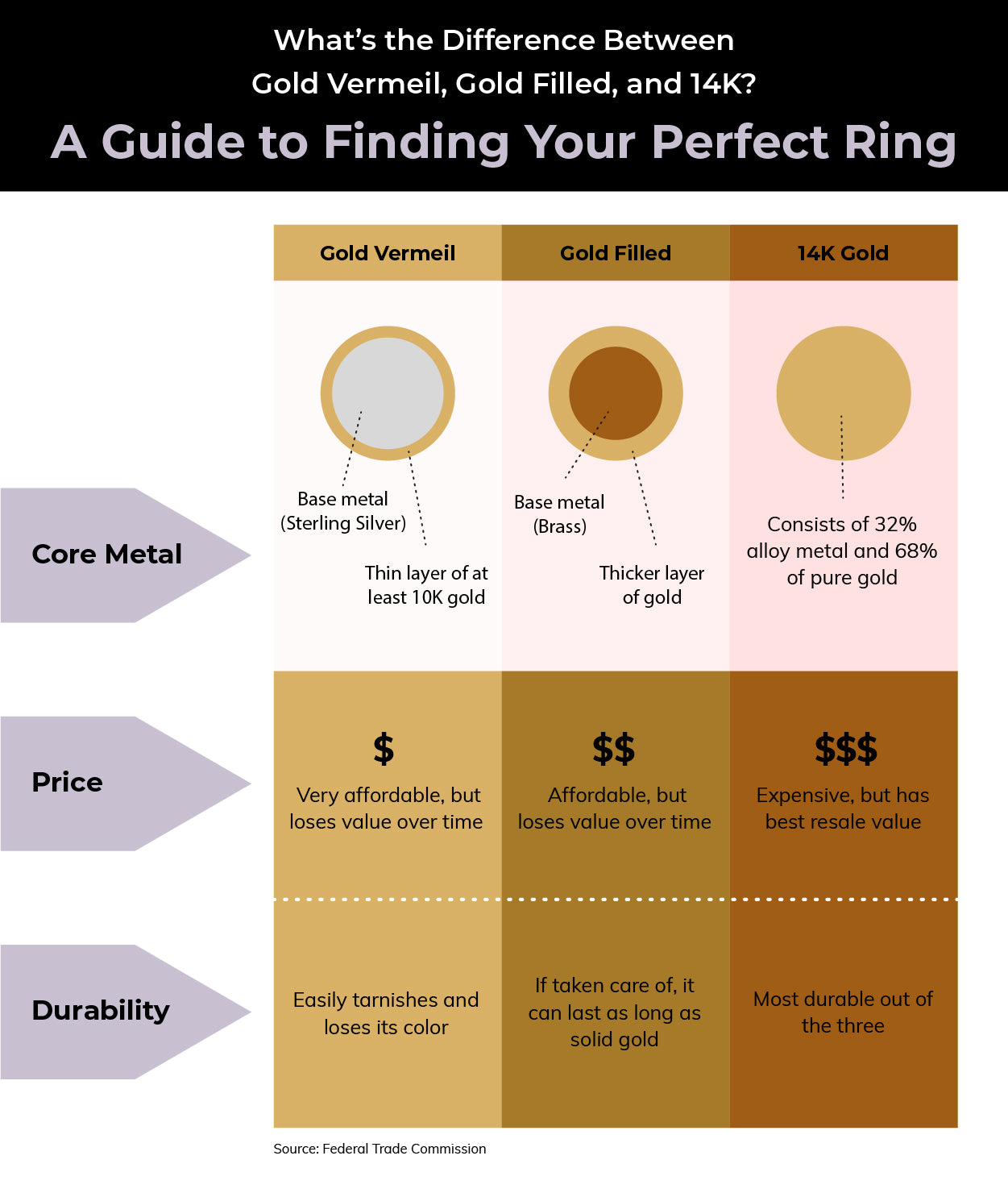
First, the base metal must be sterling silver. Sterling silver is an alloy containing 92.5% pure silver, which holds its own intrinsic commodity value. This is a critical distinction from “gold-plated” jewelry, which typically uses non-precious base metals. By using silver as the core, vermeil pieces maintain a “floor” value based on the spot price of silver.
Second, the gold layer must be at least 10 karats or higher. While many premium brands use 14k or 18k gold to achieve a richer color, the legal minimum ensures that the coating is not a cheap imitation or a highly diluted alloy.
Third, and perhaps most importantly from a durability standpoint, the gold thickness must be at least 2.5 microns. To put this in perspective, standard gold plating can be as thin as 0.5 microns. A 2.5-micron layer is five times thicker than average plating, which significantly impacts the lifespan of the piece and its resistance to wear and tear. From a financial perspective, this thickness represents a greater “capital expenditure” in terms of the raw gold used during the manufacturing process.
Vermeil vs. Gold Plated: Analyzing the Price Gap
When evaluating gold vermeil as a purchase, it is helpful to view it through the lens of a price-to-quality ratio. Gold-plated jewelry is often considered a “sunk cost.” Because the base metal is usually inexpensive (like brass) and the gold layer is microscopic, the resale value is virtually zero. These items are fashion-cycle products intended for short-term use.
Gold vermeil, however, commands a higher price point because it bridges the gap between disposable fashion and heirloom quality. When you purchase vermeil, you are paying for a significant amount of sterling silver and a measurable thickness of gold. While it does not appreciate in value like a 24k gold bullion bar, it retains “scrap value” due to the silver content, and its longevity ensures that the “cost per wear” remains low over several years.
The Financial Case for Gold Vermeil in Personal Finance
In personal finance, the goal is often to maximize utility while minimizing unnecessary depreciation. Gold vermeil serves as a strategic choice for individuals who want the aesthetic of solid gold without the four-to-five-figure price tag. It allows for the diversification of a wardrobe or personal collection without over-leveraging one’s liquid assets in high-premium jewelry.
Cost-Benefit Analysis: Durability vs. Acquisition Cost
The most compelling financial argument for gold vermeil is the cost-benefit analysis compared to solid gold. Solid 14k or 18k gold jewelry is priced based on the weight of the gold plus a significant “maker’s mark” or retail markup. For many, a solid gold chain might cost $1,500, whereas a visually identical gold vermeil version might cost $150.
If the solid gold piece is viewed as an investment, one must account for the fact that retail jewelry markups often exceed 100-300%. This means that if you try to sell that $1,500 chain back to a jeweler the next day, you might only receive the melt value of the gold, which could be closer to $600.
In contrast, the $150 gold vermeil piece is an “expensed” item rather than a “capital investment.” The financial risk is capped at $150. If the piece lasts five years of regular wear—which high-quality vermeil easily can—the cost is roughly $30 per year. For consumers focused on cash flow and liquidity, keeping the $1,350 difference in a high-yield savings account or an index fund while wearing the vermeil alternative is often the mathematically superior move.
Resale Value and Liquidity in the Secondary Market

While gold vermeil should not be purchased with the primary intent of resale, it does hold more liquidity than base-metal jewelry. Platforms like Depop, Poshmark, and RealReal have created a robust secondary market for “affordable luxury” brands that specialize in vermeil. Because the base is sterling silver, the pieces feel “substantial” to the touch, a tactile quality that buyers in the secondary market associate with value.
Furthermore, if a vermeil piece eventually loses its gold luster after years of heavy use, it can be “re-dipped” at a fraction of the cost of buying a new piece. This ability to refurbish the asset adds to its long-term financial viability. Alternatively, because the core is sterling silver, it can be sold to silver refiners for its melt value, providing a small “salvage value” that cheaper plating cannot offer.
Business Finance and the Jewelry Industry Model
The rise of gold vermeil is not just a consumer trend; it is a calculated business strategy that has reshaped the jewelry industry’s financial landscape. Direct-to-consumer (DTC) brands have leveraged vermeil to create a new category known as “Demi-Fine” jewelry.
Profit Margins and the “Affordable Luxury” Segment
For jewelry businesses, gold vermeil offers a highly attractive margin profile. Solid gold jewelry is subject to the volatility of the gold spot market. When gold prices spike, the cost of goods sold (COGS) for solid gold pieces skyrockets, forcing brands to either thin their margins or raise prices and risk losing customers.
Vermeil allows brands to maintain more stable pricing. Since the gold component is a thick plating rather than the entire mass of the object, the manufacturer’s exposure to gold price fluctuations is mitigated. This stability allows for better financial forecasting and more aggressive marketing budgets. The “Demi-Fine” segment occupies a psychological “sweet spot” for consumers: it is expensive enough to feel like a significant treat or gift, but affordable enough to be an impulsive purchase.
Supply Chain Economics: Managing Precious Metal Costs
From a manufacturing standpoint, gold vermeil requires specialized equipment and chemical processes (electrolysis) to ensure the 2.5-micron thickness is uniform. For a business, the investment in this process is a barrier to entry that separates high-end brands from “fast fashion” jewelry producers.
By focusing on vermeil, companies can optimize their inventory turnover. High-end solid gold pieces often sit in inventory for longer periods due to their high price points, tying up a company’s working capital. Vermeil pieces move faster, increasing the “velocity of money” within the business. This higher turnover rate often results in a better Return on Equity (ROE) for the jewelry brand owners than if they focused exclusively on investment-grade solid gold.
Gold Vermeil as a Strategic Asset in a Diversified Portfolio
While it is important to distinguish between “jewelry” and “investments,” an informed approach to gold vermeil involves understanding how tangible goods fit into a broader financial picture.
Hedging Against Inflation with Tangible Goods
Precious metals have historically served as a hedge against inflation. While a gold vermeil ring isn’t a substitute for a gold sovereign or an ounce of bullion, it belongs to the category of “hard assets.” In periods of high inflation, the cost of raw materials—silver and gold—rises. This, in turn, drives up the retail price of new jewelry.
An individual who built a collection of high-quality vermeil pieces five years ago would likely find that replacing those pieces today would cost 20-30% more due to the rise in labor, shipping, and metal costs. In this sense, purchasing vermeil is a way to lock in the “utility value” of luxury goods before future price increases.
Assessing Long-Term Appreciation vs. Utility Value
When deciding whether to buy gold vermeil, one must weigh appreciation against utility. Solid gold is an appreciation play; it is a store of value. Gold vermeil is a utility play; it provides the psychological and social benefits of luxury at a controlled cost.
For the modern professional, the “wealth-building” move is often to limit spending on depreciating assets. However, because jewelry is often a required or desired part of professional and social presentation, gold vermeil represents a “frugal luxury.” It allows the wearer to project an image of success and attention to detail—qualities that can have indirect financial benefits in career networking and personal branding—without diverting large amounts of capital away from traditional investment vehicles like stocks, real estate, or retirement accounts.
In summary, what gold vermeil means is a calculated compromise. It is a regulated, high-quality material that offers the aesthetic and tactile experience of gold while anchored by the intrinsic value of sterling silver. From a financial perspective, it represents an optimized choice for those looking to balance the desire for luxury with the principles of smart capital management. By understanding the 2.5-micron standard and the silver-core requirement, consumers and businesses alike can navigate the jewelry market with a clear eye on value, durability, and long-term financial impact.
aViewFromTheCave is a participant in the Amazon Services LLC Associates Program, an affiliate advertising program designed to provide a means for sites to earn advertising fees by advertising and linking to Amazon.com. Amazon, the Amazon logo, AmazonSupply, and the AmazonSupply logo are trademarks of Amazon.com, Inc. or its affiliates. As an Amazon Associate we earn affiliate commissions from qualifying purchases.