
The familiar envelope or digital notification of your monthly gas bill can sometimes feel like a mystery. While the primary purpose is clear – paying for the natural gas used in your home or business – the specifics of what this charge encompasses can be less obvious. Understanding your gas bill is crucial for effective personal finance management, enabling you to budget accurately, identify potential savings, and ensure you’re not overpaying for your energy consumption. This article delves into the components that make up your gas bill, offering a clear and insightful breakdown to empower you with knowledge.

Understanding the Core Charge: Your Gas Consumption
At its heart, your gas bill is a reflection of the amount of natural gas you have consumed. However, this consumption is not simply billed per unit of gas as it enters your property. Several factors influence how this usage translates into a monetary figure.
Measuring Your Usage: Cubic Feet and Therms
Natural gas is typically measured in cubic feet (often abbreviated as CCF or MCF for thousand cubic feet). Your utility company installs a gas meter at your property, a device that meticulously records the volume of gas that passes through it. This meter reading is then used to calculate your consumption for the billing period.
However, the “value” of that gas isn’t solely based on volume. Natural gas has a varying energy content, often measured in British Thermal Units (BTUs). To standardize billing and account for variations in gas quality, utility companies often convert cubic feet into “therms.” A therm is a unit of energy equal to 100,000 BTUs. Your gas bill will likely show your consumption in both cubic feet and therms, with the latter being the basis for the primary energy charge. The conversion factor from cubic feet to therms can vary slightly depending on your region and the specific composition of the natural gas supplied.
The Cost of Energy: Kilowatt-Hours (for some heating)
While natural gas itself is measured in therms, it’s important to note that in some regions, or for specific appliances, the energy derived from gas might be presented in kilowatt-hours (kWh), a unit more commonly associated with electricity. This is particularly true when comparing the cost-effectiveness of gas heating versus electric heating. The conversion between therms and kilowatt-hours is a standard energy equivalence. For example, one therm is approximately equivalent to 29.3 kilowatt-hours. While your gas bill will primarily focus on therms, understanding this equivalence can be helpful for comparative budgeting and energy efficiency analysis.
How Usage is Tracked: Meter Readings and Estimates
Your gas meter is the silent observer of your energy use. The readings from this meter are the foundation of your bill. There are two primary ways these readings are obtained:
- Actual Meter Reads: A representative from your utility company physically visits your property at regular intervals (typically monthly or bi-monthly) to read your gas meter. This provides the most accurate picture of your actual consumption.
- Estimated Meter Reads: In situations where an actual meter read isn’t possible (e.g., access issues, staff shortages), your utility company may estimate your usage. This estimation is usually based on your historical consumption patterns, taking into account factors like the season and typical usage for similar properties. While estimates are designed to be reasonably accurate over time, they can sometimes lead to discrepancies. If you consistently receive estimated bills, it’s advisable to contact your utility provider to arrange an actual meter read to ensure your billing is precise.
Beyond Consumption: Fixed Charges and Service Fees
Your gas bill isn’t solely about how much gas you use. A significant portion of your bill consists of various fixed charges and service fees that are levied regardless of your consumption level. These charges contribute to the infrastructure, maintenance, and operational costs of the natural gas distribution system.
Customer Service and Account Maintenance Fees
Every utility customer incurs charges for the basic services provided by the gas company. These can include:
- Customer Service Charge: This is a flat fee that covers the cost of maintaining customer accounts, processing payments, providing customer support, and managing billing systems. It’s a cost associated with being a customer of the utility.
- Meter Service Charge: This fee helps cover the costs associated with the installation, maintenance, calibration, and ongoing servicing of your gas meter. The meter is a critical piece of equipment, and its upkeep is essential for accurate billing.
Distribution and Infrastructure Costs
The natural gas you receive has to travel a long distance from the extraction point to your home. This journey involves a complex network of pipelines, compressor stations, and storage facilities. Your gas bill includes charges to cover the costs associated with building, maintaining, and operating this vast infrastructure.
- Distribution System Charge: This charge is directly related to the cost of the local distribution network – the pipes that run from the main transmission lines to your property. It covers maintenance, repairs, upgrades, and leak detection within the local delivery system.
- Demand/Capacity Charges (Commercial/Industrial): For larger commercial and industrial customers, bills often include demand or capacity charges. These reflect the maximum rate at which a customer can draw gas from the system. Utilities need to maintain sufficient capacity to meet peak demand, and these charges help recover those investments, even if the customer doesn’t consistently draw at their maximum capacity.
Regulatory and Environmental Charges
The energy sector is heavily regulated, and utilities are often required to comply with various environmental mandates and government regulations. These costs are typically passed on to consumers.
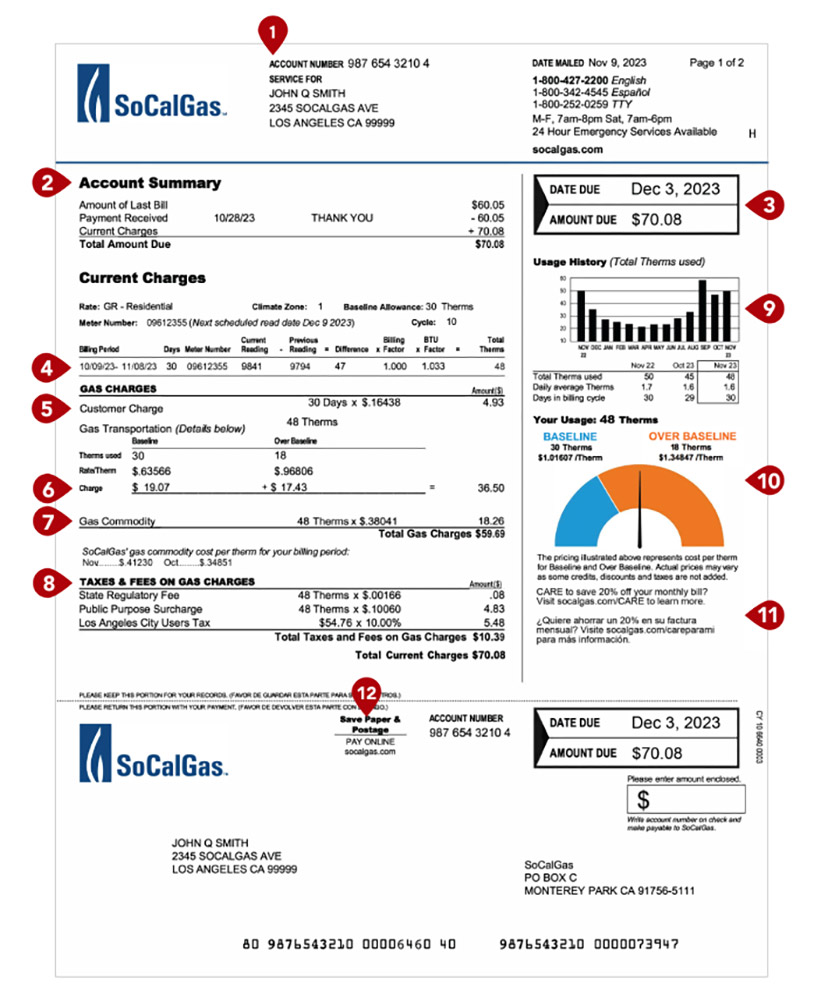
- State and Local Taxes: Your gas bill will almost always include applicable state and local taxes. These can vary significantly by jurisdiction and contribute to general government revenue or specific energy-related programs.
- Environmental Compliance Fees: Utilities may incur costs related to environmental regulations, such as those for emissions reduction, pipeline integrity, or remediation of historical sites. These costs are often recovered through specific line items on your bill.
- Public Purpose Program Surcharges: In some regions, gas bills may include surcharges that fund public purpose programs. These programs can support energy efficiency initiatives, low-income energy assistance, or renewable energy development.
Additional Charges and Potential Add-ons
Beyond the core consumption, fixed fees, and regulatory costs, your gas bill might also feature other charges, some of which are optional or reflect specific service choices.
Energy Efficiency Program Contributions
Many utility companies offer programs designed to help customers reduce their energy consumption and save money. Participation in or contributions to these programs can sometimes appear on your bill.
- Energy Efficiency Surcharges: These are often mandated by regulators to fund programs that promote energy-saving measures, such as rebates for efficient appliances, home energy audits, or weatherization assistance.
- Renewable Energy Certificates (RECs) or Green Energy Options: While less common for natural gas than electricity, some providers may offer options to purchase renewable energy certificates or participate in green energy programs that might appear as an add-on charge on your bill.
Late Payment Fees and Other Penalties
Failing to pay your gas bill on time can result in additional charges. It’s essential to be aware of these penalties to avoid unnecessary costs.
- Late Payment Fees: If your payment is not received by the due date, your utility company will likely assess a late fee. The amount of this fee is typically a percentage of the outstanding balance or a fixed amount, as stipulated in your service agreement.
- Reconnection Fees: If your service has been disconnected due to non-payment, you will likely have to pay a reconnection fee in addition to any outstanding charges and late fees before your gas supply is restored.
Billing Options and Service Plans
In some cases, your gas bill might reflect choices you’ve made regarding your billing or service plan.
- Budget Billing/Level Payment Plans: These plans allow you to pay a fixed amount each month, averaging your annual gas costs. While this can help with budgeting by smoothing out seasonal fluctuations, it’s important to understand that you are still paying for your actual usage, and adjustments may be made periodically to true up the balance.
- Third-Party Supplier Charges (if applicable): In deregulated energy markets, you may have the option to choose a third-party supplier for your natural gas. If you have done so, your bill might show charges from this supplier in addition to the delivery charges from your local utility. It’s crucial to understand the terms of your agreement with any third-party supplier to avoid unexpected costs.
Taking Control of Your Gas Bill: Strategies for Savings
Understanding what your gas bill covers is the first step towards managing your energy expenses effectively. By being aware of the different components, you can identify areas where you might be able to reduce costs and optimize your consumption.
Monitoring Your Consumption Patterns
Regularly reviewing your gas bills allows you to track your consumption over time. Pay attention to seasonal variations and identify any unusually high usage periods. This can help you pinpoint specific appliances or habits that might be contributing to increased costs.
Improving Energy Efficiency at Home
The most impactful way to reduce your gas bill is to improve the energy efficiency of your home. Simple measures can make a significant difference:
- Insulation and Sealing: Proper insulation in your attic, walls, and basement, along with sealing air leaks around windows and doors, can prevent heat loss during colder months.
- Thermostat Management: Installing a programmable or smart thermostat allows you to automatically adjust your home’s temperature when you’re away or asleep, reducing unnecessary heating.
- Appliance Maintenance: Regularly maintaining your furnace and hot water heater ensures they operate at peak efficiency. Consider upgrading to newer, more energy-efficient models when they reach the end of their lifespan.
- Mindful Usage: Simple habits like taking shorter showers, washing clothes in cold water when possible, and avoiding leaving gas appliances running unnecessarily can contribute to savings.

Exploring Utility Programs and Incentives
Many gas utilities offer programs and incentives that can help you save money on your energy bills. These might include:
- Rebates for Energy-Efficient Appliances: Check with your utility provider for rebates on new, high-efficiency furnaces, water heaters, or other gas-powered appliances.
- Energy Audits: Some utilities offer free or discounted home energy audits to identify areas where your home might be losing energy.
- Budget Billing: As mentioned earlier, budget billing can help you manage your monthly expenses by providing a predictable payment amount.
By demystifying the components of your gas bill, you gain the power to make informed financial decisions, identify potential savings, and ensure you’re paying a fair price for the energy services you receive. A proactive approach to understanding and managing your energy consumption will not only benefit your wallet but also contribute to a more sustainable energy future.
aViewFromTheCave is a participant in the Amazon Services LLC Associates Program, an affiliate advertising program designed to provide a means for sites to earn advertising fees by advertising and linking to Amazon.com. Amazon, the Amazon logo, AmazonSupply, and the AmazonSupply logo are trademarks of Amazon.com, Inc. or its affiliates. As an Amazon Associate we earn affiliate commissions from qualifying purchases.