
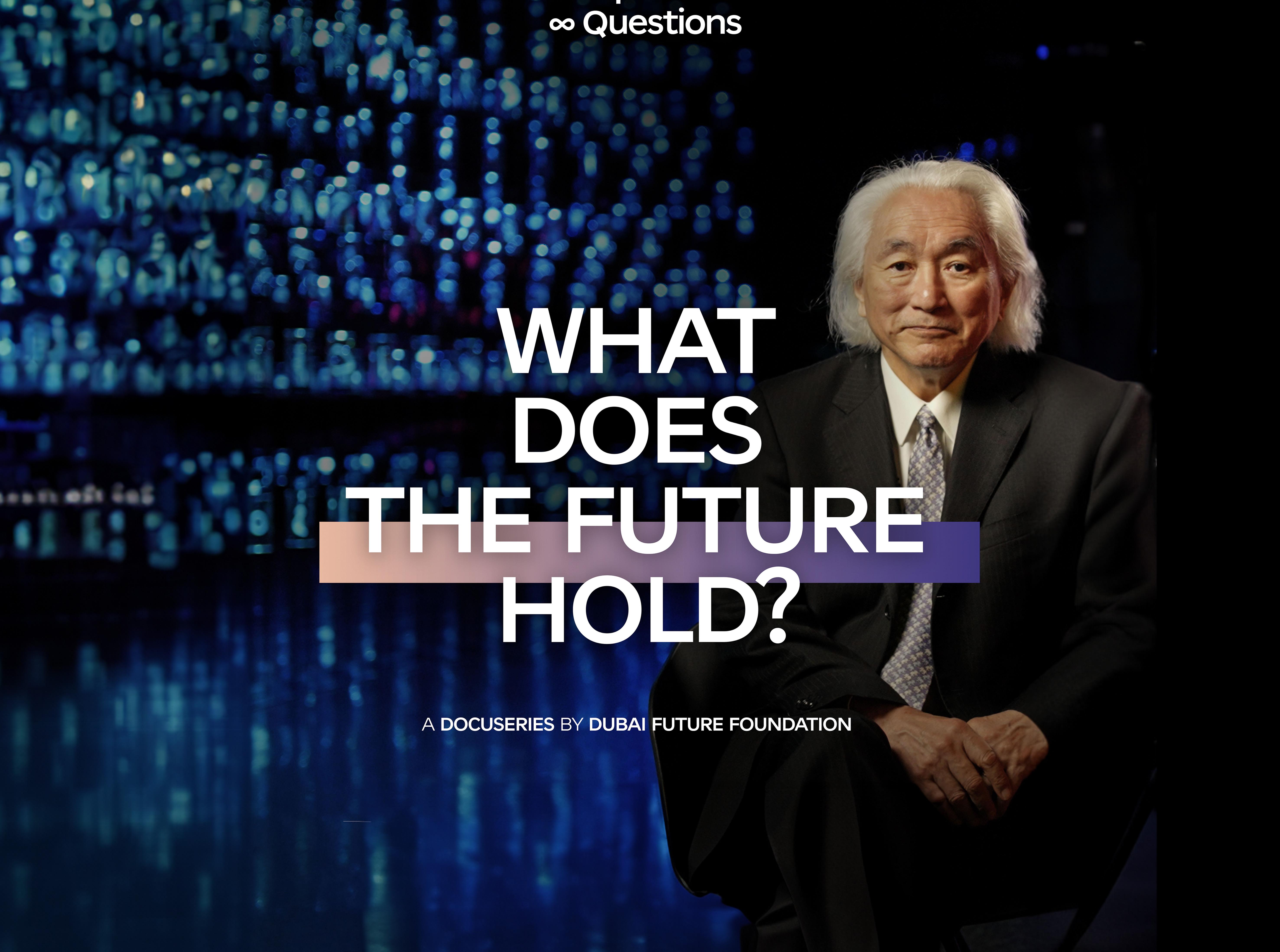
The trajectory of human civilization has always been tethered to the tools we create. From the printing press to the steam engine, and from the silicon chip to the internet, every leap in technology has fundamentally restructured how we live, work, and perceive reality. Today, we stand at a precipice that feels different from those of the past. The convergence of artificial intelligence, quantum computing, and spatial interfaces is not just an incremental improvement; it is a total reimagining of the digital and physical worlds. As we look toward the horizon, the question “what does the future hold?” becomes less about specific gadgets and more about the fundamental shift in our relationship with information and existence.

The Generative Revolution: Moving Beyond Simple Automation
For decades, the promise of technology was “automation”—teaching machines to perform repetitive tasks to save human time. However, the future holds a paradigm shift from automation to “augmentation” and “agency.” We are entering an era where technology doesn’t just follow instructions; it anticipates needs and generates solutions autonomously.
The Rise of Agentic AI
The current wave of Large Language Models (LLMs) has introduced the world to generative AI, but the next phase is the transition to “AI Agents.” Unlike a chatbot that responds to a prompt, an agentic AI is capable of multi-step reasoning, planning, and execution. In the near future, we will move away from juggling dozens of individual apps. Instead, a unified AI agent will navigate the digital ecosystem on our behalf—booking travel, managing complex project workflows, and negotiating service contracts—with minimal human intervention. This shift will redefine productivity, moving the human role from “doer” to “director.”
Hyper-Personalization in Software Development
The future of software is not one-size-fits-all. We are approaching a point where software will be “liquid,” meaning it will adapt and rewrite its own interface and functionality based on the specific user’s behavior. With the democratization of coding through AI, we will see a rise in “disposable applications”—custom tools built by AI in seconds to solve a single, specific problem, then discarded. This level of hyper-personalization ensures that technology fits the human, rather than forcing the human to learn the technology.
The Infrastructure of Tomorrow: Quantum Computing and Edge Networks
Behind every software breakthrough lies the hardware and infrastructure that makes it possible. As our demands for data processing grow exponentially, the traditional binary computing model is reaching its physical limits. The future holds a radical restructuring of how data is computed and transmitted.
Quantum Supremacy and Cryptographic Security
Quantum computing remains one of the most anticipated frontiers in tech. While still in its nascent stages, the leap from bits to qubits represents a massive jump in processing power. The future holds the potential for quantum systems to simulate molecular structures for drug discovery in hours rather than decades. However, this power comes with risks. The “Quantum Apocalypse” refers to the point where quantum computers can easily break current encryption standards. Consequently, the next decade will see a massive overhaul of global digital security as we transition to post-quantum cryptography to protect our financial and personal data.
The Decentralized Edge: IoT and Real-Time Processing
While the last decade was defined by “The Cloud,” the future belongs to “The Edge.” As we integrate more Internet of Things (IoT) devices into our cities and homes—from autonomous vehicles to smart grids—the latency of sending data to a central server and back is no longer acceptable. Edge computing brings processing power physically closer to the data source. This allows for real-time decision-making in self-driving cars and industrial robotics, creating a world where the physical environment is “alive” with intelligence, responding to changes in milliseconds.
Human-Centric Innovation: Wearables, Spatial Computing, and the New Interface
The era of staring at a glowing rectangle in our pockets is nearing its twilight. The future of technology is moving toward “invisible” interfaces—systems that integrate seamlessly into our sensory experience without the friction of a handheld device.
Spatial Computing and the End of the Smartphone Era
Spatial computing, led by advancements in Augmented Reality (AR) and Mixed Reality (MR), seeks to merge digital objects with the physical world. Instead of looking down at a screen, information will be overlaid onto our field of vision via lightweight glasses or contact lenses. This will transform everything from remote work—where 3D avatars occupy the same physical room—to education, where a student can walk through a digital recreation of ancient Rome. As these devices become more ergonomic, the smartphone will likely transition from a primary device to a secondary processing hub, eventually disappearing altogether.
Neural Interfaces and Bio-Digital Convergence
The most profound frontier of the future is the direct link between the human brain and computers. Brain-Computer Interfaces (BCIs), such as those being developed by companies like Neuralink and Synchron, are already showing promise in medical fields, allowing paralyzed individuals to control digital cursors with thought alone. As this technology matures, the “what does the future hold” answer takes on a more biological tone. We may eventually see a future where the barrier between thought and digital action is removed, enabling a form of “digital telepathy” and the expansion of human cognitive capacity through direct access to the web.
Digital Sovereignty and the Ethics of an Automated World
As technology becomes more deeply embedded in our lives, the challenges we face shift from technical hurdles to ethical and societal ones. The future holds a significant debate over who owns the data that fuels our world and how we protect the essence of human agency.
Data Privacy in the Age of Large Language Models
The current AI boom is built on the ingestion of massive amounts of human-generated data. This has sparked a global conversation about data sovereignty and intellectual property. In the future, we will likely see the rise of “Personal Data Vaults,” where individuals exert granular control over what information they share with AI models. The focus will shift from “free” services funded by data harvesting to decentralized models where users are compensated for the data they provide, or where local AI models run entirely on personal devices to ensure absolute privacy.
Bridging the Digital Divide and Sustainable Tech
The future of technology cannot be discussed without addressing its environmental and social footprint. The energy requirements for massive data centers and AI training are staggering. The next generation of tech will be defined by “Green Computing”—the development of more efficient algorithms and hardware that require a fraction of the power. Furthermore, as technology accelerates, the risk of a widening digital divide grows. The future must hold a concerted effort to ensure that high-speed connectivity and AI tools are not luxuries of the global elite, but utility-like services available to all, ensuring that the technological future is an inclusive one.

Conclusion: The Symbiotic Future
What does the future hold? It holds a world where the boundary between the digital and the physical is increasingly porous. We are moving toward a symbiotic relationship with our tools—one where technology is no longer a separate entity we “use,” but an ambient layer of our existence that enhances our capabilities, protects our health, and expands our understanding of the universe.
While the challenges of security, ethics, and privacy are significant, the potential for technology to solve some of humanity’s most pressing problems—from climate change to terminal illness—has never been greater. The future is not something that simply happens to us; it is a landscape we are actively building with every line of code and every new circuit. As we navigate this next frontier, the goal remains the same: to create technology that doesn’t just make life faster or more efficient, but makes it more profoundly human.
aViewFromTheCave is a participant in the Amazon Services LLC Associates Program, an affiliate advertising program designed to provide a means for sites to earn advertising fees by advertising and linking to Amazon.com. Amazon, the Amazon logo, AmazonSupply, and the AmazonSupply logo are trademarks of Amazon.com, Inc. or its affiliates. As an Amazon Associate we earn affiliate commissions from qualifying purchases.