
For American citizens and resident aliens living abroad, the concept of “citizenship-based taxation” can be a daunting financial reality. The United States is one of the few countries in the world that taxes its citizens on their global income, regardless of where they live or where the money is earned. However, the U.S. tax code provides a powerful mechanism to mitigate this burden: the Foreign Earned Income Exclusion (FEIE). Understanding the nuances of this exclusion is essential for anyone looking to optimize their personal finances while building a life or business overseas.
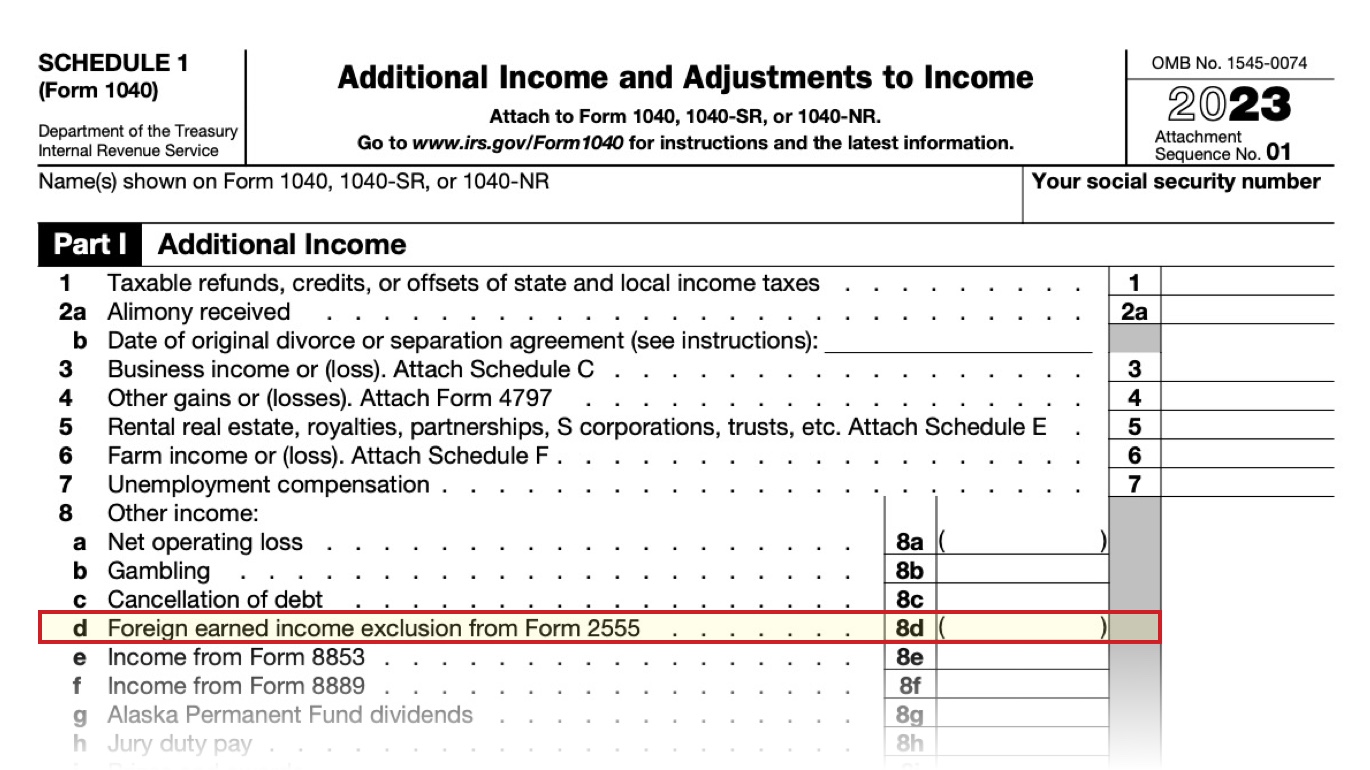
The FEIE is designed to prevent double taxation—the scenario where an individual pays taxes to both a foreign government and the U.S. Internal Revenue Service (IRS) on the same dollar of income. By mastering the eligibility requirements and financial implications of the FEIE, expats can significantly reduce their tax liability, often bringing it down to zero for a substantial portion of their earnings.
The Mechanics of the Foreign Earned Income Exclusion (FEIE)
At its core, the Foreign Earned Income Exclusion is a tax provision that allows qualifying U.S. citizens and resident aliens to exclude a specific amount of their foreign earnings from their gross income when filing their U.S. federal tax return. This exclusion does not happen automatically; it must be actively claimed by filing Form 2555 with the IRS.
How the FEIE Prevents Double Taxation
The primary purpose of the FEIE is to provide relief to Americans working in foreign jurisdictions. Without this exclusion, a software developer living in Spain, for example, would owe income tax to the Spanish government and then potentially owe full U.S. federal taxes on those same earnings. By using the FEIE, that developer can “exclude” a significant chunk of their Spanish salary—up to $120,000 or more, depending on the tax year—from their U.S. taxable income.
It is important to note that the FEIE only applies to federal income tax. It does not necessarily exempt you from self-employment taxes (Social Security and Medicare), nor does it automatically apply to state-level taxes, as each state has its own rules regarding foreign income.
Distinguishing Between Earned and Unearned Income
One of the most critical aspects of the FEIE is the definition of “earned income.” To qualify for the exclusion, the money must be compensation for personal services rendered. This includes wages, salaries, professional fees, and bonuses.
Conversely, “unearned” or passive income does not qualify for the FEIE. This includes:
-
Dividends and interest.
-
Capital gains from stock or real estate sales.
-
Rental income.
-
Social Security benefits or pensions.
-
Alimony.
For digital nomads and entrepreneurs, the distinction is vital. If you run a business, the portion of your income that represents your “salary” for work performed is excludable, but pure profit distributions or passive investment income are not.
Qualifying for the Exclusion: The Two Primary Tests
To claim the FEIE, you cannot simply be “on vacation.” The IRS requires you to demonstrate that you have a “tax home” in a foreign country and that you meet one of two rigorous residency tests: the Physical Presence Test or the Bona Fide Residence Test.
The Physical Presence Test (The 330-Day Rule)
The Physical Presence Test is the most common path for digital nomads and short-term expats. To pass this test, you must be physically present in a foreign country or countries for at least 330 full days during any period of 12 consecutive months.
These 330 days do not have to be consecutive, but they must be “full days.” A full day is a period of 24 consecutive hours beginning at midnight. Time spent traveling over international waters or in the U.S. (even for a layover) generally does not count toward your 330 days. This test is strictly quantitative; the IRS does not care about your intent or your ties to the foreign country—only the calendar matters.
The Bona Fide Residence Test
The Bona Fide Residence Test is more qualitative and is typically used by expats who have established a long-term, settled life in a foreign country. To qualify, you must be a U.S. citizen (or a resident alien of a country with which the U.S. has an income tax treaty) and a resident of a foreign country for an uninterrupted period that includes an entire uninterrupted tax year (January 1 to December 31).

The IRS looks at several factors to determine “bona fide” status, including:
-
The nature and length of your stay.
-
Whether you have established a home and brought your family.
-
Your involvement in the local community.
-
Whether you have declared to the foreign authorities that you are not a resident (doing so usually disqualifies you).
This test offers more flexibility for travel back to the U.S., but it carries a higher burden of proof regarding your lifestyle and intentions.
Maximizing Your Savings: Limits and the Housing Exclusion
While the FEIE is a powerful tool, it is not unlimited. The IRS sets an annual cap on the amount you can exclude, and there are additional provisions for those living in high-cost-of-living areas.
Current Exclusion Limits and Inflation Adjustments
The maximum exclusion amount is adjusted annually for inflation. For the 2023 tax year, the limit was $120,000; for 2024, it increased to $126,500. If a married couple both work abroad and meet the residency tests, they can each claim the exclusion, potentially shielding over $250,000 from U.S. federal income tax.
However, a crucial financial detail often overlooked is the “stacking rule.” The IRS calculates the tax rate on your non-excluded income by looking at what your tax bracket would have been before the exclusion. This means if you earn $150,000 and exclude $120,000, the remaining $30,000 is taxed at the rates that apply to the $120,000–$150,000 range, rather than the lower brackets starting from zero.
Leveraging the Foreign Housing Exclusion and Deduction
Beyond the basic earned income exclusion, expats can also benefit from the Foreign Housing Exclusion (for employees) or the Foreign Housing Deduction (for self-employed individuals). This allows you to exclude or deduct expenses related to housing in a foreign country, such as rent, utilities (excluding telephone), insurance, and furniture rentals.
The IRS provides a “base amount” (roughly 16% of the FEIE limit) that you must pay yourself, but expenses above that base, up to a certain ceiling, can be excluded. In high-cost cities like Hong Kong, London, or Zurich, the IRS allows for much higher housing caps, significantly increasing the total amount of income an expat can shield from U.S. taxation.
Strategic Financial Planning and Compliance Requirements
Navigating the FEIE is not just about meeting the 330-day rule; it requires meticulous record-keeping and a proactive approach to your broader financial strategy.
Filing Form 2555 and Maintaining Records
To claim the FEIE, you must file Form 2555 with your annual tax return (Form 1040). Even if your income is below the exclusion limit and you owe zero taxes, you are still legally required to file a return if you meet the standard filing thresholds. Failure to file on time can lead to the loss of the exclusion, resulting in a massive, unexpected tax bill.
Documentation is your best defense in the event of an audit. You should maintain a detailed log of your travel, including boarding passes and passport stamps, to prove your physical presence. Additionally, keep copies of leases, utility bills, and foreign tax returns to support a Bona Fide Residence claim.
The Impact on State Taxes and Retirement Contributions
The FEIE interacts with other areas of personal finance in ways that can be surprising.
-
State Taxes: Some “sticky” states (like California, Virginia, or South Carolina) may still consider you a resident and demand taxes on your foreign income, even if the IRS allows the exclusion. You may need to take specific steps to “break domicile” with your home state.
-
Retirement Accounts (IRA/Roth IRA): To contribute to an IRA or Roth IRA, you must have “taxable compensation.” If you exclude all of your income using the FEIE, you have zero taxable compensation and therefore cannot legally contribute to these retirement accounts.
For some high-earning expats, it may actually be more beneficial to use the Foreign Tax Credit (FTC) instead of the FEIE. The FTC allows you to take a dollar-for-dollar credit for taxes paid to a foreign government. If you live in a high-tax country like Germany or France, the FTC might result in a lower overall tax bill and allow you to keep your income “taxable” for IRA contribution purposes.

Conclusion
The Foreign Earned Income Exclusion is a cornerstone of financial planning for Americans living abroad. By effectively utilizing this provision, you can protect a significant portion of your hard-earned money, allowing you to reinvest in your business, save for retirement, or fund your international lifestyle. However, because the rules are rigid and the “stacking” and housing provisions are complex, it is often wise to consult with a tax professional specializing in expat taxation. With the right strategy, the FEIE can transform the challenge of citizenship-based taxation into a manageable, and even advantageous, component of your global financial journey.
aViewFromTheCave is a participant in the Amazon Services LLC Associates Program, an affiliate advertising program designed to provide a means for sites to earn advertising fees by advertising and linking to Amazon.com. Amazon, the Amazon logo, AmazonSupply, and the AmazonSupply logo are trademarks of Amazon.com, Inc. or its affiliates. As an Amazon Associate we earn affiliate commissions from qualifying purchases.