
When we strip away the sentimentality of holiday gatherings and childhood memories, the question “What does family mean to you?” takes on a profound financial dimension. In the realm of wealth management and personal finance, family is the ultimate “why.” It is the primary driver behind why we work, why we save, and how we choose to allocate our most precious resources. To view family through a financial lens is not to diminish its emotional value, but rather to recognize that financial stability is the bedrock upon which a family’s dreams, security, and future legacy are built.

In a modern economic landscape, the definition of family has expanded, yet the core financial responsibilities remain. Whether you are supporting aging parents, raising children, or building a life with a partner, family represents a long-term commitment that requires a strategic approach to money management. It is the transition from “me” to “us,” shifting the focus from short-term consumption to long-term wealth preservation and growth.
The Financial Architecture of Family Legacy
For many, family means legacy—the ability to leave the world better for the next generation than it was for the current one. This is not merely about the amount of money left in a bank account; it is about the structural tools used to ensure that wealth serves a purpose.
Defining Wealth Beyond the Balance Sheet
True family wealth includes financial capital, but it also encompasses human and intellectual capital. From a financial planning perspective, this means viewing your portfolio as a tool for empowerment. What does family mean to you if you cannot provide them with the freedom to pursue their passions? Strategic financial planning allows a family to define its values—be it education, philanthropy, or entrepreneurship—and fund them accordingly. When money is aligned with family values, it ceases to be a source of stress and becomes a vehicle for opportunity.
Strategic Estate Planning as an Act of Care
One of the most significant ways to demonstrate what family means to you is through comprehensive estate planning. This is often an overlooked aspect of personal finance because it requires confronting our own mortality. However, a well-structured estate plan is a final act of stewardship. By utilizing tools such as revocable living trusts, wills, and durable powers of attorney, you ensure that your assets are distributed according to your wishes and that your family is spared the legal complexities of probate.
In the context of modern finance, this also includes digital estate planning. In an era where a significant portion of our wealth and identity exists online—from cryptocurrency wallets to digital business assets—failing to provide a roadmap for your heirs can lead to the permanent loss of family wealth.
Investing for Multi-Generational Stability
If family means long-term security, then the investment strategy must reflect that duration. Multi-generational investing requires a shift in perspective, moving away from the volatility of day-to-day market fluctuations toward the steady power of compounding over decades.
The Power of Compound Interest for the Next Generation
Starting an investment journey for a child is one of the most impactful financial decisions a parent or grandparent can make. Through custodial accounts like the UTMA (Uniform Transfers to Minors Act) or UGMA (Uniform Gifts to Minors Act), families can begin building a nest egg that benefits from an incredibly long time horizon. Even modest contributions made during a child’s early years can grow exponentially by the time they reach adulthood, providing them with a “financial head start” that can be used for a home down payment or starting a business.
Education Funds and the Cost of Opportunity
For many, family means providing the best possible start in life, which often translates to higher education. With the rising cost of tuition, the 529 College Savings Plan has become a cornerstone of family financial planning. These plans offer tax-advantaged growth, and recent changes in legislation have made them even more flexible, allowing for the rollover of unused funds into a Roth IRA for the beneficiary. By prioritizing education funding, families are investing in the “intellectual capital” mentioned earlier, ensuring that the next generation has the tools to sustain and grow the family’s prosperity.
Protecting the Family Unit Through Risk Management
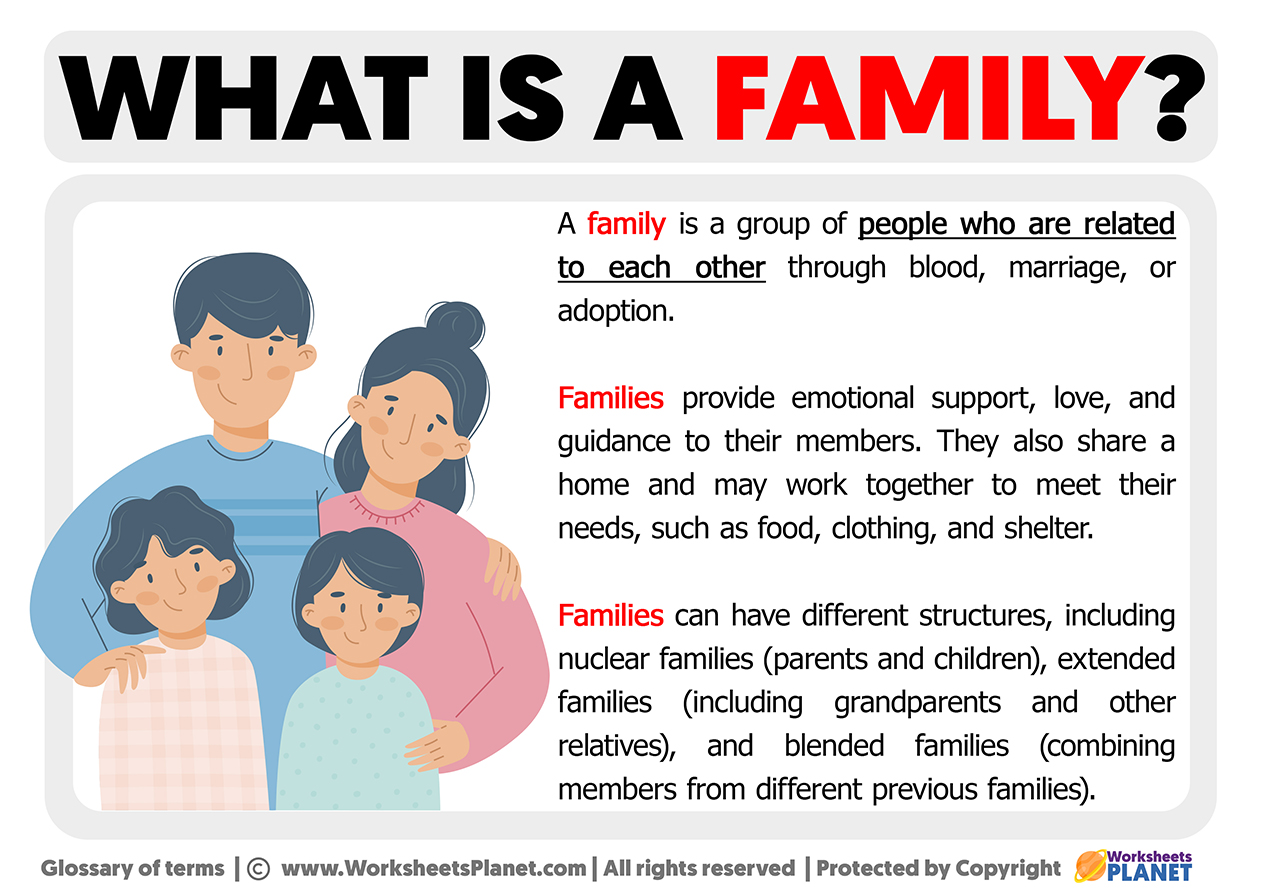
To say that family means everything is to admit that losing the ability to provide for them would be devastating. This is where the intersection of money and family becomes a matter of risk management. A robust financial plan is not just about growth; it is about defense.
Insurance as a Safety Net, Not an Expense
Life and disability insurance are often viewed as monthly expenses to be minimized. However, when viewed through the lens of family commitment, they are the ultimate safety net. If family means ensuring your spouse can stay in the family home or your children can attend the college you promised them, then life insurance is the mechanism that guarantees those outcomes regardless of what happens to the primary earner.
Furthermore, as we look toward the “sandwich generation”—those caring for both children and aging parents—long-term care insurance becomes a critical component of the financial dialogue. Protecting the assets you have worked a lifetime to build from being depleted by healthcare costs is a vital part of honoring what family means to you.
Emergency Funds: The Buffer Against Life’s Volatility
On a more immediate level, family security is defined by the ability to weather a storm. A liquid emergency fund, typically covering three to six months of essential expenses, is the first line of defense against job loss, medical emergencies, or unforeseen repairs. In a family context, this fund provides more than just money; it provides psychological safety. It ensures that the family’s daily life and long-term goals are not derailed by short-term crises.
The Entrepreneurial Family: Side Hustles and Shared Ventures
In recent years, the concept of family has become increasingly intertwined with the concept of the “family business” or the “shared side hustle.” In the modern economy, families are looking for ways to diversify their income streams together.
Teaching Financial Literacy Through Shared Ventures
What does family mean to you in the context of growth? For many, it means teaching the next generation the value of a dollar and the mechanics of the economy. Involving children in a family side hustle—whether it’s managing an e-commerce store, participating in a real estate investment, or running a small service business—is a practical way to build financial literacy. These ventures provide a “real-world” laboratory where family members can learn about revenue, expenses, taxes, and the rewards of hard work.
Building a Family Brand or Business Entity
For those with a high net worth or a specialized skill set, forming a Family Limited Partnership (FLP) or a family-owned LLC can be a strategic move. These entities allow families to pool their resources, achieve better investment returns through economies of scale, and provide a framework for professionalizing the management of family assets. This structure not only offers tax advantages but also creates a shared mission for the family, fostering a sense of unity and collective responsibility toward their financial future.

Redefining Value in Modern Financial Planning
Ultimately, when you ask “What does family mean to you?” from a financial perspective, the answer lies in the concept of “Financial Freedom.” This is the point where your assets generate enough income to cover your family’s lifestyle, allowing you to reclaim your most valuable non-renewable resource: time.
Financial freedom allows a parent to be present for a child’s milestones, a spouse to support a partner’s career change, and an adult child to provide hands-on care for an elderly parent. In this light, money is simply a tool. It is the fuel for the life you want to lead with the people you love.
The most successful financial plans are those that don’t just track net worth, but track the fulfillment of family objectives. Whether it’s saving for a multi-generational vacation that will create lifelong memories or establishing a charitable foundation that reflects the family’s commitment to their community, the integration of money and family is what gives financial success its true meaning.
In conclusion, family means a commitment to the future. It means making the hard choices today—budgeting, investing, and planning—to ensure that the people we care about most are protected and empowered tomorrow. By aligning our financial tools with our family values, we transform the abstract concept of “money” into a tangible expression of love, security, and lasting legacy.
aViewFromTheCave is a participant in the Amazon Services LLC Associates Program, an affiliate advertising program designed to provide a means for sites to earn advertising fees by advertising and linking to Amazon.com. Amazon, the Amazon logo, AmazonSupply, and the AmazonSupply logo are trademarks of Amazon.com, Inc. or its affiliates. As an Amazon Associate we earn affiliate commissions from qualifying purchases.