
In the world of finance, few concepts are as misunderstood yet as fundamentally transformative as exponential growth. While the term is often tossed around in boardrooms and on trading floors as a synonym for “fast growth,” its mathematical reality is far more specific and powerful. For the individual investor, the business owner, or the financial strategist, understanding exponential growth is not just a theoretical exercise; it is the difference between modest savings and generational wealth.
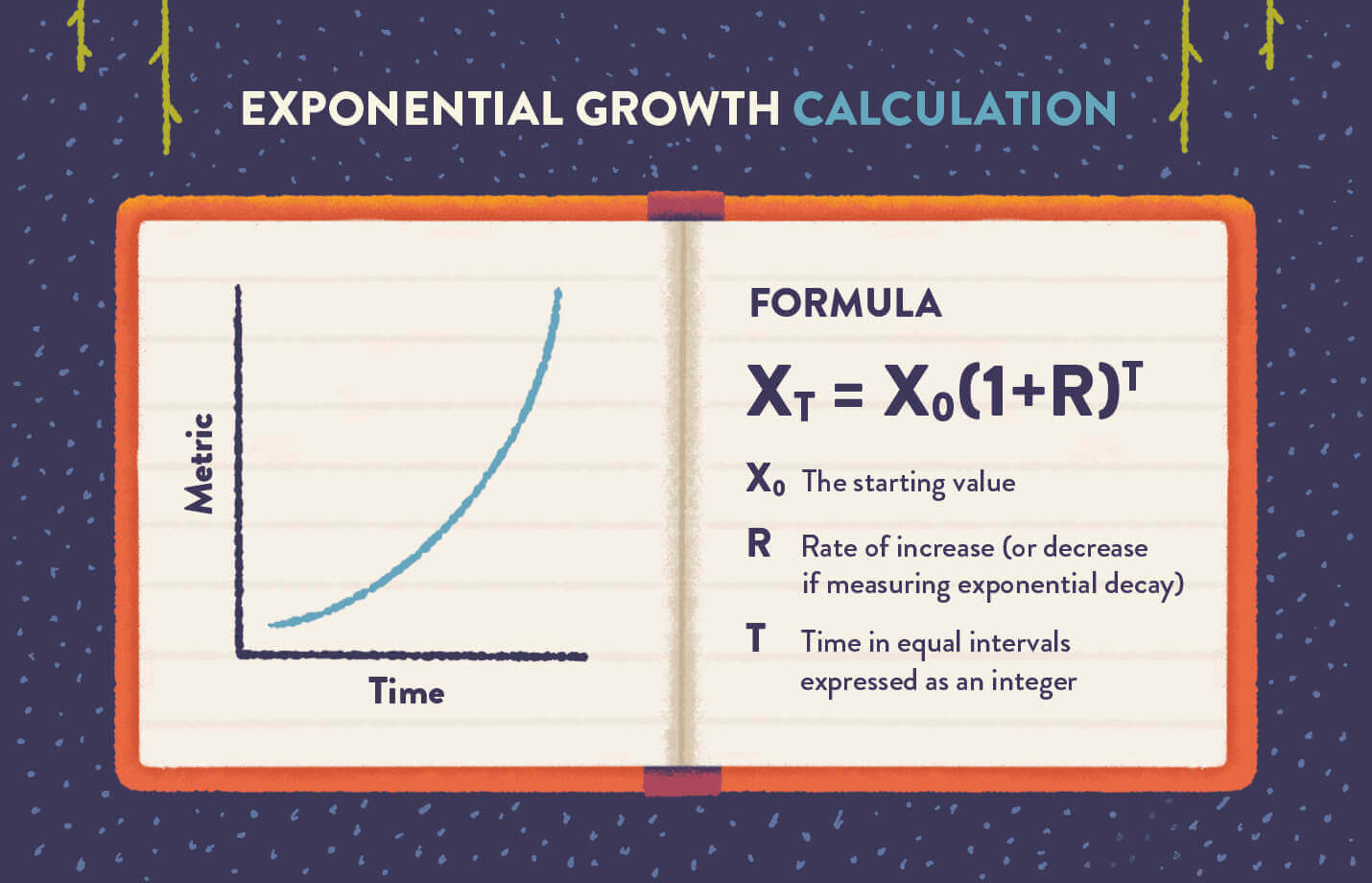
Exponential growth occurs when the increase in a value is proportional to its current value, leading to growth that accelerates over time. Unlike linear growth, where a value increases by a constant amount at every interval (1, 2, 3, 4…), exponential growth sees the value increase by a constant percentage (2, 4, 8, 16…). In the context of money, this is the engine of the global economy.

The Mathematics of Wealth: Understanding the Mechanics
To harness the power of exponential growth, one must first grasp the underlying mechanics that separate it from the steady, predictable climb of linear progression. In a linear model, if you save $1,000 a year, after ten years, you have $10,000. It is a straight line on a graph. Exponential growth, however, produces a curve that starts slowly—almost imperceptibly—before hitting an “inflection point” where the numbers skyrocket.
The Difference Between Linear and Exponential
The primary trap many people fall into is “linear bias.” Human intuition is naturally wired to think linearly. If we see a stock grow by 10% in a year, we often assume a similar nominal gain the following year. However, exponential growth means that the 10% gain in year two is calculated based on the new, higher total from year one. This “growth on growth” creates a compounding effect. Over short horizons, the difference between linear and exponential growth looks negligible. Over long horizons, the gap becomes an unbridgeable chasm.
The Rule of 72
A practical tool used by financial professionals to conceptualize exponential growth is the “Rule of 72.” This is a simplified formula to estimate how long it will take for an investment to double at a fixed annual rate of interest. By dividing 72 by the annual rate of return, investors can see the exponential timeline in action. For instance, at a 6% return, your money doubles in 12 years. At a 12% return, it doesn’t just grow twice as fast; it doubles in a mere 6 years. Because the growth is exponential, that 12% return will result in four times as much money as the 6% return over a 12-year period, not just double.
Compound Interest: The Eighth Wonder of the World
Albert Einstein is famously credited with calling compound interest “the eighth wonder of the world,” adding that “he who understands it, earns it; he who doesn’t, pays it.” In personal finance, compound interest is the purest application of exponential growth. It is the process where the interest you earn on your initial investment begins to earn interest itself.
The Power of Time in Investing
The most critical variable in the exponential growth equation isn’t the amount of money you start with or even the interest rate—it is time. Because the “hockey stick” curve of exponential growth happens in the later stages of the timeline, the longer capital is allowed to remain untouched, the more explosive the growth becomes.
Consider two investors: one who starts investing $500 a month at age 25 and stops at 35, and another who starts at 35 and continues until age 65. Despite the second investor putting in significantly more capital over thirty years, the first investor often ends up with a larger portfolio because their money had an extra decade to undergo exponential compounding. This illustrates that in the realm of money, time is the greatest multiplier.
Reinvesting Dividends and Capital Gains
Exponential growth in a portfolio is often maintained through the disciplined reinvestment of dividends and capital gains. When a company pays a dividend, the investor has two choices: spend it or reinvest it. By choosing the latter, the investor increases their number of shares, which in turn increases the next dividend payout. This creates a feedback loop. By refusing to “bleed” the account of its earnings, the investor ensures that the base of the exponential calculation continues to widen, leading to larger and larger nominal gains in every subsequent cycle.

Business Scaling and Market Dominance
Beyond personal portfolios, exponential growth is the holy grail of corporate finance and venture capital. In the business world, “scaling” is the pursuit of exponential revenue growth while keeping costs linear or fixed. When a business achieves this, its profit margins expand rapidly, leading to a valuation that can leap from millions to billions in a remarkably short timeframe.
From Startup to Unicorn
The term “Unicorn”—a startup valued at over $1 billion—is inherently tied to the concept of exponential growth. High-growth companies, particularly those in the SaaS (Software as a Service) or fintech sectors, benefit from low marginal costs. Once the initial platform is built, adding the millionth customer costs almost nothing compared to the first. This allows revenue to grow exponentially while expenses remain relatively flat. Investors flock to these opportunities because they offer a “power law” return, where a single exponential success can outweigh dozens of linear failures.
Leveraging Network Effects for Revenue Growth
A key driver of exponential growth in modern business is the “network effect.” This occurs when a financial service or platform becomes more valuable as more people use it. Think of credit card networks or digital payment gateways. As the user base grows, the utility of the service increases, which attracts more users, creating an exponential loop of adoption and revenue. For a business, capturing this momentum means moving past the slow, customer-by-customer acquisition phase and into a phase of self-sustaining, accelerating expansion.
The Risks and Realities of Exponential Models
While exponential growth is a powerful tool for wealth creation, it is not without its perils. In finance, anything that can grow exponentially can also decay exponentially, and no physical or economic system can maintain an exponential trajectory forever.
Market Saturation and the S-Curve
In reality, most exponential growth eventually transitions into an “S-curve.” This happens when a company or an investment reaches market saturation. There are only so many people who can buy a specific product or invest in a specific fund. Eventually, the growth rate must slow down, transitioning back into a linear or stagnant phase. Professional investors look for the “inflection point” at the start of the curve, but they must also be wary of the “ceiling” where the exponential magic begins to fade.
Managing Exponential Debt
Exponential growth also has a dark side: compound interest on debt. Credit card debt and high-interest loans operate on the same mathematical principles as investments, but they work against the individual. If debt is not managed, the interest added to the principal creates a mounting obligation that grows faster every month. This is “exponential decay” of net worth. Understanding this is vital for financial health; it explains why paying off high-interest debt is mathematically equivalent to achieving a guaranteed high-rate return on an investment.
Strategies to Harness Exponential Growth in Your Portfolio
To benefit from exponential growth, an investor must move away from a “savings” mindset and into an “ownership” mindset. Savings accounts rarely offer interest rates that outpace inflation, meaning their real exponential growth is often zero or negative. Ownership of assets—equities, real estate, or businesses—is the primary vehicle for capturing true growth.
Identifying High-Growth Assets
To maximize the exponential effect, investors often look toward “growth” stocks or sectors characterized by high innovation. These are companies that reinvest their earnings into research and development rather than paying them out, betting that they can achieve a higher rate of return internally. By owning a piece of a company that is itself growing exponentially, the investor’s capital is leveraged against the company’s success. Diversifying across these assets ensures that while some may follow a linear path, others may hit that coveted exponential stride.
The Importance of Consistency
The greatest enemy of exponential growth is interruption. Because the most significant gains occur at the end of the growth curve, pulling money out of the market during a downturn or “timing the market” can reset the exponential clock. Maintaining a consistent investment strategy—often referred to as dollar-cost averaging—ensures that you are continuously adding to the principal base.
In conclusion, exponential growth is the most potent force in the financial universe. It rewards patience, punishes delay, and transforms the modest contributions of the present into the vast fortunes of the future. Whether you are analyzing a corporate balance sheet or planning for retirement, the goal remains the same: find the curve, get on it early, and let the mathematics of compounding do the heavy lifting. By shifting your focus from “how much can I make today” to “how much can this grow over time,” you align yourself with the fundamental principles of wealth creation.
aViewFromTheCave is a participant in the Amazon Services LLC Associates Program, an affiliate advertising program designed to provide a means for sites to earn advertising fees by advertising and linking to Amazon.com. Amazon, the Amazon logo, AmazonSupply, and the AmazonSupply logo are trademarks of Amazon.com, Inc. or its affiliates. As an Amazon Associate we earn affiliate commissions from qualifying purchases.