
In the vast and intricate world of audio technology, few tools are as ubiquitous and fundamental as the equalizer. Often abbreviated simply as “EQ,” an equalizer is a piece of hardware or software designed to adjust the balance between different frequency components within an audio signal. Think of it as a sculptor for sound, allowing you to selectively boost or cut specific sonic ranges to enhance clarity, correct imperfections, or achieve a desired aesthetic. From professional recording studios to the humble settings on your smartphone’s music player, equalizers are silently — or sometimes not so silently — at work, shaping our auditory experiences in profound ways.

To truly understand an equalizer, one must first grasp the concept of frequency. Sound, at its core, is a vibration that travels through a medium, typically air, in the form of waves. The rate at which these waves vibrate is called their frequency, measured in Hertz (Hz). Low frequencies (e.g., 20-200 Hz) correspond to bass sounds – the rumble of an earthquake or the thump of a kick drum. Mid-range frequencies (e.g., 200 Hz-4 kHz) are where most human speech and instrumental melodies reside, defining the “body” of a sound. High frequencies (e.g., 4 kHz-20 kHz) provide brilliance, airiness, and sparkle, like the shimmer of cymbals or the crispness of a vocal consonant. An equalizer provides the granular control to manipulate these distinct frequency bands, offering a powerful lever for sonic refinement.
The Fundamental Concept of an Audio Equalizer
At its heart, an audio equalizer is a frequency-specific volume control. Instead of turning the entire signal up or down, it allows engineers, producers, and even casual listeners to fine-tune the loudness of particular frequency ranges. This ability to isolate and modify specific parts of the sound spectrum is what makes EQ an indispensable tool in virtually every audio application.
Defining Frequencies and the Human Ear
The human ear is an astonishingly complex organ, capable of perceiving sounds across a broad spectrum, typically from 20 Hz to 20,000 Hz (20 kHz). However, our perception of these frequencies isn’t linear. Some frequencies are more prominent or easily detected than others, and our sensitivity varies with age and individual physiology. An equalizer exploits this understanding by allowing targeted adjustments. For instance, boosting a vocal track around 2-4 kHz can enhance its presence and intelligibility, as this range is crucial for speech clarity. Conversely, cutting around 200-300 Hz might remove a “muddy” quality from a bass guitar, making it sound tighter and more defined. The goal is often to create a balanced, clear, and pleasing soundscape, free from harshness, muddiness, or lack of definition.
The Problem: Unbalanced Audio
Why do we need equalizers in the first place? Audio signals, whether recorded or live, are rarely perfect. Microphones might introduce unwanted resonances, instruments might naturally have an imbalanced frequency response, or room acoustics might cause certain frequencies to be exaggerated or diminished. A bass guitar might sound too boomy in a small room, or a vocal might lack clarity because it’s clashing with other instruments in the mid-range. Digital audio files, while clean, can still suffer from poor mixing decisions made during production or be played back on systems with their own sonic quirks. Without an equalizer, these imbalances would persist, leading to a sub-optimal listening experience.
The Solution: Frequency Manipulation
The equalizer steps in as the primary solution to these challenges. By providing controls to boost (increase volume) or cut (decrease volume) specific frequency bands, it offers a corrective and creative toolset. Corrective equalization addresses problems: removing hums, reducing harshness, or cleaning up muddiness. Creative equalization, on the other hand, shapes the sound aesthetically: making a kick drum punchier, adding sparkle to cymbals, or giving a vocal more warmth. The art of equalization lies in subtle, informed adjustments that enhance the overall sound without making it sound artificial or over-processed.
Types of Equalizers and Their Mechanics
Over decades of audio engineering, various types of equalizers have evolved, each offering different levels of control, visual representation, and operational philosophy. Understanding these distinctions is key to choosing the right tool for the job.
Parametric Equalizers: Precision Control
Parametric EQs are the workhorses of professional audio. They offer the most granular control, typically providing three key parameters for each adjustable frequency band:
-
Frequency (F): Selects the exact center frequency to be affected (e.g., 500 Hz, 2 kHz).
-
Gain (G): Determines how much that chosen frequency will be boosted or cut (e.g., +6 dB, -3 dB).
-
Q-factor (Q) or Bandwidth: Controls the “width” of the frequency band being affected. A high Q (narrow bandwidth) targets a very specific frequency, while a low Q (wide bandwidth) affects a broader range. This precision allows engineers to surgically remove problematic resonances or highlight specific sonic characteristics without impacting adjacent frequencies too much.
Graphic Equalizers: Visual Simplicity
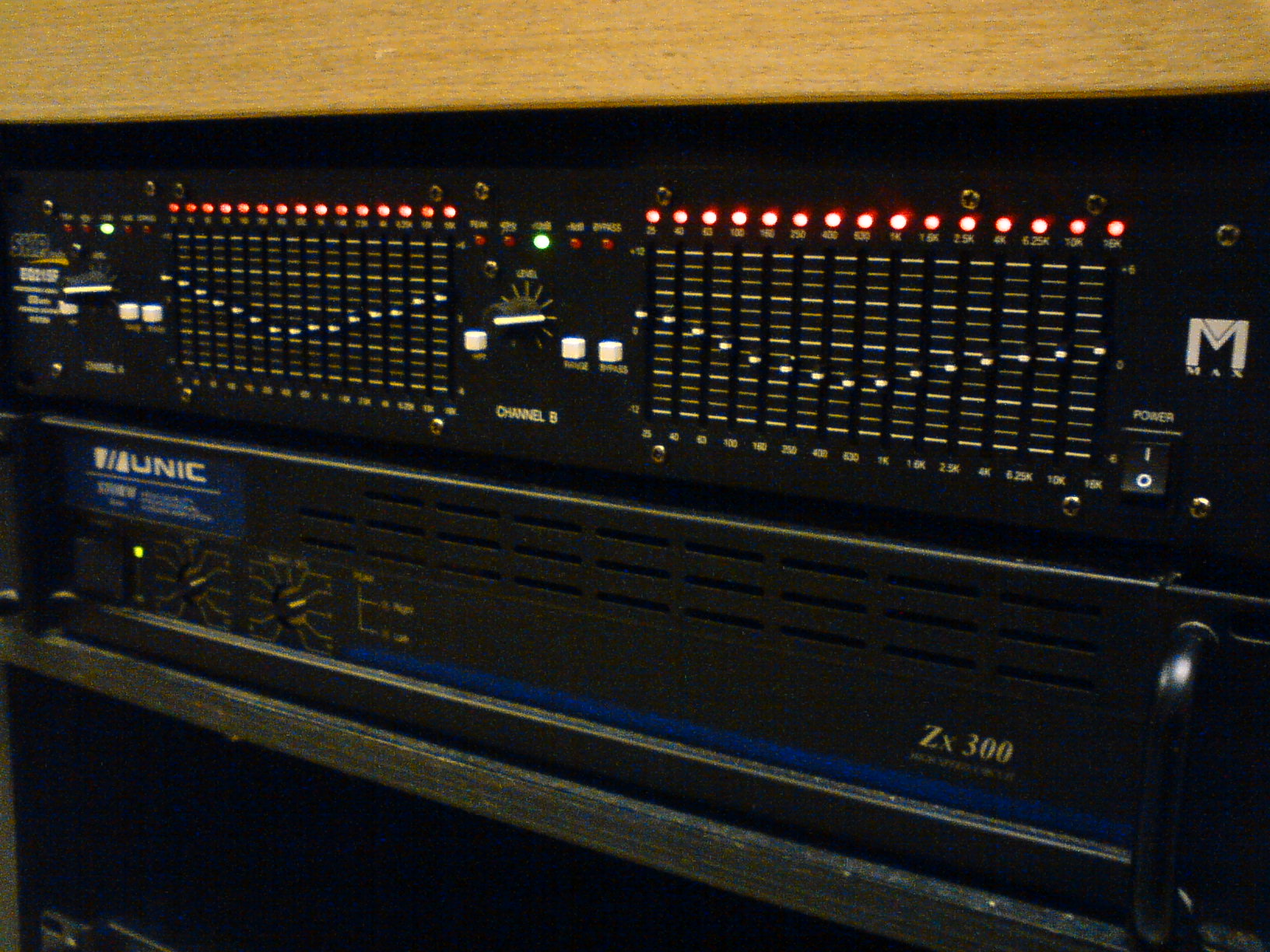
Graphic EQs are instantly recognizable by their rows of physical sliders (or virtual faders in software). Each slider corresponds to a fixed, pre-set frequency band (e.g., 60 Hz, 125 Hz, 250 Hz, etc.). Moving a slider up boosts that frequency, and moving it down cuts it. The arrangement of the sliders creates a visual “graphic” representation of the frequency response curve, making it intuitive for quick adjustments. While less precise than parametric EQs due to fixed frequency points and bandwidths, graphic EQs are common in live sound, home stereo systems, and car audio for their ease of use and immediate visual feedback.
Shelf and Bell Filters: Shaping the Ends and Mids
These describe the shape of the equalization curve:
-
Bell Filter: This is the standard shape used in parametric and graphic EQs. It boosts or cuts a specific frequency range around a center point, resembling a bell curve.
-
Shelf Filter: Unlike bell filters, shelf filters boost or cut all frequencies above a certain point (high-shelf) or below a certain point (low-shelf) uniformly. For example, a high-shelf boost can add “air” to an entire track, brightening everything above a chosen frequency (e.g., 10 kHz). A low-shelf cut can remove muddiness by reducing all frequencies below a certain point (e.g., 80 Hz). These are excellent for broad tonal shaping.
Dynamic Equalizers: Adaptive Processing
A more advanced form, dynamic EQs combine the frequency control of an equalizer with the responsiveness of a compressor. Instead of making a static boost or cut, a dynamic EQ only applies its gain changes when the signal level in a specific frequency band crosses a set threshold. This is incredibly useful for tackling transient problems, like a vocal note that occasionally becomes too harsh in a specific frequency, or a bass frequency that only overpowers the mix at certain moments. It provides a more transparent and less obtrusive form of equalization.
Why Equalization Matters: Applications Across Tech
The impact of equalizers extends far beyond the confines of professional studios, permeating various facets of modern technology and our daily lives. Its fundamental role in shaping audio fidelity makes it critical for numerous applications.
Music Production and Mixing: Crafting the Soundstage
This is perhaps where the equalizer’s role is most celebrated. In music production, EQ is indispensable for:
-
Clarity and Separation: Each instrument occupies its own frequency space. EQ helps “carve out” room for individual elements, preventing them from clashing and ensuring each part is heard distinctly. For example, cutting some low-mids from a guitar can make space for the bass guitar.
-
Tonal Balance: Achieving a pleasing overall balance where no frequency range is overbearing or lacking.
-
Problem Solving: Removing unwanted resonances, hums, or harsh frequencies from individual tracks.
-
Creative Shaping: Emphasizing character, adding warmth, brilliance, or punch to instruments and vocals to achieve a specific sonic aesthetic. The difference between a muddy demo and a polished, professional track often lies in expert EQ application.
Live Sound Reinforcement: Taming Acoustics

In live sound, the equalizer is a critical tool for combating the unpredictable nature of venues. Every room has its own acoustic properties, leading to certain frequencies being exaggerated or diminished. Live sound engineers use EQs (often graphic EQs for speed, and parametric EQs for precision) to:
-
Feedback Suppression: Cutting frequencies that are prone to feedback, a common headache in live performances.
-
Room Tuning: Compensating for the room’s natural resonances and anti-resonances to ensure the audience hears a balanced sound.
-
Vocal & Instrument Clarity: Adjusting individual microphone channels to optimize their sound in the live environment.
Home Audio and Personal Devices: Tailoring the Listening Experience
From sophisticated home theater receivers to the basic settings on a pair of headphones, equalizers allow consumers to personalize their listening experience. Many apps like Spotify or Apple Music offer built-in EQ presets (e.g., “Bass Boost,” “Vocal,” “Rock”) or customizable graphic EQs. These enable users to:
-
Compensate for Speaker/Headphone Characteristics: Different audio output devices have varying frequency responses. EQ helps to flatten or enhance these responses to match personal preference.
-
Adapt to Music Genres: Certain genres might benefit from specific EQ curves (e.g., a slight bass boost for electronic music).
-
Correct for Room Acoustics: In a home setting, EQ can help tame reflections or enhance bass that might be absorbed by furniture.
Podcasting and Broadcast: Enhancing Vocal Clarity
For spoken word content, intelligibility is paramount. Equalizers are vital for:
-
Vocal Presence: Boosting frequencies crucial for speech clarity (often around 1-4 kHz) to make voices cut through.
-
Removing Mud and Boom: Cutting low-mid frequencies to prevent voices from sounding muffled or overly bassy.
-
Reducing Sibilance: Attenuating harsh “s” and “t” sounds which reside in higher frequencies, making the audio more pleasant to listen to. Consistent and clear vocal audio is a hallmark of professional podcasts and broadcasts.
Gaming Audio: Immersion and Positional Cues
In gaming, high-quality audio is not just about immersion but also tactical advantage. Equalizers play a role in:
-
Enhancing Positional Audio: By subtly boosting or cutting frequencies related to footsteps or gunshots, EQs can make these critical sounds more discernible, aiding players in locating opponents.
-
Customizing Sound Profiles: Gamers can tailor their audio to prioritize specific sound elements, like emphasizing dialogue in story-driven games or boosting environmental cues in competitive shooters.
-
Optimizing Headset Performance: Like home audio, EQs can compensate for the specific sound profile of a gaming headset, ensuring balanced and accurate audio reproduction.
Best Practices and Common Pitfalls in Equalization
While the equalizer is a powerful tool, its effective use requires skill, practice, and a good ear. Misuse can easily degrade audio quality rather than enhance it.
Less is Often More: The Art of Subtle Adjustment
A common mistake, especially for beginners, is to over-equalize. Drastic boosts or cuts often lead to an unnatural, artificial, or harsh sound. Professional engineers typically advocate for making subtle adjustments, often just 1-3 dB at a time. The goal is often to solve a problem or enhance a characteristic with the smallest possible change, ensuring the audio retains its natural integrity. Think of EQ as seasoning – a pinch enhances, too much spoils the dish.
Listening Environment and Reference Monitors
The quality of your monitoring system (speakers, headphones) and your listening environment significantly impact your EQ decisions. If your speakers have an exaggerated bass response, you might mistakenly cut too much bass from your mix. Conversely, poor room acoustics can create false frequency imbalances. Working in a treated room with flat-response studio monitors or high-quality, neutral headphones is crucial for making accurate and transferable EQ judgments. Regular reference listening on various systems (car stereo, phone speakers) helps ensure your mix translates well everywhere.
Avoiding Over-Equalization: The “Scooped” or “Harsh” Sound
Over-equalization often manifests in specific undesirable characteristics:
-
Scooped Mid-Range: This happens when too many mid-frequencies are cut, often to make bass and treble sound more prominent. While it can sound “punchy” initially, it typically results in a hollow, thin, and often fatiguing sound, where vocals and many instruments lose their body and presence.
-
Harshness/Sibilance: Excessive boosting of high frequencies (especially around 2-8 kHz) can make the audio sound brittle, painful, and introduce harsh sibilance (exaggerated “s” sounds) in vocals.
-
Boominess/Muddiness: Over-boosting low-mids (around 200-500 Hz) leads to a muddy, indistinct sound, while excessive low-end (below 100 Hz) can create an overwhelming, boomy, and undefined bass.
EQ in Context: Before and After Other Effects
The order in which you apply EQ relative to other audio effects (like compression, reverb, or delay) can dramatically alter the final sound.
-
Pre-Compression EQ (Corrective): Often, corrective EQ (e.g., removing a harsh resonance) is done before compression. This ensures the compressor isn’t reacting to problematic frequencies, leading to a more transparent and effective compression.
-
Post-Compression EQ (Creative/Shaping): Creative EQ (e.g., adding sparkle or warmth) is often done after compression, as the compression will have stabilized the dynamics of the sound.
-
General Rule: There’s no single “correct” order, but understanding how each effect interacts with the frequency spectrum is key to achieving desired results. Experimentation within an informed framework is encouraged.
The Future of Equalization: AI and Adaptive Audio
As technology continues its rapid advancement, the realm of equalization is also evolving, with artificial intelligence and machine learning poised to revolutionize how we interact with and apply EQ.
Intelligent EQ Algorithms
AI-powered equalizers are emerging, capable of analyzing audio content in real-time and suggesting or even automatically applying EQ settings based on genre, instrument recognition, or desired sonic characteristics. These tools can identify problematic frequencies, suggest corrective cuts, or enhance elements to make a mix sound more “professional” or “radio-ready” according to learned data sets. This democratizes professional-level audio processing, making sophisticated EQ adjustments accessible to a broader audience.
Personalized Audio Profiles
Beyond static presets, future equalizers will likely offer highly personalized audio profiles. Imagine an EQ that adapts not only to your specific headphones but also to your unique hearing profile (which can be measured) and even your current listening environment, optimizing sound delivery in real-time. This could lead to a truly bespoke auditory experience, where every piece of audio is perfectly tailored to the individual listener.
Immersive Audio Environments
With the rise of spatial audio, Dolby Atmos, and virtual reality, equalizers will play an increasingly critical role in creating believable and immersive soundscapes. Dynamic EQ can help place sounds precisely within a 3D space, ensuring consistency and clarity as the listener moves through a virtual environment. As audio becomes more interactive and multi-dimensional, the ability to control and shape frequency responses will be more crucial than ever for delivering truly captivating experiences.
In conclusion, the equalizer, in its various forms, remains a cornerstone of audio technology. From the fundamental principle of frequency manipulation to its diverse applications across music, broadcasting, and personal audio, it empowers us to sculpt sound with precision and artistry. As AI and adaptive audio continue to push boundaries, the equalizer will undoubtedly evolve, continuing its vital role in defining how we perceive and enjoy the auditory world around us. Understanding “what does equalizer mean” is not just about defining a gadget; it’s about appreciating a profound technological tool that shapes our sonic reality.
aViewFromTheCave is a participant in the Amazon Services LLC Associates Program, an affiliate advertising program designed to provide a means for sites to earn advertising fees by advertising and linking to Amazon.com. Amazon, the Amazon logo, AmazonSupply, and the AmazonSupply logo are trademarks of Amazon.com, Inc. or its affiliates. As an Amazon Associate we earn affiliate commissions from qualifying purchases.