
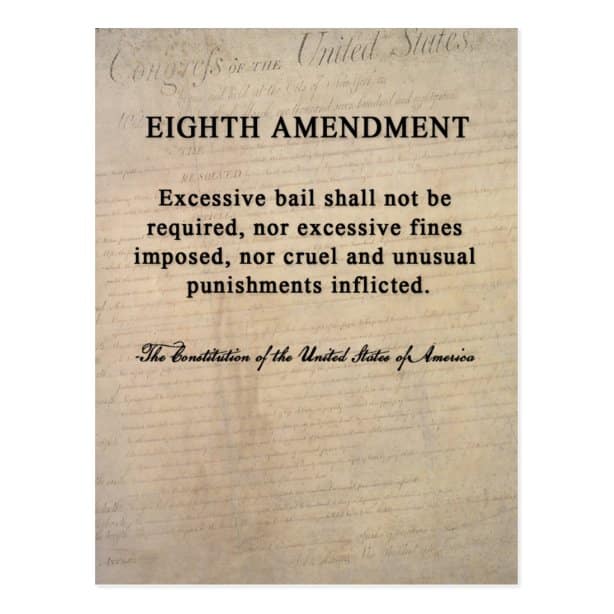
The Eighth Amendment to the United States Constitution is often recognized for its prohibition against “cruel and unusual punishments.” However, its full text offers critical protections with profound implications for personal and business finance, particularly through its clauses forbidding “excessive bail” and “excessive fines.” Understanding these provisions is not merely an academic exercise; it’s essential for safeguarding your economic well-being and navigating the justice system without facing ruinous financial penalties or an undue financial burden before even being proven guilty.
The Eighth Amendment’s Core Financial Protections: Excessive Fines
At its heart, the Eighth Amendment directly addresses financial burdens through its prohibition of “excessive fines.” This clause serves as a vital check on the government’s power to impose monetary penalties, ensuring they are proportional to the offense and do not become instruments of economic oppression.
Defining “Excessive”: A Matter of Proportionality
The Supreme Court, in cases like Timbs v. Indiana (2019), has affirmed that the Excessive Fines Clause applies not only to the federal government but also to states and local municipalities. The core question in determining if a fine is “excessive” revolves around proportionality. Courts typically consider several factors:
- The gravity of the offense: How serious was the crime or infraction? Minor offenses should not incur monumental fines.
- The harm caused: What was the actual or potential damage resulting from the conduct?
- The defendant’s culpability: What was the individual’s level of responsibility or intent?
- The ability to pay: While not always the sole determining factor, a fine that completely strips an individual of their livelihood or forces a business into bankruptcy purely for a minor offense is likely to be deemed excessive.
- Fines for similar offenses: Are comparable offenses typically punished with significantly lower fines?
This proportionality test ensures that fines serve their legitimate purposes—deterrence and retribution—without transforming into punitive measures designed to generate revenue or to arbitrarily strip citizens and businesses of their assets.
Impact on Individuals and Businesses
For individuals, an excessive fine can mean the loss of savings, assets, or even the inability to meet basic living expenses. Imagine a minor traffic infraction or a low-level misdemeanor resulting in a fine that rivals a year’s income. Such a penalty, if deemed excessive, could trigger a cascade of financial distress, leading to debt, bankruptcy, and long-term economic instability. It might prevent an individual from paying rent, buying food, or accessing necessary medical care, effectively imposing a civil death sentence rather than a proportionate penalty.
Businesses, too, face significant risks from excessive fines. Regulatory bodies, government agencies, and courts can impose massive monetary penalties for violations ranging from environmental breaches to financial misconduct. While large corporations might absorb substantial fines, smaller businesses and startups can be crippled or forced into liquidation by an out-of-proportion penalty. The Eighth Amendment provides a constitutional avenue to challenge such fines, arguing that they undermine the very existence of the enterprise, destroy jobs, and stifle economic activity far beyond the scope of the alleged transgression. Protecting businesses from excessive fines is crucial for fostering a stable economic environment and ensuring that entrepreneurial ventures are not extinguished by disproportionate governmental overreach.
Civil vs. Criminal Fines: Expanding Interpretations
Historically, the Excessive Fines Clause was primarily applied to criminal punishments. However, recent legal interpretations and evolving case law have broadened its scope. The Supreme Court in Timbs v. Indiana specifically addressed civil asset forfeiture, where the government seizes property allegedly connected to a crime, even without a criminal conviction. Such seizures, if grossly disproportionate to the offense, can now be challenged under the Excessive Fines Clause. This expansion is critical for financial protection, as civil asset forfeiture can devastate an individual’s or family’s wealth, sometimes based on mere suspicion and without the full due process of a criminal trial. This means that if the government tries to take your car, house, or savings account because it was allegedly used in or derived from a crime, and the value of that asset far outweighs the severity of the alleged offense, you have a constitutional basis to argue that the seizure constitutes an excessive fine.
Financial Implications of Excessive Bail
While not a fine, excessive bail imposes a financial burden that directly impacts an individual’s financial stability and access to justice. The Eighth Amendment mandates that “excessive bail shall not be required,” aiming to ensure that pre-trial detention is not simply a function of wealth.
The Cost of Freedom: Pre-Trial Detention and Its Financial Burden
Bail is a financial guarantee that an arrested individual will appear in court. If a judge sets bail at an amount an individual cannot afford, it effectively means they are incarcerated without being convicted of a crime. This pre-trial detention carries a hefty financial toll.
- Loss of Income: While detained, individuals cannot work, leading to immediate loss of wages or business income. This can quickly destabilize personal finances, leading to missed rent payments, utility shut-offs, and defaults on loans.
- Job Loss: Prolonged absence from work, especially without clear communication, often results in termination. Losing a job not only impacts current income but also future earning potential and career trajectory.
- Family Hardship: The financial impact extends to families who rely on the detainee’s income. This can push families into poverty, increase reliance on social services, and disrupt children’s well-being and education.
- Legal Fees: Being detained can make it harder to communicate with legal counsel, potentially prolonging the legal process and increasing legal expenses.
The financial pressure to accept unfavorable plea bargains just to get out of jail, regardless of guilt, is immense. This systemic issue undermines the principle of “innocent until proven guilty” and disproportionately affects low-income individuals and communities of color, perpetuating cycles of poverty and incarceration.
Bail Bonds and the For-Profit Justice System
When individuals cannot afford to pay the full bail amount, they often turn to bail bond agents. These agents typically charge a non-refundable fee—usually 10% of the total bail amount—in exchange for posting the full bail. While this provides a mechanism for release, it comes at a significant financial cost. For example, a $10,000 bail might require a $1,000 non-refundable payment to a bail bondsman. If the person appears for all court dates, the bondsman gets their money back from the court, but the $1,000 fee is kept by the bondsman. If the person fails to appear, the bondsman can pursue the individual for the full bail amount, often employing aggressive tactics. This system creates a for-profit industry that extracts wealth from communities, particularly those already struggling financially, further exacerbating economic disparities within the justice system.
Wealth-Based Detention: A Challenge to Equal Protection
The Eighth Amendment’s prohibition on excessive bail is inherently linked to the principle of equal protection. If freedom before trial is contingent solely on one’s ability to pay, it creates a two-tiered justice system where the wealthy can buy their freedom while the poor remain incarcerated. This wealth-based detention has far-reaching financial consequences, contributing to a cycle of poverty and criminalization. Reforms aimed at reducing reliance on monetary bail and promoting alternatives like personal recognizance bonds or supervised release are crucial steps towards ensuring that an individual’s financial status does not determine their liberty or their capacity to maintain economic stability.
Indirect Financial Impacts of “Cruel and Unusual Punishment”
While “cruel and unusual punishment” might seem less directly related to finance, its application has significant economic ramifications for individuals, families, and society as a whole.
The Economic Burden of Incarceration
The United States has the highest incarceration rate in the world, and the financial cost of maintaining this system is staggering. Taxpayers bear the burden of housing, feeding, and providing services for millions of inmates. When punishments are deemed “cruel” because they are excessively long or involve inhumane conditions, they translate directly into higher, prolonged financial expenditures for the state. Beyond the direct costs, an incarcerated individual contributes nothing to the economy, subtracting from the national GDP and local tax bases. These funds could otherwise be invested in education, infrastructure, or economic development, yielding far greater returns for society.
Healthcare Costs within the Correctional System
A significant portion of the financial burden associated with incarceration comes from healthcare. The Eighth Amendment requires that prisons provide adequate medical care, and failure to do so can constitute cruel and unusual punishment. When prisons fail in this duty, it can lead to worsening health conditions, requiring more intensive and expensive treatment down the line, often at taxpayer expense. In some cases, legal challenges against inadequate medical care can result in substantial financial settlements paid out by correctional facilities, further increasing the economic cost of sub-standard conditions. The financial implications extend beyond the immediate costs; preventable illnesses or injuries within the system can lead to lifelong health issues, impacting an individual’s ability to work and requiring ongoing public or private healthcare support post-release.
Loss of Earning Potential and Generational Poverty
Perhaps the most devastating long-term financial impact of overly harsh or cruel punishments is the destruction of an individual’s earning potential. Long sentences remove individuals from the workforce for years, severing ties with employers, hindering skill development, and creating significant gaps in employment history. Upon release, individuals with criminal records face immense challenges securing stable, well-paying jobs, often relegated to low-wage work or unemployment. This not only impacts their personal finances but also their ability to support their families, contributing to cycles of generational poverty. Children of incarcerated parents are more likely to experience financial hardship, educational setbacks, and even future involvement with the justice system, perpetuating a self-reinforcing economic disadvantage that extends far beyond the individual’s initial punishment.
Navigating the Financial Landscape of the Eighth Amendment
Understanding the Eighth Amendment’s financial protections empowers individuals and businesses to challenge unjust monetary penalties and bail conditions.
Legal Recourse and Financial Planning
If you believe you are facing an excessive fine or bail, seeking legal counsel immediately is paramount. An experienced attorney can assess the proportionality of the financial demand, gather evidence, and advocate on your behalf to reduce the burden or have it dismissed. For businesses, integrating legal review into compliance strategies can help identify potential Eighth Amendment challenges before fines are levied or during the appeals process. From a personal finance perspective, understanding the potential financial risks associated with certain legal infractions—and knowing your constitutional rights—is a crucial element of comprehensive financial planning.

Advocacy for Reform and Economic Justice
Beyond individual cases, the Eighth Amendment serves as a foundation for broader advocacy efforts aimed at economic justice within the criminal justice system. Movements to reform bail systems, cap civil asset forfeiture, and ensure humane prison conditions are all rooted in the principles enshrined in this amendment. These reforms seek to prevent the justice system from becoming a driver of poverty and inequality, instead striving for a system that is fair, proportionate, and respects the financial dignity of all individuals. Engaging with and supporting these efforts can contribute to a more equitable financial landscape for everyone.
aViewFromTheCave is a participant in the Amazon Services LLC Associates Program, an affiliate advertising program designed to provide a means for sites to earn advertising fees by advertising and linking to Amazon.com. Amazon, the Amazon logo, AmazonSupply, and the AmazonSupply logo are trademarks of Amazon.com, Inc. or its affiliates. As an Amazon Associate we earn affiliate commissions from qualifying purchases.