
In the modern musical landscape, few acronyms carry as much weight, cultural impact, or technological significance as EDM. Standing for Electronic Dance Music, EDM is far more than a simple genre; it is a sprawling ecosystem of sound defined by its reliance on cutting-edge technology. While the term became a mainstream buzzword in the early 2010s, its roots and its future are tethered to the evolution of the hardware and software that allow human beings to manipulate electrons into rhythm and melody.

To understand what EDM stands for is to understand the digital revolution in art. It represents a shift from acoustic instrumentation to silicon-based synthesis, where the computer is the primary instrument and the studio is a limitless laboratory. This article explores the technological foundations of EDM, the software that powers global hits, and the emerging tech trends that continue to redefine the sonic boundaries of the genre.
The Digital Backbone: From Analog Origins to Modern DAWs
The “Electronic” in Electronic Dance Music signifies a departure from physical vibration—like a plucked string or a struck drum—toward synthesized signals. This journey began with massive analog synthesizers and drum machines, but today, the heart of EDM technology lies within the Digital Audio Workstation (DAW).
The Transition from Hardware to Software
In the early days of electronic music, producing a track required a room full of expensive, temperamental hardware. Devices like the Roland TR-808 drum machine and the TB-303 bass synthesizer were the “tech stacks” of the 1980s. However, the 1990s and 2000s saw a paradigm shift as processing power increased. The transition to “In-the-Box” (ITB) production meant that an entire studio’s worth of gear could be emulated within a laptop. This democratization of technology allowed anyone with a computer to become a producer, effectively launching the global EDM explosion.
The Power of the Digital Audio Workstation (DAW)
Today, the DAW is the central nervous system of EDM. Software such as Ableton Live, FL Studio, and Logic Pro provides the canvas for complex arrangements. Ableton Live, in particular, revolutionized the tech side of EDM by bridging the gap between studio production and live performance. Its “Session View” allows producers to trigger loops and samples in real-time, treating the software like a live instrument. These platforms utilize advanced multi-core processing to handle hundreds of tracks, each loaded with complex digital signal processing (DSP) chains, enabling a level of precision that was mathematically impossible in the analog era.
Synthesis and Sound Design: The Tech Behind the Noise
At the core of EDM is the quest for unique sounds. Unlike traditional genres that rely on the familiar timbre of a guitar or piano, EDM thrives on sound design—the technical process of creating a sound from scratch using oscillators, filters, and modulators.
Subtractive, FM, and Wavetable Synthesis
Electronic music is built on various types of synthesis, each a different method of manipulating digital data.
- Subtractive Synthesis involves taking a harmonically rich waveform and “subtracting” frequencies using filters.
- Frequency Modulation (FM) Synthesis uses one waveform to modulate another, creating the metallic, complex tones common in Dubstep and Drum & Bass.
- Wavetable Synthesis is perhaps the most significant tech advancement in modern EDM. By cycling through a series of single-cycle waveforms, producers can create evolving, organic textures. Software like Xfer Records’ Serum has become the industry standard, utilizing visual graphical interfaces that allow producers to see exactly how the sound wave is being manipulated in real-time.
Virtual Studio Technology (VST) and Plugins
The modular nature of EDM tech is best exemplified by VSTs. These are software plugins that integrate into the DAW to provide specific functions—synthesizers, samplers, or effects like reverb and delay. The sophistication of these tools is staggering. Modern reverb plugins use “convolution” technology, which employs mathematical impulses to “sample” the acoustics of real-world spaces, such as a cathedral or a professional studio, and apply those physics to a digital sound. This high-level digital modeling allows a producer in a bedroom to achieve the sonic depth of a multi-million dollar recording facility.
Live Performance Tech: Beyond the Turntables
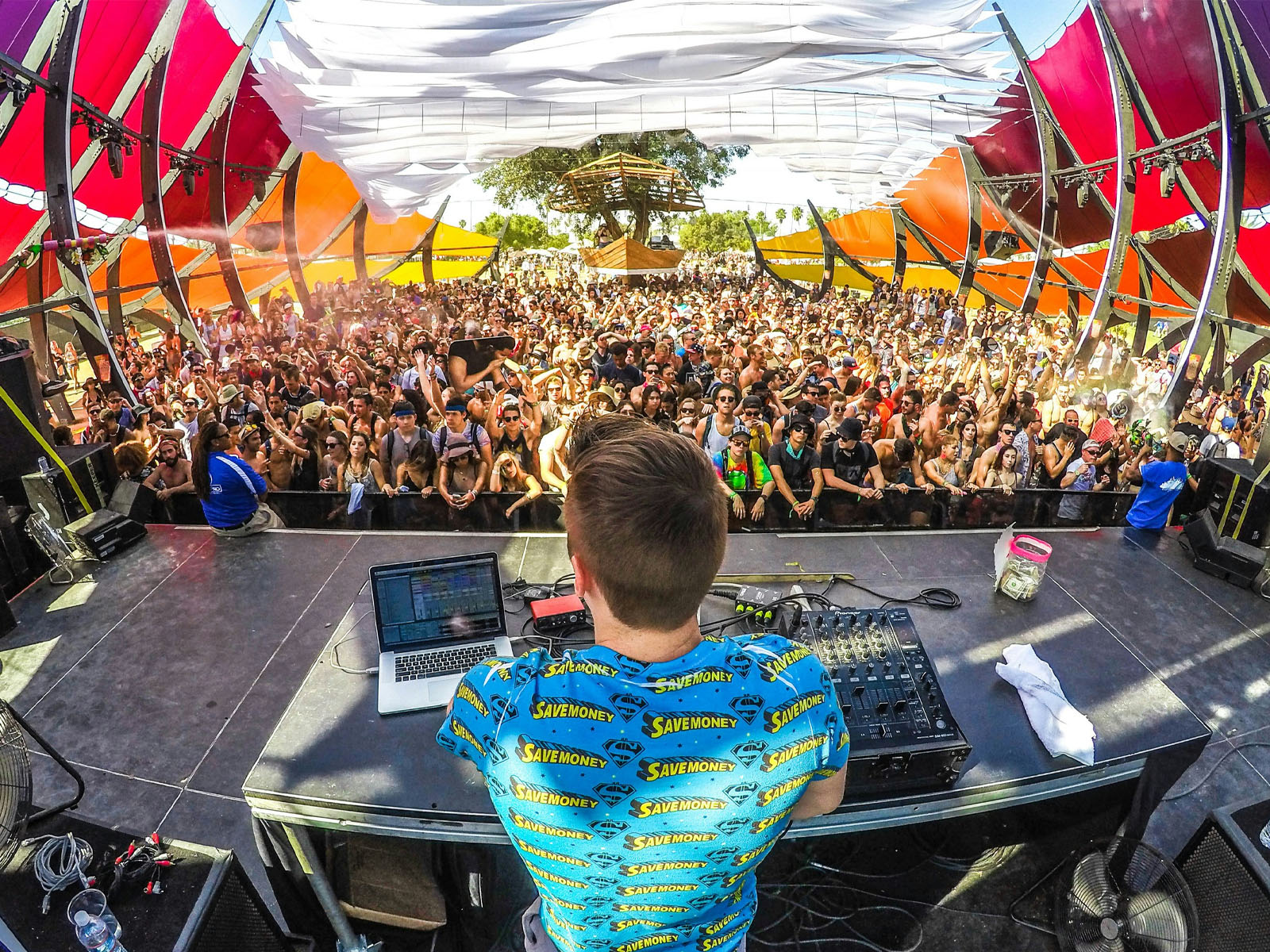
While EDM is “made” in the studio, it is “consumed” in massive festivals and clubs. The technology used to translate a digital file into a high-octane live experience is a feat of modern engineering.
Controllers, MIDI, and High-Tech Interfaces
The modern “DJ booth” has evolved into a high-tech command center. While some still use traditional decks, many EDM artists utilize MIDI (Musical Instrument Digital Interface) controllers. MIDI is a technical protocol that allows electronic instruments and computers to communicate. By using controllers from brands like Akai or Native Instruments, performers can manipulate software parameters on their laptops through physical knobs and pads. This allows for “Live PA” sets where the music is remixed, mashed up, and altered on the fly, ensuring that no two performances are ever identical.
Synchronized Visuals and Light-Show Automation
A major part of the EDM “tech” experience is the synchronization of sound and sight. This is achieved through Timecode and SMPTE (Society of Motion Picture and Television Engineers) data. By linking the music software to visual software like Resolume or TouchDesigner, artists can ensure that every kick drum hit triggers a specific strobe light or a frame of high-definition video on a massive LED wall. This level of automation requires immense computing power and high-speed data transfer protocols to ensure zero latency between the audio signal and the visual output.
The Future of EDM: AI, Web3, and Immersive Audio
As we look toward the next decade of Electronic Dance Music, the integration of emerging technologies suggests that the genre is entering a new phase of “intelligent” production and immersive consumption.
AI-Generated Composition and Mastering
Artificial Intelligence is currently disrupting the EDM production workflow. AI tools like Landr and CloudBounce utilize machine learning algorithms to “master” tracks—the final technical step in music production that ensures a song sounds professional across all speaker systems. Furthermore, generative AI tools are now capable of suggesting chord progressions, drum patterns, and even vocal synthesis. While controversial, this tech serves as a “co-pilot” for producers, handling the technical minutiae and allowing them to focus on the broader creative vision.
Spatial Audio and Virtual Reality Experiences
The hardware for listening to EDM is also changing. With the rise of Dolby Atmos and Spatial Audio, EDM is moving away from traditional stereo (two channels) into a 360-degree immersive soundscape. This technology uses “object-based” audio, where a sound is treated as a coordinate in a 3D space rather than just a signal in a speaker.
Additionally, the “Metaverse” and VR technology are providing new venues for EDM. Platforms like Fortnite and Wave have hosted virtual concerts where millions of users interact with a digital avatar of the artist. These events are powered by game engines like Unreal Engine 5, representing a total convergence of music, gaming, and real-time rendering technology.

Conclusion: The Infinite Loop of Innovation
So, what does EDM stand for in music? Beyond the literal definition, it stands for the relentless pursuit of technological innovation. It is a genre where the artist and the engineer are often the same person, and where the limitations of the music are defined only by the limitations of the hardware and software available.
From the early days of analog circuitry to the modern era of AI-assisted production and VR festivals, EDM remains the most tech-forward movement in the history of art. As long as technology continues to evolve, so too will the sounds of Electronic Dance Music, proving that in this niche, the machine is not a replacement for the soul, but a powerful amplifier of human creativity.
aViewFromTheCave is a participant in the Amazon Services LLC Associates Program, an affiliate advertising program designed to provide a means for sites to earn advertising fees by advertising and linking to Amazon.com. Amazon, the Amazon logo, AmazonSupply, and the AmazonSupply logo are trademarks of Amazon.com, Inc. or its affiliates. As an Amazon Associate we earn affiliate commissions from qualifying purchases.