
The notation “dy/dx” is more than just an abstract mathematical symbol; it’s a foundational concept that underpins vast swathes of modern technology. In the realm of computing, engineering, and data science, understanding dy/dx is akin to grasping the fundamental principles of how systems evolve, how information changes, and how we can predict and manipulate these transformations. This seemingly simple fraction represents the instantaneous rate of change of one variable with respect to another, a concept known as the derivative in calculus. When applied to technology, it becomes the language through which we describe and harness digital dynamics, enabling everything from the smooth animation on our screens to the intelligent decisions made by AI.

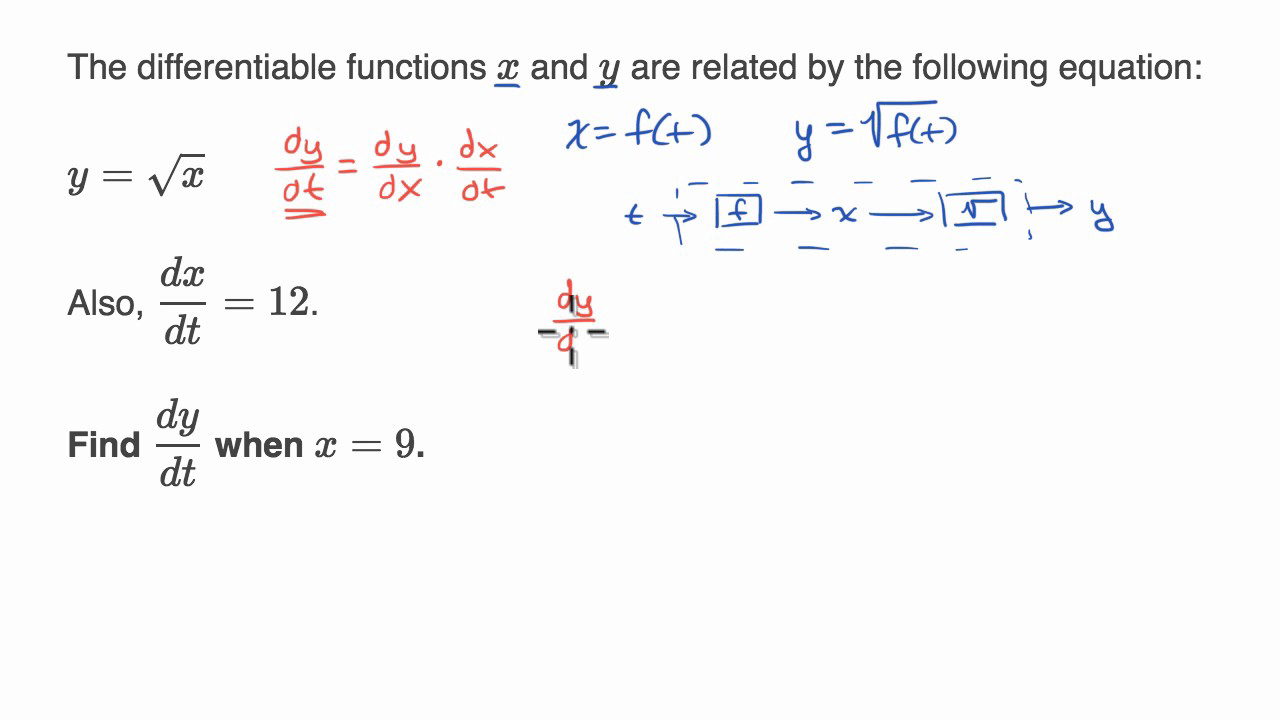
At its heart, dy/dx is about understanding slope. Imagine a graph where one quantity is plotted against another. The derivative, dy/dx, tells us how much the “y” value changes for an infinitesimal change in the “x” value. In the context of technology, these “y” and “x” values can represent countless parameters: the speed of a processor versus the power it consumes, the accuracy of a machine learning model versus the amount of data it’s trained on, or the position of a character in a video game versus time. Without the ability to quantify and analyze these rates of change, the sophisticated technologies we rely on daily would simply not be possible.
This article will delve into the profound implications of dy/dx within the technological landscape. We will explore its role in the development of algorithms, its critical function in optimizing performance, and its indispensable contribution to the advancement of artificial intelligence. By demystifying this calculus cornerstone, we can gain a deeper appreciation for the intricate workings of the digital world around us.
The Algorithmic Engine: Driving Software Evolution with Derivatives
Algorithms are the lifeblood of software. They are the step-by-step instructions that computers follow to perform tasks, from sorting data to rendering complex graphics. The design and refinement of these algorithms often rely heavily on understanding how changes in input affect output – precisely what dy/dx describes. In many computational scenarios, we are not just interested in a single outcome, but in how efficiently we can reach that outcome, or how sensitive the outcome is to small adjustments in the process.
Optimization: Finding the Sweet Spot in Computational Processes
One of the most pervasive applications of dy/dx in technology is optimization. Whether it’s minimizing the time it takes for a search engine to return results, maximizing the battery life of a smartphone, or finding the most efficient route for a delivery drone, optimization algorithms are constantly at play. These algorithms often involve finding the minimum or maximum value of a function, which is achieved by finding where the derivative of that function is equal to zero.
Consider, for example, the process of training a machine learning model. The model learns by adjusting its internal parameters to minimize an error function, which measures how far its predictions are from the actual values. This minimization process is typically done using an algorithm called gradient descent. The “gradient” is essentially a multi-dimensional derivative, indicating the direction of steepest ascent. By moving in the opposite direction of the gradient (i.e., the direction of steepest descent), the algorithm iteratively adjusts the model’s parameters to reduce the error. The magnitude of these adjustments is guided by the derivative, determining how quickly the model converges towards an optimal state. Without the concept of dy/dx, the very idea of “learning” for a machine would be severely hampered.
Dynamic Systems and Simulation: Modeling the Real World Digitally
Many technological applications involve modeling and simulating dynamic systems – systems that change over time. This includes everything from weather forecasting and fluid dynamics simulations for aerospace engineering to the physics engines that power video games and virtual reality experiences. These simulations are built upon differential equations, which are equations involving derivatives.
For instance, in a physics engine for a game, the movement of objects is governed by physical laws. Newton’s laws of motion, for example, relate force, mass, and acceleration. Acceleration is the second derivative of position with respect to time (d²x/dt²), and velocity is the first derivative (dx/dt). By numerically solving these differential equations, the simulation can accurately predict how objects will move, collide, and interact in response to applied forces. The accuracy of these simulations, and thus the realism of the virtual world, is directly tied to how precisely the derivatives are calculated and integrated over time. Similarly, in robotics, understanding the precise rate of change of joint angles (velocities) and how these affect the robot’s position and orientation (derivatives) is crucial for its motion planning and control.
Performance Tuning: The Subtle Art of Efficiency through Differentiation
In the competitive landscape of technology, performance is paramount. From the speed of a website to the responsiveness of an application, users expect seamless and immediate interactions. Achieving this level of performance often involves intricate tuning of hardware and software, and dy/dx plays a subtle yet critical role in this process. It allows engineers to understand the delicate relationships between various performance metrics and to make precise adjustments for optimal outcomes.
Resource Management: Balancing Power, Speed, and Efficiency
Modern computing devices are constrained by resources – battery life, processing power, memory, and network bandwidth. Effectively managing these resources requires a deep understanding of how different operational parameters influence each other. For example, increasing the clock speed of a CPU can boost performance, but it also significantly increases power consumption and heat generation. Dy/dx can be used to model the relationship between clock speed and power draw. By calculating this derivative, engineers can determine the “sweet spot” where performance gains outweigh the increased power expenditure, or conversely, identify the point of diminishing returns.
This principle extends to software optimization as well. When designing algorithms, developers often consider the time complexity and space complexity – how the execution time and memory usage grow with the input size. Derivatives can be used to analyze the rate of growth of these complexities, helping developers choose algorithms that are not only functionally correct but also computationally efficient for large datasets. For instance, understanding how the number of operations changes with an increase in data points can guide the selection of algorithms that scale gracefully, preventing applications from becoming sluggish as they handle more information.
Signal Processing and Data Compression: Extracting Meaning from Noise
In fields like digital signal processing, which deals with analyzing and manipulating signals like audio, images, and sensor data, dy/dx is fundamental. Derivatives are used to detect edges in images, to identify changes in frequency in audio signals, and to filter out noise. For example, the Sobel operator, a widely used edge detection algorithm in computer vision, uses approximations of the image’s spatial derivatives to find regions of rapid intensity change, which typically correspond to edges.
Data compression algorithms also leverage the principles of differentiation. By analyzing the rate of change of data values, compression techniques can identify patterns and redundancies. For instance, in lossless compression, if a series of data points has a constant rate of change (a linear trend), this can be represented more efficiently than storing each individual point. While not always explicitly stated as “dy/dx,” the underlying mathematical principles of analyzing change and variation are deeply embedded in these processes. This allows for more efficient storage and transmission of digital information, crucial for the vast amounts of data generated and consumed in the digital age.
The Intelligence Revolution: AI’s Reliance on Derivatives
Perhaps the most transformative application of dy/dx in contemporary technology lies in the field of artificial intelligence (AI). Machine learning, the engine behind much of today’s AI, is fundamentally built upon the principles of calculus, particularly differentiation. The ability of AI to learn, adapt, and make predictions is intrinsically linked to its capacity to quantify and respond to changes.
Machine Learning Training: The Backbone of AI Learning
As mentioned earlier, the training of machine learning models is heavily reliant on calculus. The process of adjusting model parameters to minimize errors is driven by algorithms like gradient descent and its variations (e.g., stochastic gradient descent, Adam optimizer). These algorithms use the derivative (or gradient in higher dimensions) of the loss function with respect to the model’s parameters. The derivative tells the algorithm how much each parameter contributes to the overall error and in which direction to adjust it to reduce that error.
Without the ability to compute these derivatives efficiently, training complex neural networks with millions or even billions of parameters would be computationally infeasible. Libraries like TensorFlow and PyTorch, the cornerstones of modern deep learning, employ automatic differentiation (autodiff) techniques. Autodiff is a sophisticated computational method that calculates derivatives of arbitrary functions programmatically, making the training of deep neural networks practical. This allows AI systems to learn from massive datasets, recognize complex patterns, and perform tasks that were once thought to be exclusively human domains.

Reinforcement Learning and Decision Making: Navigating Complex Environments
Reinforcement learning (RL) is a branch of AI where agents learn to make sequences of decisions in an environment to maximize a cumulative reward. This often involves understanding how actions affect the agent’s state and the subsequent rewards. Derivatives can play a role in optimizing the agent’s policy – the strategy it uses to choose actions. For example, in some RL algorithms, the objective is to maximize an expected reward, and techniques might involve finding where the derivative of this expected reward with respect to the policy parameters is zero.
Furthermore, in scenarios where an AI needs to predict future states or outcomes based on current conditions, differential equations are often employed. This is particularly relevant in areas like robotics, autonomous driving, and game AI, where predicting the trajectory of objects or the consequences of an action requires understanding rates of change. The ability to model and predict these dynamic changes allows AI systems to operate effectively and intelligently in complex and ever-changing environments.
In conclusion, the notation dy/dx, representing the derivative, is a cornerstone of modern technology. It provides the mathematical framework for understanding and quantifying change, enabling the optimization of algorithms, the accurate simulation of dynamic systems, the efficient management of resources, and the intelligent learning capabilities of AI. As technology continues to evolve at an unprecedented pace, the principles encapsulated by dy/dx will undoubtedly remain at the forefront, driving innovation and shaping the digital future.
aViewFromTheCave is a participant in the Amazon Services LLC Associates Program, an affiliate advertising program designed to provide a means for sites to earn advertising fees by advertising and linking to Amazon.com. Amazon, the Amazon logo, AmazonSupply, and the AmazonSupply logo are trademarks of Amazon.com, Inc. or its affiliates. As an Amazon Associate we earn affiliate commissions from qualifying purchases.