
In the dynamic world of finance, few names resonate with as much historical weight and current relevance as the Dow Jones. Often cited in news headlines, market reports, and casual conversations about the economy, “the Dow” has become a shorthand for the health of the U.S. stock market and, by extension, the broader economic landscape. For anyone navigating personal finance, investing, or simply trying to understand the pulse of the financial world, grasping what the Dow Jones truly means is fundamental. It’s more than just a number; it’s a centuries-old barometer, a carefully curated collection of influential companies, and a significant indicator that shapes investment strategies and economic outlooks. This article delves into the origins, methodology, significance, and criticisms surrounding the Dow Jones Industrial Average (DJIA), positioning it firmly within the realm of crucial financial knowledge.

Unpacking the Dow Jones: A Pillar of Market Understanding
To truly understand the Dow, one must appreciate its origins and its enduring role as a key financial indicator. It serves as a vital tool for investors, economists, and the general public to gauge market performance and economic sentiment.
Origins and Evolution: From Charles Dow to Global Benchmark
The story of the Dow Jones Industrial Average begins in the late 19th century with Charles Dow, a visionary journalist and co-founder of Dow Jones & Company and The Wall Street Journal. In 1884, Dow created his first stock average, featuring just 11 stocks, mostly railroads. His aim was simple: to provide a clear, concise measure of the market’s direction at a time when financial data was opaque and scattered. The official Dow Jones Industrial Average, as we largely recognize it today, debuted on May 26, 1896, comprising 12 prominent industrial companies. These initial constituents represented the industrial might of America at the turn of the century, including General Electric (the only original component to remain on the index until 2018), American Cotton Oil, and U.S. Leather.
Over more than a century, the DJIA has evolved significantly. It expanded to 20 stocks in 1916 and finally to its current 30 components in 1928. This evolution reflects the changing nature of American industry and economy, moving from heavy manufacturing to a more diverse mix of technology, finance, healthcare, and consumer goods. While its methodology has been refined, its core purpose — to provide a reliable snapshot of the market — has remained constant, cementing its status as one of the most widely recognized and frequently quoted market indices globally.
The Core Purpose: A Snapshot of Economic Health
At its heart, the Dow Jones Industrial Average aims to represent the performance of a significant segment of the U.S. stock market. By tracking the price movements of 30 large, publicly traded companies, it seeks to offer a proxy for the overall health and direction of the American economy. When the Dow rises, it often signals investor confidence, robust corporate earnings, and a generally positive economic outlook. Conversely, a falling Dow can indicate market apprehension, potential economic headwinds, or declining corporate profitability.
It’s crucial to understand that the Dow isn’t merely a passive reflection; it’s an active indicator that can influence market sentiment itself. News reports often lead with “the Dow was up X points today,” setting the tone for public perception of financial performance. For individuals managing their personal finances or investing in retirement accounts, the Dow’s movements can provide a quick, albeit simplified, gauge of their investment portfolio’s potential performance, particularly if they hold broad-market index funds or ETFs.
Decoding the DJIA: Components and Calculation
Understanding what the Dow Jones means requires peering into its composition and the unique way its value is determined. This sheds light on both its strengths and its limitations as a market indicator.
The Thirty Titans: Who’s In (and Why It Matters)
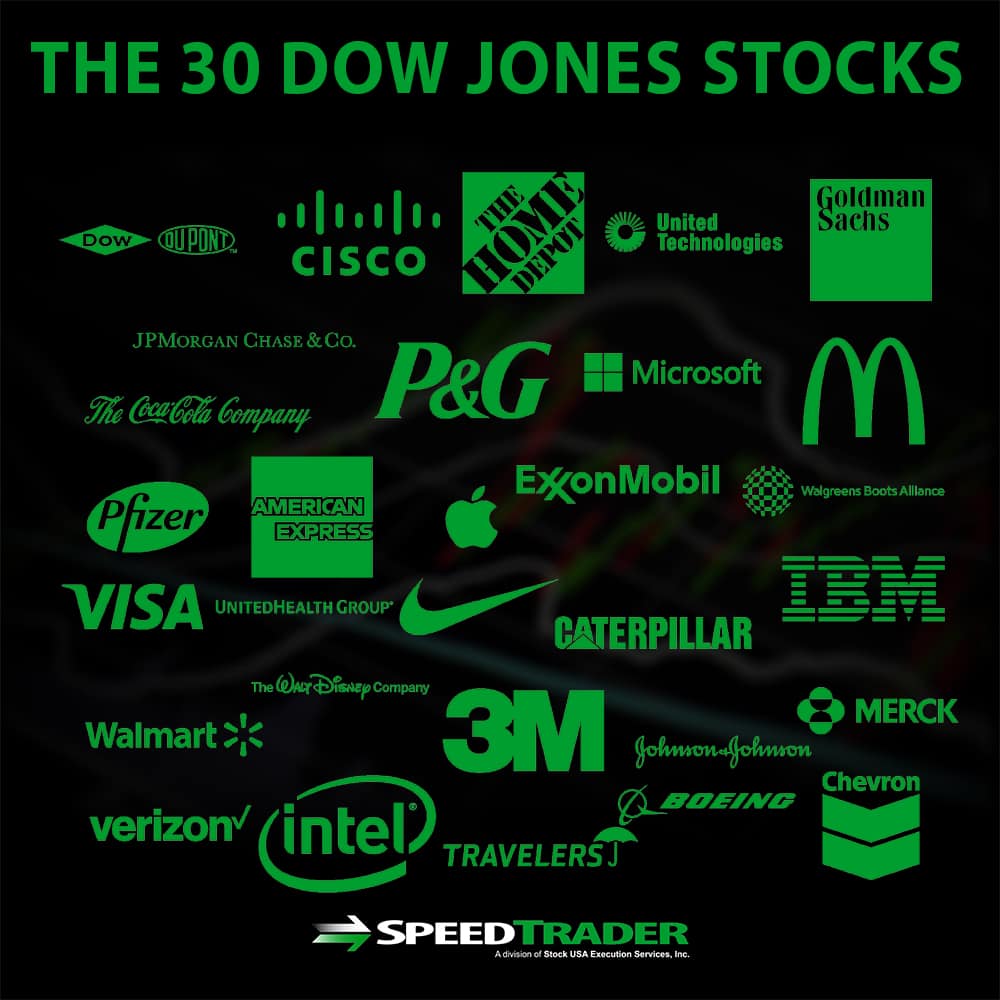
The “Industrial” in Dow Jones Industrial Average is somewhat anachronistic today. While it once comprised primarily industrial giants, the 30 companies currently included in the index represent a broad cross-section of major sectors within the U.S. economy. These are often referred to as “blue-chip” companies – large, well-established, and financially sound corporations with a history of stable earnings and reliable performance. Examples frequently include household names like Apple, Microsoft, Goldman Sachs, JPMorgan Chase, Coca-Cola, Disney, McDonald’s, Boeing, and Visa.
The selection of these 30 companies is not governed by a rigid quantitative formula but rather by the editors of The Wall Street Journal. They consider a company’s reputation, sustained growth, investor interest, and its ability to represent a significant portion of the U.S. stock market and economy. Changes to the index components are relatively rare but occur when a company’s relevance wanes, it undergoes significant corporate actions (like mergers or bankruptcies), or another company is deemed more representative of modern economic trends. The composition matters because these companies are bellwethers, their collective performance offering insights into various economic sectors. For an investor, knowing these components can highlight where market leadership resides and which industries are currently driving the index.
Understanding the Price-Weighted Average and the Dow Divisor
One of the most distinctive, and often debated, features of the DJIA is its calculation method: it is a price-weighted average. Unlike market-cap-weighted indices (like the S&P 500), where companies with larger market capitalizations have a greater influence, the Dow gives more weight to stocks with higher share prices.
Here’s a simplified explanation:
- Sum of Stock Prices: Historically, the Dow was calculated by adding up the prices of its 30 component stocks and dividing by the number of stocks (30).
- The Dow Divisor: However, stock splits, mergers, and other structural changes to the component companies would distort the average. To maintain historical continuity and prevent these events from artificially inflating or deflating the index, a Dow Divisor was introduced. This divisor is a dynamically adjusted number (currently much less than 1, usually around 0.15) that ensures the index’s value is comparable day-to-day, even with changes to its components or stock splits.
The formula is: DJIA = Sum of the prices of the 30 component stocks / Dow Divisor.
This price-weighted methodology means that a $1 change in a high-priced stock has a greater impact on the Dow’s value than a $1 change in a low-priced stock, even if the latter company has a significantly larger market capitalization. This aspect is a frequent point of criticism, as it doesn’t necessarily reflect the true economic size or influence of the underlying companies.
Selection Criteria: A Constant Evolution
The selection of companies for the DJIA is managed by S&P Dow Jones Indices, specifically by a committee. While the criteria are not strictly defined by quantitative rules, they generally look for:
- Large, established U.S. companies: These are typically leaders in their respective industries.
- Reputation and sustained growth: Companies with a strong track record and robust business models.
- Representation of the broader economy: The committee aims for a mix of sectors that reflect the current economic landscape.
- Investor interest: Companies that are widely followed and actively traded.
This qualitative approach allows the index to adapt to structural changes in the economy, ensuring it remains a relevant barometer. For example, the inclusion of tech giants and healthcare leaders over time reflects the shift from a manufacturing-heavy economy to one driven by innovation and services.
The Dow’s Significance and Its Place in Your Financial Toolkit

Beyond its mechanics, the Dow Jones holds substantial practical significance for market participants and everyday individuals. Its influence extends from setting the tone for daily financial news to informing broader investment decisions.
A Barometer for Market Sentiment and Investor Confidence
The Dow is undeniably a powerful psychological indicator. Its daily movements are scrutinized by investors, analysts, and the media. A strong performance by the Dow can bolster investor confidence, encouraging more buying and potentially driving further market gains. Conversely, a sharp decline can trigger panic, leading to sell-offs and exacerbating market downturns. This psychological aspect is particularly potent due to the Dow’s long history and widespread recognition. It’s often the first number people look at when checking the market, making it a crucial gauge of the collective mood of investors. Understanding this sentiment is part of financial literacy; it helps individuals distinguish between emotional reactions and fundamental analysis when making personal investment choices.
Beyond the Headlines: Practical Implications for Investors
While the Dow provides a quick snapshot, its practical implications for investors can be multifaceted:
- Diversification Indicator: For those with diversified portfolios, the Dow’s movement can offer a directional clue about the large-cap segment of the U.S. market.
- Economic Health Proxy: It acts as a proxy for the health of certain large, mature industries. Its performance can suggest trends in sectors like industrials, financials, and consumer goods.
- Benchmark for Managed Funds: Some actively managed funds might compare their performance against the DJIA, particularly if their investment mandate focuses on large-cap U.S. equities.
- Informing Macro Decisions: For businesses and policymakers, the Dow’s trends can inform decisions related to expansion, interest rates, and overall economic policy.
However, intelligent investors recognize that relying solely on the Dow for investment decisions is unwise. Its limited number of components and price-weighted nature mean it doesn’t represent the entire market. A deeper dive into other indices and individual company fundamentals is always necessary for sound financial planning and investment strategy.
How to “Invest” in the Dow: ETFs and Index Funds
Directly investing in the Dow Jones Industrial Average isn’t possible, as it’s an index, not a traded security. However, investors can gain exposure to its performance through various financial instruments:
- Exchange-Traded Funds (ETFs): Several ETFs are designed to track the performance of the DJIA. The most prominent example is the SPDR Dow Jones Industrial Average ETF (DIA), often referred to as “Diamonds.” Investing in DIA provides an easy way to own a basket of stocks that mirrors the Dow’s components and their price-weighted impact.
- Index Funds: While less common specifically for the Dow due to the prevalence of ETFs, some mutual funds might aim to replicate the index’s performance.
- Individual Stocks: Investors can also choose to buy shares of the individual 30 companies within the index, though this requires more capital and effort to maintain the exact weighting of the Dow.
These investment vehicles are excellent tools for individuals looking to gain broad exposure to large-cap U.S. equities without picking individual stocks. They offer diversification within the Dow’s component companies and are typically lower-cost alternatives to actively managed funds.
Criticisms and Complementary Perspectives
Despite its popularity and historical significance, the Dow Jones Industrial Average is not without its critics. Understanding these criticisms is essential for a balanced view of its utility as a financial indicator.
Addressing the Limitations: A Narrow Lens?
The primary criticisms leveled against the DJIA include:
- Limited Representation: With only 30 companies, the Dow covers a very small fraction of the thousands of publicly traded companies in the U.S. stock market. This makes it a “narrow lens” that may not accurately reflect the performance of smaller companies, specific sectors (like emerging tech or biotech), or the overall breadth of the economy.
- Price-Weighted Methodology: As discussed, the price-weighted calculation means that a higher-priced stock has a disproportionate impact on the index, regardless of the company’s actual market capitalization. This can lead to situations where a smaller, high-priced company influences the Dow more than a larger, lower-priced company, potentially misrepresenting market-wide value creation.
- “Industrial” Misnomer: The name is outdated. The index today includes companies from various sectors, far beyond traditional “industrials,” which can be confusing for new investors.
- Subjective Selection: The qualitative nature of company selection, while flexible, can also be seen as subjective and lacking the transparency of rules-based, market-cap-weighted indices.
These limitations mean that while the Dow is a good starting point for understanding market trends, it should not be the sole basis for investment decisions or economic analysis.
Broader Horizons: Comparing the Dow to Other Major Indices
To gain a comprehensive understanding of the market, the Dow should always be considered alongside other major indices:
- S&P 500 Index: This is widely regarded as the best single gauge of large-cap U.S. equities. Comprising 500 leading companies, it is market-capitalization weighted, meaning companies with larger market values have a greater influence. This provides a broader and often more accurate picture of the overall market than the Dow.
- NASDAQ Composite: Heavily weighted towards technology and growth companies, the NASDAQ Composite includes over 3,000 stocks listed on the NASDAQ exchange. It is also market-capitalization weighted and is an excellent indicator for the performance of the tech sector and speculative growth stocks.
- Russell 2000: This index tracks the performance of 2,000 small-cap U.S. companies. It’s an important benchmark for understanding the health of smaller, often more domestically focused businesses, which can provide a different perspective on economic resilience.
By observing these indices in conjunction with the Dow, investors can develop a more nuanced and holistic view of market performance, sector-specific trends, and the broader economic narrative.
The Enduring Legacy of an Industrial Icon
The Dow Jones Industrial Average, despite its criticisms and evolving landscape, continues to hold a prominent place in the financial world. Its longevity and widespread recognition ensure its enduring relevance.
Navigating Market Cycles with the Dow
Throughout its history, the Dow has weathered countless economic storms, bull markets, and bear markets. From the Roaring Twenties to the Great Depression, the Dot-com bubble, the 2008 financial crisis, and the recent pandemic-induced volatility, the Dow has been a steadfast, if sometimes imperfect, chronicler of market cycles. Its long-term trend, despite significant short-term fluctuations, has generally been upwards, reflecting the underlying growth and innovation of the American economy. For long-term investors, the Dow’s history serves as a powerful reminder of the resilience of the market and the importance of a patient, disciplined approach to investing.
Looking Ahead: The Dow in a Modern Economy
In an increasingly complex and interconnected global economy, the role of the Dow Jones remains significant. It continues to be a go-to headline number for summarizing market activity, and its components—though often changing—represent some of the most influential corporations shaping our future. As the economy evolves, the Dow will likely continue to adapt, reflecting shifts in industry leadership and economic drivers. For anyone engaging with the financial world, understanding the Dow Jones isn’t just about knowing a number; it’s about appreciating a vital piece of financial history and understanding a persistent, albeit limited, indicator in the ever-unfolding story of global markets. It acts as a gateway to deeper financial literacy, encouraging further exploration into the intricate mechanisms that drive wealth creation and economic progress.
aViewFromTheCave is a participant in the Amazon Services LLC Associates Program, an affiliate advertising program designed to provide a means for sites to earn advertising fees by advertising and linking to Amazon.com. Amazon, the Amazon logo, AmazonSupply, and the AmazonSupply logo are trademarks of Amazon.com, Inc. or its affiliates. As an Amazon Associate we earn affiliate commissions from qualifying purchases.