
In the current era of hyper-connectivity, the nuances of digital communication have transcended simple data exchange. We no longer just “send messages”; we engage in a complex dance of protocols, notification hierarchies, and user interface (UI) cues. One of the most discussed phenomena in this space is “double texting.” While often dismissed as a mere social etiquette concern, double texting—the act of sending a second message before the recipient has responded to the first—is actually a profound case study in how messaging technology shapes human behavior and digital psychology.
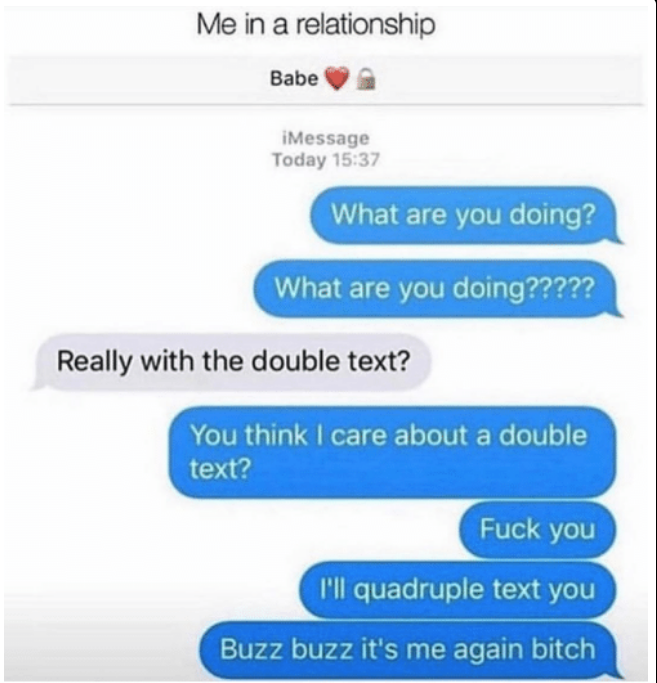
To understand what double texting means today, we must look beyond the social anxiety and examine the technological infrastructure that enables, encourages, or discourages this behavior. From the transition of SMS to Over-the-Top (OTT) platforms to the integration of Artificial Intelligence in our chat bubbles, the “double text” is a byproduct of a sophisticated technological evolution.
Understanding the Architecture of Instant Messaging (IM)
The concept of double texting didn’t truly exist during the early days of mobile telecommunications. To understand why it has become a focal point of digital culture, we must first analyze the shift in the underlying technology that carries our words.
The Shift from SMS to Over-the-Top (OTT) Media Services
In the era of traditional SMS (Short Message Service), communication was asynchronous and often transactional. Because early cellular plans charged per message, users were incentivized to be concise and wait for a reply to avoid mounting costs. The “double text” was an expensive habit.
The landscape shifted dramatically with the rise of OTT services—platforms like WhatsApp, iMessage, Telegram, and Signal. These apps bypass traditional cellular networks, utilizing data protocols (TCP/IP) to transmit information. This shift removed the financial barrier to sending multiple messages. In the tech world, this is known as the “zero-marginal cost” of communication. When the cost of sending ten messages is the same as sending one, the frequency of transmission naturally increases. Double texting became a technical inevitability once the economic constraints of the hardware were removed.
How Notification Systems Influence User Behavior
Modern operating systems (iOS and Android) have optimized their notification stacks to prioritize “immediate engagement.” When you send a double text, you aren’t just sending information; you are triggering a specific set of API calls that activate the recipient’s haptic motor, light up their OLED screen, and place a persistent banner in their notification shade.
From a software engineering perspective, the double text is a method of “re-pinging” a client device. If the first notification was buried by other system alerts or silenced by a “Focus Mode” algorithm, the second text serves as a secondary trigger to bring the conversation thread back to the top of the stack. This is a deliberate design choice in messaging UI/UX intended to maintain “session stickiness.”
The Mechanics of the “Double Text”: Technical Triggers and UI Design
The meaning of a double text is often dictated by the visual feedback the technology provides. Modern messaging apps are designed with “transparency features” that change the psychological weight of an unanswered message.
Read Receipts and Presence Indicators
The introduction of “Read Receipts” (the infamous blue ticks) and “Presence Indicators” (the “typing…” bubble) changed the nature of the double text from a simple follow-up to a high-stakes interaction. These features are powered by real-time data synchronization protocols like WebSocket or MQTT, which allow for low-latency updates between the server and the client.
When a user sees that a message has been “Delivered” but not “Read,” the decision to double text becomes a tactical move based on perceived network status or user availability. If the tech confirms the recipient is “Online,” the lack of a response feels like a system failure or a social slight. In this context, the double text is a manual “retry” command sent by the user to overcome a perceived communicative lag.
Ghosting, Lag, and the “Message Sent vs. Delivered” Paradigm
Technologically, there is a significant difference between a message being “sent,” “delivered,” and “read.”
- Sent: The message has left the sender’s device and reached the service provider’s server.
- Delivered: The server has successfully pushed the data to the recipient’s device.
- Read: The recipient has opened the specific thread, triggering a status update back to the sender.
A double text often occurs in the gap between “Delivered” and “Read.” In areas with poor spectral efficiency or high network congestion, a message might hang in the “Sent” phase. Here, the double text acts as a diagnostic tool. Users often send a second, shorter message to see if the network “wakes up” and pushes both through simultaneously.

The Impact of AI and Automation on Messaging Cadence
As we move deeper into the decade, the “meaning” of a double text is being further complicated by the integration of Machine Learning (ML) and Artificial Intelligence (AI) within our messaging apps.
Algorithmic Sorting and Smart Replies
Many modern messaging platforms now use algorithmic sorting to manage our inboxes. Apps like Slack or Google Chat may deprioritize messages from certain senders if the engagement rate is low. In this environment, a double text can be a strategic attempt to “game” the algorithm. By sending a second message, the sender increases the “recency” score of the conversation thread, ensuring it stays at the top of the recipient’s UI.
Furthermore, features like “Smart Reply” (suggested responses generated by Natural Language Processing) have lowered the friction of responding. When the technology makes it as easy as a single tap to say “Sounds good!”, the expectation for a quick reply increases. If a user doesn’t even use the automated “Smart Reply,” the sender is more likely to double text, assuming the recipient is genuinely away from their device.
Bot Etiquette: When Systems Double Text for Us
We are also seeing the rise of “automated double texting” in professional and personal contexts. Customer Relationship Management (CRM) tools and AI assistants are programmed to follow up automatically if a lead doesn’t respond within a set timeframe. This “algorithmic persistence” mimics human double texting but is driven by conversion optimization data.
As users become accustomed to bots double texting them for appointments or sales, the social stigma of human-to-human double texting begins to erode. We are being conditioned by our software to view repeated pings as “reminders” rather than “intrusions.”
Digital Wellness and the Psychological Feedback Loop of Connectivity
Finally, the meaning of the double text must be viewed through the lens of digital wellness and the technology designed to protect our attention.
Combating “Notification Fatigue” in Synchronous Communication
The tech industry is currently in a tug-of-war between engagement and wellness. Features like Apple’s “Summary Notifications” or Android’s “Digital Wellbeing” are designed to batch notifications together. This means a recipient might not even see the first text until a certain time of day.
When a sender double texts, they are essentially attempting to break through these wellness firewalls. In a professional tech environment, such as on platforms like Microsoft Teams, double texting is often viewed through the lens of “synchronous vs. asynchronous” workflows. A double text marks a shift from an asynchronous request (respond when you can) to a synchronous demand (I need this now). Understanding this technical distinction is crucial for maintaining digital professional standards.
Future Trends: Haptic Feedback and the End of the Texting Stigma
As we look toward the future of communication technology—including AR/VR environments and more sophisticated haptic wearables—the “double text” may evolve into something entirely different. Imagine a “nudge” delivered via a smart haptic watch that doesn’t involve text at all.
In these emerging ecosystems, the “meaning” of a double text will likely shift toward “presence awareness.” Instead of worrying about the etiquette of sending two messages, users will rely on high-fidelity data about their contacts’ availability (biometric status, environmental context, or “Deep Work” mode status).
Conclusion
So, what does double text mean in the world of technology? It is more than just a social habit; it is a symptom of our current stage of digital evolution. It is a product of the transition from expensive, limited SMS to free, unlimited OTT messaging. It is a tactical response to the UI/UX of read receipts and notification hierarchies. And increasingly, it is a behavior modulated by AI and digital wellness protocols.
As technology continues to bridge the gap between human thought and digital transmission, the “double text” serves as a reminder of our desire for connection in an age of fragmented attention. Whether seen as a tool for re-engagement or a breach of digital boundaries, the double text remains a fascinating intersection of software engineering and human psychology. In the end, the meaning of a double text isn’t just in the words sent, but in the complex digital infrastructure that carries them.
aViewFromTheCave is a participant in the Amazon Services LLC Associates Program, an affiliate advertising program designed to provide a means for sites to earn advertising fees by advertising and linking to Amazon.com. Amazon, the Amazon logo, AmazonSupply, and the AmazonSupply logo are trademarks of Amazon.com, Inc. or its affiliates. As an Amazon Associate we earn affiliate commissions from qualifying purchases.