
The intersection of bioacoustics and modern technology has transformed the way humans interact with the natural world. For decades, the low-frequency “grunt” of a deer was a sound known only to experienced woodsmen and field biologists. However, as we move further into the era of digital transformation, the question of “what does a deer grunt sound like” is no longer just a matter of auditory memory; it is a challenge of data science, digital signal processing (DSP), and artificial intelligence.
In this exploration, we analyze the technological frameworks used to identify, record, and replicate these specific wildlife vocalizations. From the complex waveforms of a social buck grunt to the high-fidelity engineering required to simulate these sounds in consumer electronics, the technology of deer vocalization is a testament to how far sensory tech has evolved.
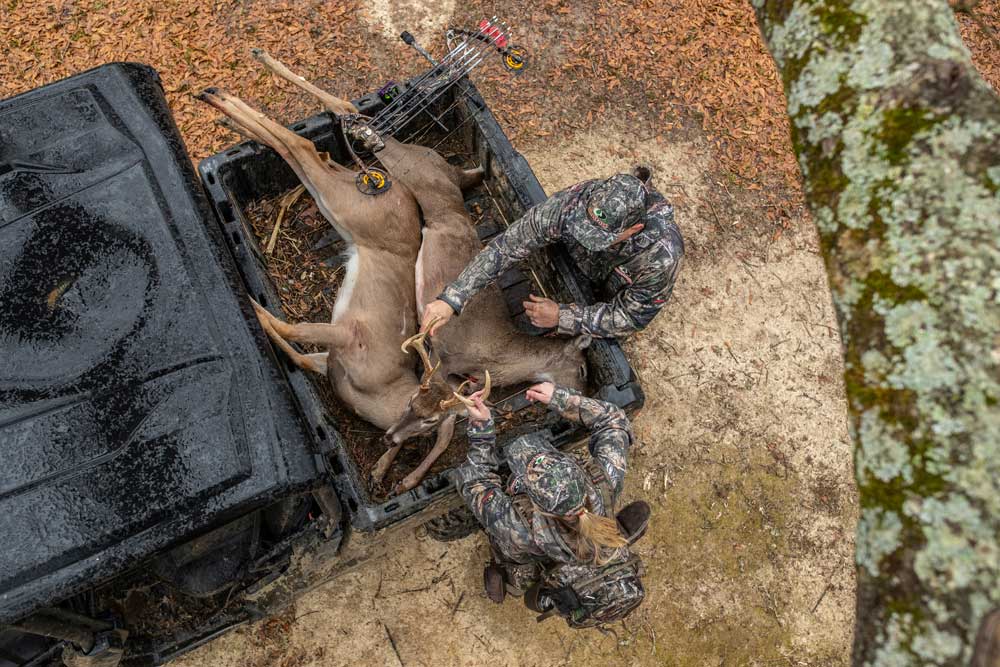
The Physics of Sound: Understanding the Acoustic Profile of a Deer Grunt
Before a piece of software can identify a sound, the hardware must capture its physical properties accurately. A deer grunt is a short, guttural burst of sound, typically lasting between 0.5 to 1.5 seconds. From a technical perspective, it is characterized by low-frequency energy, usually falling between 100 Hz and 1,000 Hz.
Frequency Analysis and Waveform Patterns
To a computer, a deer grunt is not a “noise” but a specific arrangement of frequencies and amplitudes. Using spectrographic analysis, engineers can visualize the grunt as a series of harmonic bands. Unlike the high-pitched “whistle” of an elk or the staccato “bark” of a squirrel, the deer grunt presents a dense, rich fundamental frequency with several overtones.
Advanced audio software uses Fast Fourier Transform (FFT) algorithms to break these sounds down into their constituent parts. This allows tech developers to isolate the “grunt” from background environmental noise, such as wind shear or the rustling of dry leaves. By mapping these patterns, developers create a “digital fingerprint” for the vocalization, which serves as the foundation for all subsequent identification and replication technology.
From Biological Origin to Digital Signal
The biological source of the sound—the deer’s larynx and vocal tract—acts as a natural resonator. Capturing this digitally requires high-sensitivity microphones with a flat frequency response in the lower register. In the tech world, this often involves the use of MEMS (Micro-Electro-Mechanical Systems) microphones. These tiny, high-performance sensors are increasingly integrated into trail cameras and handheld recording devices.
When the analog pressure wave of a grunt hits the microphone’s diaphragm, it is converted into a voltage and then digitized via an Analog-to-Digital Converter (ADC). The resolution of this conversion—measured in bit depth and sample rate—determines how much of the “soul” or “texture” of the grunt is preserved. For professional-grade bioacoustic research, a 24-bit/96kHz recording is the standard for ensuring that every micro-vibration of the deer’s vocal cords is captured for analysis.
AI and Machine Learning in Bioacoustics: Identifying Calls in the Field
Identifying a deer grunt in a controlled studio environment is simple; identifying it in the middle of a thunderstorm or near a flowing creek requires sophisticated Artificial Intelligence. The field of “Automated Species Identification” has seen massive leaps forward due to neural networks and machine learning (ML) models.
Training Models on Natural Sounds
To teach an AI what a deer grunt sounds like, developers feed the algorithm thousands of hours of audio data. This process, known as supervised learning, involves tagging specific segments of audio as “Buck Grunt,” “Doe Bleat,” or “Non-Target Noise.”
Convolutional Neural Networks (CNNs), which are typically used for image recognition, are surprisingly effective here. By converting audio into a visual spectrogram, the CNN can “see” the shape of the grunt. It looks for the specific visual signature of the grunt’s attack, sustain, and decay. As the model processes more data, its confidence interval increases, allowing it to distinguish between a deer grunt and a human cough or a falling branch with over 98% accuracy.
The Role of Edge Computing in Hunting Apps
One of the most significant tech trends in the outdoor space is “Edge Computing.” Previously, complex audio analysis had to be uploaded to a cloud server for processing. Today, mobile processors—such as those found in high-end smartphones—are powerful enough to run ML models locally.
Modern hunting and wildlife apps utilize the phone’s microphone to listen to the environment in real-time. When the user asks, “What did I just hear?” the app doesn’t need a cellular signal to provide an answer. It processes the audio buffer locally, compares it against the onboard ML model, and identifies the grunt instantly. This democratization of bioacoustic technology allows casual observers and professional researchers alike to map deer movements and behaviors with unprecedented precision.
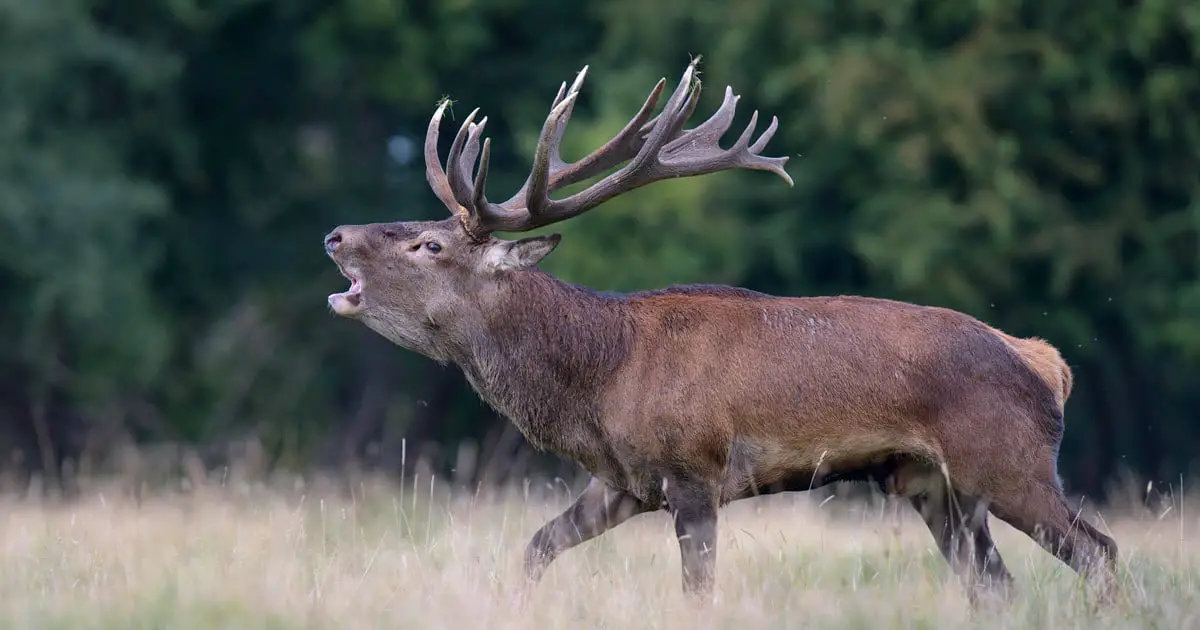
The Evolution of Electronic Callers: Digital Signal Processing (DSP) and Realism
If identifying the sound is the first half of the equation, the second half is replication. Electronic callers and digital simulation tools have moved far beyond the simple “push-button” toys of the past. They are now sophisticated pieces of audio equipment designed to mimic the exact acoustic pressure of a living animal.
Improving Authenticity through High-Fidelity Audio
The primary challenge in simulating a deer grunt is the “flatness” of digital playback. A real deer grunt is omnidirectional and interacts with the surrounding environment, bouncing off trees and ground cover. To combat this, high-end electronic callers utilize Digital Signal Processing (DSP) to add depth and “body” to the sound.
Engineers use 32-bit floating-point processing to ensure that the audio does not clip or distort at high volumes. Furthermore, the speakers used in these devices are specifically tuned for low-midrange frequencies. Standard tweeters cannot reproduce the “growl” of a rutting buck; instead, specialized woofers with high-excursion drivers are required to move enough air to simulate the physical presence of a 200-pound animal.
Smart Connectivity: Bluetooth and Remote Integration
The current trend in wildlife tech is the “ecosystem” approach. Modern electronic callers are no longer standalone units; they are nodes in a larger digital network. Through low-latency Bluetooth and proprietary RF (Radio Frequency) links, these devices can be controlled via smartphones or synchronized with other units.
Some advanced systems allow users to “layer” sounds digitally. A user can play a background track of wind or walking leaves while triggering a deer grunt on a separate channel. This multi-track playback, managed by a central processor, creates a 3D soundscape that is far more convincing than a single-loop recording. This level of control is made possible by sophisticated firmware that manages audio buffering and prevents the “glitching” often associated with lower-end consumer electronics.
Wearable Tech and Audio Enhancement for Field Research
As we look toward the future, the technology used to experience deer grunts is moving toward “augmented hearing.” This involves wearable devices that do more than just record; they enhance and translate the auditory experience for the human user.
Noise-Canceling and Sound Amplification Hardware
Active Noise Cancellation (ANC) is a staple of consumer headphones (like the AirPods Max or Sony WH-1000XM5), but in the context of wildlife observation, the tech is reversed. Rather than canceling all sound, “Active Ambient” technology uses external microphones to amplify specific frequency ranges—like those of a deer grunt—while suppressing harmful or distracting noises like wind or gunfire.
This is achieved through real-time DSP. The device identifies the low-frequency signature of the grunt and applies a localized gain boost, effectively giving the user “super-human” hearing. For researchers tracking deer in dense brush, this technology is invaluable for identifying the presence of an animal long before it is visible to the naked eye.
Real-Time Translation: From Grunt to Behavioral Analysis
The final frontier of this technology is the translation of intent. Bioacousticians are currently working on AI models that don’t just identify that a sound is a “grunt,” but categorize the meaning of that grunt based on its cadence and pitch.
By analyzing the micro-deviations in the sound, future tech could provide a real-time readout on a smartwatch or AR glasses, indicating whether the deer is in a state of agitation, social curiosity, or reproductive readiness. This involves “Big Data” analytics, comparing the captured sound against a global database of known deer behaviors. It represents the ultimate fusion of hardware, software, and biological science.

Conclusion: The Digital Future of the Wild
The question of “what does a deer grunt sound like” has evolved into a complex study of digital acoustics. We have moved from simple wooden reed calls to AI-driven, high-fidelity systems that can detect, analyze, and replicate the sounds of the forest with startling accuracy.
As technology continues to advance, the line between the natural and the digital will continue to blur. Through the use of ML models, Edge Computing, and advanced DSP, we are gaining a deeper understanding of wildlife than ever before. For the tech-savvy observer, the deer grunt is no longer just a sound in the woods—it is a data point, a frequency, and a gateway into the sophisticated world of modern bioacoustics.
aViewFromTheCave is a participant in the Amazon Services LLC Associates Program, an affiliate advertising program designed to provide a means for sites to earn advertising fees by advertising and linking to Amazon.com. Amazon, the Amazon logo, AmazonSupply, and the AmazonSupply logo are trademarks of Amazon.com, Inc. or its affiliates. As an Amazon Associate we earn affiliate commissions from qualifying purchases.