
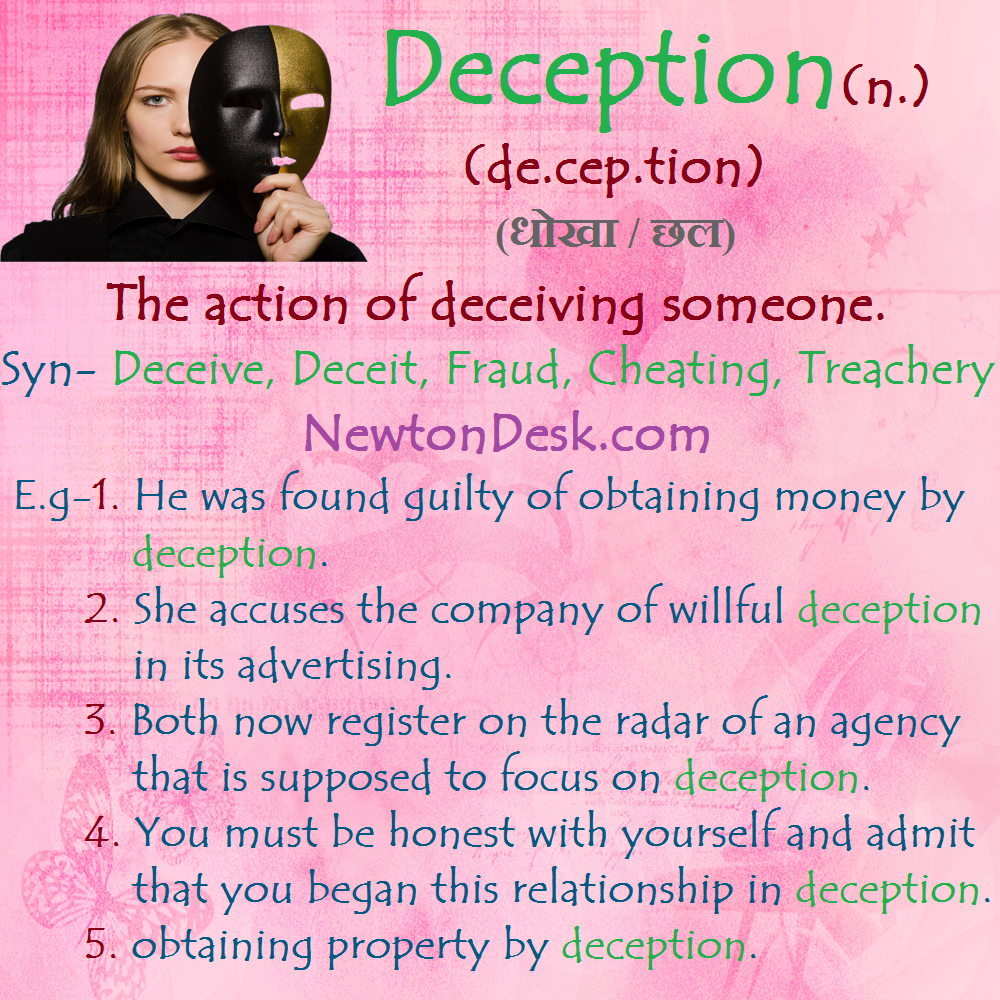
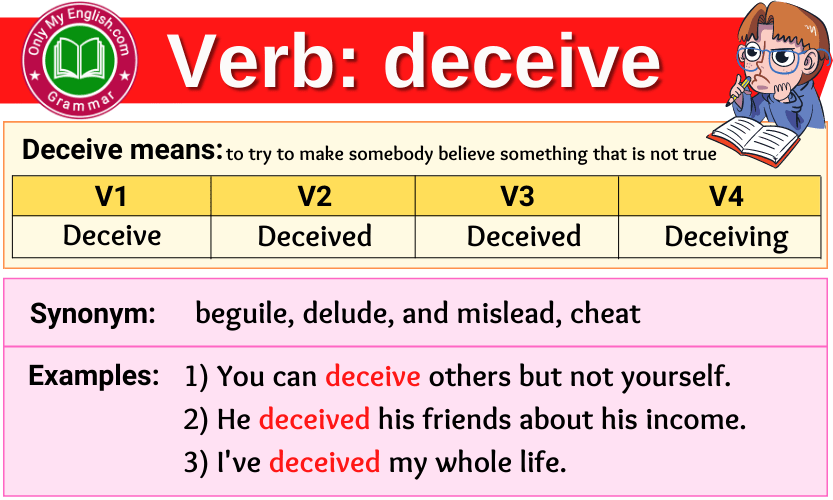
In its most basic linguistic form, to deceive is to cause someone to believe something that is not true, typically in order to gain some personal advantage. However, as our lives have migrated into the digital realm, the definition of “deceiving” has undergone a profound technological transformation. In the modern tech landscape, deception is no longer limited to a simple lie told between two people; it has become a sophisticated architecture of code, design, and algorithmic manipulation.
Understanding what it means to be deceived in today’s world requires a deep dive into the intersection of technology and psychology. From the subtle nudges of a user interface to the terrifying realism of synthetic media, deception in tech is a multifaceted challenge that threatens our security, our privacy, and our perception of reality.

The Evolution of Deception: From Social Engineering to Deepfakes
Deception in technology often begins with the human element. While we often think of “hacking” as a complex series of code-breaking maneuvers, the most effective form of technical deception remains social engineering. In this context, deceiving means leveraging psychological manipulation to trick users into making security mistakes or giving away sensitive information.
The Psychology of Phishing and Spoofing
Phishing is perhaps the most pervasive form of digital deception. It relies on “spoofing”—the technical act of disguising a communication from an unknown source as being from a known, trusted source. When an email appears to be from your cloud service provider or a trusted software vendor, it is deceiving your visual and cognitive heuristics. The deception here is twofold: the technical fabrication of the sender’s identity and the psychological pressure (often urgency or fear) used to bypass the user’s critical thinking. As AI-driven language models evolve, these deceptive communications are becoming increasingly personalized and free of the grammatical errors that once served as red flags.
Synthetic Media and the Rise of AI Manipulation
As we move further into the decade, “deceiving” has taken on a more visceral meaning through the advent of deepfakes and synthetic media. Utilizing Generative Adversarial Networks (GANs), bad actors can now create hyper-realistic video and audio recordings of individuals saying or doing things they never did.
In this technological niche, deception is an attack on the concept of “seeing is believing.” When a video can be manipulated to show a CEO making a false announcement or a security professional authorizing a wire transfer, the deception is embedded in the pixels and waveforms themselves. This represents a paradigm shift where the medium of information is no longer a reliable indicator of its truth.
Dark Patterns: The Art of Deceptive Interface Design
While some forms of deception are clearly malicious or illegal, others are baked into the very software and apps we use every day. These are known as “Dark Patterns”—user interface (UI) designs crafted to trick users into doing things they did not intend to do, such as buying insurance they don’t need or signing up for a recurring subscription.
Misdirection and Forced Continuity
One of the most common ways a tech product is deceiving is through misdirection. This occurs when the UI purposefully draws your attention to one thing (like a bright, colorful “Accept” button) to distract your attention from another (like a hidden “Decline” link or a list of data-sharing permissions).
Forced continuity is another deceptive tactic where a user signs up for a free trial but is not given a clear way to opt-out before being charged. The deception lies in the “roach motel” design philosophy: easy to get into, but nearly impossible to get out of. By intentionally complicating the cancellation process, software developers are deceiving users regarding the true cost and commitment of the service.
The Ethical Boundary Between Persuasion and Manipulation
There is a thin line between “persuasive design”—which helps users achieve their goals—and “deceptive design,” which prioritizes company metrics over user intent. Deceiving, in the context of UX (User Experience), means undermining the user’s autonomy. When a website uses “confirmshaming”—a tactic where the decline option is worded to make the user feel guilty or foolish (e.g., “No thanks, I prefer to stay uninformed”)—it is using emotional manipulation to override logical decision-making. Recognizing these patterns is the first step in reclaiming digital agency.
Deception in Data Privacy and Algorithm Transparency
In the backend of our favorite platforms, deception often manifests as a lack of transparency. We are often deceived about how our data is being used, who it is being sold to, and how algorithms are shaping our digital experiences.
Shadow Profiles and Hidden Data Harvesting
Many users believe that if they do not have an account with a specific social media platform or tech giant, that company has no data on them. However, through “shadow profiles,” tech companies can track non-users across the web using cookies, trackers, and metadata from their friends’ contact lists.
In this scenario, “deceiving” refers to the hidden nature of data collection. Companies often present a “privacy-first” face to the public while simultaneously building complex technical infrastructures designed to bypass the very privacy settings they promote. The deception is the gap between the user’s expectation of privacy and the technical reality of persistent surveillance.
Algorithmic Bias as a Form of Technical Deception
Algorithms are often presented as neutral, objective decision-makers. However, the “black box” nature of many AI systems can be inherently deceptive. When an algorithm is trained on biased data, it produces biased results, yet these results are often delivered with the authority of mathematical certainty.
If a hiring AI or a credit-scoring tool systematically excludes certain demographics due to hidden variables, it is deceiving the stakeholders into believing the process is fair and meritocratic. The deception here is the “illusion of objectivity”—the idea that because a machine made the decision, it must be free of human prejudice.
Securing the Future: Defending Against Digital Deceit
As the methods of deception become more sophisticated, our technical defenses must also evolve. Combating digital deception requires a combination of robust security frameworks and a fundamental shift in how we interact with technology.
Zero Trust Architecture and Verification
The primary technical response to a deceptive environment is the “Zero Trust” model. In a world where identities can be spoofed and communications can be faked, the foundational principle of Zero Trust is “never trust, always verify.”
This involves multi-factor authentication (MFA), end-to-end encryption, and rigorous identity management systems. By assuming that any request, even one that looks legitimate, could be an attempt at deception, organizations can build layers of defense that make it significantly harder for deceptive tactics to succeed. Cryptographic signatures and blockchain-based verification are also emerging as tools to prove the provenance of digital content, helping to mitigate the impact of deepfakes and altered media.
Cultivating Digital Literacy in an Era of Misinformation
Technical solutions can only go so far; the final line of defense against being deceived is the human user. Digital literacy is no longer just about knowing how to use a computer; it is about understanding the mechanics of deception. This includes being able to identify dark patterns, recognizing the signs of AI-generated content, and understanding the value of personal data.
Educational initiatives must focus on teaching users to question the “default” settings and to look beneath the surface of a polished interface. To truly understand what “deceiving” means in the tech world is to recognize that software is never neutral. Every app, website, and algorithm was built with an intention. By aligning our technical tools with ethical standards and fostering a culture of skepticism and verification, we can navigate the complexities of the digital age without falling prey to its many deceptions.
In conclusion, deception in the technology sector is a moving target. It ranges from the blatant criminality of a phishing scam to the subtle, profitable “nudges” of a deceptive UI. As we continue to integrate AI and automated systems into every facet of our lives, the premium on transparency and truth will only increase. Knowing what it means to be deceived is the first step toward building a more honest and secure digital future.
aViewFromTheCave is a participant in the Amazon Services LLC Associates Program, an affiliate advertising program designed to provide a means for sites to earn advertising fees by advertising and linking to Amazon.com. Amazon, the Amazon logo, AmazonSupply, and the AmazonSupply logo are trademarks of Amazon.com, Inc. or its affiliates. As an Amazon Associate we earn affiliate commissions from qualifying purchases.