
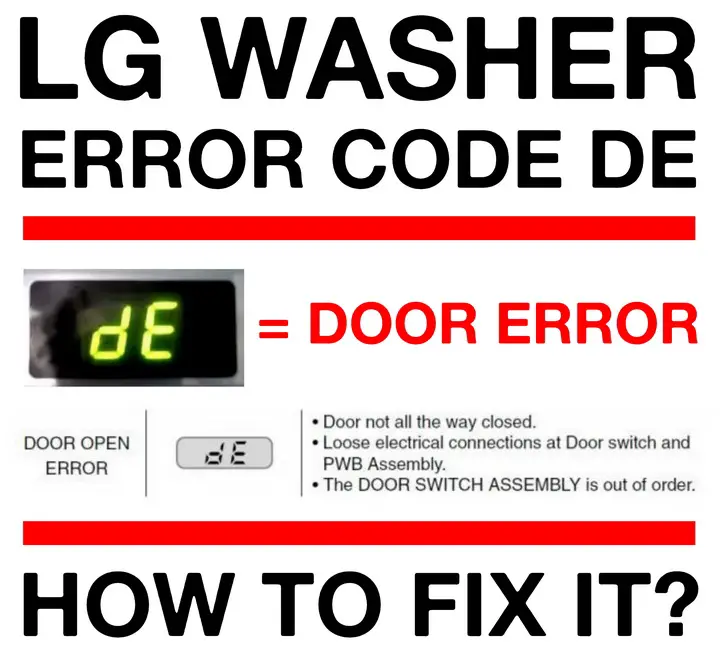
Few household appliances are as indispensable as the washing machine. When it falters, the ripple effect on daily routines can be significant. For owners of LG washing machines, encountering an enigmatic “DE” error code on the digital display can be a moment of immediate frustration. Far from being a random glitch, “DE” is a crucial diagnostic message, signaling a specific issue that, once understood, is often straightforward to address. This article will delve into the technical meaning behind the “DE” code, explore its implications for LG’s brand reputation, and offer practical advice on the financial considerations of repair versus replacement, all while empowering you with the knowledge to tackle this common appliance hiccup.
Decoding the “DE” Error: A Technical Deep Dive
At its core, the “DE” error code on an LG washing machine stands for “Door Error” or “Door Open.” This seemingly simple message indicates that the washing machine’s control system believes the door or lid is not properly closed or latched, preventing the wash cycle from starting or continuing. For safety reasons and to prevent water leaks, washing machines are designed not to operate unless the door is securely shut and locked. Understanding the nuances of this error involves looking at the various components that contribute to the door’s secure closure and the machine’s ability to sense it.
The Door Error Explained: Why Your Washer Won’t Start
The “DE” error is typically triggered by one of several underlying causes, all related to the door’s integrity or the sensor’s perception of it. The most common culprit is a physical obstruction. This could be anything from a stray piece of clothing caught in the door seal, a small item like a sock or a coin lodged between the door and the drum, or even the detergent dispenser tray not being fully pushed in on some models. These obstructions prevent the door from achieving a complete and secure close, thus activating the “DE” error.
Beyond simple obstructions, the door latch mechanism itself is a frequent point of failure. Modern washing machines employ an intricate latching system that not only secures the door but also communicates its status to the machine’s main control board. If the latch is broken, bent, or misaligned, it won’t engage properly. Over time, wear and tear can degrade the plastic or metal components of the latch, leading to a loose fit or complete failure. Similarly, the door strike—the component on the door frame that the latch engages with—can become damaged or misaligned, preventing proper closure.
Furthermore, the door switch or sensor plays a critical role. This electromechanical component is responsible for detecting whether the door is indeed closed and locked. If the door switch itself is faulty, it may incorrectly report an “open” status to the control board, even if the door is physically shut. This can be due to electrical issues, corrosion, or mechanical failure within the switch. On some advanced LG models, wiring issues leading to or from the door switch can also interrupt this crucial communication, resulting in a false “DE” error. Diagnosing the exact cause often requires a systematic approach, starting with the most obvious and moving towards the more complex internal components.
Initial Troubleshooting Steps for the Tech-Savvy User
Before reaching for the phone to call a technician, many “DE” errors can be resolved with a few simple troubleshooting steps. These initial checks leverage basic logic and observation, often saving time and money.
- Check for Obstructions: This is always the first step. Open the washing machine door wide and meticulously inspect the gasket (rubber seal) around the opening and the edges of the door itself. Look for any clothing items, lint buildup, foreign objects, or even dried detergent residue that might be preventing a flush closure. If you find anything, remove it carefully.
- Ensure Proper Closure: Firmly close the door. Sometimes, it simply wasn’t pushed hard enough to engage the latch. You should hear a distinct click as the latch mechanism engages. Avoid slamming the door, as this can exacerbate existing issues or create new ones.
- Power Cycle the Machine: A common fix for many electronic glitches, power cycling can reset the washing machine’s control board. Unplug the machine from the power outlet for 5-10 minutes, then plug it back in. This allows the system to clear any temporary electronic errors and re-evaluate the door status.
- Examine the Door Latch and Strike: Visually inspect the door latch (the hook on the door) and the strike (the slot on the machine body where the latch enters). Look for any visible signs of damage, bending, or misalignment. If the latch is loose, wobbly, or appears broken, it’s likely the source of the problem. Ensure the screws holding the strike plate in place are tight.
- Check the Detergent Dispenser: On front-loader models, ensure the detergent drawer is fully pushed in. Some LG models link this to the door safety mechanism.
By systematically going through these steps, a significant number of “DE” errors can be quickly resolved, empowering users to take control of minor appliance issues.
Beyond the Code: LG’s Brand Promise and User Experience
While the technical aspect of an error code is crucial, the way a brand designs its products and supports its customers in addressing these issues profoundly impacts its reputation. For a leading appliance manufacturer like LG, clear error codes and accessible solutions are integral to maintaining consumer trust and loyalty.
LG’s Approach to Appliance Reliability and Customer Support
LG has built a strong brand presence through its commitment to innovation, design, and perceived reliability. When an appliance like an LG washing machine displays an error code, it’s a test of that brand promise. A well-designed product isn’t just about functionality; it’s also about ease of troubleshooting and repair. LG typically provides comprehensive user manuals that detail error codes and their common remedies. Beyond the physical manual, their online support portals, FAQs, and dedicated customer service channels offer a wealth of information.
The clarity of the “DE” error itself is a testament to good design. Unlike cryptic alphanumeric codes that offer no immediate clue, “DE” (Door Error) is intuitive. This empowers users to quickly understand the nature of the problem, fostering a sense of control rather than confusion. LG also designs its appliances with a degree of modularity, meaning components like door latches and switches are often replaceable without requiring a complete machine overhaul. This thoughtful approach to serviceability reinforces the brand’s commitment to long-term product value and customer satisfaction.
However, the availability of parts, the responsiveness of customer service, and the network of certified technicians are equally important. A robust brand like LG invests in these areas, ensuring that when self-help measures are exhausted, professional support is readily available, thus minimizing customer downtime and frustration.
The Impact of Error Codes on Brand Perception
Error codes, while necessary, walk a fine line in shaping brand perception. When an error code like “DE” is clear, accurate, and accompanied by accessible troubleshooting guidance, it can actually enhance brand perception. It communicates transparency and empowers the consumer to act. Users feel respected when a brand doesn’t hide behind obscure technical jargon but instead provides digestible information. This builds trust, as it suggests the brand stands behind its product and anticipates potential user challenges.
Conversely, a poorly implemented error code system can be detrimental. If “DE” meant something entirely unrelated to the door, or if the troubleshooting steps provided by LG were vague or unhelpful, it would quickly erode user confidence. Repeated or unresolvable errors can lead to consumer frustration, negative reviews, and a reluctance to purchase from the brand again. In an era dominated by online reviews and social media, a single persistent error or poor customer service experience can quickly spiral into a public relations challenge. Therefore, for brands like LG, investing in clear diagnostics and comprehensive support is not just about fixing machines; it’s about safeguarding and strengthening their valuable brand equity. It transforms a potential point of failure into an opportunity to demonstrate reliability and customer-centricity.
The Financial Angle: Repair, Replace, or DIY?
When confronted with a “DE” error that proves resistant to initial troubleshooting, a financial decision-making process inevitably begins. Should you attempt a DIY repair, call a professional, or consider investing in a new washing machine? Each option carries its own set of costs and benefits, influenced by factors like the machine’s age, the severity of the issue, and the cost of parts.
Assessing the Cost: DIY vs. Professional Repair vs. New Investment
For a “DE” error, the most common components requiring replacement are the door latch assembly or the door switch. These parts are typically available online or through appliance parts suppliers. The cost of a replacement door latch for an LG washing machine can range from $20 to $100, depending on the specific model and where it’s purchased. If you’re comfortable with basic hand tools and following online video tutorials, a DIY replacement of these parts is often feasible and represents the most cost-effective solution. The savings come from avoiding technician labor fees.
However, if you’re not comfortable working with electrical components or dismantling parts of your appliance, or if the issue seems more complex (e.g., wiring problems, control board malfunction), calling a professional appliance technician is the safer route. A service call for an appliance technician can range from $75 to $150, typically covering the diagnosis. Beyond that, you’ll pay for labor, which can be $50 to $100 per hour, plus the cost of parts. A professional repair for a door latch or switch might total $150 to $300, depending on the technician’s rates and part markup.
The decision to replace the machine altogether becomes a consideration if:
- The machine is old: Appliances typically have a lifespan of 10-13 years. If your LG washing machine is approaching or exceeding this age, significant repairs might not be a worthwhile investment, as other components might soon fail.
- Repair costs are high: If the repair estimate exceeds 50% of the cost of a new, comparable machine, it often makes more financial sense to invest in a new appliance.
- Multiple issues exist: If the “DE” error is just one in a series of problems, it might be a sign that the machine is simply wearing out.
Investing in a new machine carries a significant upfront cost, ranging from $600 to $1,500 or more for an LG model. However, newer machines often come with enhanced energy efficiency, advanced features, and a new warranty, which can offer long-term savings and peace of mind.
Maximizing Your Appliance Investment: Warranties and Maintenance
To minimize the financial impact of appliance breakdowns, several proactive strategies are essential. First and foremost, understanding your warranty coverage is critical. LG washing machines typically come with a limited warranty (often 1 year on parts and labor, longer on certain components like the motor or drum). If your machine is still under warranty, any “DE” related repair (that isn’t user-induced damage) should be covered, making professional service the logical choice without incurring significant out-of-pocket costs. Always keep your purchase receipt and warranty information readily accessible.
Beyond warranty periods, preventative maintenance plays a crucial role in extending the life of your appliance and preventing common errors. For instance, regularly cleaning the door gasket on your LG washing machine can prevent lint and residue buildup that might obstruct proper door closure, thus avoiding a “DE” error. Periodically inspecting the door latch for signs of wear and tear can allow you to address minor issues before they escalate into a complete failure.
Furthermore, consider the long-term energy efficiency of your appliance. While an older, working machine might not incur repair costs, it could be consuming significantly more water and electricity than a newer, Energy Star-rated model. Calculating potential annual savings on utility bills can sometimes tip the financial scales towards replacement, even if the current repair cost is manageable. Maximizing your appliance investment isn’t just about fixing problems when they arise; it’s about proactive care, smart financial planning, and an understanding of the product’s lifecycle.
Advanced Troubleshooting and When to Call the Experts
For the more technically inclined, or for issues that persist beyond basic fixes, deeper diagnostics might be attempted. However, it’s crucial to recognize the limits of DIY and understand when professional intervention becomes not just advisable, but essential.
Tools and Techniques for Deeper Diagnostics
If the “DE” error persists after checking for obstructions, power cycling, and inspecting the latch, the issue might lie with the door switch itself or the wiring. To diagnose these, you might need a few basic tools:
- Screwdrivers: To access internal components.
- Multimeter: For testing electrical continuity and voltage (only for those comfortable and knowledgeable about electrical safety).
- Pliers: For disconnecting wires.
To test the door switch, you would typically need to access the switch, which is usually located behind the front panel or top cover, near the door opening. Using a multimeter, you can check for continuity across the switch’s terminals when the door is open and closed. A functioning switch should show continuity when closed and an open circuit when open. If the readings are inconsistent, the switch is likely faulty. Similarly, you can inspect the wiring harness leading to the door switch for any visible damage, fraying, or loose connections.
Some LG models also have a “diagnostic mode” or “service mode” that can be accessed via a specific button sequence. This mode can often provide more detailed error codes or allow you to test individual components, including the door lock mechanism. However, accessing and using service modes should be approached with caution, as incorrect inputs can sometimes lead to further issues. Always refer to the specific service manual for your LG model if attempting this.

When Professional Help Becomes Essential
While DIY troubleshooting can save money, there are clear instances when professional help is not just recommended, but vital.
- Safety Concerns: If you are uncomfortable working with electricity or dismantling parts of your appliance, or if the repair involves sensitive electrical components like the main control board, it’s always safer to call a professional. Water and electricity are a dangerous combination, and improper handling can lead to injury or further damage.
- Lack of Expertise or Tools: If you don’t have the necessary tools (like a multimeter) or the confidence to interpret electrical readings, a professional will be able to diagnose the issue accurately and efficiently.
- Complex Issues: If the “DE” error seems to be intermittent, or if it’s accompanied by other unusual symptoms (e.g., machine not powering on, strange noises), it might indicate a more complex problem than a simple door latch. A technician has the experience to identify underlying issues.
- Time Constraints: If you need your washing machine back in action quickly and don’t have the time to research, order parts, and perform the repair yourself, a professional can often provide a quicker resolution.
- Warranty Preservation: For machines still under warranty, attempting a DIY repair, especially one that involves dismantling components, could potentially void your warranty. It’s always best to contact LG customer support first to arrange for a warranted repair.
Knowing when to call in the experts protects your safety, ensures proper repair, and often, in the long run, saves you from more expensive self-inflicted damages. Contacting LG’s official support channels or a certified appliance repair technician ensures that the repair is done correctly and with genuine parts, maintaining the integrity and longevity of your appliance.
In conclusion, the “DE” error on your LG washing machine is a common and usually manageable issue. By understanding its technical meaning as a “Door Error,” appreciating how LG as a brand supports its customers through clear diagnostics, and making informed financial decisions about repair or replacement, you can transform a moment of appliance frustration into an opportunity for empowerment and efficient household management.
aViewFromTheCave is a participant in the Amazon Services LLC Associates Program, an affiliate advertising program designed to provide a means for sites to earn advertising fees by advertising and linking to Amazon.com. Amazon, the Amazon logo, AmazonSupply, and the AmazonSupply logo are trademarks of Amazon.com, Inc. or its affiliates. As an Amazon Associate we earn affiliate commissions from qualifying purchases.