
In the rapidly evolving landscape of digital gaming and tabletop entertainment, few acronyms carry as much weight as “DC.” For the uninitiated, DC stands for Difficulty Class. In the context of Dungeons & Dragons (DnD), it represents the numerical threshold that a player must meet or exceed to succeed at a specific task. However, as the world’s most popular roleplaying game has migrated from physical tabletops to sophisticated digital ecosystems, the concept of DC has transformed from a simple pen-and-paper mechanic into a foundational element of game software logic, user interface design, and algorithmic probability.

Understanding DC is no longer just about rolling a twenty-sided die; it is about understanding how modern software interprets player input, manages complex databases, and utilizes random number generation (RNG) to create a seamless, interactive experience. Whether you are navigating a Virtual Tabletop (VTT) like Foundry or Roll20, or utilizing the massive cloud-based architecture of D&D Beyond, DC is the primary logic gate that dictates the flow of digital storytelling.
The Core Algorithm: Difficulty Class as a Conditional Logic Gate
At its technical core, the DC mechanic functions as a classic conditional statement. In software development terms, every time a player attempts an action—whether it is picking a high-tech lock or hacking into a magical terminal—the game engine executes a check. This check follows a fundamental “if-then-else” structure.
The Math Behind the Code
The formula for a DC check is mathematically straightforward: d20 + Modifiers ≥ DC. If the result of the variable (the die roll) plus the constant (the player’s modifiers) is greater than or equal to the DC, the function returns a “success” Boolean. If not, it returns a “failure.” In a digital environment, this calculation happens in milliseconds, but the underlying tech required to make this feel “fair” to a user is immense.
Developers of D&D software must build robust engines that can handle hundreds of variables simultaneously. A single DC check might need to pull data from a character’s SQL database (to find their proficiency bonus), check against a real-time status effect (a temporary debuff), and compare it against a target value stored in a separate “Monster or Hazard” table. The DC is the anchor point for this entire data transaction.
Scaling Difficulty through Data Sets
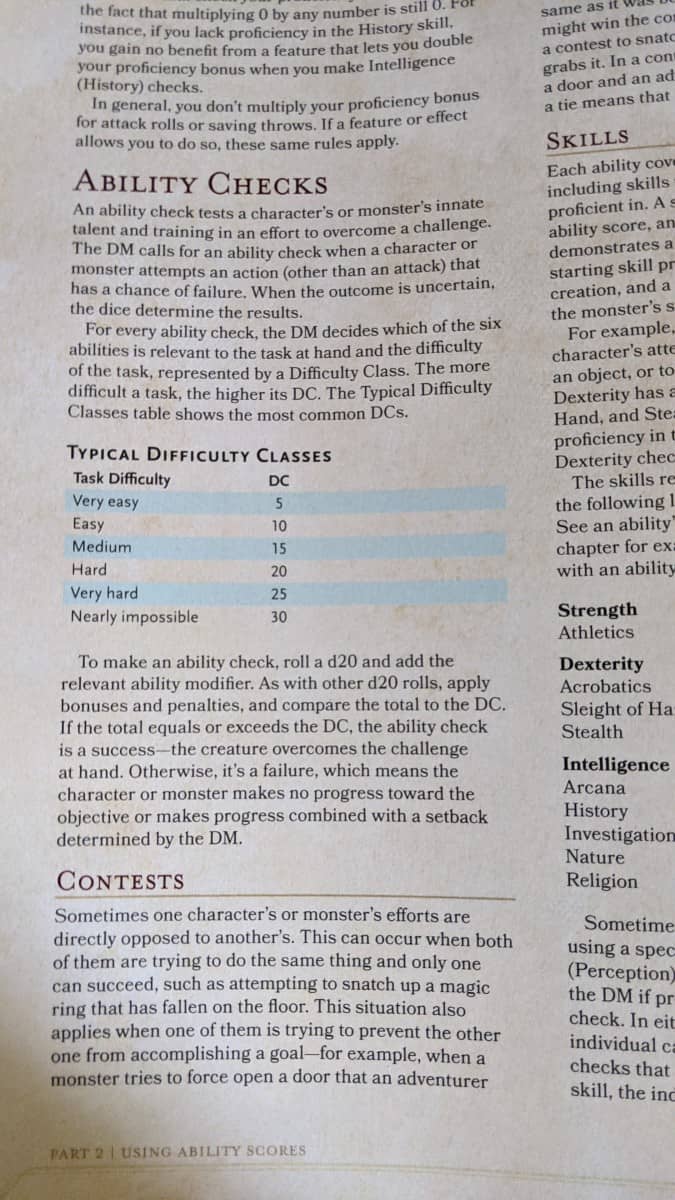
In tech-centric game design, DCs are categorized into specific tiers that provide a standardized framework for difficulty. These tiers allow software developers to automate environmental challenges:
- Easy (DC 5-10): Low-level logic gates that most characters can pass.
- Moderate (DC 15): The baseline for professional-level tasks in the game’s world.
- Hard to Nearly Impossible (DC 20-30): High-level data points that require optimized “builds” and specialized digital equipment to overcome.
By categorizing these values, programmers can create procedural generation tools that populate digital dungeons with balanced obstacles, ensuring that the “Difficulty Class” remains consistent with the player’s current progression level.
Digital Tools and the Automation of DC Management
The transition from manual calculation to automated systems has revolutionized how players interact with the DC mechanic. Digital platforms have moved the heavy lifting of mathematics from the human brain to high-speed processors, allowing for a more immersive experience.
The Rise of Virtual Tabletops (VTTs)
Platforms such as Roll20, Foundry VTT, and Fantasy Grounds have integrated the DC mechanic into their core APIs. When a Dungeon Master (DM) clicks on a trap in a digital map, the software automatically prompts the players for a “Saving Throw.” The VTT then compares the player’s automated roll against the pre-set DC programmed into the trap’s metadata.
This automation goes beyond mere calculation; it involves complex UI/UX considerations. Modern VTTs use visual cues—such as green or red highlights on digital character sheets—to communicate success or failure instantly. This reduces cognitive load and allows the “tech” to fade into the background, focusing on the narrative while the backend handles the rigorous DC logic.
Integrated Development Environments for DMs
For the modern DM, managing DCs has become an exercise in data management. Tools like D&D Beyond serve as a centralized hub where DCs are indexed across thousands of spells, items, and monster stat blocks. These tools use sophisticated search algorithms and cross-referencing capabilities to ensure that a DM can look up a “Spell Save DC” in seconds.

The tech stack behind these platforms often involves cloud-syncing, ensuring that if a player updates their “Intelligence” score on a mobile app, the corresponding “Wizard Spell DC” is instantly updated across the DM’s tablet and the group’s shared digital workspace. This real-time synchronization is a hallmark of the digital transformation of tabletop gaming.
The Role of Artificial Intelligence in Setting DCs
As we move further into the age of AI, the way DCs are determined is shifting from static, pre-written values to dynamic, AI-generated challenges. Large Language Models (LLMs) and specialized AI tools are now being used to assist DMs in crafting balanced encounters on the fly.
Procedural Difficulty Adjustment
AI tools can analyze a party’s current technological “loadout”—their gear, levels, and previous success rates—to suggest an appropriate DC for a custom challenge. This is known as dynamic difficulty adjustment, a concept common in AAA video games that is now finding its way into the DnD space. By utilizing machine learning, these tools can predict the probability of success for a given party, helping the DM set a DC that provides tension without being mathematically impossible.
Narrative-to-Technical Conversion
One of the most impressive feats of current AI in the DnD niche is the ability to interpret natural language and convert it into technical stats. A DM might describe a “heavily encrypted biometric vault,” and an AI plugin within their VTT can instantly assign it a DC 25 Intelligence (Hacking) check based on the linguistic context of the description. This bridge between creative writing and technical execution is narrowing, thanks to advances in natural language processing (NLP).
Security and Integrity in Digital Dice Rolling
When the DC is the barrier between victory and defeat, the integrity of the roll becomes paramount. In a digital environment, “rolling a die” is actually an execution of a Random Number Generator (RNG). Ensuring that these rolls are truly fair is a major focus for developers in the DnD tech space.
Pseudo-Random vs. True Random Generation
Most digital DnD platforms use Pseudo-Random Number Generators (PRNGs), which use mathematical algorithms to simulate randomness. However, high-end platforms are increasingly looking toward “True” Random Number Generation, which pulls entropy from physical phenomena (like atmospheric noise) to ensure that the dice rolls cannot be predicted or manipulated.
For players facing a high DC, knowing that the digital “physics” of the roll are secure is essential for maintaining the “immersion of risk.” Digital security measures also prevent “client-side” manipulation, where a savvy user might attempt to inject code to force a successful roll against a high DC.
Anti-Cheat and Verifiable Rolls
In the professional and competitive DnD space—such as streamed games or digital tournaments—the verification of DC checks is a critical technical requirement. Blockchain technology and cryptographic hashing are being explored as ways to provide “provably fair” rolls. Each time a roll is made against a DC, it is recorded with a unique hash that can be verified by any observer, ensuring that neither the player nor the software tampered with the outcome.
The Future of DC: Augmented Reality and Beyond
Looking ahead, the concept of the Difficulty Class is set to expand even further as Augmented Reality (AR) and Virtual Reality (VR) become more mainstream. Imagine wearing an AR headset where, as you look at a physical door, a digital overlay appears, displaying the DC required to break it down based on your character’s real-time stats.
In these environments, the DC becomes a spatial UI element. The “tech” of the game will move from the screen into the physical space around us, utilizing computer vision to identify objects and assign them DCs dynamically. This represents the ultimate convergence of traditional tabletop mechanics and cutting-edge software engineering.
As we have seen, “DC” in DnD is far more than a simple game term. It is a sophisticated data point that sits at the intersection of probability, software logic, and user experience. For the modern player and developer alike, mastering the DC is the key to unlocking the full potential of the digital tabletop revolution. Whether through the automation of VTTs, the predictive power of AI, or the security of advanced RNG, the Difficulty Class remains the most important variable in the algorithm of adventure.
aViewFromTheCave is a participant in the Amazon Services LLC Associates Program, an affiliate advertising program designed to provide a means for sites to earn advertising fees by advertising and linking to Amazon.com. Amazon, the Amazon logo, AmazonSupply, and the AmazonSupply logo are trademarks of Amazon.com, Inc. or its affiliates. As an Amazon Associate we earn affiliate commissions from qualifying purchases.