
In the rapidly evolving landscape of digital health, the interpretation of biological markers is moving away from the manual microscope and into the realm of high-speed data processing. When we ask, “What do crystals mean in urine?” from a technology-centric perspective, we are no longer just discussing a biological phenomenon. Instead, we are exploring a complex data-gathering exercise powered by computer vision, automated imaging, and predictive algorithms. The detection of crystals—be they calcium oxalate, uric acid, or struvite—now serves as a primary use case for how advanced medical software can revolutionize diagnostic accuracy and patient outcomes.

As we transition into an era of personalized medicine, the technology used to identify these microscopic structures is becoming as critical as the biological findings themselves. This article explores the tech-driven revolution in urinalysis, focusing on how AI, automated hardware, and digital health platforms are redefining our understanding of metabolic health.
The Evolution of Microscopic Analysis: From Manual Slides to AI-Powered Recognition
For decades, identifying crystals in urine was a labor-intensive process. A technician would manually prepare a slide, view it under a light microscope, and attempt to categorize crystals based on their geometric shapes. Today, this process has been digitized, significantly reducing the margin for human error and increasing the throughput of diagnostic laboratories.
Automated Sediment Analysis: How Algorithms Identify Crystal Morphology
Modern laboratories now employ Automated Urine Sediment Analyzers. These machines utilize digital flow morphology or flow cytometry. In digital flow morphology, the device captures thousands of high-resolution images of a urine sample as it flows through a capillary.
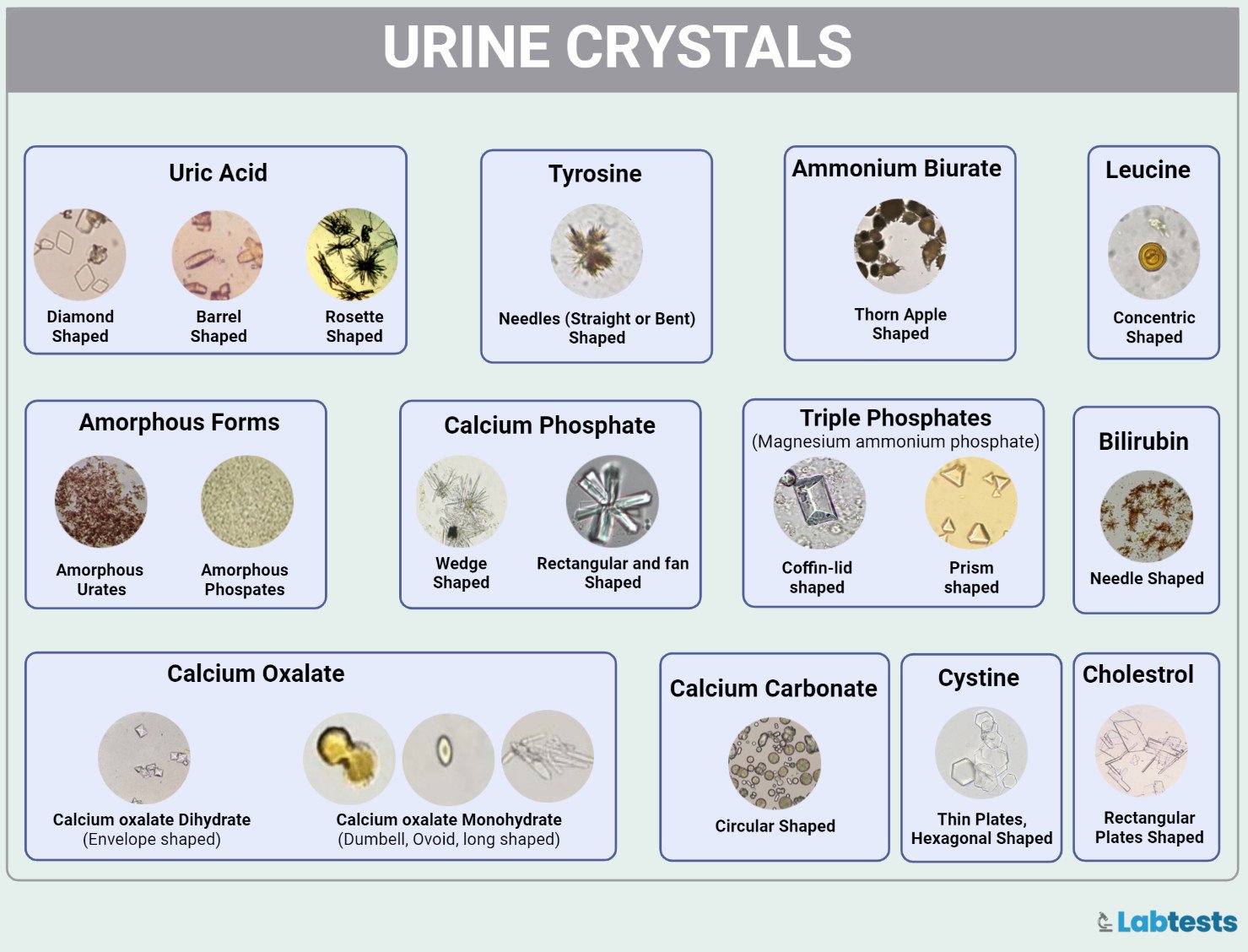
The real magic, however, occurs in the software layer. Convolutional Neural Networks (CNNs), a class of deep-learning algorithms, are trained on massive datasets containing millions of annotated images of urinary crystals. These algorithms can distinguish between the envelope-like shape of calcium oxalate dihydrate and the needle-like structures of tyrosine with a precision that often surpasses human capability. By digitizing the morphology of a crystal, the software can provide a quantitative analysis rather than just a qualitative “present or absent” result.
Reducing Human Error in Diagnostic Interpretation
Human fatigue is a significant factor in traditional pathology. After hours of looking through a lens, a technician might overlook a rare cystine crystal—a key indicator of a genetic disorder. Digital systems do not suffer from fatigue. They apply the same rigorous criteria to every frame. Furthermore, these systems can flag “borderline” cases for human review, creating a hybrid workflow where the AI handles the bulk of the scanning and the specialist focuses on the most complex anomalies. This tech-enabled efficiency is the backbone of modern high-volume diagnostic centers.
Smart Health Tracking: The Rise of At-Home Diagnostic Tech
The “Consumerization of Healthcare” has brought the laboratory into the home. Patients are no longer content waiting days for a lab report to tell them why they might be prone to kidney stones. This demand has spurred the development of smartphone-integrated hardware and apps designed to monitor urinary health in real-time.
Smartphone-Integrated Reagent Strips and Optics
Several health-tech startups have developed kits that allow users to perform a urinalysis using their smartphone camera. While standard “dipsticks” have existed for years, the integration with digital platforms adds a layer of sophisticated data analysis.
The user dips a specialized reagent strip into a sample and takes a photo through a dedicated app. The app uses the phone’s processing power to normalize lighting conditions and color balance—critical technical hurdles in digital diagnostics—to accurately read the chemical indicators of crystal formation, such as pH levels and specific gravity. Some advanced prototype “add-on” lenses even allow for low-power magnification, turning a smartphone into a rudimentary microscope capable of detecting large-scale crystal clusters.
Wearable Tech and Real-Time Metabolic Monitoring
We are moving toward a future where “smart toilets” and wearable sensors provide continuous biofeedback. These devices are being engineered with microfluidic chips—often called “Lab-on-a-Chip” technology. These chips can perform complex chemical separations and optical checks within a footprint of a few square centimeters.
By continuously monitoring the concentration of minerals and the presence of micro-crystals, these devices can sync with a user’s smartwatch or health dashboard. From a software perspective, this creates a “longitudinal health record,” allowing the AI to notice trends over weeks or months rather than relying on a single “snapshot” test. If the tech detects a spike in crystal-forming markers, it can trigger an alert to increase hydration or consult a physician before a painful kidney stone develops.
Data Analytics and Predictive Health: What Urine Crystals Tell the Cloud
In the tech sector, data is the new oil. When a diagnostic machine identifies crystals in a urine sample, that data point is uploaded to a secure cloud environment where it becomes part of a much larger analytical framework. This is where “Digital Twins” and predictive modeling come into play.
Big Data in Preventative Nephrology
When thousands of instances of urinary crystals are aggregated and anonymized, they provide a wealth of information for public health analytics. Software platforms can correlate the prevalence of certain types of crystals with geographic data, dietary trends, or environmental factors (such as heatwaves increasing dehydration).
For the individual, this means the software can offer “Predictive Nephrology.” By analyzing your specific data against the “Big Data” of millions of others, an AI engine can calculate your risk score for developing urolithiasis (kidney stones). This is a shift from reactive medicine (treating the stone) to proactive engineering (managing the metabolic environment to prevent the stone).
Personalized Nutrition and Biofeedback Loops
Tech companies in the wellness space are leveraging crystal data to fuel personalized nutrition apps. If a user’s digital health record shows frequent uric acid crystals, an integrated AI nutritionist can automatically adjust the user’s meal plan, suggesting lower-purine foods and tracking the subsequent change in urine chemistry. This creates a closed-loop system where biological data directly influences behavioral software, leading to optimized health outcomes through technology.
Digital Security and Privacy in the Age of Biological Data
As we digitize the meaning of crystals in urine, we encounter the significant challenge of data security. Biological data is the most sensitive form of information an individual possesses. In the tech industry, protecting this data is a paramount engineering challenge.
Protecting Sensitive Metabolic Information
The transmission of diagnostic data from an automated lab or a home device to a doctor’s tablet must be secured via end-to-end encryption. As medical tech moves toward decentralized models, developers are increasingly looking at blockchain or distributed ledger technology to ensure that a patient’s “metabolic footprint” cannot be tampered with or accessed by unauthorized parties. The goal is to create a “Trustless” system where the data is verifiable but the privacy is absolute.
The Future of Interoperable Diagnostic Platforms
A major hurdle in medtech is “data silos”—where your lab data doesn’t talk to your fitness app or your electronic health record (EHR). The next frontier in this tech niche is the development of universal APIs (Application Programming Interfaces) that allow different health platforms to communicate securely.
Imagine a scenario where the detection of crystals by an automated lab system automatically updates your health insurance’s preventative care module, schedules a follow-up through an automated booking bot, and adjusts your smart water bottle’s daily intake goal. This level of interoperability is the ultimate goal of the digital health ecosystem, turning a simple microscopic finding into a coordinated, tech-driven health response.

Conclusion: The Silicon Interpretation of Biology
What do crystals mean in urine? In the 21st century, they mean a data-rich opportunity for technological intervention. They represent a success story for computer vision, a challenge for data security, and a milestone for predictive AI.
As we continue to refine the software and hardware used in medical diagnostics, the humble urinary crystal becomes a testament to how far we have come. We are no longer limited by the human eye or manual record-keeping. Through the power of the cloud, machine learning, and mobile hardware, we have transformed a routine biological check into a sophisticated digital insight. The future of health is not just biological—it is algorithmic, and it is being built one pixel and one crystal at a time.
aViewFromTheCave is a participant in the Amazon Services LLC Associates Program, an affiliate advertising program designed to provide a means for sites to earn advertising fees by advertising and linking to Amazon.com. Amazon, the Amazon logo, AmazonSupply, and the AmazonSupply logo are trademarks of Amazon.com, Inc. or its affiliates. As an Amazon Associate we earn affiliate commissions from qualifying purchases.