
In the architecture of modern industrial infrastructure and large-scale commercial real estate, few components are as critical yet as misunderstood as the cooling tower. Often seen as hulking, vapor-spewing structures atop skyscrapers or tucked away in industrial complexes, these units serve as the unsung heroes of thermal management. At its core, a cooling tower is a specialized heat exchanger that plays a pivotal role in the operational efficiency of HVAC systems and industrial processes. By mastering the physics of evaporative cooling, these systems ensure that large-scale facilities can operate without overheating, maintaining both system longevity and energy efficiency.
The Thermodynamics of Heat Rejection
To understand what a cooling tower does, one must first understand the fundamental problem: heat generation. Whether it is a massive data center processing petabytes of information or a chemical plant refining crude oil, machinery generates significant amounts of thermal energy as a byproduct of operation. If this heat is not continuously removed, the equipment will eventually fail or experience catastrophic degradation.
The Role of Water as a Heat Transfer Medium
Water is an exceptionally effective medium for absorbing and transporting heat. In a standard HVAC or industrial cooling loop, cool water is circulated through pipes to absorb heat from the process machinery or the building’s air conditioning chillers. Once the water has absorbed this heat, it becomes “hot” and must be cooled down before it can be circulated back through the system to repeat the process. This is where the cooling tower becomes indispensable.
The Evaporative Cooling Principle
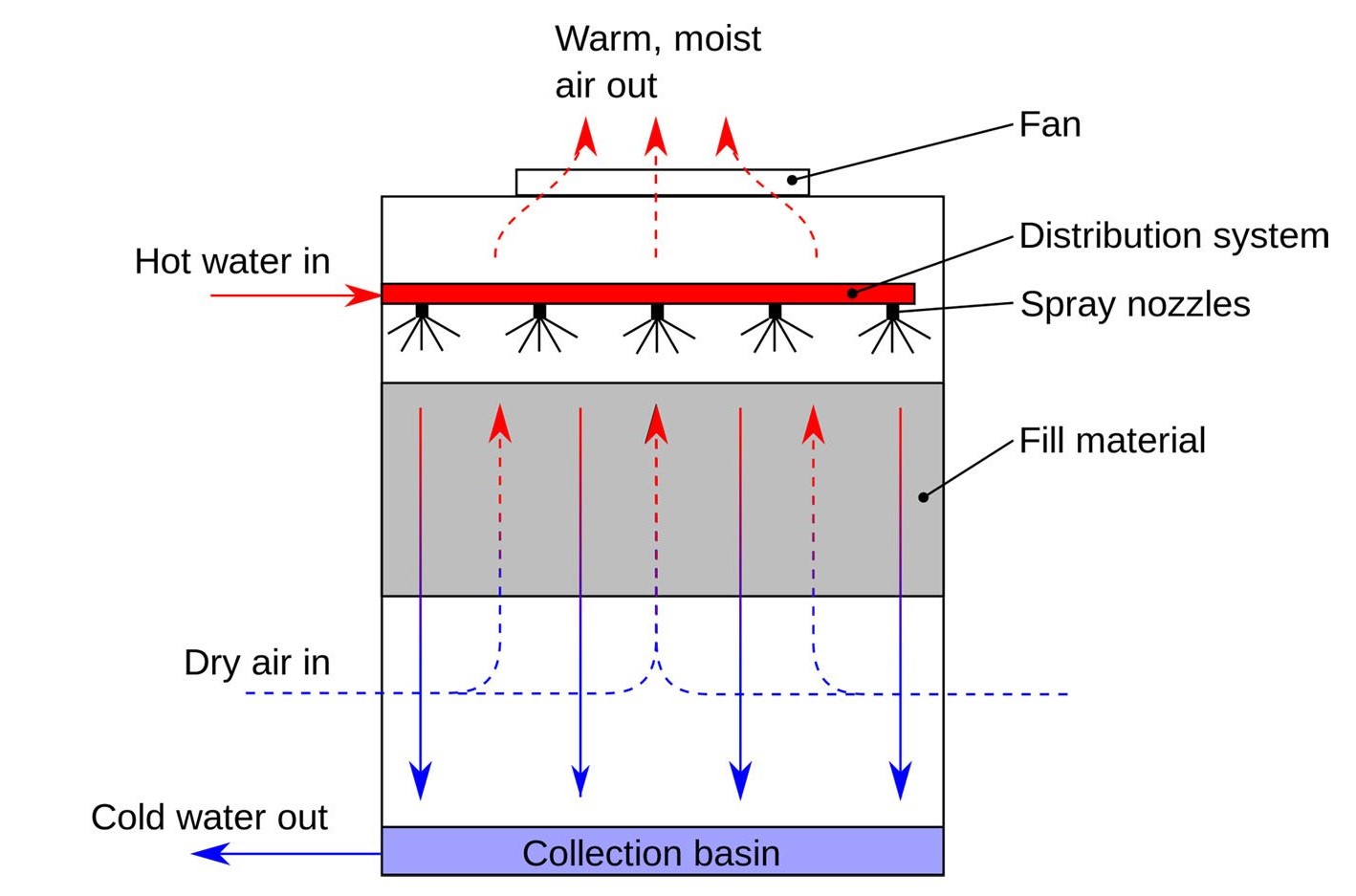
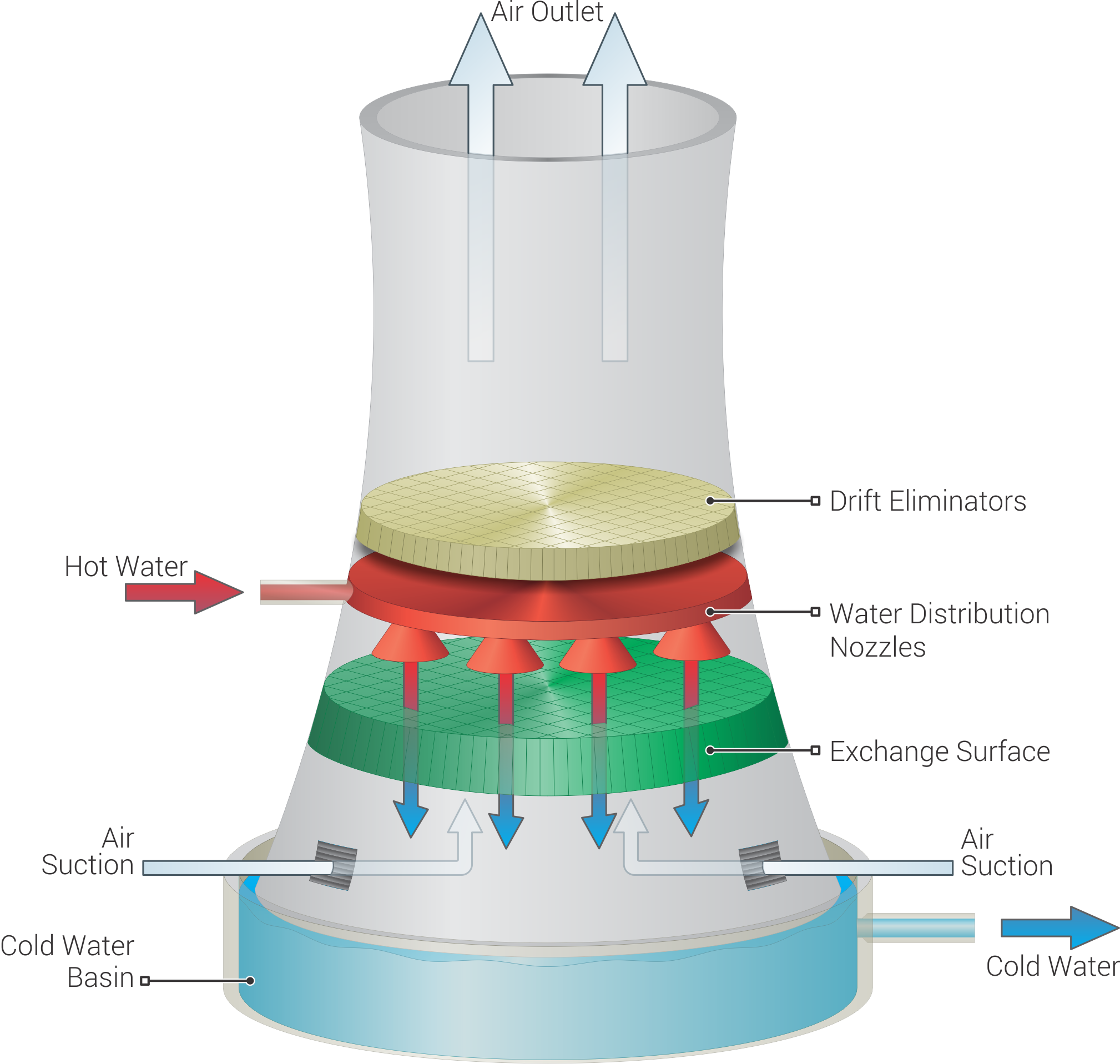
The cooling tower functions on the principle of evaporative cooling. When the warm water enters the tower, it is distributed over a “fill” media—a structure designed to maximize the surface area of the water. Simultaneously, air is moved through the tower, either by natural draft or mechanical fans. As the air passes over the water, a small fraction of that water evaporates. Because evaporation is an endothermic process—meaning it absorbs energy—it pulls latent heat out of the remaining body of water, significantly lowering its temperature. This chilled water is then collected in a basin at the bottom of the tower and pumped back into the facility to absorb more heat.
Industrial Efficiency and Energy Optimization
From a financial and operational perspective, the cooling tower is a tool of massive energy leverage. By utilizing the ambient atmosphere as a heat sink, facilities avoid the need for energy-intensive mechanical refrigeration cycles to dump heat into the environment.
Reducing the Carbon Footprint
In the context of contemporary corporate sustainability, the efficiency of a cooling tower directly impacts the ESG (Environmental, Social, and Governance) profile of a company. By rejecting heat through evaporation, facilities consume significantly less electricity than they would if they relied exclusively on air-cooled condensers, which require high-powered fans to force air over dry coils. This optimization is not just an environmental gesture; it is a fundamental business strategy to reduce operational overhead. Lower electricity consumption translates directly into lower utility bills, making the cooling tower a key asset in financial resource management.
The Lifecycle of Mechanical Systems
Beyond immediate energy savings, cooling towers protect the lifespan of expensive industrial assets. Chillers, compressors, and high-performance servers are sensitive to operating temperatures. When a cooling tower operates at peak efficiency, it maintains a stable thermal environment for these assets, preventing the “thermal stress” that leads to unplanned maintenance, hardware failure, and costly downtime. Investing in high-quality heat rejection infrastructure is effectively a form of insurance against the premature replacement of core business technologies.
Design Variations and Technological Evolution
While the basic function of a cooling tower remains the same, the mechanical implementation varies significantly based on the needs of the facility. These designs are categorized by how they move air and how they interface with the process water.
Forced Draft vs. Induced Draft
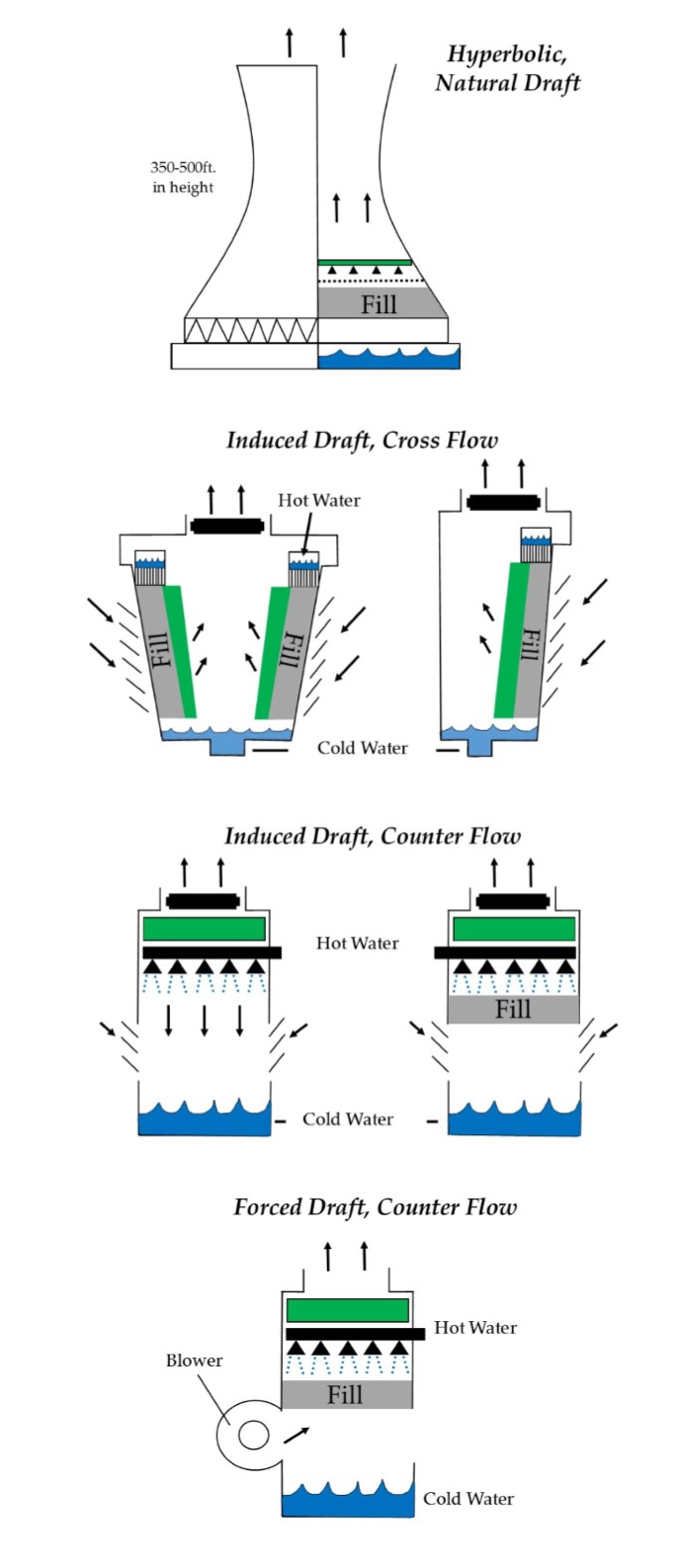
Mechanical draft towers use fans to move air. In “forced draft” designs, a fan at the base pushes air into the tower. These are often used for smaller applications or where high static pressure is required. In “induced draft” designs, fans are positioned at the top of the tower, pulling air through the internal components. Induced draft towers are generally more common in large-scale industrial settings because they are less susceptible to the recirculation of hot, moist exhaust air, which would otherwise diminish the tower’s cooling capacity.
Open-Circuit vs. Closed-Circuit Systems
The distinction between open and closed circuits is vital for facilities dealing with sensitive or corrosive processes. In an open-circuit cooling tower, the process water is directly exposed to the atmosphere. This is efficient but can lead to contamination from dust, debris, or biological growth. A closed-circuit system, or “fluid cooler,” keeps the process fluid in a sealed coil. A secondary, separate loop of water is sprayed over the exterior of these coils to provide the evaporative cooling. This keeps the primary process fluid clean and isolated, which is essential for specialized manufacturing or high-purity medical and data center environments.
Maintenance and the Future of Cooling Tech
As technology continues to evolve, the cooling tower is becoming a smarter, more integrated piece of the industrial IoT (Internet of Things) ecosystem. The future of heat rejection lies in predictive maintenance and automated water chemistry management.
Digital Monitoring and Predictive Analytics
Modern cooling towers are increasingly equipped with sensors that track vibration, motor temperature, and water quality metrics in real-time. By feeding this data into AI-driven diagnostic software, operators can detect the early signs of scale buildup, biofilm formation, or fan misalignment long before a failure occurs. This shift from reactive to proactive maintenance saves thousands of dollars annually in unnecessary site visits and prevents sudden system failures that could halt production lines.
Water Conservation Strategies
A significant critique of traditional cooling towers is their consumption of water through evaporation. Consequently, the next generation of cooling technology focuses on water efficiency. Advanced filtration systems, automated blowdown controls, and hybrid systems—which combine dry air cooling with evaporative cooling—are becoming standard. These systems adjust their mode of operation based on ambient weather conditions, using dry air cooling during cooler periods and switching to evaporative cooling only when the temperature demands it. This balance of water-saving and energy-saving technology represents the cutting edge of industrial cooling engineering.
Conclusion
The cooling tower is a testament to the power of simple physics applied at scale. By turning the basic act of evaporation into a sophisticated thermal management tool, these structures allow modern industry to thrive in environments that would otherwise be hostile to high-performance machinery. Whether it is keeping a skyscraper’s climate comfortable, ensuring a manufacturing line stays within its operational limits, or maintaining the uptime of global digital infrastructure, the cooling tower serves as the backbone of the thermal chain. As industries move toward greater automation and more stringent sustainability goals, the role of the cooling tower will only become more refined, shifting from a simple mechanical device to a data-driven partner in operational excellence. Understanding its function is not merely an engineering exercise; it is an acknowledgment of the critical infrastructure that keeps our modern world cool, functional, and profitable.
aViewFromTheCave is a participant in the Amazon Services LLC Associates Program, an affiliate advertising program designed to provide a means for sites to earn advertising fees by advertising and linking to Amazon.com. Amazon, the Amazon logo, AmazonSupply, and the AmazonSupply logo are trademarks of Amazon.com, Inc. or its affiliates. As an Amazon Associate we earn affiliate commissions from qualifying purchases.