
In the rapidly evolving landscape of technology, the difference between a breakthrough and a failure often hinges on precision. Whether an engineer is fine-tuning a machine learning model, a developer is optimizing a user interface through A/B testing, or a cybersecurity expert is stress-testing a network, the scientific method remains the bedrock of progress. At the heart of this method lies the concept of the controlled variable.
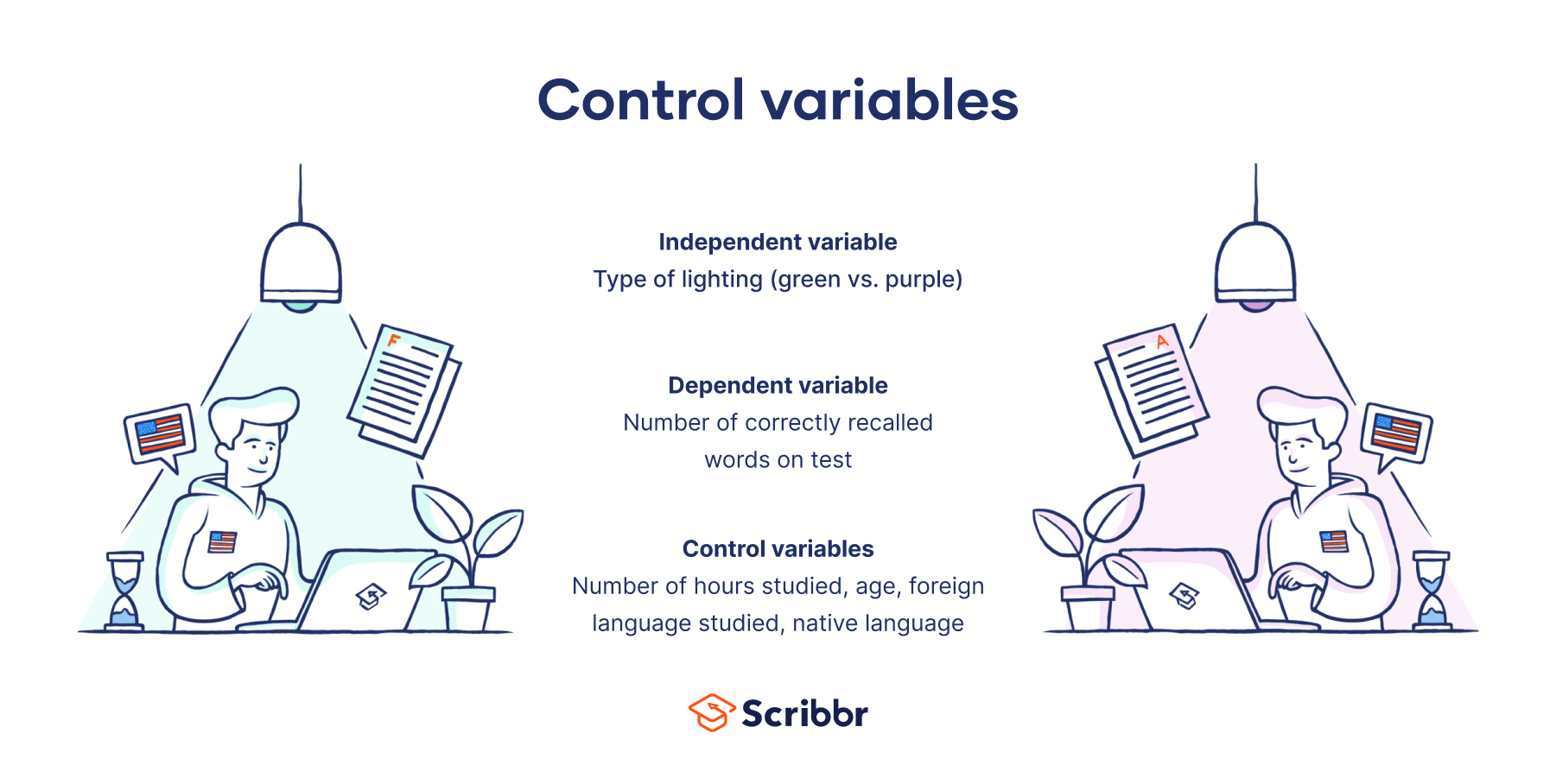
In a technical context, a controlled variable (also known as a constant variable) is an element that is intentionally kept stable and unchanged throughout an experiment or a technical trial. While the independent variable is manipulated to observe an effect, and the dependent variable is measured for results, the controlled variables ensure that the outcome is actually caused by the changes made, rather than by external noise or internal inconsistencies. Without rigorous control, the data derived from tech innovation becomes unreliable, leading to “ghost” bugs, biased AI, and inefficient software.

The Role of Controlled Variables in Software Development and User Experience
In software engineering, specifically within the realms of Quality Assurance (QA) and User Experience (UX) design, the controlled variable is the unsung hero of optimization. When developers seek to improve a product, they rarely change everything at once. Doing so would make it impossible to pinpoint which specific change led to a performance boost or a system crash.
Ensuring Consistency in A/B Testing
A/B testing is perhaps the most visible application of controlled variables in the tech industry. When a major social media platform or an e-commerce giant wants to test a new “Buy Now” button, they use a controlled environment.
In this scenario, the independent variable is the color or placement of the button. The dependent variable is the click-through rate (CTR). However, the controlled variables are numerous: the time of day the ad is shown, the demographic of the users, the device type (mobile vs. desktop), and the page loading speed. If a developer changes the button color but simultaneously shifts the target audience to a more active demographic, they cannot know for certain which change caused the increase in sales. By keeping the audience and timing constant (the controlled variables), the team ensures that the data accurately reflects the impact of the UI change.
Quality Assurance and Bug Localization
For software testers, controlled variables are essential for reproducibility. When a bug is reported, the first step is to recreate the environment in which it occurred. This involves “locking down” variables such as the Operating System version, the browser build, and the hardware specifications.
If a bug occurs on Chrome version 114 but not on version 115, the browser version is the variable that matters. To find the root cause, testers keep all other factors—network latency, user permissions, and input data—controlled. This systematic isolation allows engineers to identify the exact line of code or architectural flaw responsible for the glitch, preventing the “it works on my machine” syndrome that plagues uncoordinated development teams.
Controlled Variables in Artificial Intelligence and Machine Learning
As we move deeper into the era of Artificial Intelligence (AI), the importance of controlled variables shifts from simple software logic to complex algorithmic behavior. Training a Large Language Model (LLM) or a computer vision system involves managing thousands of moving parts.
Hyperparameter Tuning and Model Benchmarking
In machine learning, “hyperparameters” are the configurations used to control the learning process. Examples include the learning rate, the batch size, and the number of layers in a neural network. When a data scientist wants to optimize a model, they engage in hyperparameter tuning.
To understand how a specific learning rate affects the model’s accuracy, the scientist must keep all other hyperparameters—and the dataset itself—controlled. If you change the learning rate while simultaneously switching from a dataset of outdoor images to indoor images, the resulting accuracy metrics are meaningless. Controlled variables in this niche ensure that the “intelligence” of the AI is being built on a foundation of empirical truth rather than coincidental data patterns.
Mitigating Bias through Controlled Data Inputs
One of the greatest challenges in modern AI is algorithmic bias. Bias often creeps into AI systems because the variables in the training data were not properly controlled or understood. For instance, if an AI is trained to screen job resumes but the training set consists primarily of candidates from a specific geographic region, the “region” becomes an uncontrolled variable that skews the results.
To build ethical and effective AI, developers must implement “control groups” in their data. By controlling for variables like age, gender, and ethnicity in the training sets, developers can observe how the model performs across different segments. This controlled approach allows for the identification of disparate impacts, enabling the team to adjust the algorithm until it yields fair results across the board.
Impact on Cybersecurity and Digital Security Protocols
In the world of digital security, controlled variables are used to simulate attacks and harden defenses. Cybersecurity is often a game of cat-and-mouse, and the only way to stay ahead is through rigorous, controlled experimentation.
Stress Testing and Penetration Analysis
When a security team performs a Distributed Denial of Service (DDoS) stress test on their servers, they need to know exactly how much traffic their infrastructure can handle before failing. To get a clear baseline, they must control the variables of the test.
This includes controlling the type of traffic (TCP vs. UDP packets), the geographic origin of the simulated attack, and the specific entry point in the network. If the team increases the traffic volume but the server simultaneously undergoes a scheduled backup, the “backup” becomes a confounding variable. By controlling the internal state of the server and the nature of the simulated attack, the security team can identify the exact “breaking point” of the hardware and software.
Incident Response Simulation
Cybersecurity is as much about human response as it is about code. Many firms conduct “Tabletop Exercises” where they simulate a data breach. In these simulations, the “injects” (new pieces of information about the breach) serve as the variables. To measure the effectiveness of the response team, the environment must remain controlled. The team uses a standardized set of tools and a specific communication protocol. By keeping these elements constant, the organization can measure the dependent variable: the time it takes to detect, contain, and remediate the threat.
Best Practices for Implementing Variable Control in Tech Environments
Understanding the theory of controlled variables is one thing; implementing it in a high-pressure tech environment is another. The following strategies are essential for maintaining the integrity of technical experiments and deployments.
Automation Tools for Environmental Control
In modern DevOps, the concept of “Infrastructure as Code” (IaC) is essentially a tool for managing controlled variables. Tools like Terraform and Ansible allow developers to define their server environments in code. This ensures that every time a new server is spun up, it is identical to the last one.
By automating the environment, tech teams eliminate “environmental drift”—a common problem where small, undocumented changes in server settings lead to inconsistent software performance. In this context, the entire server environment becomes a controlled variable, allowing developers to focus entirely on the code they are testing. Containerization technologies like Docker take this a step further by “packaging” the software with all its dependencies, ensuring that the variables remain controlled whether the code is running on a developer’s laptop or a massive cloud cluster.
Documentation and Reproducibility in Data Science
The final pillar of variable control is documentation. In data science and software research, an experiment is only as good as its documentation. If a team achieves a 10% increase in processing speed but cannot list the controlled variables (the specific library versions, the hardware clock speeds, the initial seed for random number generation), the result cannot be reproduced.
Professional tech teams use version control systems like Git not just for code, but for tracking the entire state of an experiment. By maintaining a “paper trail” of what was held constant and what was changed, organizations build a cumulative body of knowledge. This prevents the “reinventing the wheel” phenomenon and ensures that every failure and success is a data point that leads to smarter, more efficient innovation.

Conclusion
In the tech industry, a “controlled variable” is far more than a term from a high school science lab; it is the fundamental unit of certainty. From the UI designer seeking the perfect button placement to the AI researcher striving for an unbiased model, the ability to isolate and control variables is what separates rigorous engineering from guesswork. As technology becomes more complex—moving into the realms of quantum computing and autonomous systems—the discipline of maintaining controlled variables will only become more critical. By mastering this concept, tech professionals ensure that their innovations are built on a foundation of verifiable, repeatable, and scalable data.
aViewFromTheCave is a participant in the Amazon Services LLC Associates Program, an affiliate advertising program designed to provide a means for sites to earn advertising fees by advertising and linking to Amazon.com. Amazon, the Amazon logo, AmazonSupply, and the AmazonSupply logo are trademarks of Amazon.com, Inc. or its affiliates. As an Amazon Associate we earn affiliate commissions from qualifying purchases.