
In the complex landscape of personal finance and estate planning, the term “conservator” holds significant weight. While the word might evoke images of museum professionals preserving ancient artifacts, in the realm of finance and law, it represents a critical mechanism for protecting the assets and well-being of individuals who can no longer manage their own affairs. Understanding what a conservator is, how the process works, and the financial implications of such an arrangement is essential for anyone looking to secure their financial legacy or care for a vulnerable loved one.
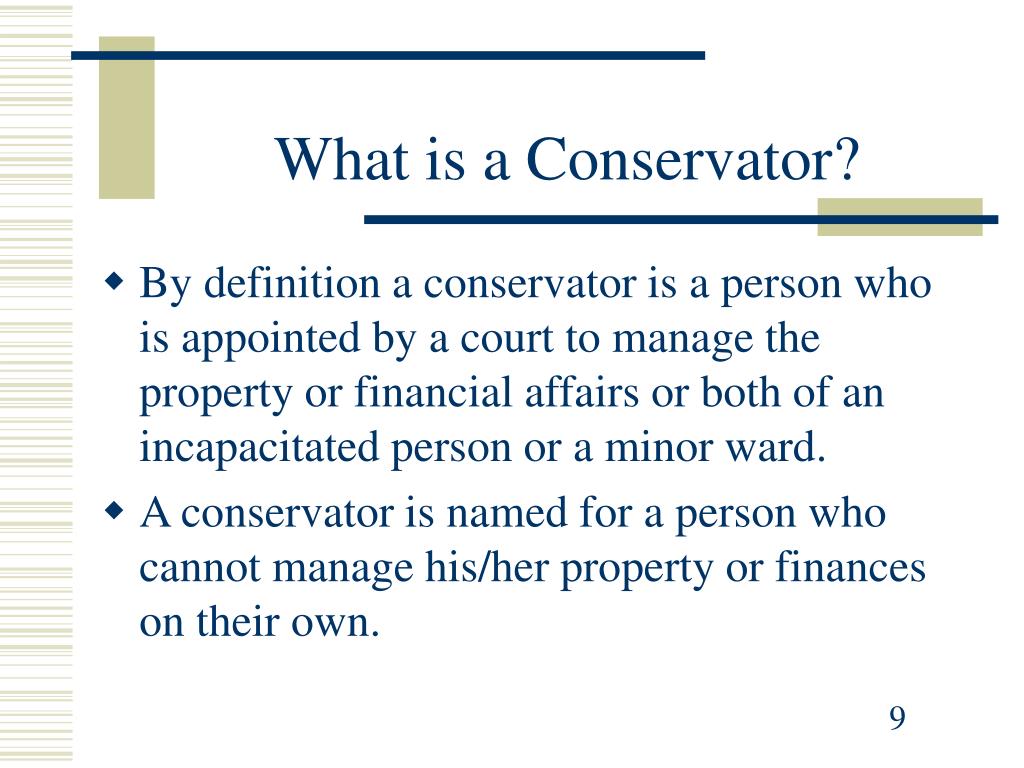
At its core, a conservatorship is a legal relationship established by a court. It grants a responsible person or organization—the conservator—the authority to make decisions for another individual—the conservatee—who has been deemed incapacitated due to illness, age, or disability. From a “Money” perspective, this is a vital tool for asset protection, ensuring that wealth is not squandered, mismanaged, or lost to exploitation when the owner is at their most vulnerable.
The Financial Mechanics of Conservatorship: Roles and Responsibilities
When a court appoints a conservator, it essentially shifts the financial steering wheel from the individual to a court-supervised fiduciary. The primary goal is to maintain the financial status quo and ensure that the conservatee’s needs are met through the strategic management of their resources.
Conservator of the Estate vs. Conservator of the Person
In most jurisdictions, the role is split into two distinct categories, though one person may hold both titles. A “Conservator of the Person” manages daily life decisions, such as healthcare and living arrangements. However, within the niche of personal finance, the “Conservator of the Estate” is the more pertinent role.
The Conservator of the Estate is tasked specifically with managing the conservatee’s financial life. This includes everything from paying monthly bills and managing investment portfolios to collecting debts owed to the individual and filing tax returns. They act as the legal signatory for the individual’s bank accounts and have the power to buy or sell property on their behalf, subject to court approval.
When Does a Financial Conservatorship Become Necessary?
A conservatorship is typically considered a last resort in financial planning. It becomes necessary when an individual lacks the “capacity” to manage their own financial affairs and has not previously executed a Power of Attorney or a Living Trust. Common triggers include advanced dementia, traumatic brain injuries, or severe developmental disabilities. From a financial management standpoint, the process is initiated to prevent the “wasting” of assets—situations where an individual might give away money to scammers, forget to pay mortgages leading to foreclosure, or allow high-value investments to languish without oversight.
The Legal Appointment Process
The path to becoming a conservator is rigorous. It involves filing a petition with the probate court, followed by a formal investigation. The court often appoints an independent investigator to verify the financial situation and the necessity of the arrangement. For the conservator, this means a deep dive into the conservatee’s financial history to establish a baseline of assets.
The Fiduciary Responsibility: Managing Wealth for Others
The moment a conservator is appointed, they assume a “fiduciary duty.” In the world of finance, this is the highest standard of care recognized by law. It means the conservator must act solely in the best interest of the conservatee, putting aside any personal gain or conflicting interests.
Duty of Care and the Prudent Investor Rule
Managing a conservatorship estate is not about high-stakes gambling or aggressive growth; it is about preservation and sustainable management. Most states require conservators to adhere to the “Prudent Investor Rule.” This legal standard dictates that the conservator must invest the estate’s assets as a “prudent” person would—emphasizing a balance between risk and return, diversification, and the long-term needs of the conservatee.
For example, a conservator managing a million-dollar portfolio for an elderly conservatee would likely shift away from volatile individual stocks toward a diversified mix of bonds, index funds, and liquid cash to ensure that medical bills can be paid for the duration of the individual’s life.
Inventory and Appraisal: Starting the Financial Record
One of the first and most critical tasks of a financial conservator is the filing of an “Inventory and Appraisal.” Within a specific timeframe (usually 60 to 90 days), the conservator must list every asset the conservatee owns, from real estate and brokerage accounts to jewelry and vehicles.
In many cases, a court-appointed probate referee must value these items. This document serves as the financial “Day Zero” for the court’s oversight. Every penny spent or earned after this filing must be accounted for in subsequent reports. This level of transparency is designed to prevent financial elder abuse and ensure that the estate remains solvent.
Managing Debts and Liabilities
A conservator does not just manage wealth; they also manage debt. Part of the financial oversight involves identifying creditors, negotiating settlements, and ensuring that all legal obligations are met. This might involve restructuring high-interest debt or liquidating non-performing assets to cover immediate care costs.
Legal and Administrative Costs of Financial Conservatorship

While a conservatorship is a powerful tool for asset protection, it is also one of the most expensive ways to manage a person’s finances. Because it is a court-supervised process, it carries significant overhead that can eat into the very assets it is meant to protect.
Court Oversight and Accounting Requirements
Unlike a private trust, a conservatorship is a public record. The conservator is required to file regular “Accountings” with the court—usually once a year or every two years. These accountings are exhaustive; they must show every dollar that came in and every dollar that went out, backed by receipts and bank statements.
Preparing these reports often requires the help of specialized forensic accountants or attorneys, whose fees are paid out of the conservatee’s estate. For small estates, these administrative costs can be disproportionately high, making the conservatorship a financially heavy burden.
Compensation and Professional Fees
Conservators are entitled to “reasonable compensation” for their services. If the conservator is a family member, they may choose to waive this fee, but professional conservators (private fiduciaries or bank trust departments) charge hourly rates or a percentage of the assets under management.
Additionally, the conservator will need to hire legal counsel to navigate court hearings and filings. All these costs—attorney fees, conservator fees, and accounting fees—must be reviewed and approved by a judge to ensure they are fair, but they nonetheless represent a steady drain on the financial resources of the conservatee.
The Requirement of a Surety Bond
To protect the conservatee from potential fraud or embezzlement by the conservator, the court usually requires the conservator to post a “surety bond.” This is essentially an insurance policy. If the conservator steals money or mismanages the estate through negligence, the bonding company compensates the estate. The premium for this bond is paid annually from the conservatee’s funds, adding another layer to the financial costs of the arrangement.
Alternatives to Conservatorship in Personal Finance
Given the cost, loss of privacy, and loss of autonomy associated with conservatorships, many financial advisors recommend proactive estate planning to avoid the process altogether. In the niche of personal finance, “pre-planning” is the most effective strategy for asset protection.
Durable Power of Attorney
A Durable Power of Attorney (DPOA) for finances is a document that allows an individual to name an “agent” to manage their money if they become incapacitated. Because this is established while the individual is still of sound mind, it bypasses the court system entirely. There is no court oversight, no mandatory public accountings, and significantly lower costs. However, the lack of oversight also means there is a higher risk of unmonitored abuse, which is why choosing a trustworthy agent is paramount.
Revocable Living Trusts
A Living Trust is perhaps the most robust financial tool for avoiding conservatorship. By transferring assets into a trust, the individual (the Grantor) can name a Successor Trustee. If the Grantor becomes incapacitated, the Successor Trustee steps in to manage the trust assets according to the specific instructions laid out in the trust document. This allows for a seamless transition of financial management without the need for a judge’s intervention or public filings.
Representative Payees for Government Benefits
For individuals whose primary income comes from Social Security or Veterans’ Affairs benefits, these agencies have their own systems. A “Representative Payee” can be appointed by the Social Security Administration to manage those specific funds without the need for a full legal conservatorship. This is a cost-effective solution for individuals with limited assets.
The Future of Asset Protection: Professional vs. Private Conservators
As the “Silver Tsunami” of aging baby boomers continues, the demand for financial conservators is rising. This has led to the professionalization of the field. While family members used to be the default choice, more people are turning to professional fiduciaries.
The Rise of Professional Fiduciaries
Professional conservators are licensed and bonded experts who manage estates as a business. From a money management perspective, they offer several advantages: they are impartial, they are experienced in complex financial filings, and they lack the emotional baggage that can complicate family dynamics. However, their services come at a higher price point, making them most suitable for mid-to-high-net-worth individuals.
The Impact of Technology on Financial Oversight
Technology is also changing how conservators operate. Fintech tools now allow for real-time monitoring of accounts, automated bill-pay, and digital record-keeping that simplifies the court accounting process. Some jurisdictions are even moving toward electronic filing systems that allow judges to flag suspicious financial activity automatically, providing an extra layer of security for the conservatee’s wealth.

Conclusion: The Financial Reality of “Conservator”
In the world of money and personal finance, a “conservator” is a guardian of wealth and a protector of the vulnerable. While the legal process is rigorous and the costs can be high, the role is vital in preventing the financial ruin that often accompanies mental or physical decline.
Whether you are acting as a conservator, planning to avoid the need for one through trusts and powers of attorney, or simply seeking to understand the term, the core message remains the same: proactive financial management and legal safeguards are the best tools we have to ensure that a lifetime of earnings is preserved for its intended purpose. Understanding the meaning of a conservator is not just a lesson in legal terminology; it is a fundamental part of comprehensive financial literacy.
aViewFromTheCave is a participant in the Amazon Services LLC Associates Program, an affiliate advertising program designed to provide a means for sites to earn advertising fees by advertising and linking to Amazon.com. Amazon, the Amazon logo, AmazonSupply, and the AmazonSupply logo are trademarks of Amazon.com, Inc. or its affiliates. As an Amazon Associate we earn affiliate commissions from qualifying purchases.