
In the complex landscape of corporate communication, subtle abbreviations often carry significant weight. Among these, “c/o”—standing for “care of”—is one of the most ubiquitous yet frequently misunderstood terms. While it may seem like a relic of traditional postal mail, the use of “c/o” remains a critical component of modern business operations, legal compliance, and financial management.
In a business context, “c/o” serves as a bridge between the intended recipient of a document or package and the intermediary responsible for its physical receipt. Whether you are dealing with a registered agent, a third-party logistics provider, or a remote employee working through a coworking space, understanding the nuances of this abbreviation is essential for ensuring that critical business assets and information reach their destination without delay.
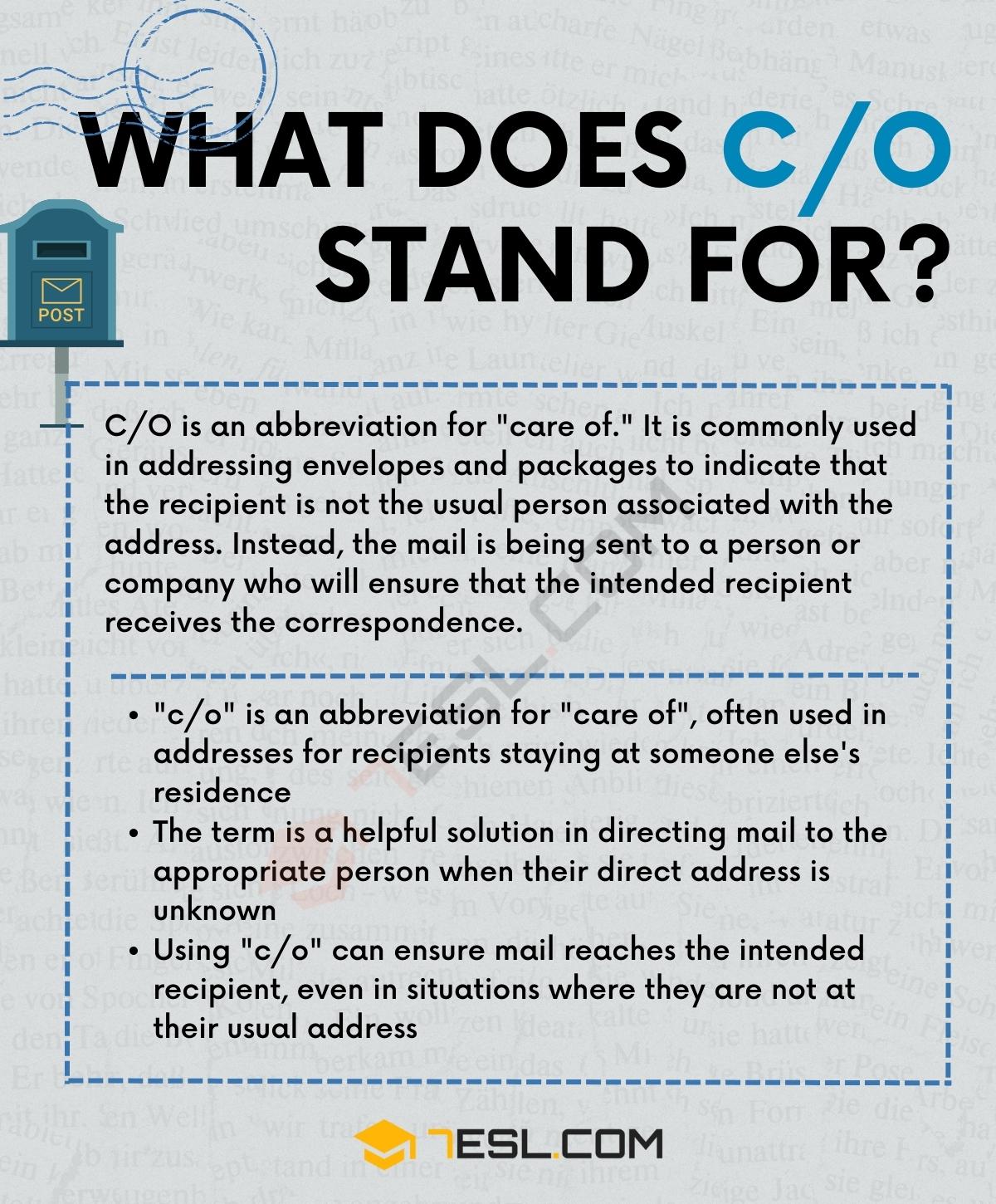
The Operational Mechanics of “Care Of” in Business
At its core, “c/o” is a routing instruction. It signals to the postal service or a private courier that the person or entity named first is not the primary occupant or the owner of the address listed. Instead, the entity following the “c/o” is the party responsible for the “care” or delivery of the item to the final recipient.
Facilitating Third-Party Logistics (3PL)
For many growing businesses, managing inventory and physical mail in-house is neither cost-effective nor scalable. This is where third-party logistics (3PL) providers come into play. When a company uses a 3PL for order fulfillment or returns, “c/o” becomes a vital tool in the supply chain.
For example, if a boutique e-commerce brand based in New York uses a fulfillment center in Ohio, they might direct professional samples or returns to be sent to:
Brand Name
c/o Fulfillment Center X
Address in Ohio
This tells the carrier that while the package belongs to the “Brand Name,” it should be delivered to “Fulfillment Center X,” which has the authority to sign for and process the arrival. This clarity prevents delivery failures and ensures that inventory is tracked correctly within the business’s financial ecosystem.
Managing Remote and Hybrid Workforces
The rise of distributed teams has necessitated new ways of handling corporate correspondence. Many modern businesses operate without a centralized physical headquarters, utilizing virtual offices or coworking spaces. When an employee requires sensitive hardware or legal documents but does not have a secure business address, the company may send the items “c/o” a local branch or a professional mail-handling service. This maintains a layer of professional separation and ensures that business-related expenses and assets are routed through official channels rather than private residential addresses, which can have implications for insurance and tax audits.
Legal and Financial Protections: The Registered Agent Model
One of the most critical applications of “c/o” in business finance and law is the appointment of a Registered Agent. For any Limited Liability Company (LLC) or Corporation, maintaining a registered agent is a legal requirement in most jurisdictions.
Ensuring Compliance and Asset Protection
A Registered Agent is a designated individual or third-party service authorized to receive service of process (lawsuits), tax notices, and official government correspondence on behalf of a business. In this scenario, the business’s official mailing address for legal purposes often appears as:
Your Company, LLC
c/o Registered Agent Service Name
Agent Street Address
Using “c/o” in this capacity is not just a matter of convenience; it is a strategic financial move. It ensures that legal notices are handled by professionals who understand the timelines for response, thereby protecting the company from default judgments that could result in significant financial loss. Furthermore, it keeps the business owner’s home address off public records, providing a layer of privacy and security that is essential for personal asset protection.
Tax Implications and Nexus
From a financial perspective, the address used on business correspondence can sometimes influence “nexus”—the level of connection a business has with a state that allows the state to tax the business. While the use of a “c/o” address through a registered agent typically does not establish a physical nexus for sales tax purposes (as the agent is an intermediary), it is vital for businesses to clearly distinguish between their principal place of business and their “care of” addresses to ensure accurate tax filings and avoid overpayment or penalties in multiple jurisdictions.

Financial Management: Accounts Payable and Receivable
In the realm of business finance, the accuracy of the “c/o” designation can directly impact a company’s cash flow and credit rating. Misdirected mail is more than a nuisance; it is a potential financial bottleneck.
Streamlining Accounts Payable
When a company moves offices or undergoes a restructuring, there is often a transition period for billing. If a vendor sends an invoice to an old address or fails to include a “c/o” designation for a new accounting firm, the payment can be delayed. This delay can lead to:
- Late Fees: Accumulating unnecessary costs that eat into profit margins.
- Relationship Strain: Damaging the trust between a business and its suppliers.
- Credit Impacts: Persistent late payments can affect the business’s credit score, making it more expensive to secure loans or lines of credit in the future.
By providing vendors with a clear “c/o” address for an outsourced CFO or an accounting firm, businesses ensure that invoices go directly to the professionals responsible for processing payments, thereby maintaining a healthy “Days Payable Outstanding” (DPO) ratio.
Accounts Receivable and Lockbox Services
Conversely, for larger corporations, “c/o” is frequently used with lockbox services. A lockbox is a bank-operated mailing address to which a company directs its customer payments. The bank opens the mail, processes the checks, and deposits the funds directly into the company’s account. The address would typically look like:
Company Name
c/o Bank Name – Lockbox Number
City, State, Zip
This financial tool accelerates the availability of funds (improving the “Days Sales Outstanding” or DSO) and reduces the risk of internal fraud, as employees never handle the physical checks. The “c/o” designation here is the linchpin that connects the customer’s payment to the bank’s secure processing facility.
Professionalism and Best Practices for Implementation
Using “c/o” correctly is as much about professional etiquette and branding as it is about logistics. In the business world, attention to detail reflects the company’s overall competence.
Proper Formatting for Business Correspondence
To ensure the highest delivery success rate and maintain a professional image, businesses should follow a standardized format:
- Recipient Name: The person or company who is the ultimate owner of the content.
- Care of Line: “c/o” followed by the name of the intermediary (individual or company).
- Street Address: The physical location of the intermediary.
- City, State, and Zip Code.
It is a common mistake to put the “c/o” name before the recipient name. In business, the hierarchy of the address should always prioritize the primary party, as this is how the recipient’s internal mailroom will route the item once it arrives at the “care of” location.
When to Avoid “c/o”
While “c/o” is a powerful tool, it is not always appropriate. Businesses should avoid using it for permanent headquarters or when sending highly confidential documents that should only be opened by the named recipient. In the latter case, “Attention:” (Attn:) is often a better choice, as it specifies a person within the same organization, rather than suggesting the mail is being handled by a third party.

The Future of “Care Of” in a Digital-First Economy
As we move further into a digital-first business environment, the physical “c/o” is evolving into digital counterparts. Virtual mailboxes now scan physical mail and upload it to secure cloud servers. In these instances, the “c/o” designation is used to route mail to a scanning facility where it is converted into digital data.
This evolution highlights the enduring relevance of the “care of” concept. Whether it is a physical letter handled by a registered agent or a digital scan managed by a software provider, the “c/o” designation remains a fundamental requirement for delegating responsibility in business. By mastering the use of this simple abbreviation, business owners and financial managers can ensure their operations remain fluid, their legal obligations are met, and their financial pipelines remain unobstructed.
In summary, “c/o” is far more than a postal instruction; it is a signifier of delegation, a tool for privacy, and a mechanism for financial efficiency. In the modern business world, knowing exactly who is in “care of” your business assets is a hallmark of strategic management.
aViewFromTheCave is a participant in the Amazon Services LLC Associates Program, an affiliate advertising program designed to provide a means for sites to earn advertising fees by advertising and linking to Amazon.com. Amazon, the Amazon logo, AmazonSupply, and the AmazonSupply logo are trademarks of Amazon.com, Inc. or its affiliates. As an Amazon Associate we earn affiliate commissions from qualifying purchases.